Castillo Labadie (Palacete Los Moreau)
Moca
Hacienda Labadie, also known as Irurena, is in Moca, in western Puerto Rico, with part of its 1,300 cuerdas extending into Isabela and Aguadilla. It operated as a coffee hacienda in the 19th century and as a sugar mill in the early 20th. Its original name, Irurena, comes from Basque and means "of three brothers," a reference to the Pellot brothers who founded it. In 1860, Juan Labadie bought it, and after his death, his widow Cornelia Pellot commissioned the concrete house that stands today.
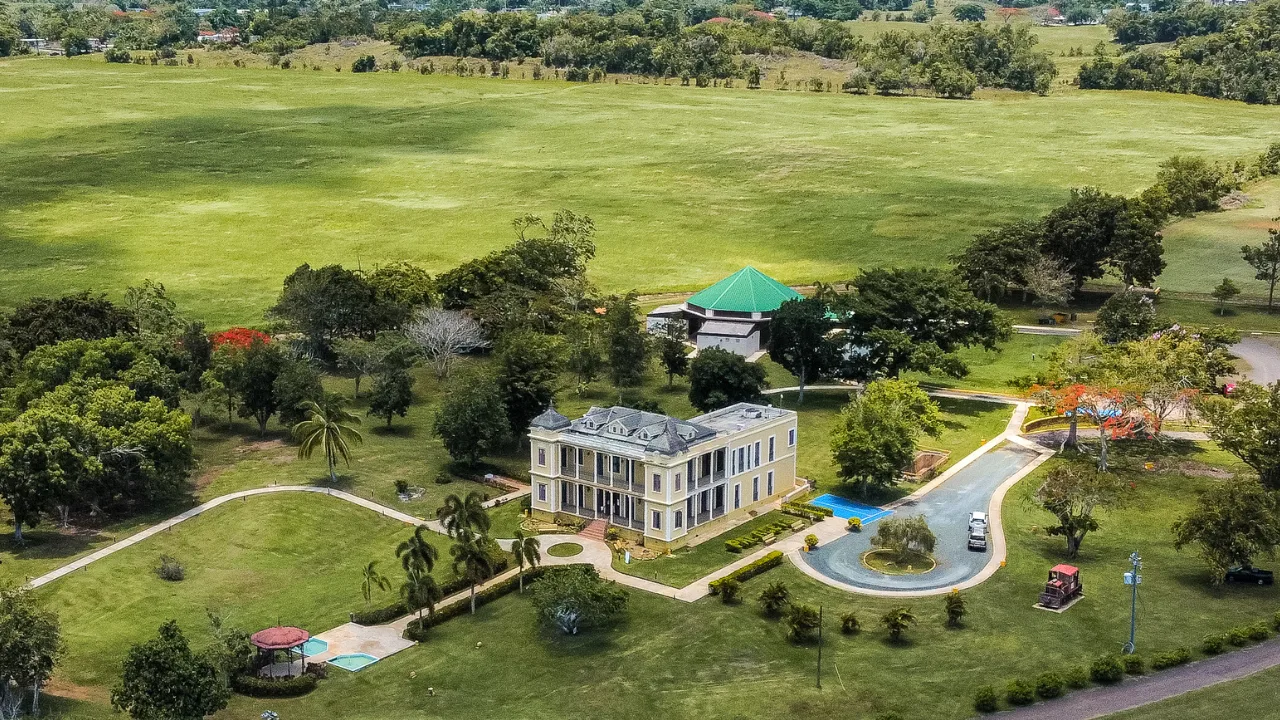
Designed by French engineer Paul Servajean in 1893 and built in 1905, the house follows the Baroque Second Empire style, a Caribbean adaptation of the French palace. It has two floors, an L-shaped floor plan, a symmetrical facade with a wraparound balcony, and pavilions topped with metal onion-dome cupolas. With the arrival of Americans in Puerto Rico, the hacienda became a sugarcane colony of Central Coloso.
The house appears in Enrique Laguerre's 1935 novel La llamarada, by the Moca-born author, as the Palmeras estate of the Moreau family. In 1993, a fire left only the facades standing, and the municipality of Moca acquired the property. After restoration, it reopened in 1999 under the name Palacete Los Moreau, in honor of Laguerre's characters.
Hacienda Labadie, also known as Irurena, is in Moca, in western Puerto Rico, with part of its 1,300 cuerdas extending into Isabela and Aguadilla. It operated as a coffee hacienda in the 19th century and as a sugar mill in the early 20th. Its original name, Irurena, comes from Basque and means "of three brothers," a reference to the Pellot brothers who founded it. In 1860, Juan Labadie bought it, and after his death, his widow Cornelia Pellot commissioned the concrete house that stands today.
Designed by French engineer Paul Servajean in 1893 and built in 1905, the house follows the Baroque Second Empire style, a Caribbean adaptation of the French palace. It has two floors, an L-shaped floor plan, a symmetrical facade with a wraparound balcony, and pavilions topped with metal onion-dome cupolas. With the arrival of Americans in Puerto Rico, the hacienda became a sugarcane colony of Central Coloso.
The house appears in Enrique Laguerre's 1935 novel La llamarada, by the Moca-born author, as the Palmeras estate of the Moreau family. In 1993, a fire left only the facades standing, and the municipality of Moca acquired the property. After restoration, it reopened in 1999 under the name Palacete Los Moreau, in honor of Laguerre's characters.