From virtual assistants to self-driving cars: how AI will change our daily lives.
,
Artificial intelligence is transforming the way we live and work. "We are going to see dramatic changes in how we interact with technology," Tony Navarro said on a recent episode of the Punto Aparte podcast, from Platea.
During the conversation, the president of Red Ventures Puerto Rico and co-founder of Guide (a platform that uses artificial intelligence to help you plan your trips) shared his vision of how AI could evolve in 2025.
These are five possible trends that could define the coming year:
1. Smarter digital assistants
Can you imagine having a virtual assistant that can do more than just answer questions? According to Navarro, we could be close to seeing digital assistants that function almost like a personal secretary:
We're going to see that Siri, for example, on your phone, is a form of agent that will become more and more intelligent, where those agents will be able to act in the real world and the digital world on your behalf, maybe making purchases for you, doing research for you or something, but in an automated way.
We are already seeing signs of this future. Microsoft has transformed the workplace with Copilot, an assistant that helps you write emails, analyze data and create presentations, almost like having a virtual coworker who understands your needs. In our homes, Amazon Alexa is already taking its first steps: placing an order, turning on the air conditioning and the lights as soon as we get home from the office, all without lifting a finger.
2. More capable robots in our environment
Robots are transforming our workplaces and homes, moving from executing basic preprogrammed tasks to adapting and responding intelligently to complex situations. As Navarro explains:
We're going to start seeing robots with much greater capability, initially in perhaps industrial settings, like warehouses… these are robots that can interact and move around inside a home, maybe operate machinery.
This evolution is already beginning. Amazon uses more than 750,000 robots in its distribution centers, including robots that can move safely around people.
A look at the evolution of AI
1950s
Birth of the AI concept
The first scientists imagined computers that could "think" like humans
2017
Transformer architecture
A breakthrough that allows AI to better understand context in language, similar to how a human grasps the full meaning of a conversation rather than just isolated words. This technology is the foundation of ChatGPT and other modern AI systems.
2022
ChatGPT revolutionizes conversational AI
AI becomes accessible to everyone through a natural chat interface
2024
Multimodal AI
AI evolves to process and understand multiple forms of communication simultaneously: text, images, voice and video. It is like giving AI the ability to see, hear and speak, similar to how humans use all their senses to understand the world.
2025
Predictions
The next step: AI that not only understands, but interacts with the physical world
3. Self-driving cars: closer and more accessible
One of the most interesting changes we could see is the arrival of autonomous vehicles at more reasonable prices. Navarro points out:
Tesla is developing a vehicle that for under $30,000 could offer autonomous mobility. And that is going to completely change the way urban systems move."
This future is already being tested in some cities. In Phoenix, Arizona, Waymo's driverless taxis (a Google company) have already completed more than one million trips. In other parts of the world, companies like BYD and XPeng are working to make electric cars with autonomous features more accessible to everyone.
4. AI in the creative industry
Entertainment and artistic creation could also be transformed significantly by AI. Navarro suggests:
I guarantee that next year we'll see a movie made entirely with AI that becomes a hit… maybe a song that reaches the top charts, made fully with AI.
The entertainment industry is already seeing the first signs of this transformation. In March 2024, Billboard Magazine reported on how "Heart on My Sleeve," an AI-generated song that accurately replicated the voices of Drake and The Weeknd, not only went viral on digital platforms but sparked a crucial debate about copyright in the digital age. The event led several major record labels to reassess their policies on the use of AI in music creation.
In film, the short "The Frost" marked a historic moment when it became the first production generated entirely by AI to be selected to compete at a Category A international film festival, according to The Hollywood Reporter in December 2024.
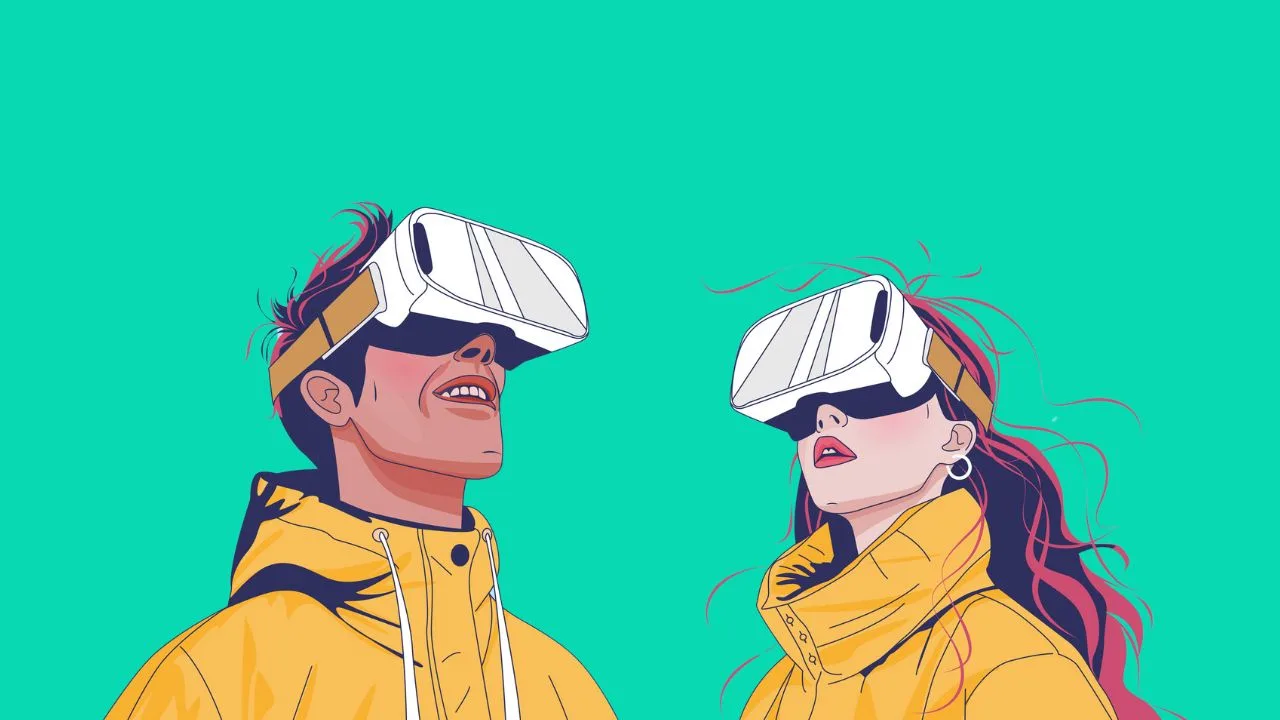
5. New ways of seeing and experiencing the world
Technology could drastically change how we interact with the digital world. Navarro describes a future where virtual reality and augmented reality blend into our daily lives:
We're already seeing models that with a prompt can generate worlds… we can start to immerse ourselves in worlds that may not be real, that are completely digital.
This type of technology could transform how we work, entertain ourselves and communicate in the near future.
This summary was produced by Claude using the original interview from Punto Aparte by Platea and reviewed by an editor.
🎙️More from Punto Aparte on Youtube
Photo: Getty Images / Namthip Muanthongthae
This content was translated with the assistance of Artificial Intelligence (AI).