Enjoy the living art of bonsai at its Trujillo Alto festival.
Shaping a plant into a work of art requires patience and discipline, especially in the practice of bonsai, which seeks to give movement, geometry and individuality to a large tree or shrub in a miniaturized version of itself.
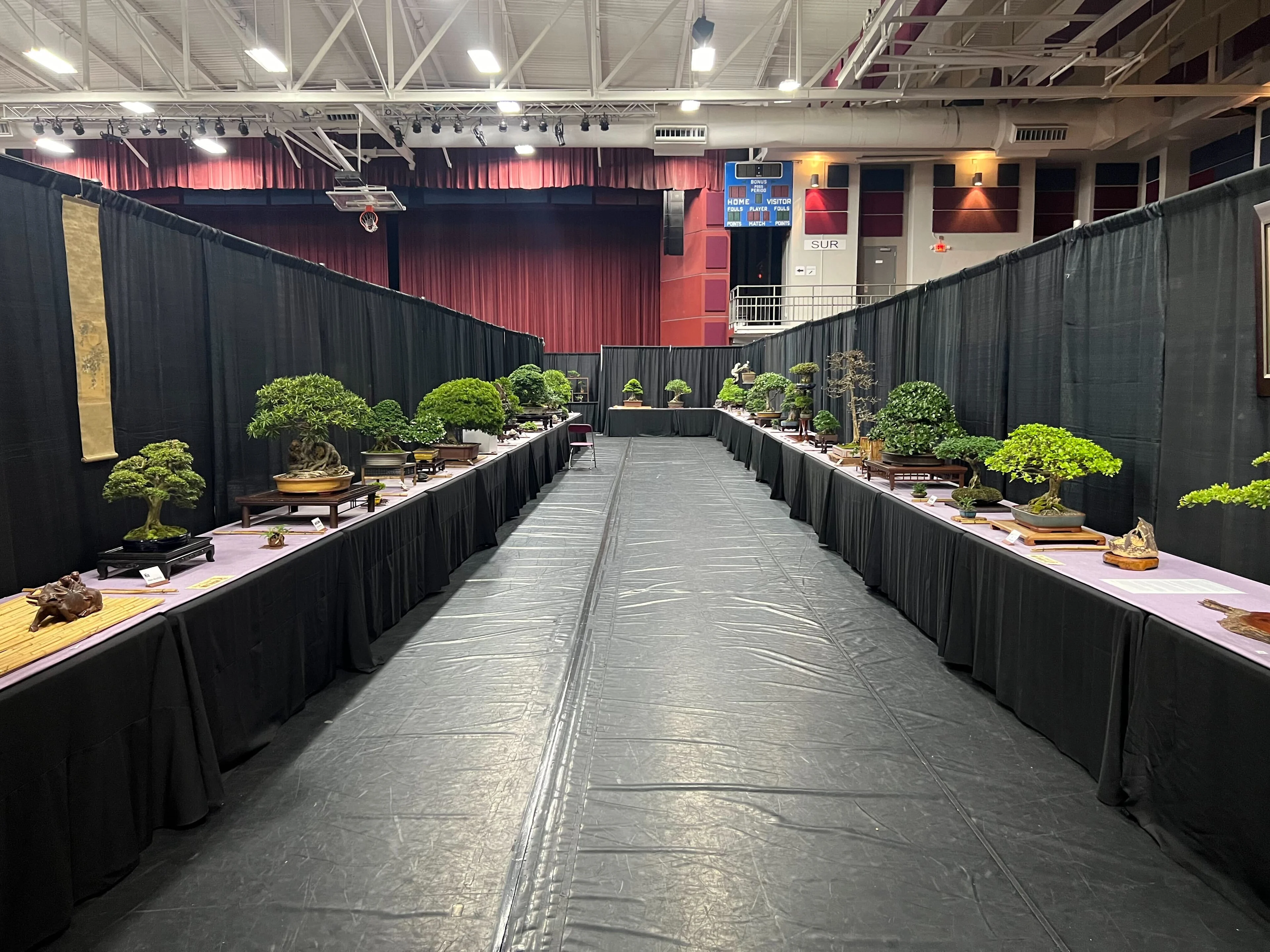
The seventh Festival Nacional del Bonsái en Trujillo Alto, held July 19-21, celebrated this discipline, turning the Coliseo Rubén Zayas Montañez into a kind of Japanese-Caribbean garden filled with unique, intrinsic living art pieces.
This year, the free exhibition featured more than 100 bonsai trees, 77 exhibitors and private collectors, and six expert demonstrators for the public's enjoyment.
Among the characteristics that determine a quality bonsai are the appearance of a mature or old tree with substantial internal branching, small leaves or leaves proportional to its size, and a defined shape.
That last quality is achieved through pruning, wiring and transplanting techniques that manipulate, without damaging, the plant's original structure; the care a bonsai requires will depend on the type of plant and its environmental conditions.
Interestingly, some native plants are excellent for bonsai, including nia, roble, mangle botón and almácigo. In bonsai practice, there are no limitations.
"The plant adapts to the conditions you offer it. We prefer small-leafed plants," but there are no rules set in stone, explained Pedro Morales, president of the Federación de Bonsái de Puerto Rico, who has more than 40 years of experience in the "living art."
In the case of flowering and fruit trees, these must be small to maintain ideal proportions. Acerolas, guavas and gooseberries are some examples.
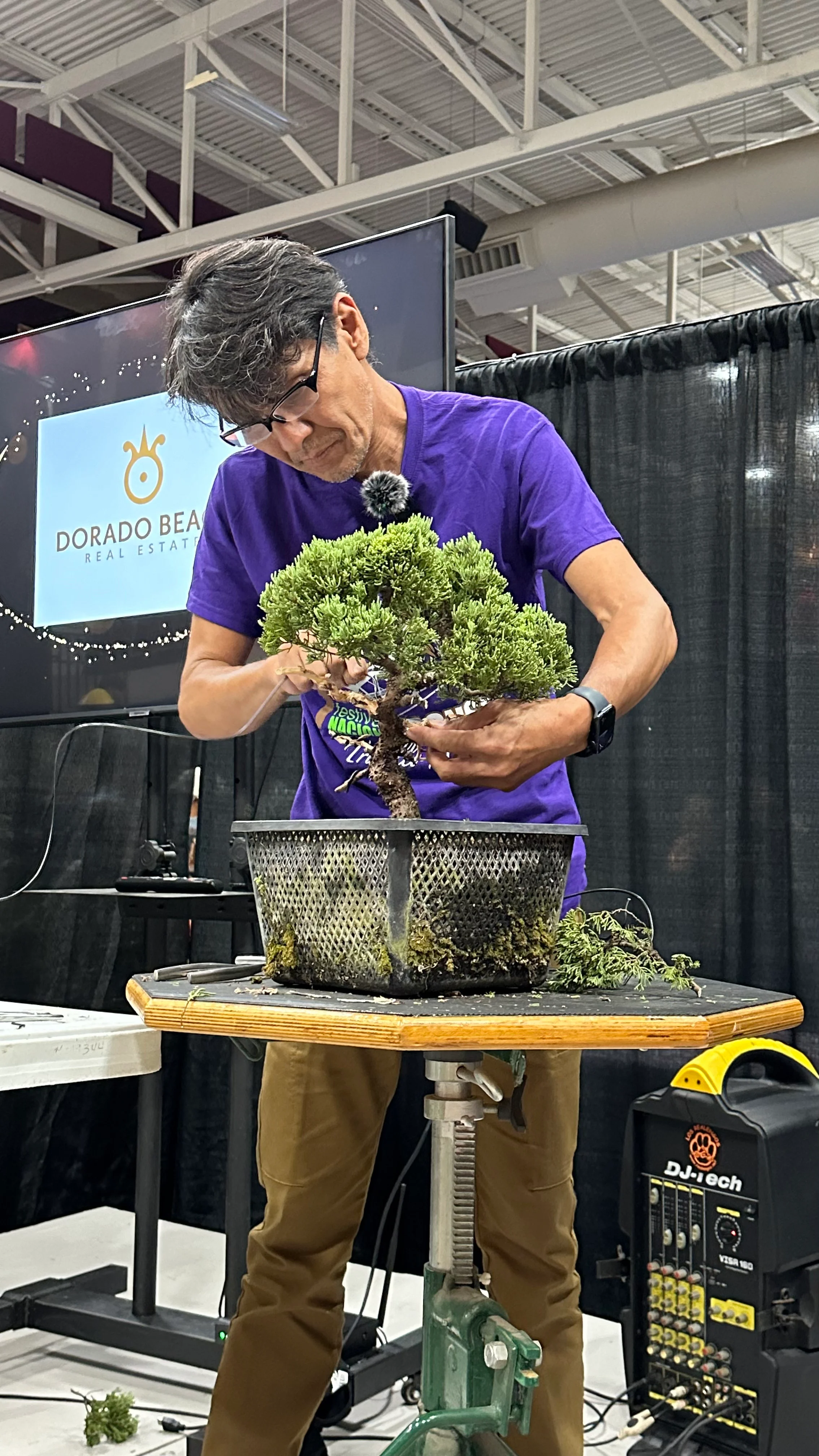
During the event, there were talks and workshops for enthusiasts of all levels. Bonsai artist Christopher Sambolín demonstrated basic care for the juniper, a coniferous plant not native to Puerto Rico.
"The important thing with this type of bonsai is that you have to be very patient, and let the plant be free, let it grow and adapt to Caribbean conditions."
Sambolín used wiring techniques to show how to style the juniper, comparing it to "braces on teeth."
Aluminum wires of different thicknesses can be used for the ties, depending on the thickness of the branches. "Once in position, they are removed," he said.
Those present also enjoyed the teachings of Japanese master Koji Hiramatzu, a specialist in bonsai trees under eight inches tall, and of Sean Smith, a renowned bonsai artist and expert in suiseki, a Japanese art that displays stones with forms found only in nature.
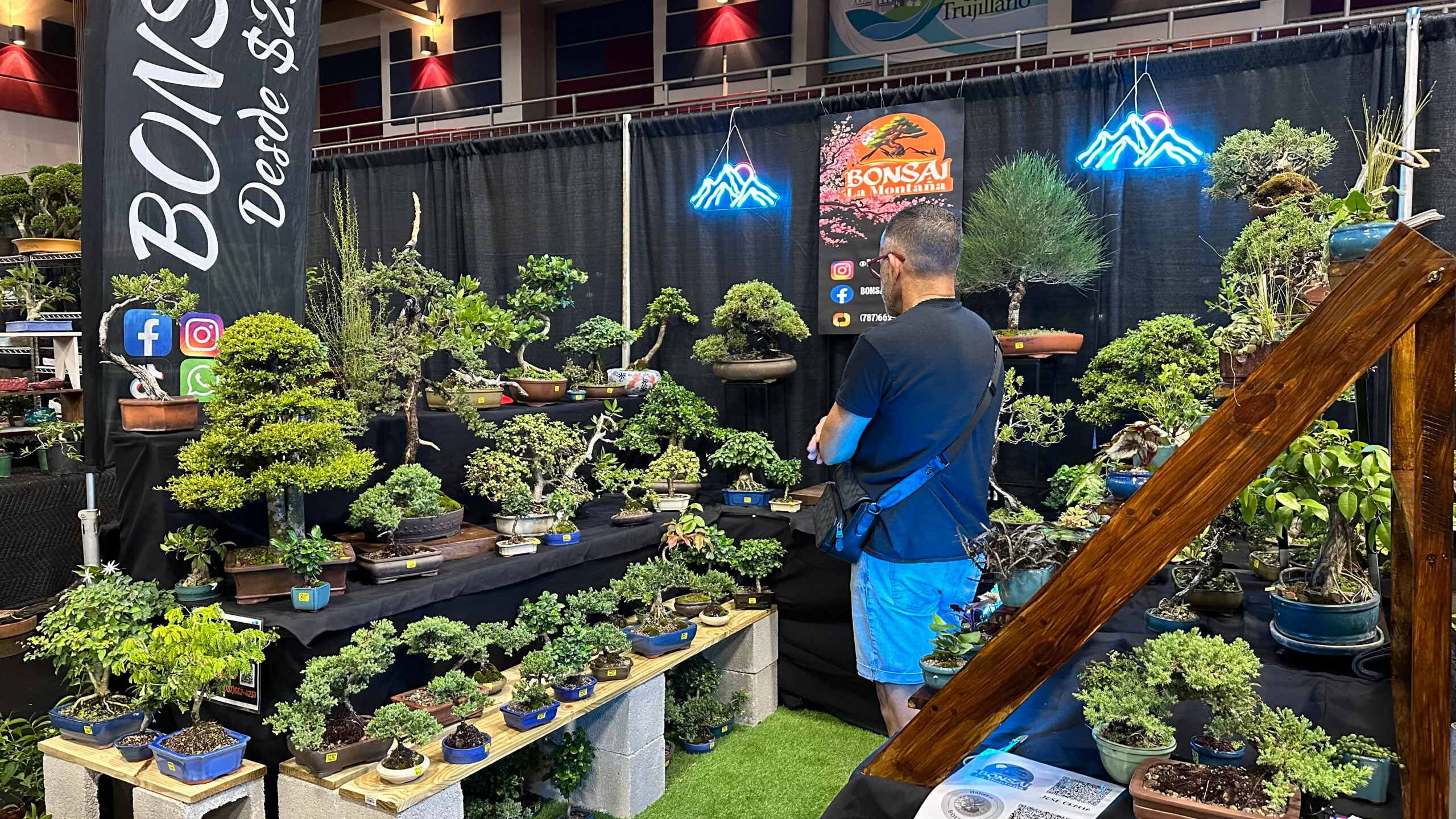
The exhibition also featured kiosks from local vendors with bonsai materials and tools available for purchase.
For many of the vendors, such as Dayanara Negrón, co-owner of Bonsai La Montaña in Arecibo, "what began one day as a passion for the art became our business and livelihood."
This content was translated with the assistance of Artificial Intelligence (AI).