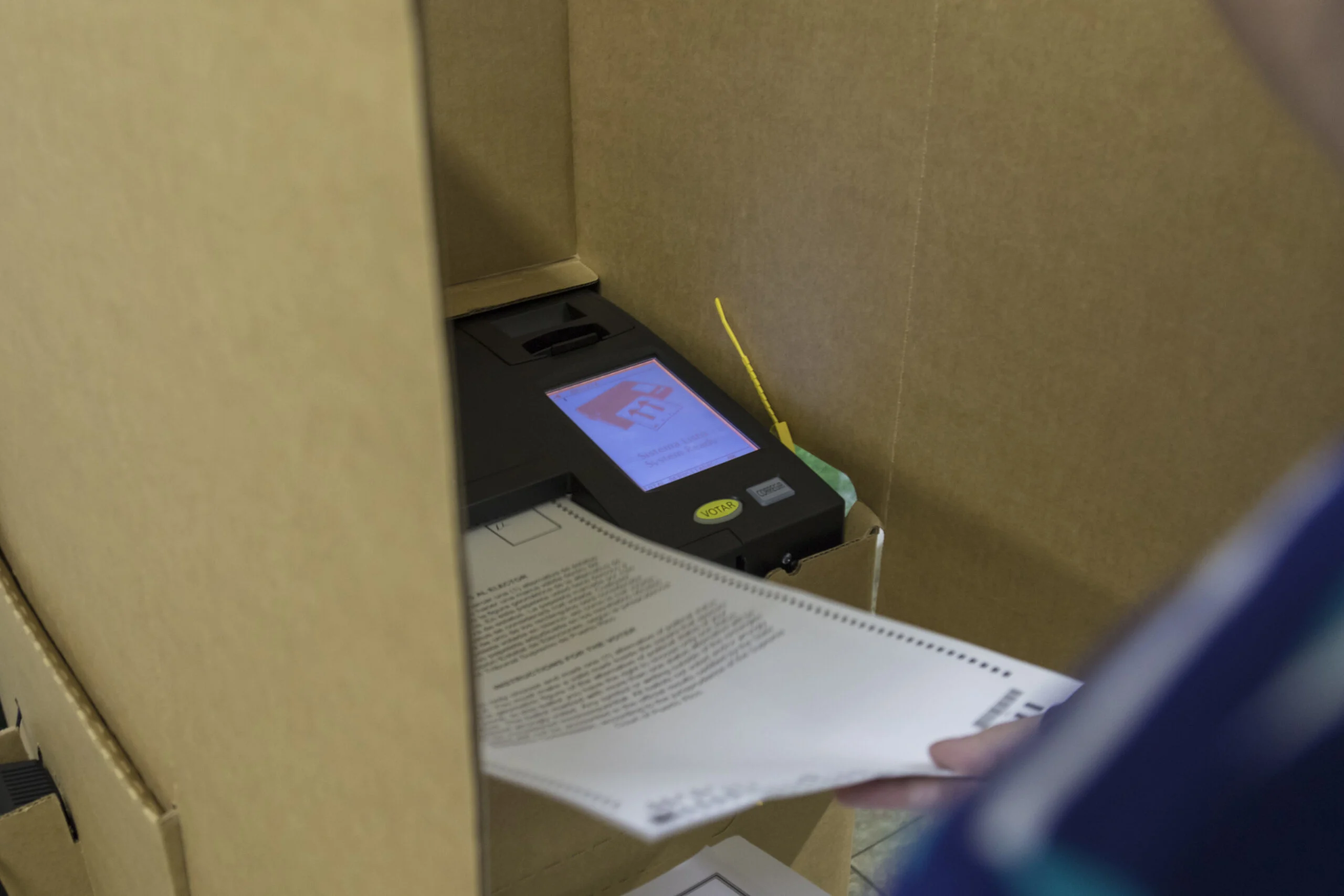
The electoral system continues to evolve in an effort to respond to the needs of Puerto Rican society.
Puerto Rico's electoral history is marked by milestones that have transformed the exercise of voting, from the direct election of governors to the inclusion of incarcerated people in the electoral process. As the Island moves toward technological modernization, new challenges and opportunities continue to shape civic participation.
Less than a hundred years ago, still a colony, Puerto Ricans were able to choose for the first time in their history who would lead the archipelago, after the U.S. Congress approved it in 1947. In 1948, Luis Muñoz Marín was elected governor of Puerto Rico, and in the process the structure of the Partido Popular Democrático (PPD) was consolidated; the party governed the Island for four consecutive terms.
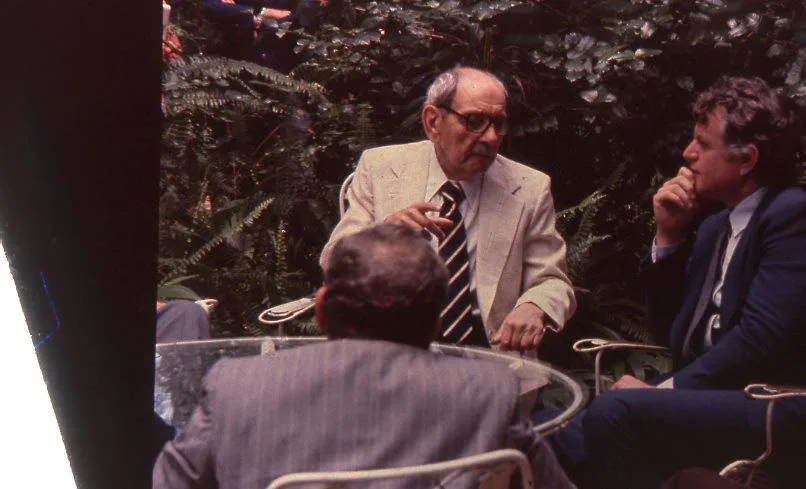
Initially, voting took place in what were known as colegios cerrados, or closed polling places. Humanities professor and history teacher Iván Ruiz Cordero explained that voting under this system ran from 8:00 a.m. to 3:00 p.m., and eligible voters remained inside the polling place until voting was finished.
"Imagine, the middle of the 20th century. There was no voter registry, so there was no way to verify whether someone had voted more than once, so everyone stayed inside until it was over," Ruiz Cordero said.
It was not until 1977, under the administration of Carlos Romero Barceló of the Partido Nuevo Progresista (PNP), that the Comisión Estatal de Elecciones was established with a new electoral law that brought substantial changes, including the elimination of the colegios cerrados. The change was not without controversy: while the party in power argued it was about expanding voting rights, opponents claimed that open polling places would make electoral fraud easier.
Three years before the change, the popular Rafael Hernández Colón argued in a State of the Commonwealth address that the "best identification of a voter is neither a card, nor a photograph, nor a signature, but the person themselves, present in the flesh at the polling place, face to face with their neighbors and friends, ready to fulfill at the ballot box the mandate of their conscience."
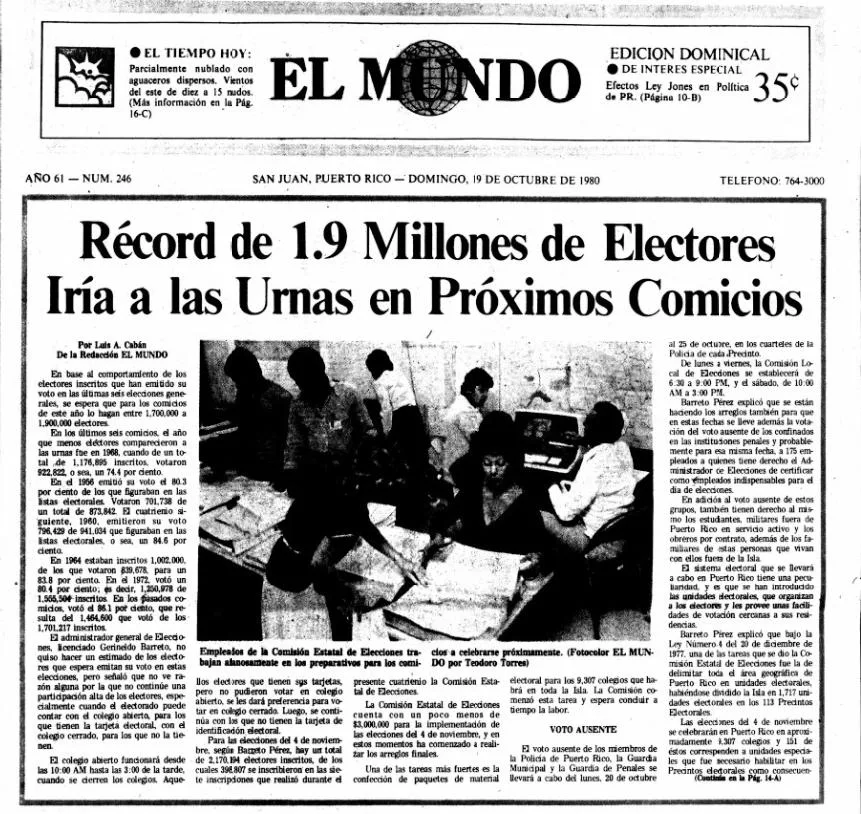
The second half of the 20th century brought other advances in Puerto Rico's electoral history. For example, in 1970, absentee voting was introduced. With a growing number of people leaving the Island for educational, work or military reasons, new methods were sought to encourage participation in electoral processes. But it was not all smooth sailing.
Professor Ruiz Cordero noted that "absentee voting was introduced to guarantee the right to vote that every U.S. citizen residing in Puerto Rico has. But that brought controversy because people did not know when their ballots would arrive or how the process would work, and there were certain fears like the ones that exist today with early voting."
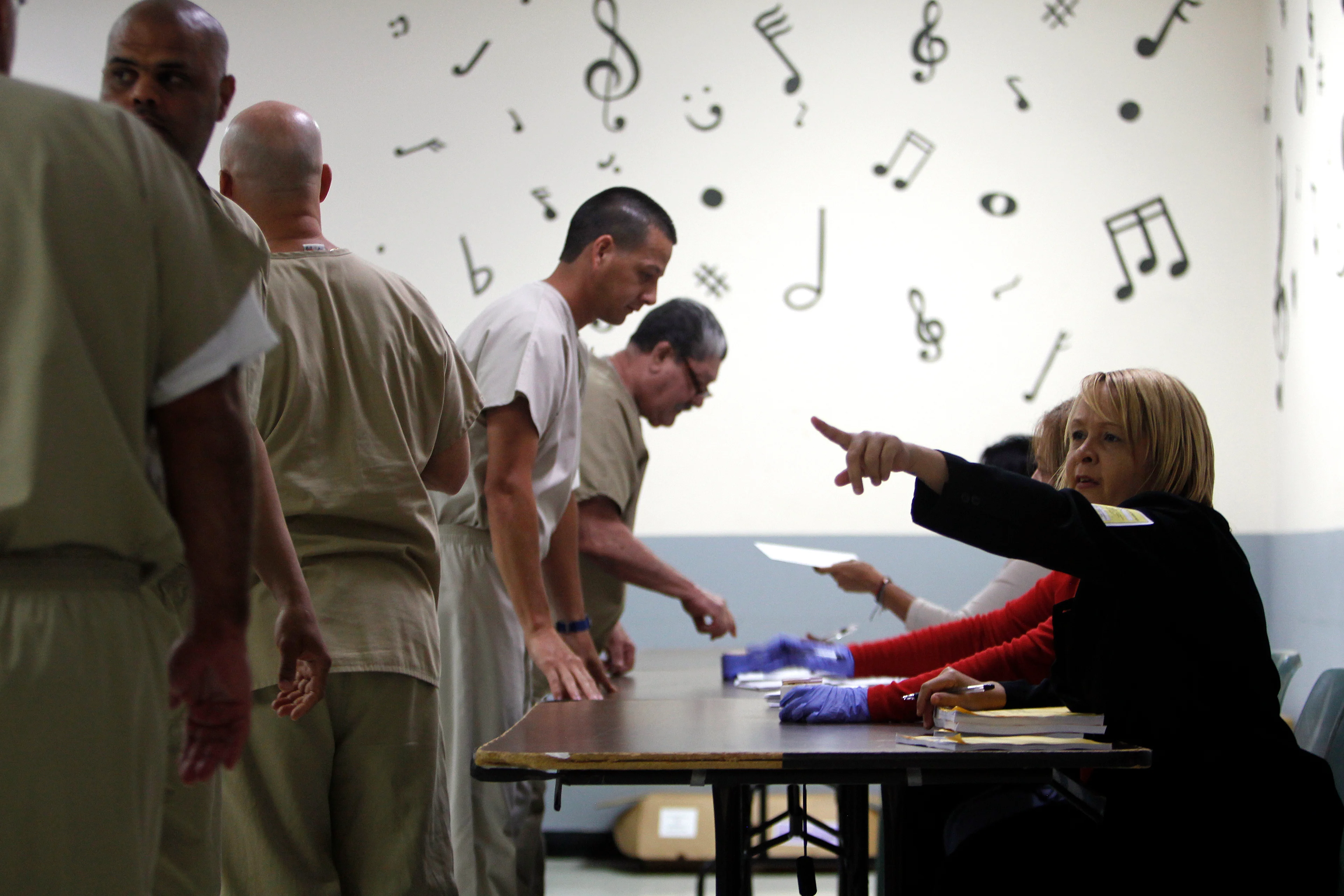
In 1980, the right to vote for incarcerated people was established. "At the time, the decision to allow incarcerated people to vote reflected a commitment to democratic principles," the professor said. Incarcerated people retain the right to vote; the process in prisons took place last Sunday, Nov. 3.
From that decade on there were no significant changes to the electoral system, until 2016 and the introduction of new technologies into the process. Two elections ago, Puerto Rico adopted the use of electronic scanners for vote counting, known as máquinas de escrutinio.
"I remember when votes were counted by tally, you'd be up until all hours. This tool is a great change. Since the 2016 elections, starting at 6:00 p.m., you at least [have an idea of] who's winning the governorship," Ruiz Cordero said.
Under that modernization effort, ahead of this Tuesday's elections, the Registro Electrónico de Electores (eRE) was also developed, allowing voters to carry out the basic functions of a Junta de Inscripción Permanente from the comfort of their home, through any electronic device.
A recent change that cannot go unnoticed is the introduction of mail-in voting. This option has been one of the focal points of the electoral race since it was introduced.
"In the middle of the COVID-19 pandemic, voters faced accessibility challenges; this vote was meant to make things easier and adapt to the times," Ruiz Cordero argued. In these elections, the CEE received just over 224,295 thousand requests for early voting, 6,872 fewer than in 2020, with mail-in being the predominant option. Starting Nov. 5, the effects of this option will be evaluated.
This content was translated with the assistance of Artificial Intelligence (AI).