
It was a sacred place…
a site of mining and logging…
an area for growing coffee and sugarcane…
But 150 years ago, because of deforestation, it began to transform into a nature reserve, a place for water extraction, scientific research, species preservation, tourism, recreation and much more.
El Yunque National Forest is commemorating, in 2026, a century and a half since 1876, when King Alfonso XII of Spain proclaimed 10,000 hectares of the Sierra de Luquillo (the Luquillo Mountains) a forest reserve, the second oldest in the Americas, after the Main Ridge Forest Reserve in Trinidad and Tobago (1776).
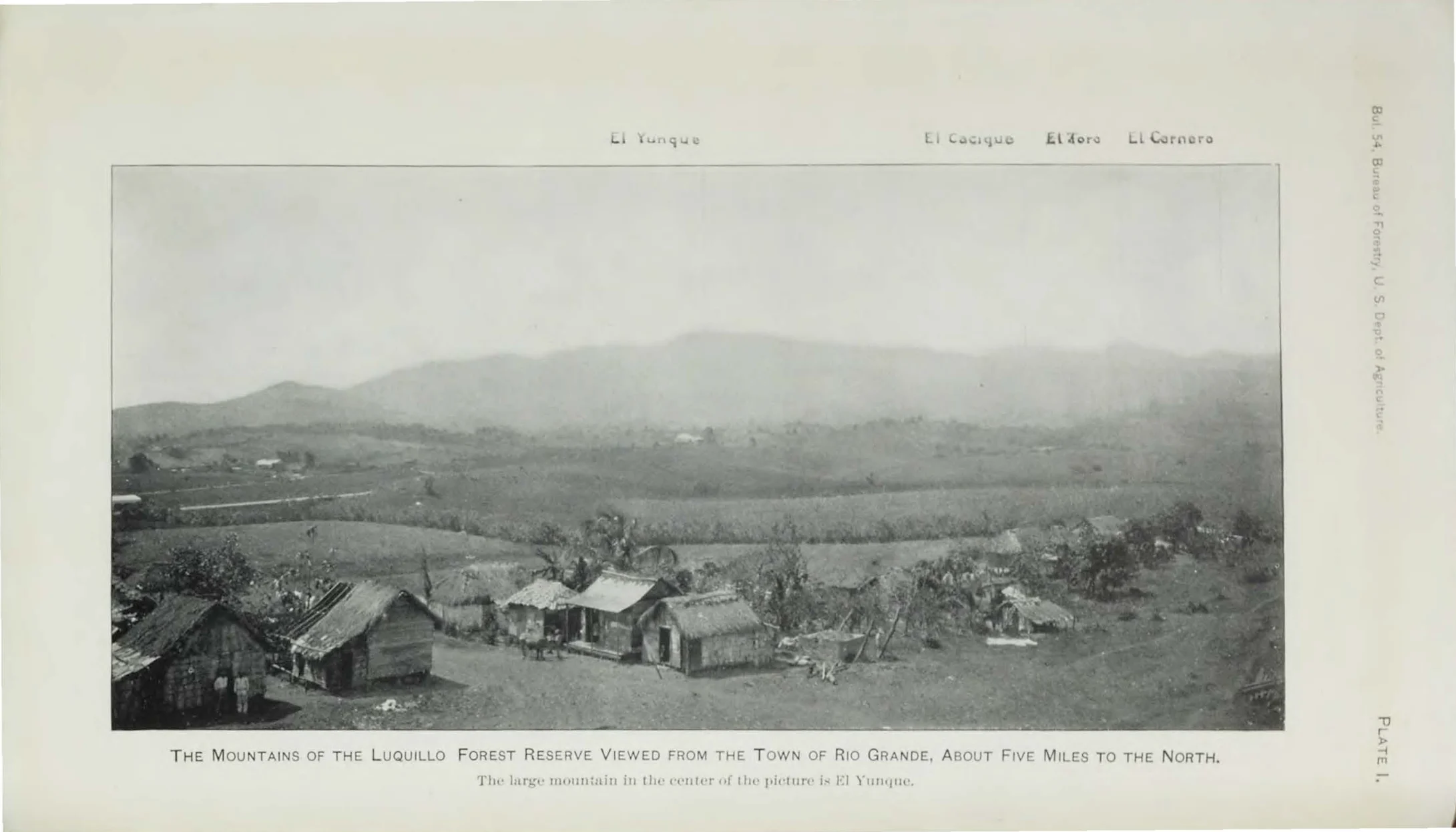
View of the Luquillo Forest Reserve from the town of Río Grande. (1905, John C. Gifford/ United States Forest Service)
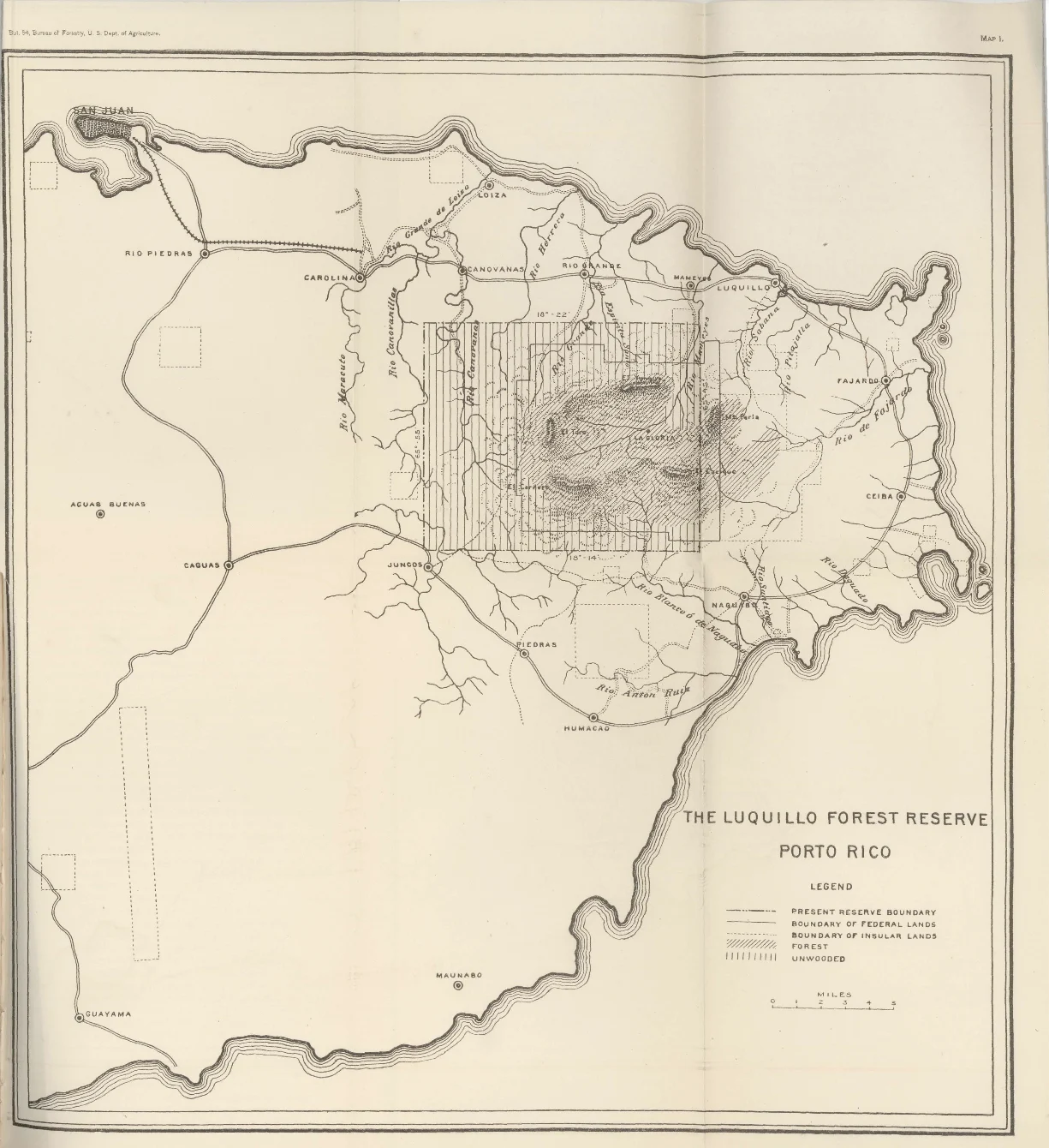
Map outlining the areas that made up the forest reserve. (1905, John C. Gifford/ USFS)
It began as an effort to protect forested land, but it ended up having a much greater impact: it laid the foundations for forest conservation in Puerto Rico, drove decades of scientific research and turned El Yunque into a refuge for species, one that supplies more than 20% of the water provided to the municipalities each year.
“I think one of the first achievements, and the most important one, was laying the foundations, or the footings, for what becomes the conservation of natural systems or natural areas in Puerto Rico,” Raymond Feliciano, an archaeologist and director of the El Yunque National Forest Heritage Program, told Platea.
“We can see El Yunque as a seed that spread across the island (in terms of conservation). And not only here. Many of the scientific studies of how tropical forests around the world work originate in El Yunque,” he emphasized.
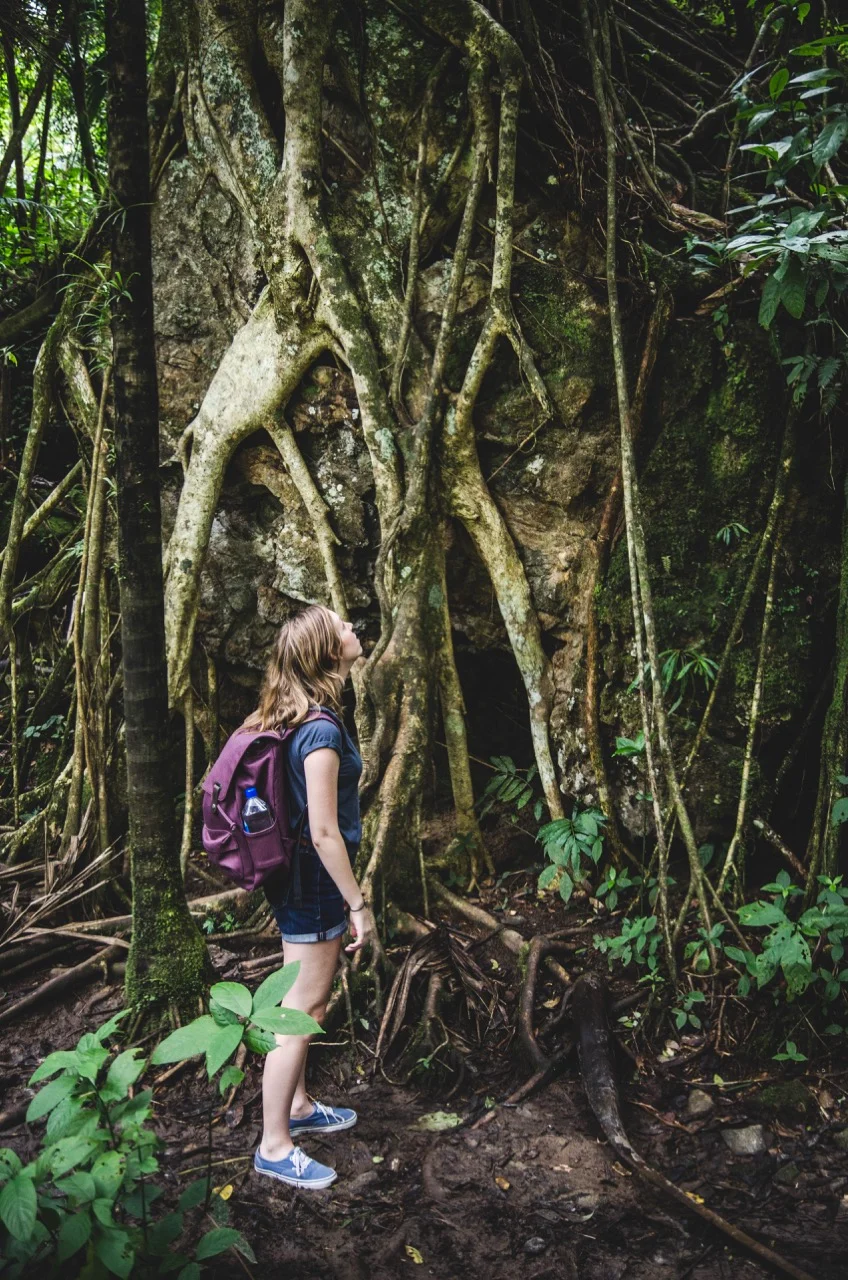
Our goal is for people to love the forest, but how are they going to love it if they don’t know it?

12,040
hectares (29,752 acres) within El Yunque National Forest, up from 10,000 hectares in 1876.
According to Feliciano, this increase came about because, after the U.S. invasion, the change of government and the establishment of the Luquillo Forest Reserve by President Theodore Roosevelt in 1903, the U.S. Forest Service took over management of the forest and, starting in the 1930s, began acquiring forest land around the island, including land adjacent to the national forest.
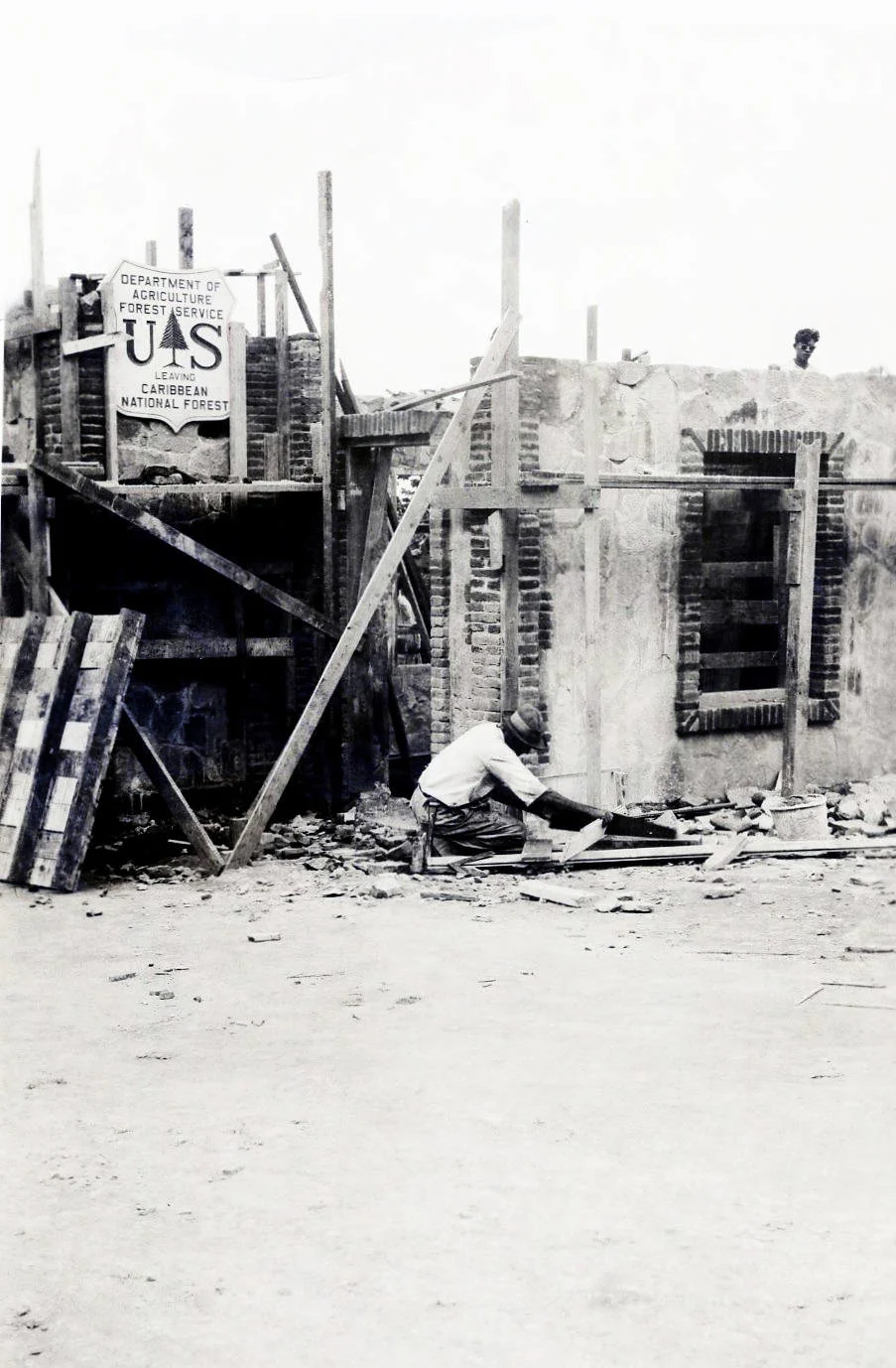
Construction of the forest’s entrance gate on the Río Blanco-Mameyes road (PR-191) in 1938. (International Institute of Tropical Forestry)
Between 2024 and 2025, 426 acres were acquired and added to El Yunque, including the largest private land donation in the forest’s history: 288 acres in 2025.
“Two-thirds of the forest we have today, in 2026, is a success story of environmental restoration… Two-thirds of the forest has been replanted, land was acquired, uses were changed, management was changed,” Feliciano said.
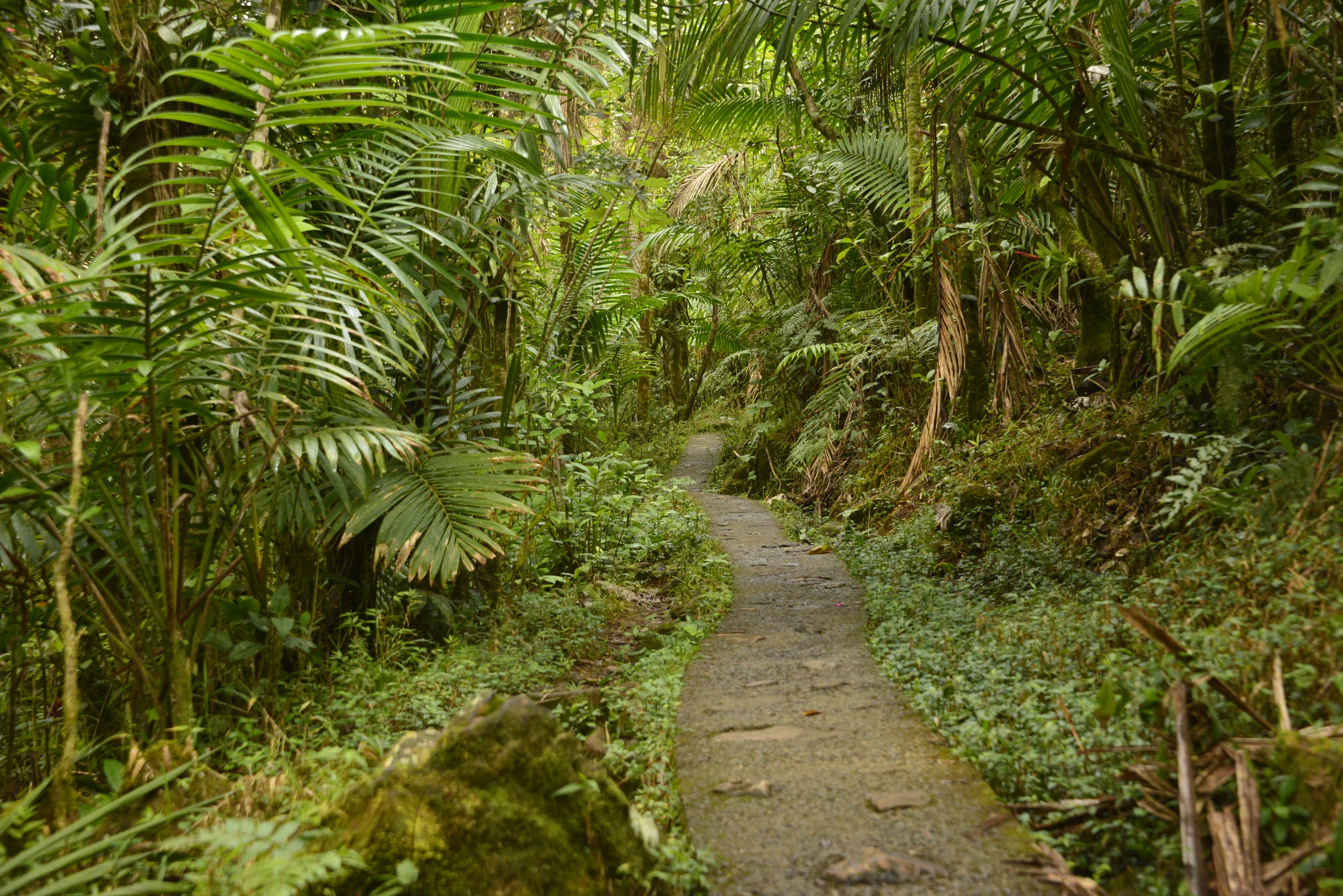
The forest exists because people perceive it, but those perceptions are not the same for all people throughout history.
Changes in how the forest is used and valued. For Feliciano, the evolution of El Yunque is also the evolution of Puerto Rican society.
For the Taíno, the forest held sacred symbolism. For the Spanish Crown, it was used for agriculture and mining, until it was decided to protect some parts of what was the last area of virgin forest in Puerto Rico in the 19th century.
For the Americans, it was used for mining, logging, military installations and scientific research, as the only tropical rainforest in the United States.
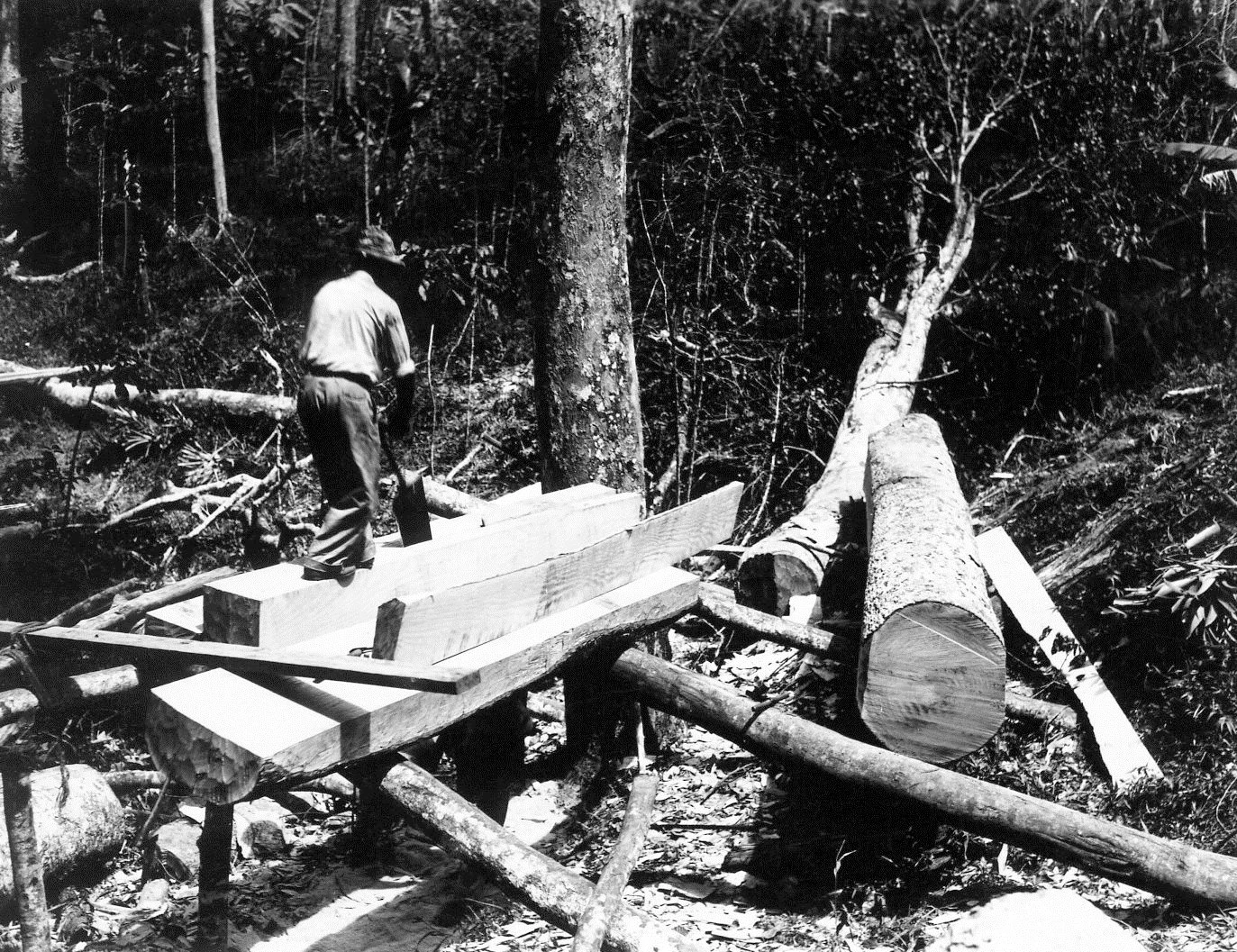
A worker cuts tabonuco lumber with a double-bladed saw. (USFS)
At the same time, it began to have recreational uses, and paths, roads, trails and facilities such as natural pools, picnic areas and more were created.
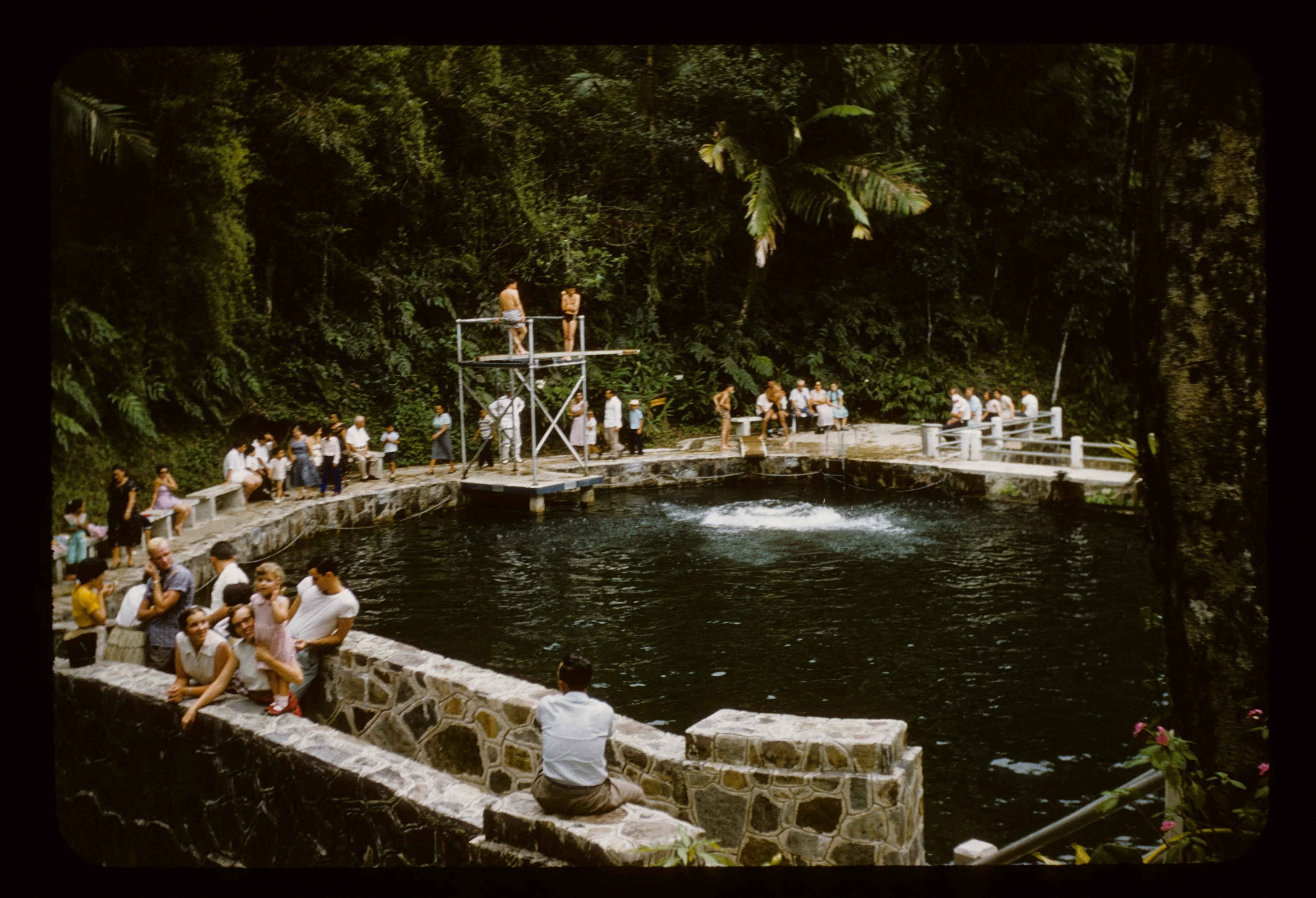
Baño Grande, on the edge of Palo Colorado, in El Yunque National Forest, in the 1950s. (Fundación Luis Muñoz Marín, Colección Menonitas)
“It brings us to the basis of management the Forest Service still has today, which is multiple use of the forest. That’s why we have recreation, water production, access to land, forest products from plants to the potential to extract minerals, which even happens in many places in the United States, not so much in Puerto Rico,” Feliciano explained.
Since 2019, with the most recent Land and Resource Management Plan for El Yunque National Forest, the Forest Service entered a new phase and brought more than 30 nonprofit organizations, municipalities, state and federal agencies, universities and community groups into the forest’s conservation and management efforts.
That is how an organization such as the Fundación Amigos de El Yunque manages El Portal, or how the Comité Pro Desarrollo de Cubuy, Inc. organizes community and tourism activities on the Cubuy River in Naguabo, in areas around the forest.
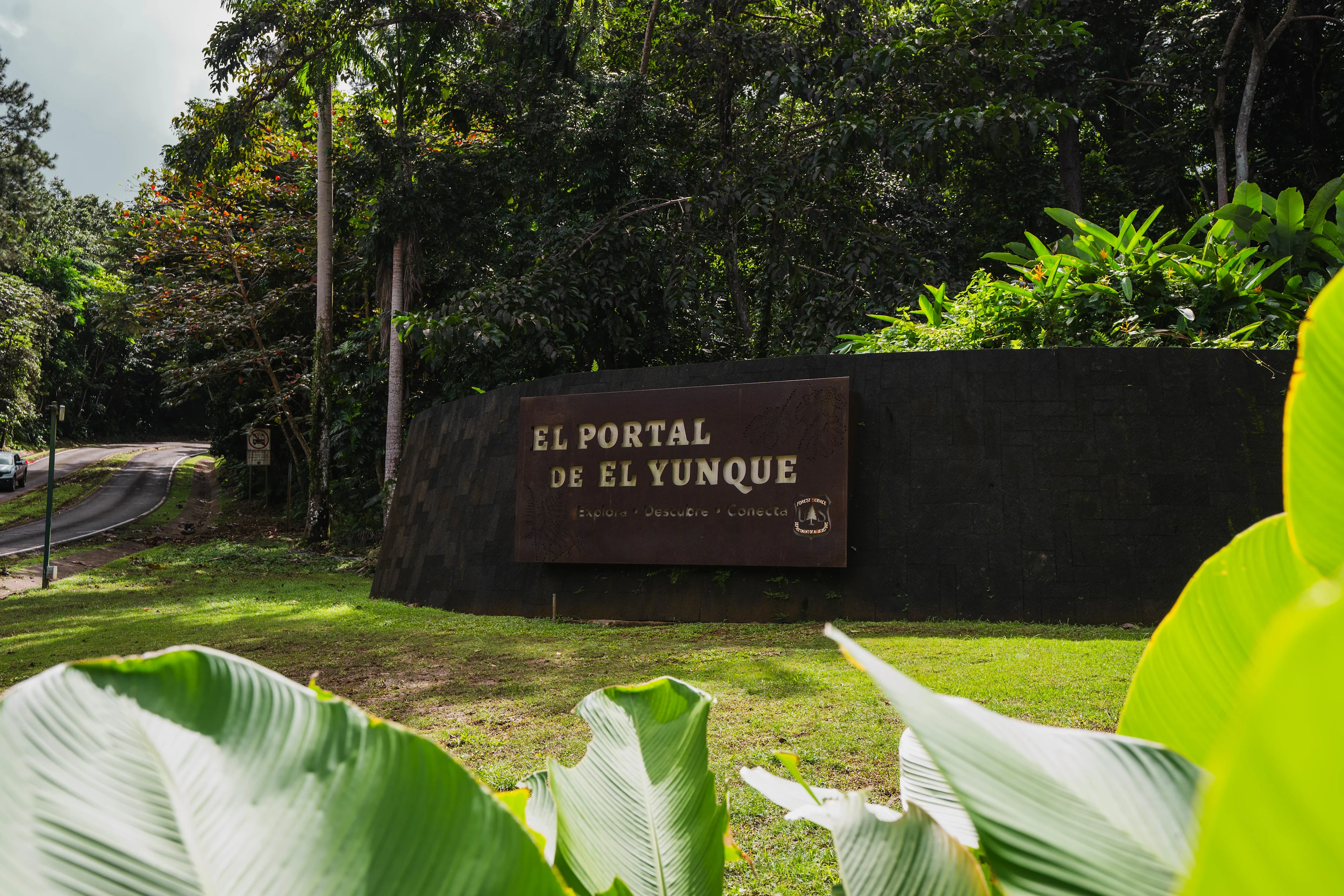
Entrance to El Portal de El Yunque, managed by the Fundación Amigos de El Yunque. (Discover Puerto Rico)
150 years, milestone by milestone
Go at your own pace: swipe, or use the buttons or your keyboard’s arrow keys. You can step out at any point and keep reading.
Milestone 1of 26
Pre-Columbian era
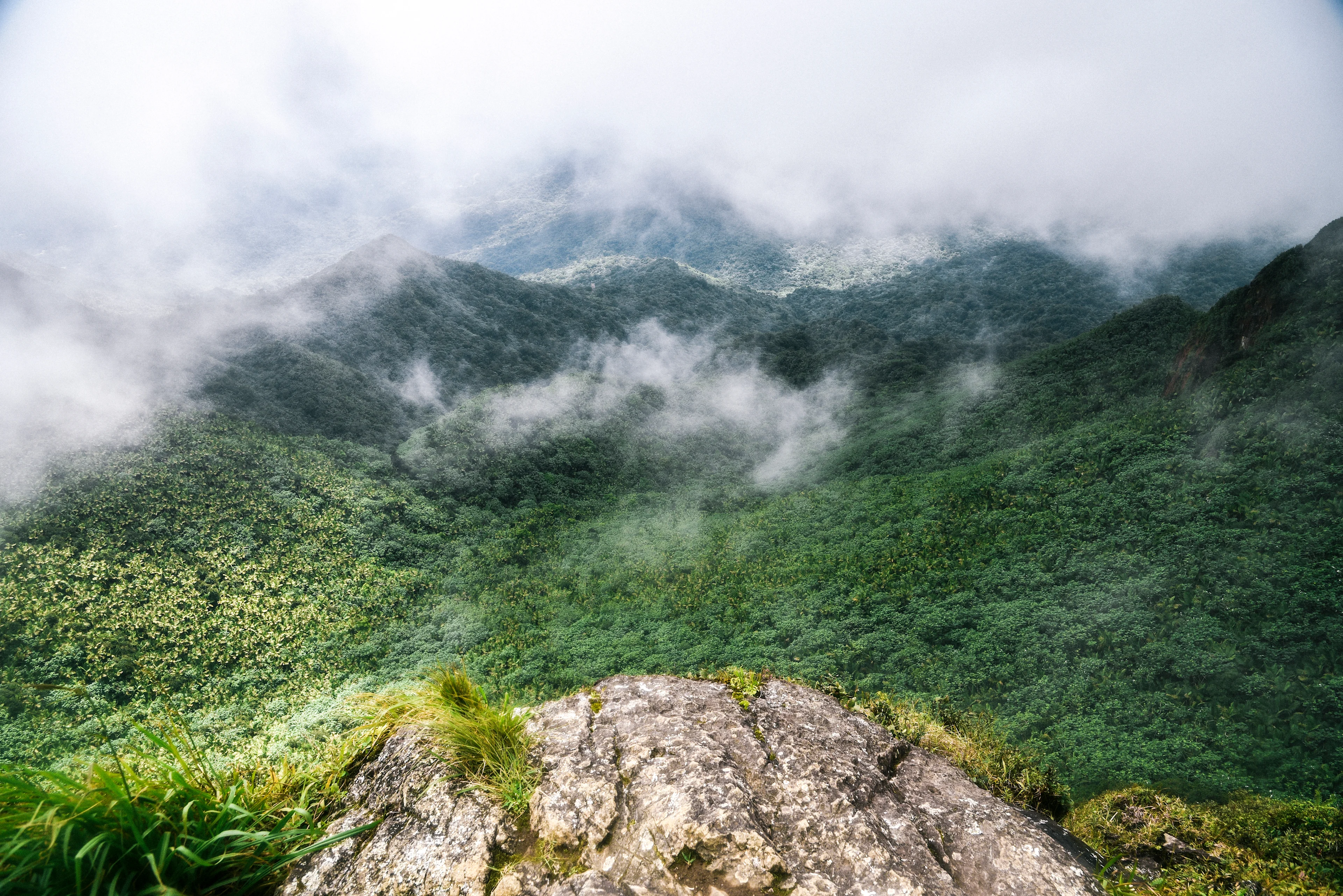
The Taíno regarded El Yunque, then called Yuque, as “sacred land” or “white land” (because of the clouds).
Getty Images

In addition to having 34 water intakes that extract more than 46 million gallons of water a day, equivalent to $25 million in water production a year, according to data provided by the U.S. Forest Service, El Yunque is fundamental to Puerto Rico economically, socially, culturally and ecologically.
“Everything around the forest depends on El Yunque in one way or another,” Feliciano said.
$3.5 million
annual amount El Yunque contributes in each of these categories:
- wildlife-watching activities
- employment, spending and payments from revenue sharing and in lieu of taxes
It is an important tourism and recreation area, with attractions, hotel complexes and a range of activities, from bird-watching or hiking to exercise, connecting with nature, solitude and community experiences.
“Its importance is much greater than just being a national symbol; it is the importance of the ecosystem services it provides to the community,” said Merlo, of the Fundación Amigos de El Yunque, which is dedicated to educating people about the forest’s history and importance, with free tours for children and other activities.

Since the early 1900s, El Yunque has also had scientific and ecological importance as home to 180 animal species (among them protected species such as the Puerto Rican parrot, the Puerto Rican broad-winged hawk and the Puerto Rican sharp-shinned hawk) and 830 plant species, including eight protected species and 39 threatened species that are a priority for conservation.
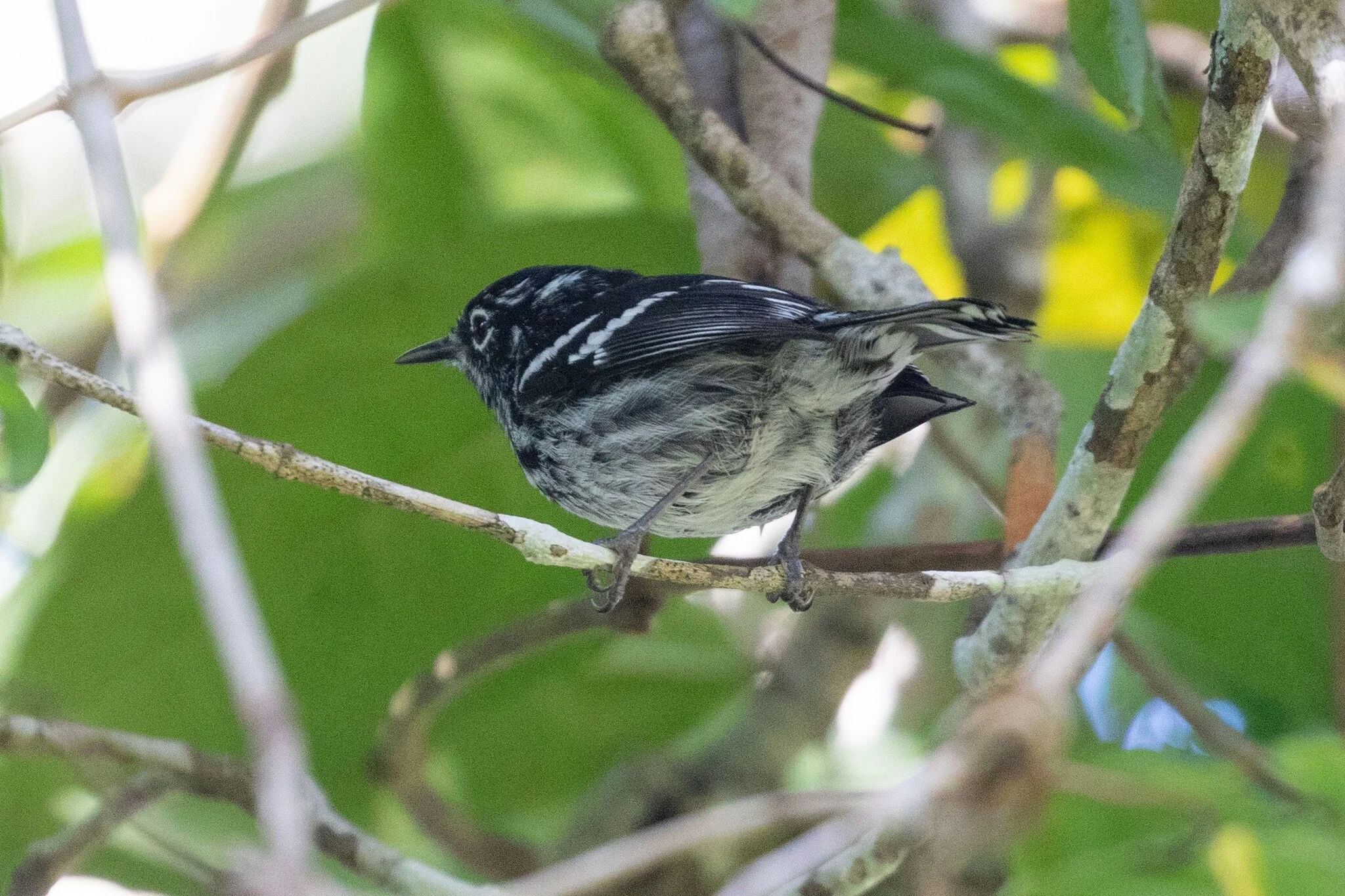
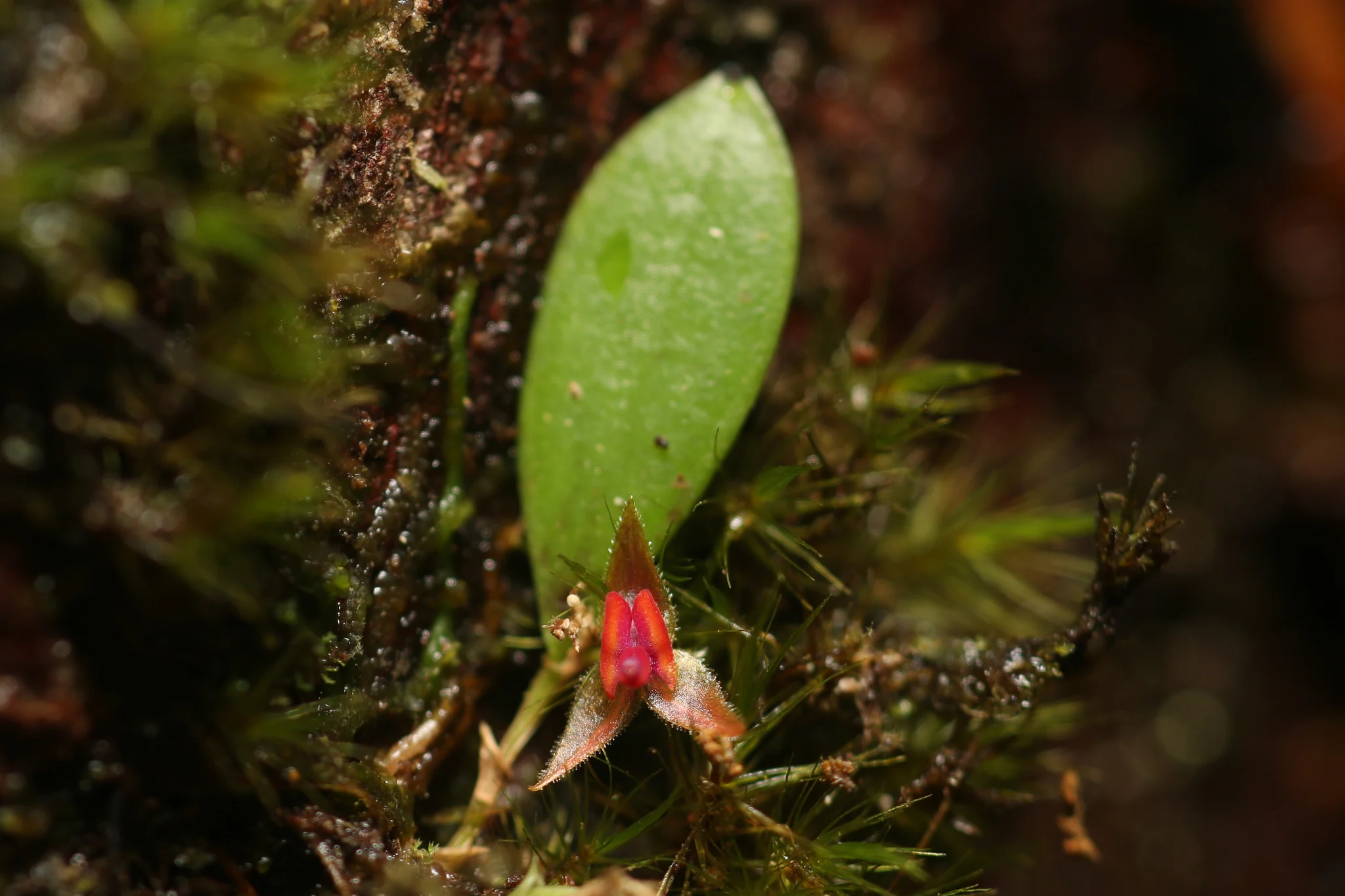
There are species that have been discovered in El Yunque, such as the coquí Eleutherodactylus hedricki or the elfin-woods warbler (Setophaga angelae), but there are also others found only there, such as the orchid Lepanthes eltoroensis, a species of flower so small that you need a magnifying glass to see it.
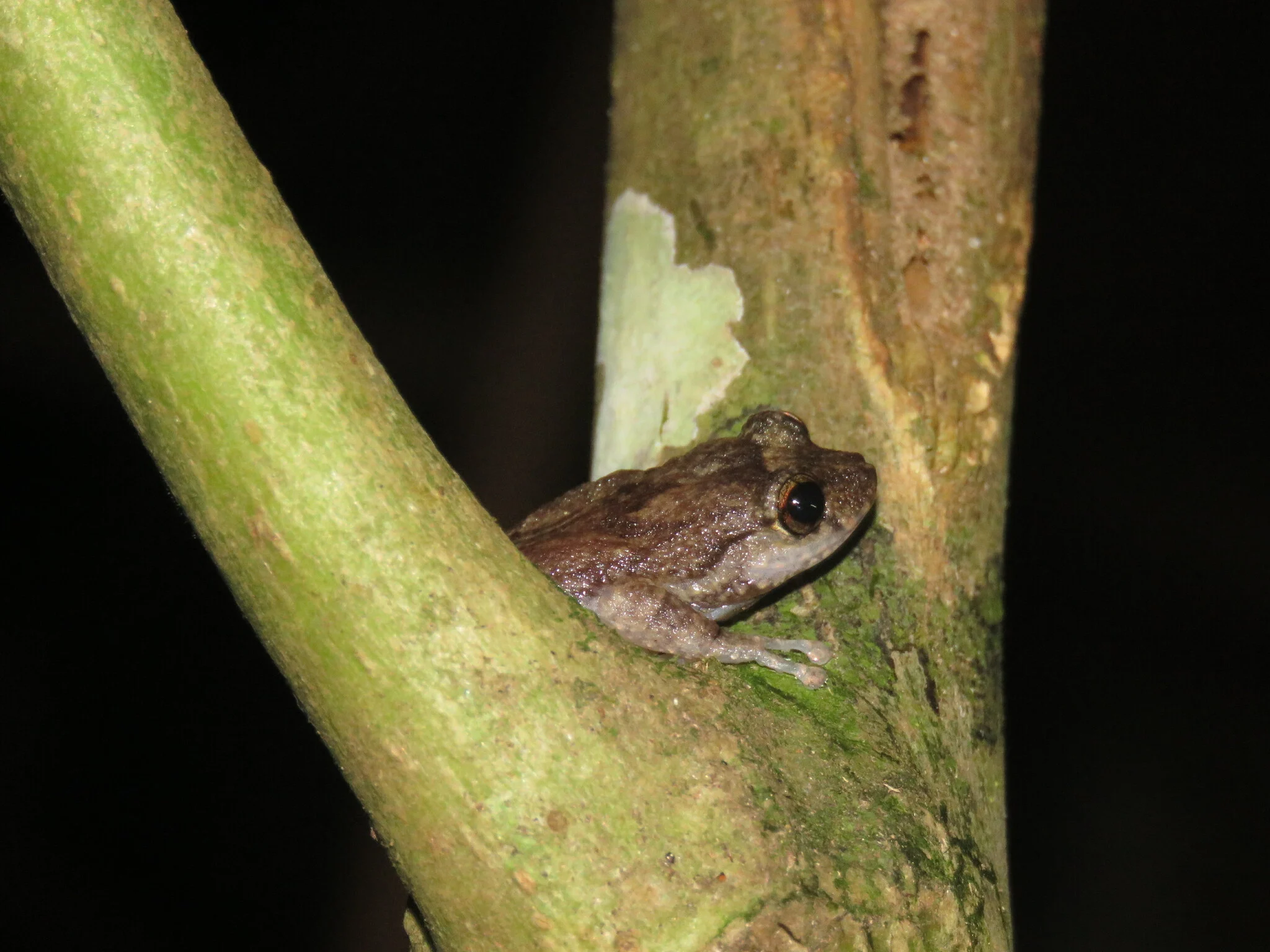
Hedrick’s coquí, also known as the tree-hole coquí (Eleutherodactylus hedricki)
Clayton H. Ziemke, iNaturalist.org, CC BY-NC
1/3
“El Yunque is one of the most studied forests in human history. And they have the longest longitudinal studies (which measure the same thing, in the same places, over time) that have been documented. No other forest in the world has been studied so much for so long,” Feliciano said.
El Yunque’s distinctive nature led the U.S. Forest Service to create an entity dedicated to scientific research in the area: the International Institute of Tropical Forestry (IITF), headquartered at the University of Puerto Rico (UPR) Botanical Garden in Río Piedras.
Since the 1930s, the institute has carried out studies at two experimental stations, El Verde Field Station and Sabana Field Research Station, where scientists from UPR and from universities around the world have come to study how a tropical forest is conserved, among other things.
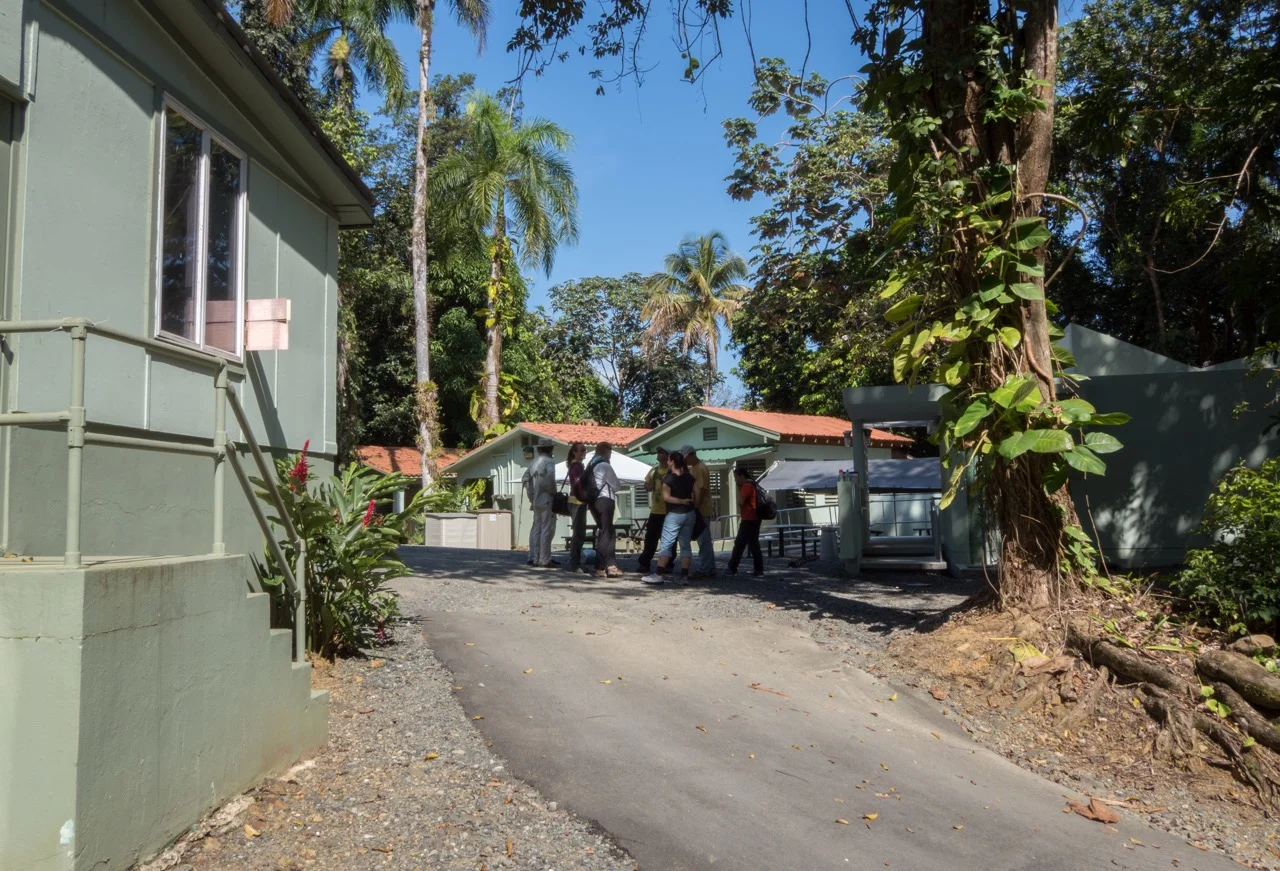
El Verde Field Station. (USFS IITF)
“They are permanent research plots where every so often… another scientist comes back and does the same data collection… to see what has changed over the past five years,” Merlo explained.

Through these studies, it has been discovered that El Yunque is not just one tropical forest. It is not even the four traditional areas that are usually talked about: Tabonuco Forest, Palo Colorado Forest, Sierra Palm Forest and Dwarf Forest (or Cloud Forest), which change with elevation.
“El Yunque is not just one forest. It is made up of different forest areas or ecosystems,” Feliciano said.
“These forest areas are not laid out in bands, the way we often sell it, but are defined by conditions. And the conditions are so varied… that there are more than 30-some, 40-some different forest systems, each with very specific conditions,” he explained.
Each ecosystem has its own species of flora and fauna, and some ecosystems are so small that they have not been discovered yet. “We also preserve with the idea that we don’t know what’s there,” Feliciano said.
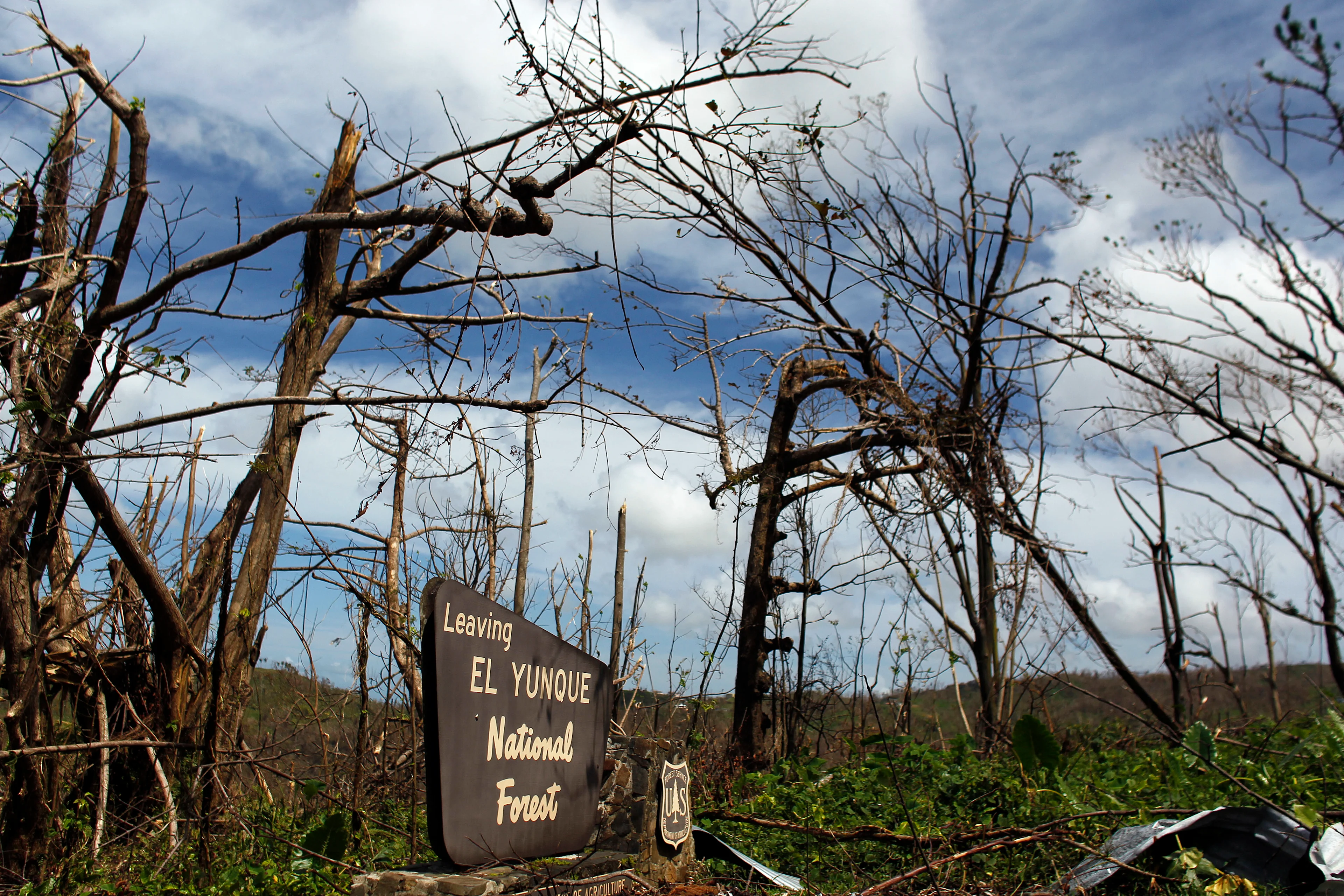
Ricardo Arduengo / AFP via Getty Images
The archaeologist said that after Hurricane María, scientists found specimens of a tree that was believed to be extinct in Puerto Rico and began studying how to propagate it.
And despite the impact and destruction the hurricane caused in the forest, especially to the infrastructure, the scientist said the ecosystems took it as “part of the natural process.” “I am sure that, if it had not been for the hurricane, the conditions would not have come about for that seed to sprout again,” he added.

The outlook for the coming years involves sharing the management of the forest, as established in the 2019 Management Plan, and keeping it an accessible space that benefits communities, recognizing the importance it has locally and internationally.
“The forest is still the heart of this eastern region… We (the Forest Service) can’t manage it alone... and we recognize that we don’t know everything as an agency, either,” Feliciano acknowledged. “We decided that we were going to be more inclusive in the development and management of the forest… Interaction with the forest, or public management, only works when people get involved,” he added.
Now, 150 years after that first designation, El Yunque continues to transform. It is no longer only about protecting forest land, but about conserving a system that communities, species, scientific research and resources such as water depend on.

And, for Feliciano, that conservation also depends on those who visit the forest and relate to it: “The forest belongs to the people. This is a forest of the people.”
7ways to be part of El Yunque’s conservation
Check off the ones you've already done, and save this to come back for the rest.
Sounds of El Yunque: Ryan Moulton, CC BY 3.0