The Unidad Investigativa de Género analyzed the main cultural event in each municipality of Puerto Rico and found that fewer than 10% of artistic bookings go to women.
Female music artists are largely absent from the stages at patronal festivals, town festivals and cultural festivals across Puerto Rico. They account for fewer than 10% of the bookings municipalities make for these celebrations, according to an assessment by the Unidad Investigativa de Género. Men are the ones who get the most work and the most exposure throughout the year.
The Unidad Investigativa de Género, a partnership between the outlet Todas and the Centro de Periodismo Investigativo, analyzed the musical lineups of the main festival in each municipality. Of a total of 1,235 performances recorded in 2024, only 112 featured women soloists or groups led by women.
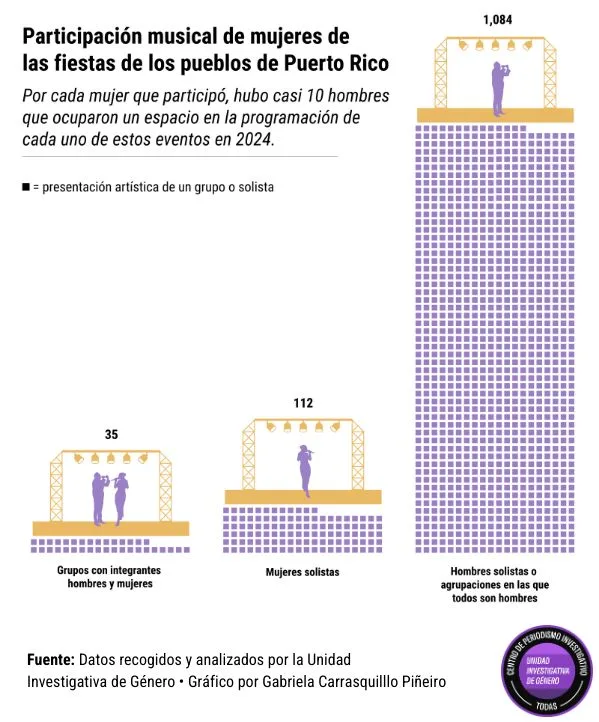
When groups that include at least one woman as a member are added, the percentage barely reaches 12%. No nonbinary artists, whose gender identity is neither male nor female, were identified.
Male dominance on town stages is not coincidental. Sexism, the wage gap and the lack of opportunities in other roles tied to the music and events industry are longstanding barriers that persist in a machista culture that pushes women out of public spaces and grants privileges to men, several people interviewed agreed.
"If they don't see us, how are they going to book us?" cultural promoter Miosoti Alvarado pointed out, referring to the lack of exposure at large-scale events, which is also a reason many women are not even considered when lineups are put together. It is a cycle that affects independent artists in particular, said Alvarado, who is also a musician and leads Piquete, a group that fuses neoplena with bomba groove.
Booking decisions at municipally organized events are dominated by a group of promoters and production companies that repeat the same names year after year.
Madera Events, VC Promotion, Stuart Management, Sanabria Events and Oro Entertainment were the companies that dominated the production of the main municipal cultural events in 2024. According to data from the Oficina del Contralor, during that year Madera Events generated more than $1.5 million in contracts with various municipalities. VC Promotion exceeded one million dollars, while Stuart, Sanabria and Oro ranged between $800,000 and $950,000 in patronal festival, town festival and cultural festival contracts alone.
In response to questions from the Unidad, VC Promotion president Rafael Vázquez Santiago said that booking artists "depends on who manages them, on getting their name out there, on being played on the radio and on being active on social media." In his view, "there are more male acts than female acts."
The Unidad attempted to reach executives at Madera Events, Stuart Management, Sanabria Events and Oro Entertainment but received no response.
In 22 of the events examined for this investigation, municipalities did not book a single woman for their musical programming. The Summer Fest in Camuy, for example, featured 15 guest artists, all of them men.
Camuy Mayor Gabriel Hernández Rodríguez said he had not been aware that the event's musical lineup had been exclusively male. He said he did not see it as "a gender issue," but rather that "the selection is made based on musical genres, the budget and the lists the promoters provide."
"I have no problem identifying more women. If they provide me with the lists, I will give them to the promoter and to the Oficina de Protocolo y Actividades [which handles the organization of the town festivals]."
Gabriel Hernández Rodríguez, mayor of Camuy, in an interview with the Gender Investigative Unit
He noted that women artists have been hired for other events, such as the Cierre de los 40 Días de Ayuno y Oración, in which sacred music singers participated.
Likewise, each of the municipalities of Carolina, Cayey, Ceiba, Comerío, Corozal, Lajas, Maunabo, Peñuelas, Quebradillas, Sabana Grande, Vega Baja, Villalba and Yauco held events with more than 10 musical bookings. None was a group led by women. There were no women soloists either.
The mayor of Vega Baja, Marcos Cruz Molina, defended his all-male musical lineup by saying that, through his municipality's social media, the public is asked which artists they want to see at their town festivals. He also noted that he considers the level of exposure each singer and group may have, and whether they have participated in recent years' festivals. "Sometimes they ask for Yolandita Monge or Ednita Nazario, but the prices can be prohibitive. Gisselle and Melina León, we've had them in the past," he said.
Cruz Molina did not acknowledge a problem in the low participation of women artists at the festivals. He said that other municipal events have included women, such as "Bobby Capó's daughter," referring to singer Jacqueline Capó.
For her part, Vega Alta mayor María Vega Pagán said she is committed to the inclusion of women and that, for that reason, she seeks a fair balance in the programming of the artistic events the municipality organizes. "We have had the participation of artists such as Victoria Sanabria, Milly Quezada, Gisselle, Melina León, and we have even had tribute groups to Olga Tañón. We have always sought a balance in the representation of women at our events," Vega Pagán said.
"At all municipal events, starting with the Encendido Navideño, we have had orchestras made up entirely of women, and we have also included women singers of sacred music at the fasting and prayer events."
María Vega Pagán, mayor of Vega Alta, in an interview with the Gender Investigative Unit
The municipalities with the highest number of musical bookings at their events were San Juan and Bayamón. The Fiestas de la Calle San Sebastián 2024 hired 66 artists and had nine performances by women. The Festival de Chuíto el de Bayamón, meanwhile, hired 75 musical performances, of which only six were led by women. In percentage terms, Bayamón came in at 8% and San Juan at 13%.
Proportionally, the municipality with the highest share of bookings going to women soloists or women-led groups was Guaynabo, at 44%. It is followed by Trujillo Alto, San Lorenzo and Toa Alta, where one in five performances at each event was by a woman soloist or a group led by women.
Of the 112 bookings given to women artists, 34% went to the same three singers: Gisselle, Ednita Nazario and Melina León.
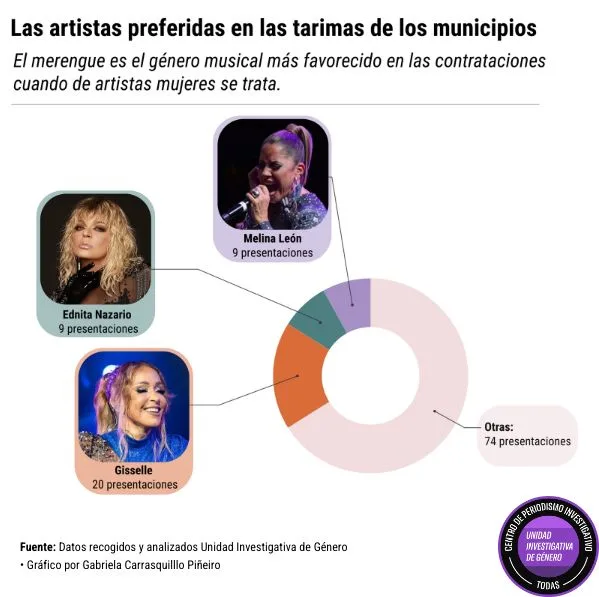
This distribution in bookings suggests that, beyond the participation of women on musical stages, equitable access to performances remains a challenge.
"A lot of people, mostly men, would tell me, 'it's just that women don't get as much work,'" said Wendalyn Hernández.
Known professionally as Wendy Luna, she heard this kind of comment constantly when she began her career leading a merengue and tropical music group. She was also the only woman hired for the Fiestas Patronales de Cabo Rojo in 2024, her hometown.
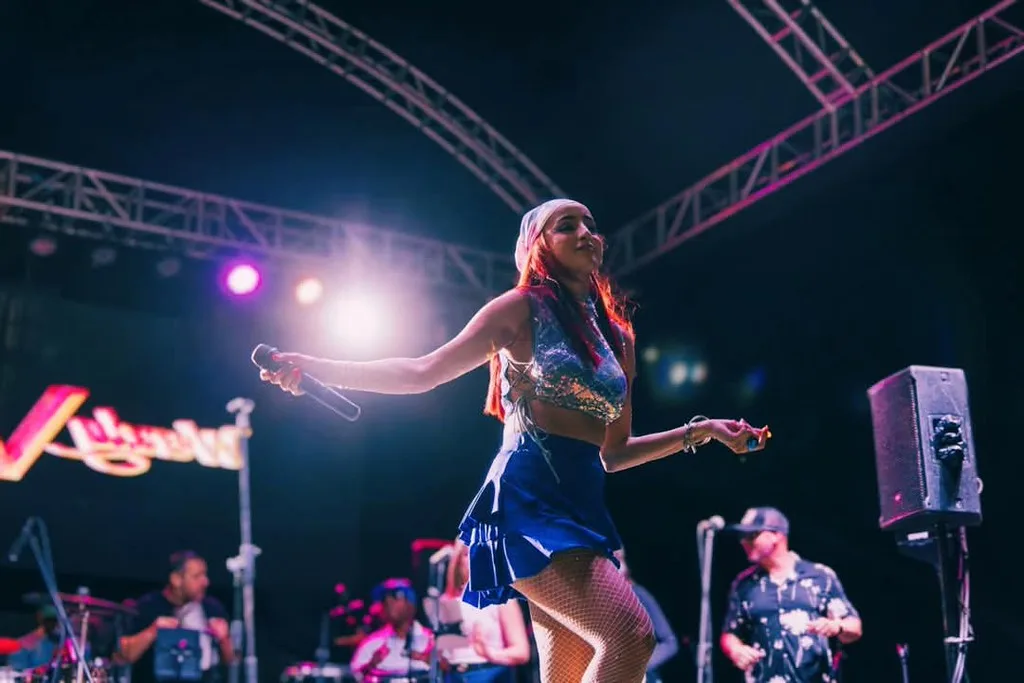
The lack of representation on stages is not only a matter of making female talent invisible; it also involves the aesthetic standards imposed on women when they try to break into the music industry.
"We women are required to be pretty, thin, perfect. A man is not asked to dress sexy in order to get a gig," said Wendy Luna.
Zuania Yamila Figueroa Berríos, a singer-songwriter known as MILA, added that promoters prioritize who "is going to sell, who is going to consume me," rather than betting on artistic diversity.
Who controls the musical offerings at municipal events?
According to the artists interviewed, one of the main arguments producers and event promoters give for not booking women is that they "don't draw a crowd." On the Island, the idea persists that only certain names guarantee an audience.
"If they don't give us exposure, how do they expect people to know who we are?"
Andrea Cruz, singer-songwriter, in an interview with the Gender Investigative Unit
For Miosoti Alvarado, who also manages the cultural events platform Dímelo Mio, the musical options led by women are varied and plentiful enough to be presented to a wider audience through cultural events and festivals.
"If someone tells me, 'put together a varied portfolio or calendar of groups led by women,' I can do it! I can give you salsa, plena, bomba, rock, reggaeton, merengue, bachata, música jíbara, hard rock, punk rock, all with a woman leading. It's not that there are too few, or that they all do the same thing. It's that people don't know what's out there," she said.
Over the past five years, the Conservatorio de Música de Puerto Rico has graduated 106 women from its bachelor's and master's programs. The Music Department at the Río Piedras campus of the Universidad de Puerto Rico graduated 37 women from 2015 to 2023. That means at least 143 women have received university-level training in recent years to pursue music professionally.
"You have to constantly remind them that we exist," Andrea Cruz said. She added that for women's participation to be more than a "passing trend," there would need to be a real commitment to gender equity.
"This is a closed business. Everyone has their arrangements and a huge amount of talent gets left out. There are many women making very good music, but they are not given the same opportunities that men are given."
Wendy Luna, singer, in an interview with the Gender Investigative Unit
Miosoti Alvarado agreed that, without a requirement to include more women, changes will never be sustainable. "In everything, Puerto Rico is so politicized, so corrupt," she said about how the relationship between municipalities and production companies has created a circuit in which the same firms receive contracts year after year.
Recently, Joseph Ocasio Rivera, of Los Pleneros de la Cresta, reported on the Chente Ydrach podcast that promoter companies that produce municipal events offered to do business with the group if its musicians agreed to a kickbacks arrangement, or bribes.
"When we said 'we're not going,' the promoters said 'Los Pleneros de la Cresta aren't getting any gigs,'" he pointed out. "They do it to the food vendors, they do it to the artisans, they do it to the artists. They get paid to produce the fiestas patronales, but they also take a little cut from everyone," added Josué Román, also a member of Los Pleneros de la Cresta.
The exclusion goes beyond the stage
Andrea Cruz said the exclusion also occurs in technical and management roles, where most key positions are held by men. "How many women managers are there?" she questioned.
"There is an incredible shortage of managers. Nobody wants to manage artists or musicians unless they are already in the mainstream. There is no professionalized music industry. The professions needed to move musical and cultural projects forward simply do not exist," said Miosoti Alvarado.
Singer-songwriter Melissa Ocasio added that producers are often more willing to listen to a man than to a woman when it comes to technical or artistic decision-making. This preference affects not only performers but also women seeking space in production, curation and cultural management.
"Beyond the visibility of artists on stage, it is essential to look at who is behind the scenes in the management and curation of these events. That is where space for women is still lacking. It is not just about the producers or the production companies, but about an entire ecosystem within the music industry, from the media to those who make hiring decisions. For equitable representation to happen, change must come from all of those structures," Ocasio said.
Factors such as motherhood, lack of opportunities and an unequally distributed workload force women in music to make decisions that men do not necessarily face.
"There are a lot of things that affect us. Suddenly, you want to manage a group or manage an artist, but you also chose to be a mother. There are many other factors that put you in a position of having to choose, and those choices are never the same for a man or for another person. So, no matter what, there comes a moment when you have to choose what is right for your body and your life, because otherwise we can't keep going," pointed out Andrea Cruz.
The global study "Be the Change: Equidad de género en la música", based on a survey of industry professionals in 133 countries, highlights that 35% of women have found their pay to be lower than that of peers in similar positions, compared with 17% among men.
In addition, 60% of women have experienced sexual harassment in the industry, and many complaints have not led to significant change. Perceptions of the problem also vary: only 16% of men acknowledge gender discrimination, compared with 49% of women and nonbinary people. Among the report's key proposals are increasing diversity in leadership positions, greater pay transparency and stricter penalties for sexual harassment.
The need to create legislation
Those interviewed agreed that change will only be possible with concrete measures. They noted that legislation is needed to guarantee equality and pay parity.
In Puerto Rico, the Ley de Nuestra Música Autóctona Puertorriqueña (Law 223-2004) and the Política para implementar la equidad de género en el Instituto de Cultura Puertorriqueña (ICP) (ICP Administrative Order 2017-01) are efforts that opened the path toward equity in musical events.
The first law was created to protect and promote traditional musical genres and establishes that every artistic event financed with public funds involving an investment of $10,000 or more must include fair representation of traditional music such as bomba, plena, danza and música campesina. The policy implemented at the ICP, for its part, establishes a framework to guarantee gender equality across all of the agency's operations and programs, seeking to eliminate gender-based discrimination and focusing on integrating a gender perspective into the creation and promotion of cultural programs.
On the effect of a law like Nuestra Música Autóctona Puertorriqueña, trovadora Victoria Sanabria recalls that "there was a time when [the hiring of traditional music] was in worse shape, and it has improved a lot." She added that "you always have to do much more for our folk music, bring it to as many venues as possible, to as many people as possible, so the public is exposed to it more and starts to love and respect it."
"And always, throughout all these years, the question has been the same and the lament has been the same: What a shame that there aren't more women in the field of traditional music and improvisation! And I've always left the question open: why exactly is that?" questioned Sanabria.
The improviser emphasized that, although she has not faced problems when being hired for festivals and cultural events, "I always fight, precisely, for women. So it can be shown that we can move forward, no matter the field." Sanabria was the only woman hired at three of the five events she participated in that this investigation examined.
Figueroa Berríos is one of the artists who supports legislation that would require the hiring of groups led by women. For the initiative to succeed, she believes the most important thing is "the willingness of whoever is going to push this forward, not just to get it created, but also to make sure it's followed."
"There should be a fairer balance for everything that has been done by women here in Puerto Rico musically," added Miosoti Alvarado.
In Argentina, the Ley "Mercedes Sosa", passed in 2019, requires a minimum of 30% female participation in festivals and live events. President Javier Milei proposed eliminating gender parity laws like this one, though to repeal them he needs a congressional majority he does not have. Meanwhile, in Chile, a similar bill was passed in October 2023 by the Cámara de Diputadas y Diputados and is awaiting Senate approval.
An analysis by the feminist music platform Somos Ruidosa of festivals in Argentina, Chile, Colombia and Mexico between 2016 and 2018 found that, on average, the participation of female soloists and all-female bands does not exceed 10% of annual acts. When mixed-gender bands are included, the figure reaches between 21% and 24%. Although Chile, Mexico and Colombia record between 20% and 30% participation by female soloists and bands on stage, Argentina barely fluctuates between 14% and 20%.
In the United States, there is no federal legislation requiring a minimum level of female participation at music events. According to data from Book More Women,events at the country's major festivals featuring at least one woman or nonbinary person increased from 29.3% in 2018 to 40% in 2024. However, when counting each individual musician who is a member of the groups considered for the study, the percentage of women and nonbinary people does not exceed 25%.
Self-management as an alternative
"We can't wait for the industry to give us a space, we have to build it ourselves," said Andrea Cruz.
Melissa Ocasio explained that, although there has been some progress in representation, "most female projects start from self-management."
That was the case for Wendy Luna, who even offered to "perform for free so people could see us." Her response to rejection from promoters and producers was to go in person to various municipal offices and present her project, looking for mayors to offer her space at their events. The municipalities of Aguadilla, Aguada and Cabo Rojo have been the main supporters of her artistic proposal. This shows that, while production companies have control over their artistic offerings, mayors also influence the decision of which artists to present at their events.
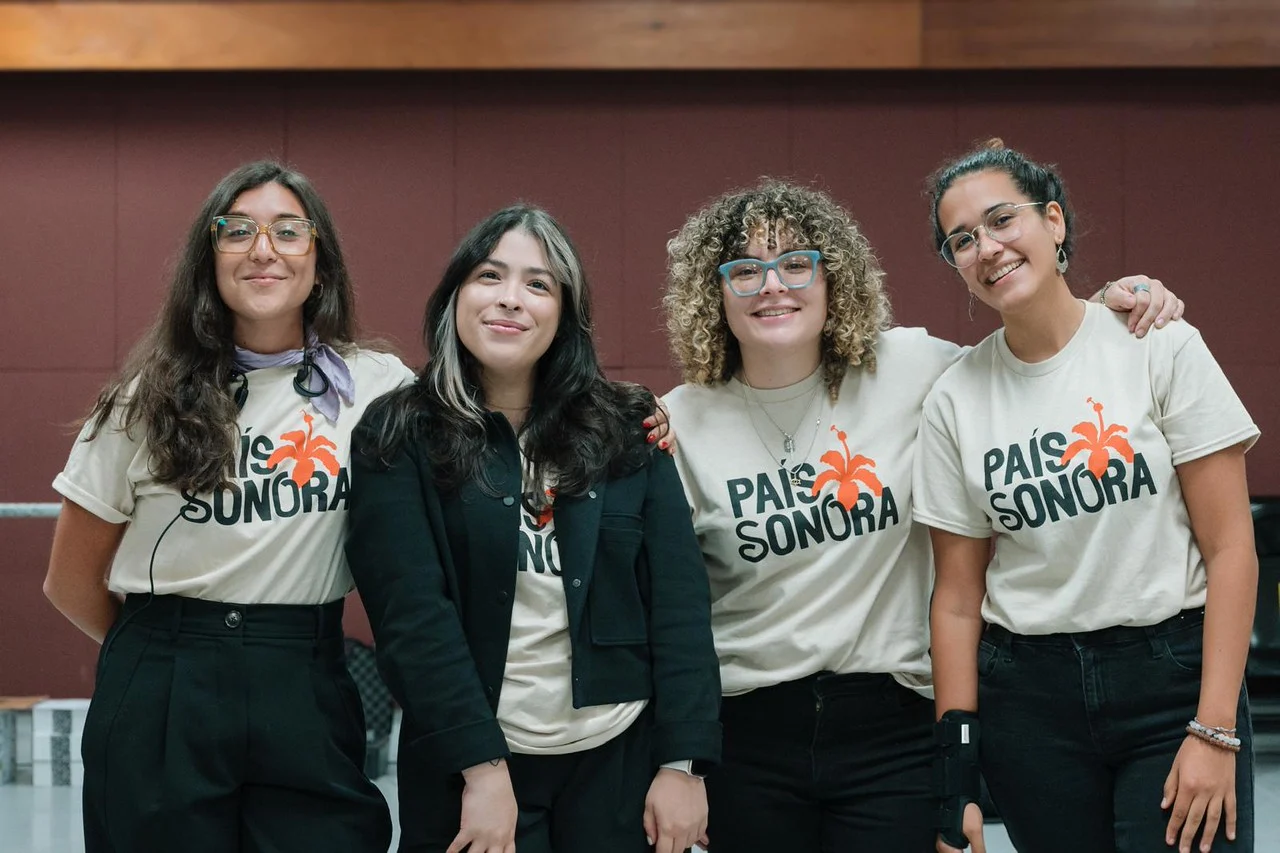
The No Toquemos Tierra initiative is an example of how self-management can become a tool for promoting equity in the music industry. Developed by singer-songwriters Melissa Ocasio, Andrea Cruz, MILA, Mildred Eunís and music producer Rafa Rivera, the collective offers services to both local and international artists in event production, conceptualization of music projects, tours, consulting and education on legal topics related to the music industry.
*Cristina del Mar Quiles and Mariela Fullana Acosta contributed to this report. This article was published in Platea with permission from Todas and the CPI.
This content was translated with the assistance of Artificial Intelligence (AI).