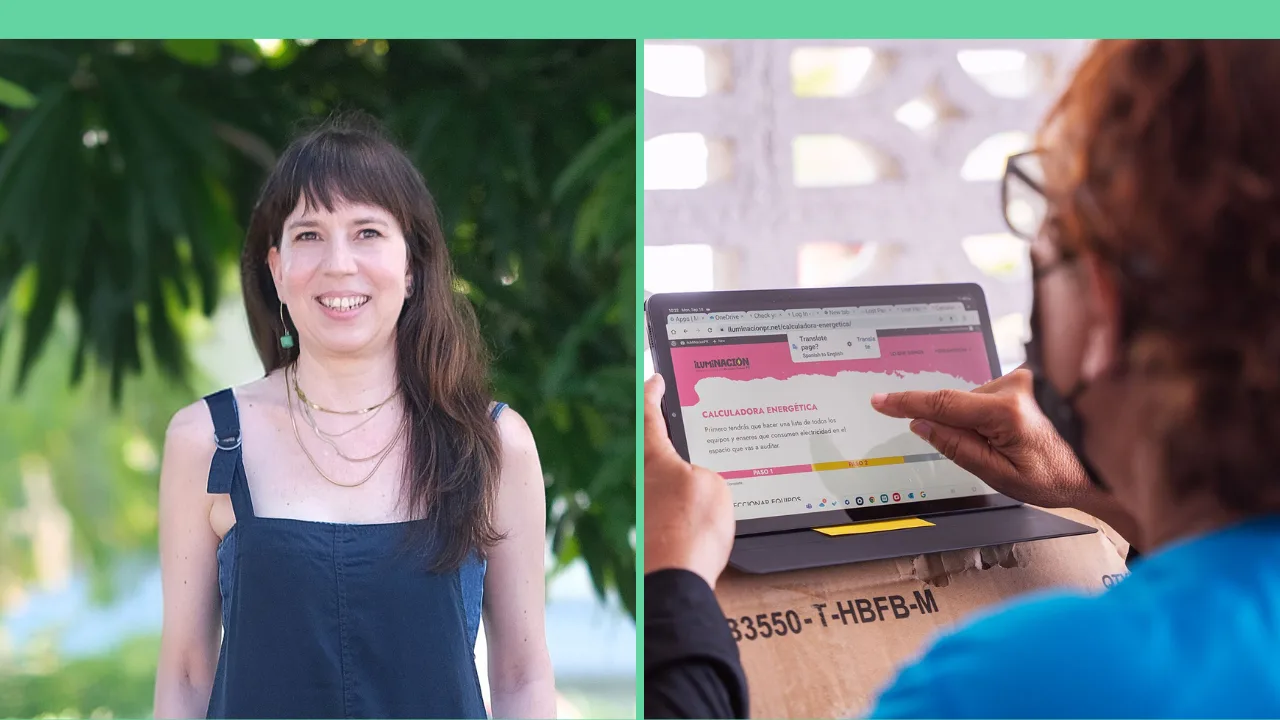
The award recognizes the development of IlumiNACIÓN, led by economist Alejandra Castrodad Rodríguez and her team, a Resilient Power Puerto Rico platform that helps communities calculate their electricity consumption to find energy solutions tailored to their needs.
Alejandra Castrodad Rodríguez, executive director of Resilient Power Puerto Rico (RPPR), and her team received the Design Award in the Climate Action category from the Cooper Hewitt, Smithsonian Design Museum in New York for the IlumiNACIÓN app, a tool designed to educate communities and nonprofit organizations about electricity consumption so they can design their own energy solutions.
"We see it as recognition of two things we firmly believe in. First, the capacity of communities to generate enormously valuable knowledge bases in the design of public policy and projects, and the importance of that collective effort… And second, we see it as recognition of the talent, ingenuity and creativity of Puerto Ricans who have spent decades here designing climate action and sustainability solutions, and how those solutions can serve as a model for the rest of the world," Castrodad Rodríguez said in an interview with Platea.
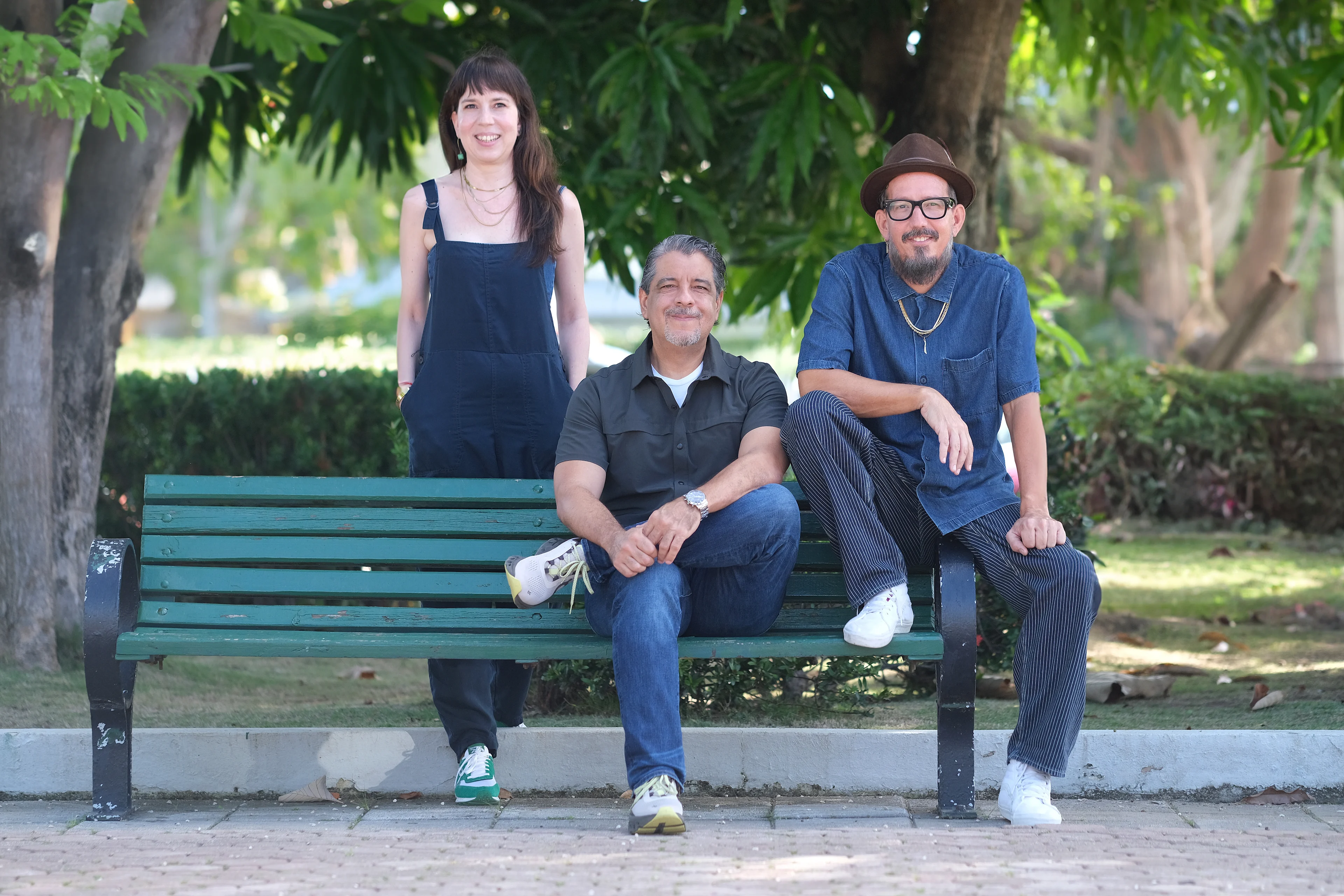
IlumiNACIÓN was developed collaboratively under the leadership of Castrodad Rodríguez, Conceptual Designer (UX, architecture and data visualization); Víctor Cuadrado Landrau (programmer and developer) of ThinkAMap; and Gustavo Castrodad Rodríguez (UI, visual and graphic identity) of design studio Guillermo Domínguez.
The this year's winners, selected by a multidisciplinary jury, are recognized for their innovation in design and their impact on improving the world, and will be honored at a ceremony on Thursday, April 3.
"Design affects every aspect of our lives every day, from the buildings where we live, learn and work, to the physical and digital systems that deliver our basic services, the clothes we wear, the spaces where we gather, and the creativity and beauty that help us understand ourselves as a nation, and yet the undeniable influence of design can go unnoticed."
Maria Nicanor, director of Cooper Hewitt Museum
The importance of the award
The awards are given in about a dozen categories, including architectural, interior, fashion, digital and communications design. The Climate Action award was created five years ago and is given to a design project that addresses the urgency of the global climate crisis.
There have been more than 200 winners over the past 25 years. In Climate Action, the award went to the company Biomason for creating a tile made with natural components, which could reduce carbon emissions in cement production. The award also went to architect David Hertz for inventing WEDEW, a portable, sustainable water and energy generator.
What is IlumiNACIÓN?
It is a digital tool in development that aims to educate communities and organizations about their energy consumption so they can work with RPPR to develop a solution tailored to their needs.
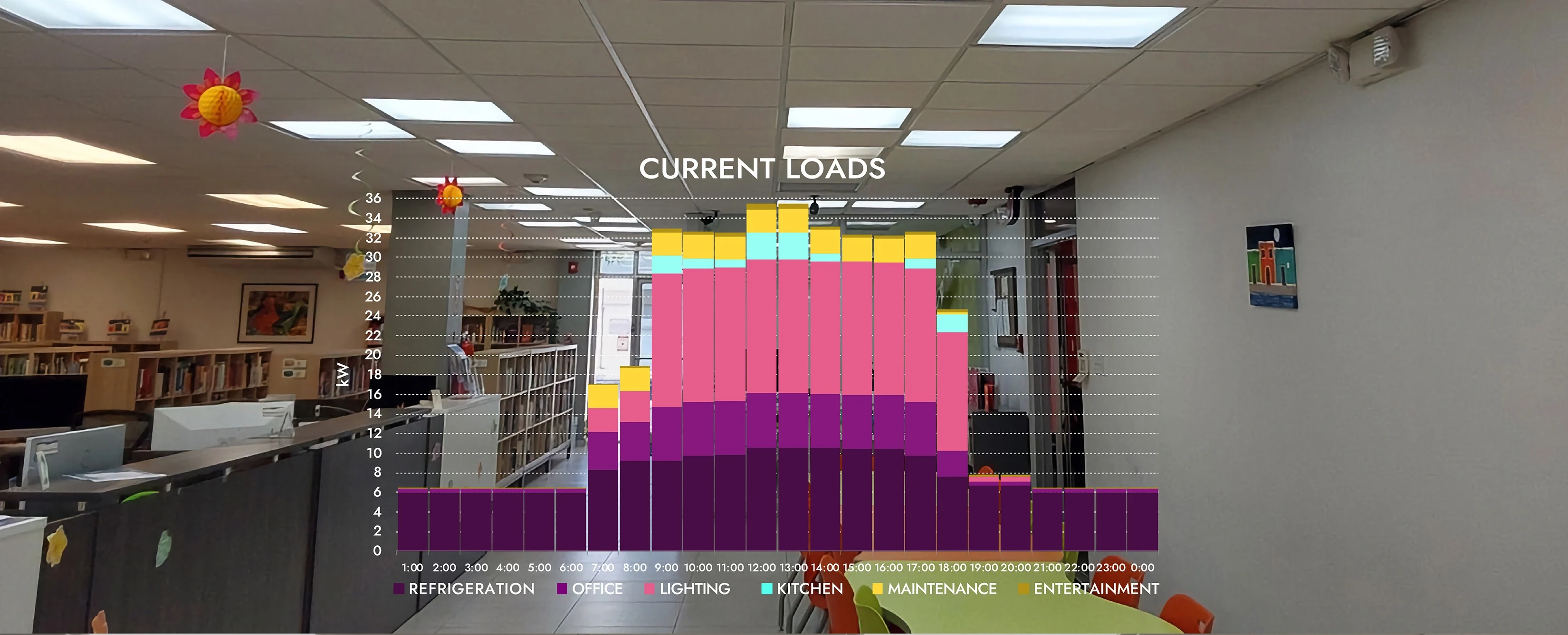
The tool includes an energy calculator that allows organizations to determine their energy consumption based on the appliances and equipment they have and how long they use them. It also includes an analysis of their climate vulnerability, which takes into account the community's exposure (whether it is exposed to flooding, power outages and other events), its susceptibility (how severe the impact of those natural or human-caused disasters is) and its access to adaptive capital or resources (how it can recover from what has occurred).
From this audit, RPPR presents a series of solutions, such as changing light bulbs or equipment, to help determine how they can reduce their energy consumption and which renewable energy solution they should pursue. This information also helps them apply for funding for renewable energy equipment and other needs.
"The user is going to dedicate time to that auditing exercise and share information with us about their consumption patterns. We, in turn, have to offer them information that is useful […] to provide energy efficiency solutions"
Alejandra Castrodad, executive director, Resilience Power Puerto Rico
For example, RPPR worked with the Jane Stern library in Dorado and, after an analysis of its energy consumption showing that a third of it came from lighting, they reduced monthly consumption by 34% through a light bulb change alone.
RPPR's goal with this tool is to achieve energy resilience, which means "having access to reliable and affordable energy," according to Castrodad Rodríguez. This is achieved through "renewable, decentralized and distributed energy," meaning clean energy from renewable sources, not controlled by a single group, that can be consumed at the point where it is generated.
When will IlumiNACIÓN be available to the public?
The executive director of RPPR explained that the plan is to make the necessary investment so that the tool is accessible to the general public "between late 2025 and early 2026." At the moment, the calculator portion is available to organizations that work directly with RPPR, among them the networks of Coordinadora Paz para las Mujeres, the Coalición de Coaliciones Pro Personas Sin Hogar, and the libraries associated with the Jane Stern community library in Dorado.
Who is Alejandra Castrodad Rodríguez?
Castrodad Rodríguez is an economist specializing in equity and a designer of public policy and analytical tools, with more than 20 years of experience working with nonprofit, community and government entities. She developed IlumiNACIÓN with her team drawing on her experience translating mathematical languages, conceptual frameworks and maps into evidence-based social justice projects.
"We are trying to create tools and enable access to resources so that all of us can design solutions tailored to our needs and the resources we have," the economist said about what inspires her in her work.
Castrodad holds a master's degree in Local Economic Development (LED) from the London School of Economics and Political Science (LSE).
She worked as an LED consultant for the Danish International Development Agency (DANIDA).
In addition to leading RPPR, she is treasurer of the board of directors of Kilómetro 0 and a member of the board of directors of the Fundación Juan Mari Brás.
She served as Chief Resilience Officer for the City of San Juan under the 100 Resilient Cities program (Rockefeller Foundation).
She worked as Interagency Group Leader for Puerto Rico's proposal under the National Disaster Resilience Competition and in the Governor's Office for the Development of Vieques and Culebra.
Since 2017 she has been a consultant for OXFAM-America, ACACIA Networks and the Boys and Girls Club de Puerto Rico.
What is Resilient Power Puerto Rico?
RPPR is a nonprofit organization founded in 2017 following the impact of hurricanes Irma and María.
The blackout that followed Hurricane María in Puerto Rico is the largest in United States history according to a Rhodium Group report, an economic research firm, and with the loss of nearly 4,000 hours of electricity, it ranks among the largest ever recorded.
The only global event that surpasses it is the power outage that occurred when Typhoon Haiyan swept through the Philippines in 2013, when nearly 6,100 hours of electricity were lost following the storm.
Initially, RPPR's mission was to bring energy to disadvantaged communities using emergency solar energy generation equipment. Today, the organization focuses on strengthening communities' capacity to "respond, rebuild and thrive after a natural disaster."
This content was translated with the assistance of Artificial Intelligence (AI).