What does the new administration face, and why do the first hundred days matter so much? We look at what to expect starting Jan. 2, when Jenniffer González is sworn in as governor of Puerto Rico.
,
The famous Greek philosopher Plato said that "the beginning is the most important part of the work." History shows that the first hundred days of a new government offer an early look at how the administration will run for the rest of its four-year term. The public watches closely, expectations running high. Some are eager to see campaign promises turn into real solutions. Others worry that the changes they hoped for will come too late, fall short, or not serve their interests.
Opinions are divided across a wide range of feelings. An entire country watches, evaluates and, above all, waits.
For many, those first hundred days are more than a simple number. It is a crucial period, when the foundations are laid for the initial policies and decisions that will set the country's course. From appointments to key positions to the first legislative measures, those opening months are critical for establishing the tone of the administration and its ability to advance initiatives with public support.
Public administration experts interviewed by Platea acknowledge that the challenges facing the incoming governor, Jenniffer González Colón, are many, made more difficult still by the oversight and control of the Fiscal Oversight Board.
A look at that first stretch of governance ahead:
What is the history behind a government's first hundred days?
During the presidency of Franklin Delano Roosevelt (1933-1945), he accelerated the passage of laws and the creation of new government agencies at the start of his term in an effort to curb the effects of the Great Depression. He swore in his entire cabinet at once, signed 76 bills and began putting the New Deal in place during his first hundred days in office. That record has become a benchmark for other leaders.
Similar episodes of rapid administrative action have occurred in other countries and eras.
On March 20, 1815, Napoléon Bonaparte returned to Paris after his exile. During his second time in command of France, he enacted a new, more democratic and liberal constitution, recruited veterans to face the allied forces and suffered the great defeat at the Battle of Waterloo. After that historical period, known as the "Hundred Days," his rule ended with his abdication on June 22, 1815, and the subsequent restoration of Louis XVIII.
When does the handoff from the current government to the incoming one happen in Puerto Rico?
Starting Jan. 2, 2025, following the inauguration of incoming Gov. González Colón.
Why that day? Section 2 of Article IV of the Constitution of the Commonwealth establishes that "the governor shall hold office for a term of four years from the second day of January of the year following his election and until his successor is elected and qualifies." On Jan. 2, the legislators elected to both legislative chambers are also sworn in.
Once each designated secretary takes office in an interim capacity, they begin assessing the agency's overall situation, make the corresponding appointments, mostly trust positions, and start outlining their work plan.
Which positions must be confirmed by the Legislature?
All cabinet heads, along with other additional positions such as governing boards and ombudsman offices, must be approved by the Senate. The secretary of state and the comptroller of Puerto Rico must have the approval of both chambers: the House and the Senate.
What governs this process and what are its limits?
It is governed by the Puerto Rico Constitution and the Political Code. Article IV, Section 4, of the Constitution establishes among the governor's duties, functions and powers the appointment, as provided by this document or by law, of all officers whose appointments the governor is authorized to make.
Under Article 54 of the Political Code of 1902, the governor shall keep a record of all appointments made by the governor, with the corresponding dates and names of incoming and outgoing employees.
The secretary of state is the custodian of the Appointments Registry. The Office of Appointments oversees about 380 government bodies, including members of the governor's cabinet, agency heads, committees, councils, commissions, boards and judicial officers, among others.
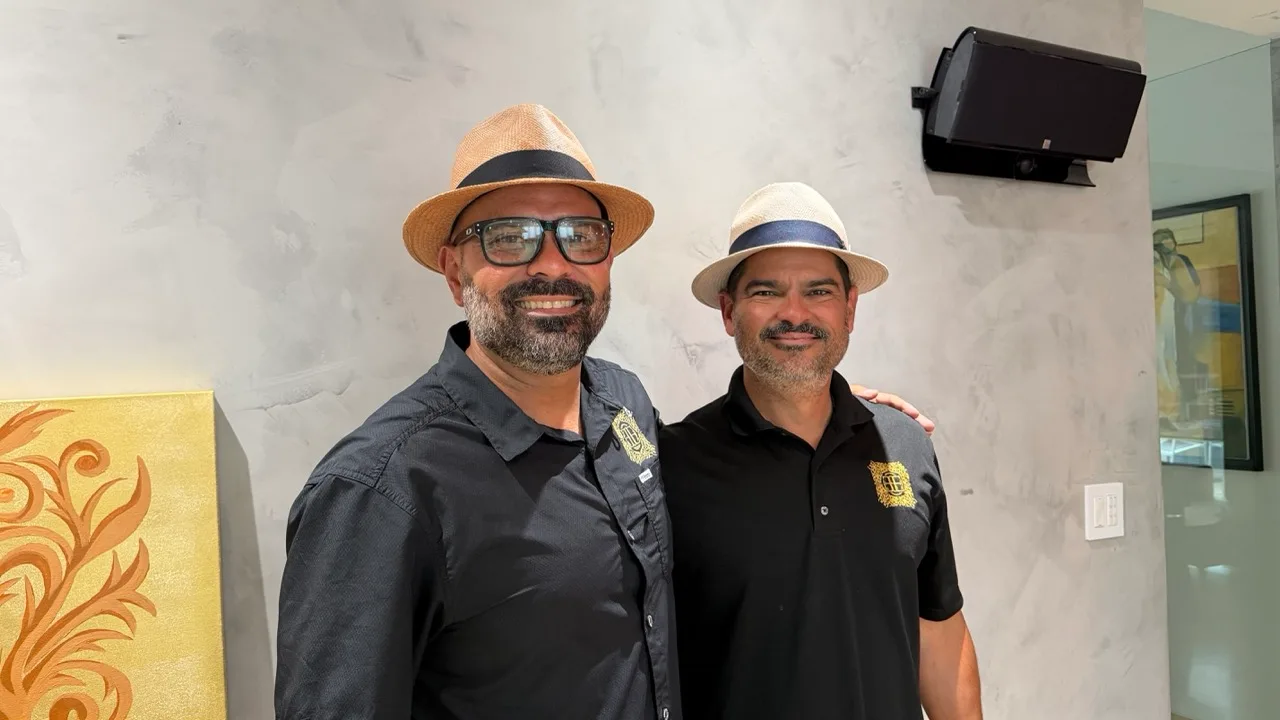
The first 100 days of government: three expert perspectives
He considers "the first hundred days" a fictional term that originated in the U.S. presidency.
He highlights two fundamental principles:
Feasibility of fulfilling campaign promises
Measuring the government's initial agility and interest
He points out that the opposition typically uses this period to question whether promises are being kept.
He emphasizes that the impact is more about image than about actual governance.
He emphasizes the importance of this period as a fundamental transition process.
He describes it as the "foundation" on which the work of government will be built.
He points out that this period reveals the direction and focus the government will take on crucial matters.
He emphasizes the importance of implementing difficult reforms early, when there is more political capital.
He warns that as time passes, proposals with a high political cost become harder to implement.
He points out the handling of the energy issue as a key factor in the government's success.
He points out the importance of making use of the initial goodwill and cooperation toward the new government.
What should the new administration's priorities be?
The three people interviewed independently agreed in pointing out the energy crisis as one of the main challenges facing the new administration, and one that must be addressed urgently.
Báez Galib, invoking the saying "machete afilao corta rapidito", emphasized the urgency of addressing not only this problem but also the country's bankruptcy, health and education as pressing matters requiring immediate attention.
Negrón Portillo, for his part, stressed that solving the electric service problem is essential to driving economic growth and attracting industries to the country.
He also identified as priorities the management of stalled federal funds, strengthening institutions such as the Universidad de Puerto Rico and the Centro Médico, improving road infrastructure and addressing climate change. He also stressed the need to improve public service and human resources management.
📝 You may be interested in: Climate change and cancer: the factor you didn't know influences incidence
Torres Colberg, for his part, supports the priority the governor-elect has given, so far, to electric service, and adds the importance of effectively managing federal funds to avoid losing them.
He also emphasized the need to reduce costs to stimulate economic development, addressing specifically tax reform, the impact of inflation and additional costs in inventory and port fees.
This content was translated with the assistance of Artificial Intelligence (AI).