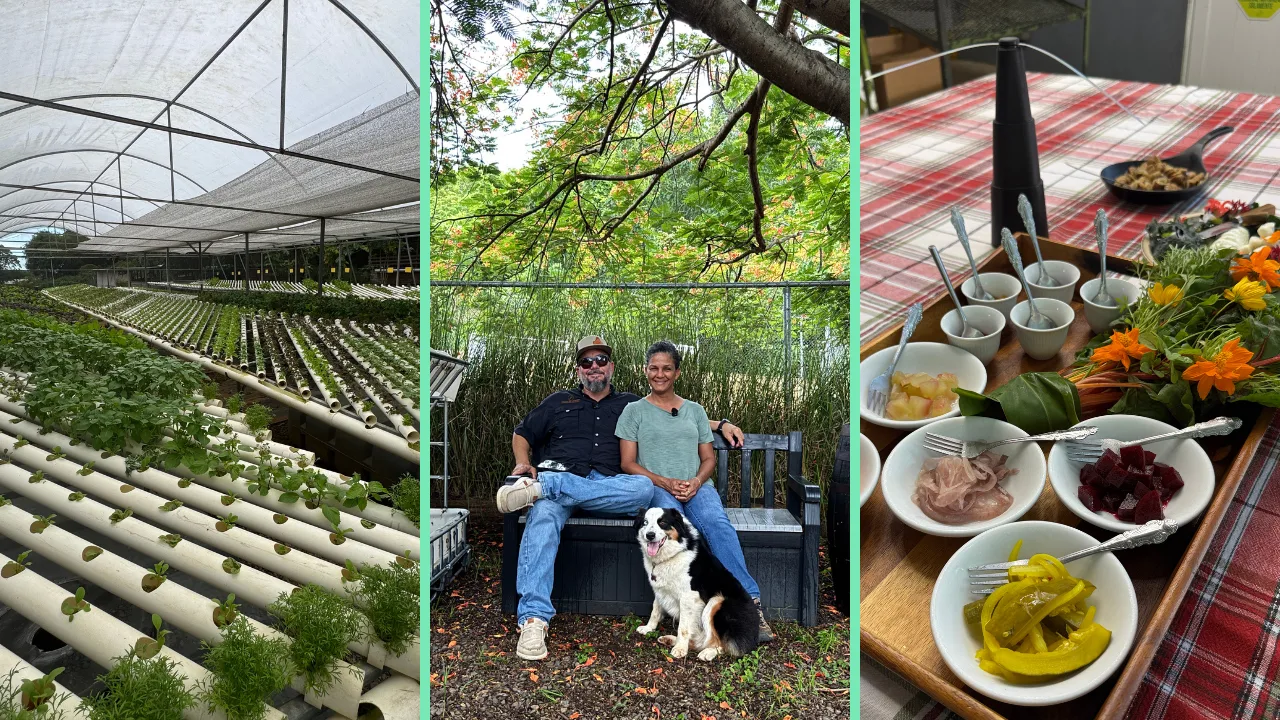
This farm in Manatí does more than sell local products. It also offers culinary experiences through agrotourism tours and various workshops.
Frutos del Guacabo is much more than a sustainable farm in Manatí where nothing goes to waste. It is a social project that offers sensory experiences, sells local products to individuals, hotels and restaurants, and has an educational mission they describe as "a rebellious act: we are teaching people to grow food."
Here is what Angelie Martínez and Efrén Robles told us. The couple co-founded Frutos del Guacabo 15 years ago on a small plot near Laguna Tortuguero. Today, they not only offer agrotourism tours that show the farm-to-table process (farm to table), but they are also partnered with 52 farmers and more than 100 chefs.
"We started doing this and the Department of Agriculture said it wasn't going to work because it was too close to the beach and it's a very small project. What we've done is keep adapting, keep adjusting so it continues to work," Robles told Platea on a tour of the farm.
On two and a half cuerdas of land, they have fit two hydroponic shade houses, several pens with goats, sheep, rabbits and horses, a community store, and crops growing in the ground, along the roadsides and in recycled barrels from the Bacardí distillery.
How did Frutos del Guacabo come about?
It all started in 2010, when Martínez, originally from Vega Baja, took a chemistry course focused on hydroponics (a soil-free growing technique) to maintain her chemistry license. Both she and Robles, an industrial mechanic from Manatí, had spent years working in the pharmaceutical industry before founding Frutos del Guacabo, a farm they define as an "agro-culinary canvas."
They had recently bought a plot of land in Manatí, so they decided to build their first hydroponic structure, which took them six months. They started by growing lettuce and cilantro, and Martínez applied everything she knew from chemistry.
Eventually, they connected with chefs to find out what they needed in their kitchens and which crops they could try, and they also partnered with farmers to supply everything that was requested. Little by little, they have become an agricultural experimentation center, testing how various crops grow in Puerto Rico.
"It has always been an open-door farm, because it was very hard for us to visit another farm and have someone explain how things were done. The main concept was to open it up so people could come and get familiar with what was happening."
Efrén Robles, co-founder of Frutos del Guacabo, a farm in Manatí
Today they offer workshops and tours tailored to what the public asks for, always focused on making the most of their farm's resources and learning how to get the best out of food, whether fresh or in jams and pickles.
Agro-culinary canvas. "We call it an agro-culinary canvas because there is no recipe. It is a space where we hold different workshops, covering agriculture, the culinary side, how you take a product and grow it, and from the moment you grow it to when you process it and understand everything about that product. And canvas because it is art. We are working with living science, we are making culture, we are highlighting all these local products, in an environment that is constantly changing," said Robles.
🌾 Our coverage of agriculture
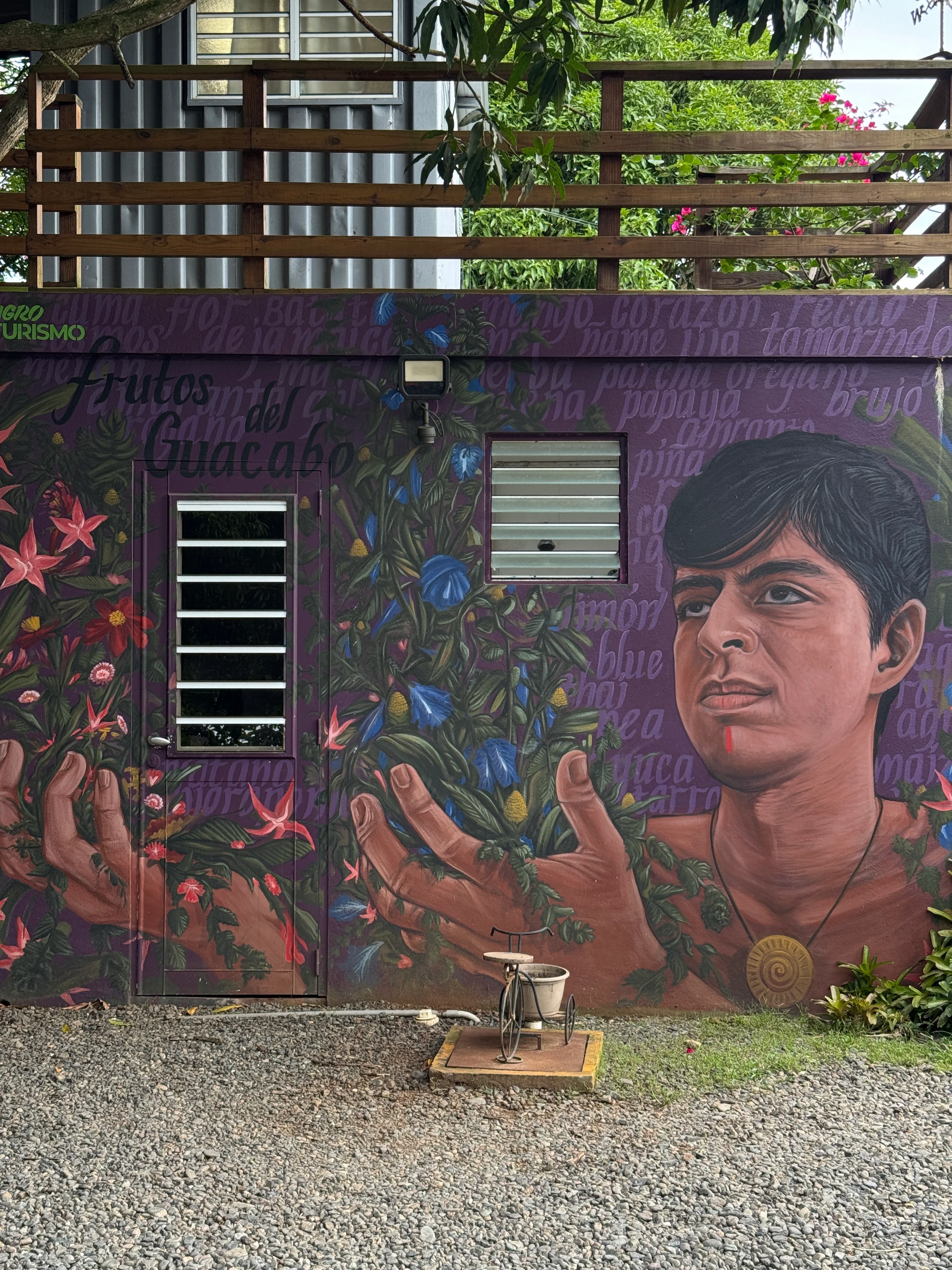
Why the name Frutos del Guacabo?
"We were looking for a name that would give the project an identity, and in an indigenous book there was a map of Puerto Rico showing the caciques during the colonial era by location and area. In the Manatí and Vega Baja area it was (the cacique) Guacabó, and we decided to call it Frutos del Guacabo," Martínez recounted.
In the Taíno era, Guacabó was the last cacique of the yucayeque, or village, of Sebuco or Cibuco, in the area around the Cibuco river, in what we now know as Vega Baja and Manatí.
What does Frutos del Guacabo offer?
"Guacabo is small at its core, but it does many things... The most important product we have is education," said Robles. Everything has a use, and they even have a compost system to make use of animal and food waste.
Here is a breakdown of each of the farm's offerings and how they work:
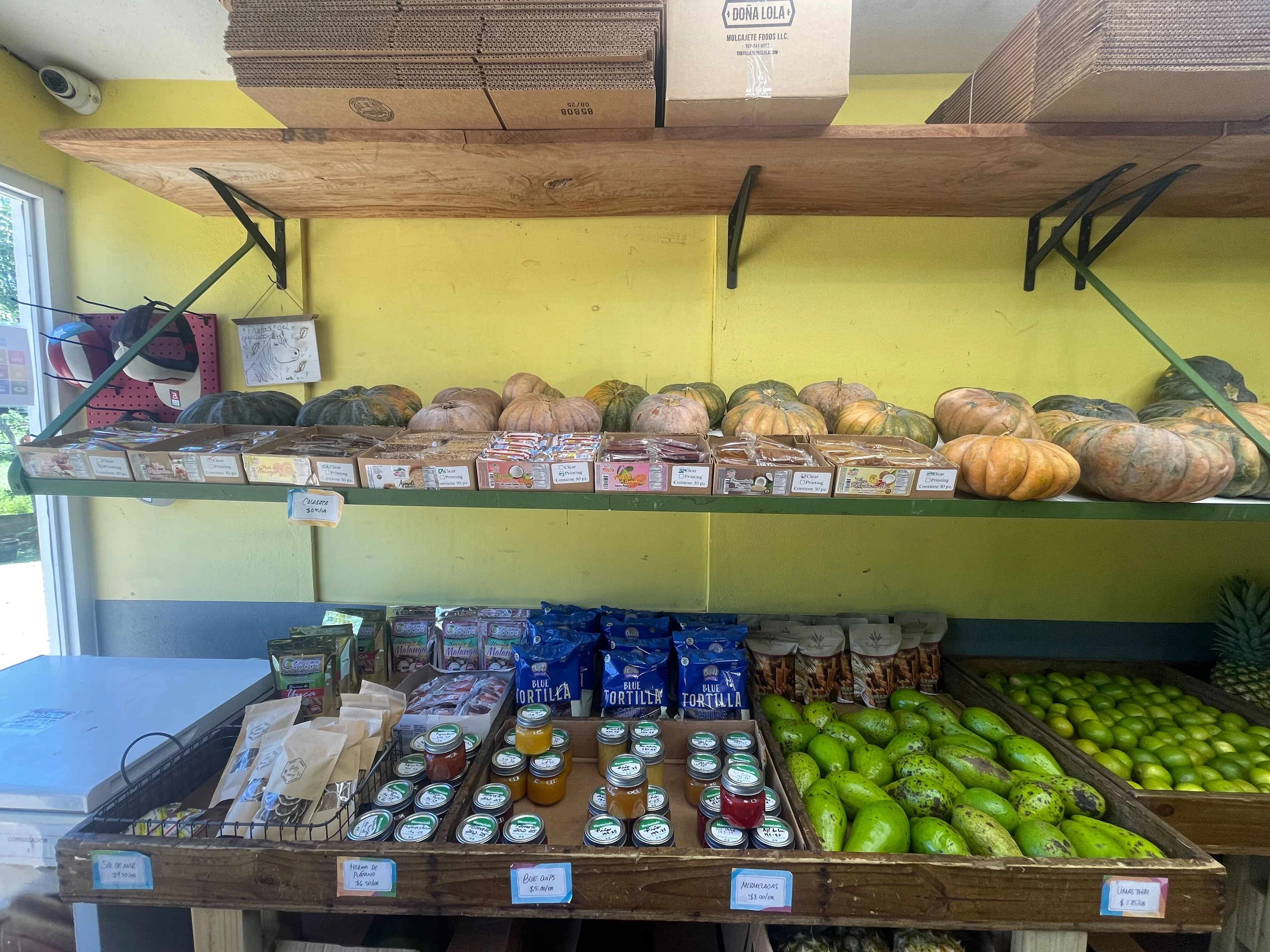
1. Production and sale of diverse crops at a community store and to chefs
The farm focuses on "specialty products that are not common and cannot be found in a supermarket," said Martínez. Many of the crops they grow were developed from Martínez's own research or from conversations with chefs, who tell them what flavors they want to experiment with. From there, they talk with their partner farmers to meet their clients' needs.
"(We have) edible flowers, microgreens, different herbs, leaves like curry or kaffir lime, herbs like lemongrass, tarragon, all these kinds of fresh spices that we can have there. Something else that sets us apart is that we are a short-supply-chain company. It goes from the producer to us, or from our farm to the cooler, and from there it's already delivered to the final point by the second day. So obviously the freshness, the nutritional value, all of that, is a bit higher," explained Robles.
Community store. In addition to crops from their farm, the store sells Puerto Rican products, both fresh and value-added. These include fresh goat cheese from their farm, coffee from various Puerto Rican farms, fruit pulp, local meats, and more.
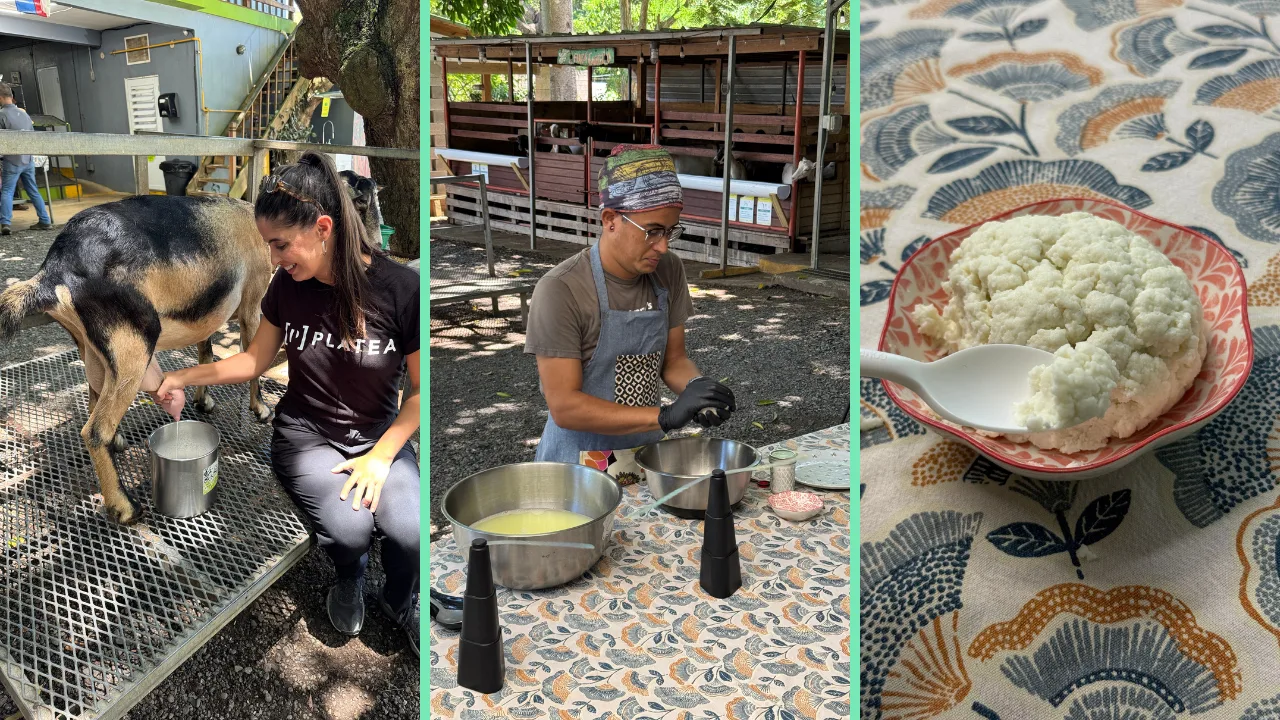
2. Sensory experiences on agrotourism tours
"At Guacabo we adapt to the needs of the public," said Martínez. That means each agrotourism tour will depend on what is requested.
Tours can include:
Walks through the farm and talks about agricultural production, both in-ground and hydroponic.
Tastings of jams, pickles and cheeses made on the farm. There may also be an explanation of how to make these products.
Tastings of Puerto Rican spirits or products from partner producers.
Guests can milk the goats and learn the process of turning the milk into cheese.
Creation of a special menu to sample Puerto Rican products and dishes.
Experiences with goats, sheep, rabbits and horses.
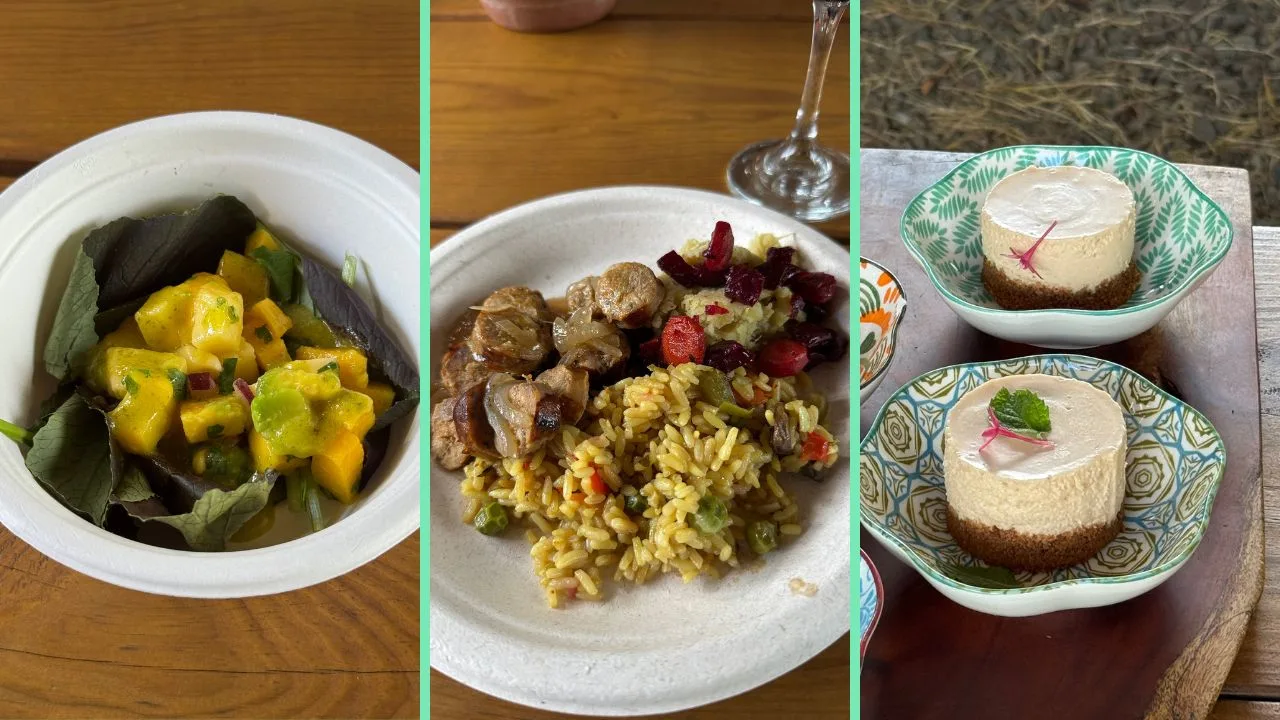
3. Various workshops
Each workshop will also depend on the group it is aimed at; "all are customized," said Robles. They offer them not only at their farm but have also visited schools and businesses to bring their message. Topics they cover include:
🧀 How to make goat cheese, from raising the goat and milking to the final product and its uses.
🧑🍳 How to make jams from various products, including ají dulce.
🍦 How to make sorbet using seasonal products such as avocado.
🥘 How to make sofrito.
🥫 How to make pickles and canning (preserving products in jars)
🌱 Planting workshop in soil or hydroponics, focused on agroecological farming.
👩🍳 Culinary workshops using various products.
How to contact Frutos del Guacabo
"You can find us on social media: Frutos del Guacabo on Facebook and Guacabo674 on Instagram, and on Google. Send us a message and we'll get in touch," explained Robles.
Ideally, all tours and workshops should be booked in advance.
Other projects from Frutos del Guacabo
Beyond the farm, Robles is part of the Somos Ají Dulce project, which aims to bring agro-culinary experiences to farms across Puerto Rico, with a menu, local products, art and music.
He also continues his work with the pharmaceutical industry through Horizon Solutions, his water purification and related products company.
This content was translated with the assistance of Artificial Intelligence (AI).