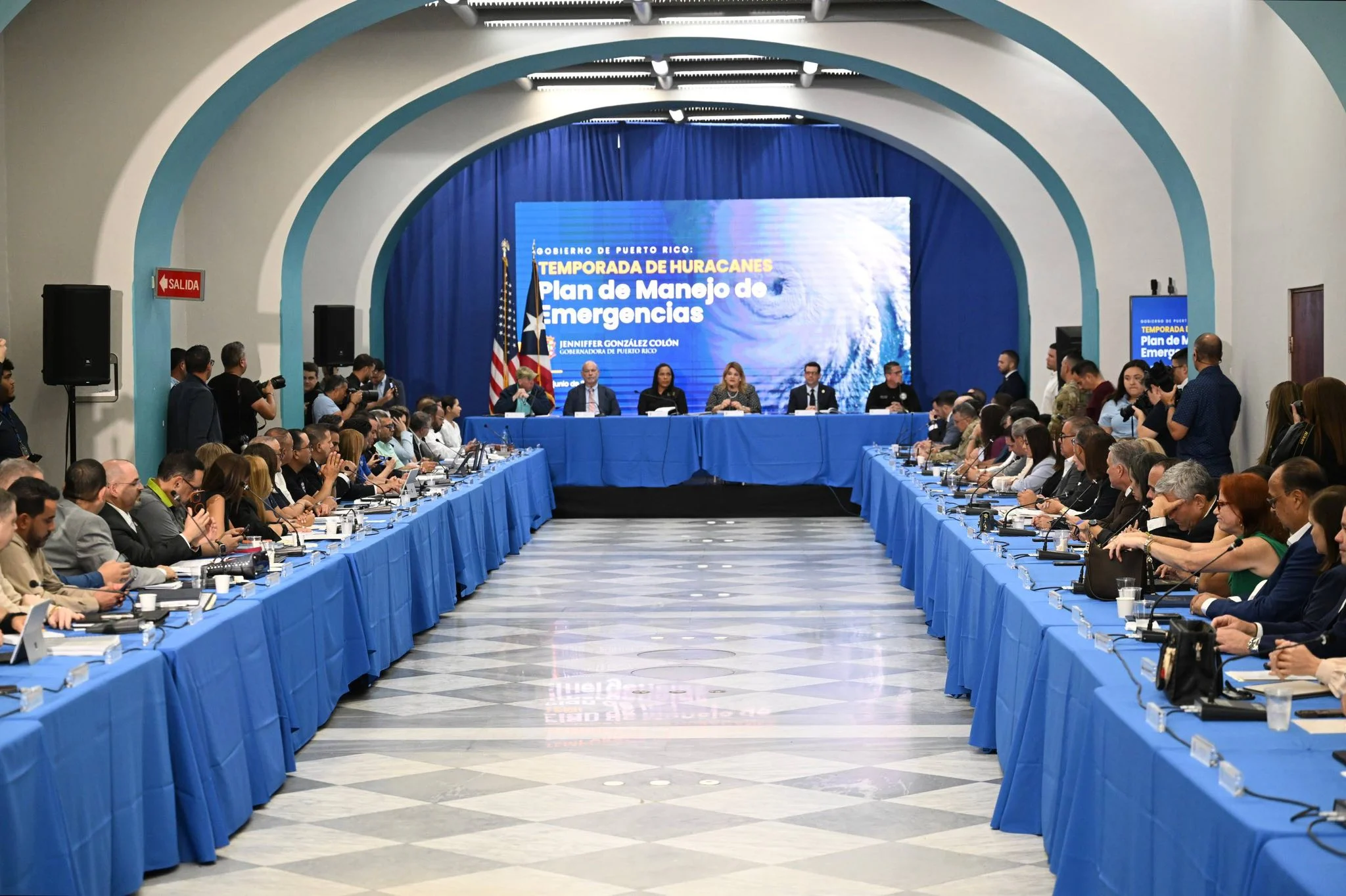
What's happening? On June 1, at the start of the hurricane season, the government presented its Emergency Management Plan, announcing the reactivation of the Puerto Rico Emergency Portal System (PREPS) site, which will be used to update information on all services, from water and electricity to shelters, health, security and the economy, in the event of an emergency.
Governor Jenniffer González, joined by agency heads and private-sector leaders including representatives from the economic, hospital and energy sectors, gave details on how each agency is preparing for this hurricane season, which ends Nov. 30.
Why does it matter? Every year, Puerto Rico faces the possibility of hurricanes and storms, making preparation essential to minimizing the impact. For this season, there are 344 shelters that could be activated in any emergency, with a capacity of 47,561 evacuees and 22,922 cots.
The Acueductos authority has 1,517 generators assigned to filtration plants, more than double the number in 2017. LUMA reported that it has +$400 million in storm-response materials, 20 times more than what was available when Hurricane María struck.
Learn how each agency is preparing.
344 shelters available
47,561 person capacity
22,922 cots
325 with cisterns
282 with generators
139 with solar systems
💡 Energy:
More than $400 million in response materials from LUMA
23,000 utility poles
3 million feet of cable
5,000 transformers
1,300 field workers
2,500 vehicles
🚰 Water:
1,517 generators at filtration plants
More than double the 600 generators available in 2017
360 mobile and fixed water distribution points
🍱 Food:
Schools stocked with food for 5 to 7 days
Capacity to feed 200,000 shelter residents
Familia has 3.1 million pounds of food
Reach for 119,000 families
👮 Security:
10,700 active police officers
More than 500 cadets available for activation
🏥 Health:
69 hospitals
135 emergency rooms
More than 120 primary health centers
🚧 Roads:
$160 million in emergency funds
More than 500 active projects
160 landslides addressed
✈ Aeropuerto Luis Muñoz Marín:
1.4 million gallons of water stored
24 generators
📲 Official portal: preps.pr.gov
The Puerto Rico Emergency Portal System (PREPS) is the official portal and will be activated during emergencies. It contains information on:
Atmospheric events and weather forecasts.
Active and canceled government services across all offices, including schools and universities, PAN and others.
Dry Law notices and Price Freeze orders.
Status of water, electricity, telecommunications, transportation and other services.
Open and active shelters.
Emergency contacts and services for people with disabilities.
🏠 Shelters
The Departamento de la Vivienda (DV) reported that there are 344 active shelters with a capacity of 47,561 evacuees and 22,922 cots in inventory. Of the shelters, 325 have a cistern, 282 have a generator and 139 have solar systems.
The agency also noted that it is building a storage facility for shelter equipment in San Juan, which will complement the one that already exists in the western area.
Shelters are also prepared to accommodate pets, with 323 cages and kennels available.
Registration of people and pets. According to the Departamento de la Familia (DF), through its CARE platform it will be possible to register not only evacuees but also their pets, with the aim of offering better coordination.
The Departamento de Educación (DE) reported that 291 of the shelters are schools, but that other school buildings could be opened as shelters if needed.
New alert system in schools. The DE also noted that all schools now have a new communications, radio and alert system, something that did not exist in 2017. They are in the process of connecting it to municipal emergency systems.
🥫 Available food
Education Secretary Eliezer Ramos said that school cafeterias have a food supply for 5 to 7 days, with the capacity to distribute food to 200,000 evacuees.
"In Vieques there is an additional warehouse with a food supply for 20 days, unlike the rest of the schools in Puerto Rico," Ramos said.
The DF, for its part, has 3.1 million pounds of food with the capacity to serve more than 119,000 families.
🧑🧑🧒🧒 Nursing homes and children's homes
Family Secretary Suzanne Roig reported that the agency has an updated platform with information on all nursing homes, their locations and their residents.
They also have "the precise location of each child (under DF guardianship), whether in private homes or larger group homes."
Both nursing homes and children's homes must meet requirements for water storage, food, medication and other supplies in case of emergencies, it was noted.
🚔 Police and Emergency Management
In an emergency, the Police activates all its personnel (more than 10,700 active officers of various ranks, for a total of 11,500 active employees), days off are canceled, 12-hour shifts are activated, and more than 500 cadets are activated in support.
Of the 192 Police facilities, 186 have electric generators and 108 have backup power, while 144 have water storage tanks and another 42 are waiting for one.
Meanwhile, the Negociado para el Manejo de Emergencias y Administración de Desastres conducted operational exercises in 10 zones, covering 78 municipalities.
🚰 Water
The Autoridad de Acueductos y Alcantarillados (AAA) has 1,456 electricity generators and 61 rented or municipal generators, for 1,517 generators assigned to filtration plants, more than double the number in 2017, when there were 600, and 39 more than last year.
A system was also created to keep those generators supplied with diesel, with storage around the island and vehicles to distribute it.
Oasis: They have 360 resources in the inventory of mobile and fixed oasis points, of which 185 are public fire hydrant sources, 32 are mobile units (2,000 gallons), seven are AAA mobile units, 35 are fixed 6,000-gallon tanks, 11 are fixed 2,000-gallon tanks and 90 are fixed cisterns.
💡 Electric power: LUMA and Genera
LUMA said it has more than $400 million in materials for storm response, 20 times more than what was available when Hurricane María struck. It also has eight regional emergency centers and 22 warehouses around the island to handle incidents.
In terms of materials, it has more than 23,000 poles, more than 3 million feet of cable and more than 5,000 distribution transformers.
It has more than 1,300 field workers and more than 2,500 vehicles.
Genera reported that it has 30 days of supply at the Aguirre substation, 24 days at Costa Sur, 21 days at Palo Seco and 21 days at San Juan, the island's main electrical substations. It also has 21 days at Mayagüez and 14 days at Cambalache.
In addition, it has $120 million in critical components in storage and 90% fuel storage capacity across all tanks.
🏥 Health
It was reported that Puerto Rico has 69 hospitals and 135 emergency rooms, as well as more than 120 primary health centers (330). Under a new law, each hospital must have two electric generators.
🚧 Roads
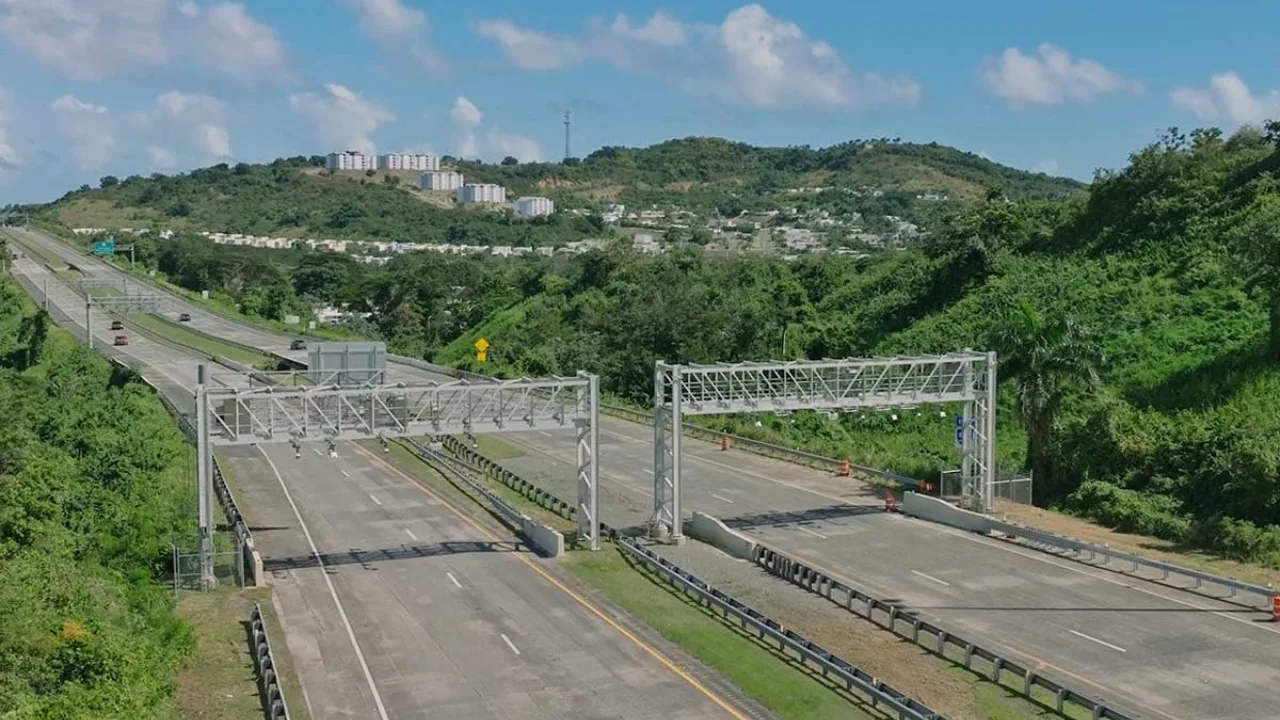
The Autoridad de Carreteras y Transportación (ACT) reported that 160 landslides have already been addressed and that there is $160 million in emergency funds to handle road situations, along with more than 500 active projects.
🛅 Airports and Ports
Regional airports. The Autoridad de los Puertos reported that the nine regional airports have generators (between 1 and 6 each), with 24,000 gallons of diesel stored for their operation. Seven of the airports have water storage tanks.
In terms of resilience, the Ceiba and Culebra airports have supplies for 2 days, while Ponce has 4 days, Isla Grande 7 days, and Vieques and Mayagüez 14 days. No figure was given for Arecibo and Humacao.
SJU airport. Aerostar reported that it has 1.4 million gallons of stored water to maintain operations, along with contracts with the AAA and private suppliers to maintain supply. It has 24 generators connected to vital operations, including baggage handling, customs, check-in and others.
It also has a diesel supply and private operators who could provide additional fuel.
Ports. San Juan Cruise Port, the cruise port administrator, indicated that its emergency plan is ready, with generators and water tanks. It also has direct communication with the Puerto Rico Tourism Company (CTPR) to inform cruise tourists in case of emergencies.
It was noted that the shipping companies have updated emergency plans. In addition, four ships can make faster and more frequent trips to the United States, which means "we can respond more quickly to an emergency," said the shipping companies' spokesperson.
🏨 Tourism
The Puerto Rico Tourism Company (CTPR) reported that Puerto Rico has 39,310 rooms, of which 14,441 are hotel rooms and 24,872 are short-term rentals and non-endorsed rooms.
The CTPR maintains direct communication with airlines and cruise lines in case ports and airports need to be closed.
🏦 Economic Development
The Department of Economic Development and Commerce (DDEC) has three active initiatives:
Business Resilience Program: to install solar panels in small and midsize businesses (SMBs).
Medical Device Cluster de Puerto Rico: assistance for manufacturers and biopharma companies that require it.
Training and technical assistance: Between August and September, a weekly resilience workshop for SMBs will be held, covering payroll management, emergencies and more.
Other initiatives. A seed capital fund for payroll, cleanup, fuel and other needs, as well as WIOA programs for wage payments and rapid-response assistance.
✝️ Instituto de Ciencias Forenses
The Instituto de Ciencias Forenses (ICF) reported that it has two full-capacity generators, eight days of fuel reserves, an operational water tank and 200 refrigerated spaces in case of a mass-casualty emergency. It also has three additional trailers with a capacity of nearly 200 more spaces.
This content was translated with the assistance of Artificial Intelligence (AI).