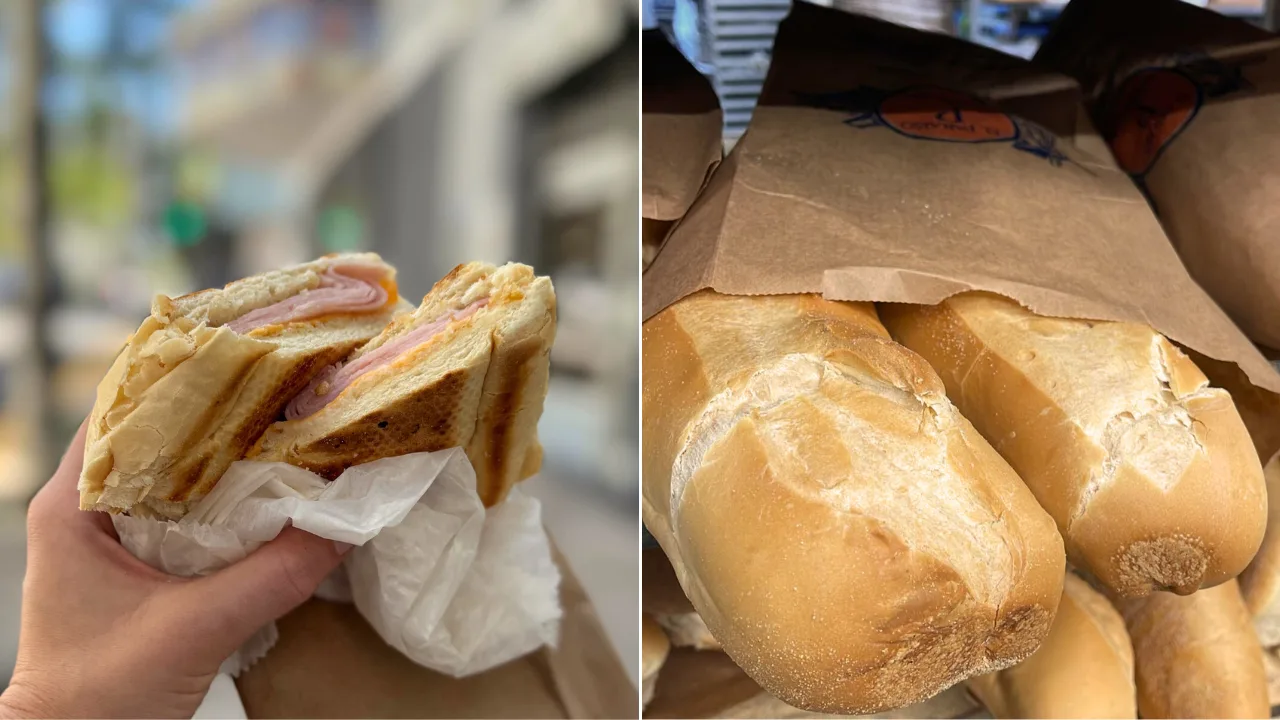
From the Taínos, who grew yuca for casabe, to town bakeries filled with the aroma of warm loaves of sobao, bread has become an essential part of the Puerto Rican diet.
But where does this staple food come from?
Whether sobao, de agua or de maíz, the bread consumed today on the archipelago traces its origins back hundreds of years, to the arrival of wheat during the Spanish colonization.
To understand the history of bread, we spoke with historian and gastronomy expert Pedro Reina Pérez.
The arrival of wheat on the Island
Before the era of conquest, the Taínos were already making casabe, a thin, crispy bread made from yuca flour. It was with the arrival of the Spanish that wheat-based bread-making methods were introduced.
"I would say bread is one of the universal foods found across different cultures," said historian and journalist Pedro Reina Pérez.
"But there is a difficulty: wheat is not grown in Puerto Rico. So during the colonial years, wheat had to be brought in from outside, and that wheat was not easy to obtain if it came from Europe."
At that time, smuggling was the main economic activity in the Caribbean, as European empires in the Americas imposed trade monopolies.
"So to survive, people broke the law," the historian said.
"Breaking the law for survival is as if it were in our DNA from the very beginning."
And one of the main sources of wheat for Puerto Rico and the rest of the Caribbean, Reina Pérez pointed out, were the 13 colonies that the United Kingdom held on the North American coast, that is, what we know today as the United States.
"The origin of the relationship between Puerto Rico and the United States is the illegal trade of flour for sugar," Reina Pérez explained, citing the book "Albores históricos del capitalismo en Puerto Rico."
"From what I have read, I know of no other source of wheat flour imports to Puerto Rico besides the 13 British colonies."
Daily bread
Over the years, bread in Puerto Rico diversified, and today it includes not only the well-known pan sobao but also pan de agua, pan de maíz and mallorca, among others.
According to the corporate registry of the Department of State, as of Oct. 14, there are about 153 businesses with the word "panadería" in their name. Among them is La Asturiana, in Caguas, a nearly century-old bakery that bakes its breads in a brick oven.
By comparison, a search for the word "pizza" in the same registry returns 194 results for active corporations that include the term in their name, while "pizzería" yields 32 results. This shows how, despite the popularity of pizza, bakeries remain a fundamental part of culinary identity in Puerto Rico.
Another well-known bakery is San Agustín, in Ponce. There, Primera Hora reported, the family that founded the business has kept the recipe for its popular pan dulce a secret.
Platea recently reviewed some of its readers' favorite bakeries, and the list includes La Asturiana and San Agustín as well as Lemy and Ricomini. You can see the list of 15 bakeries here.
And bread continues to evolve. Beyond town bakeries, there are also businesses that make artisan breads, such as El Horno de Pane and Lucía Patisserie, and some, like Mugi Pan, make breads in the traditional Japanese style.
"Bread is elastic," Reina Pérez said. "Bread lets itself be claimed, lets itself be named, even though at its core it is a fairly basic food: water, yeast and salt, and sometimes fat and sometimes not, and sometimes sugar and sometimes not."
This content was translated with the assistance of Artificial Intelligence (AI).