The sicá, yubá, holandé and cuembé preserve their roots through music as a legacy of Afro-descendant heritage.
"Down the blazing Antillean street goes Tembandumba de la Quimbamba — rumba, macumba, candombe, bámbula —…", reads the poem Majestad Negra, by Luis Palés Matos, recited to the rhythm of the sicá, one of the best-known rhythms in Puerto Rican bomba.
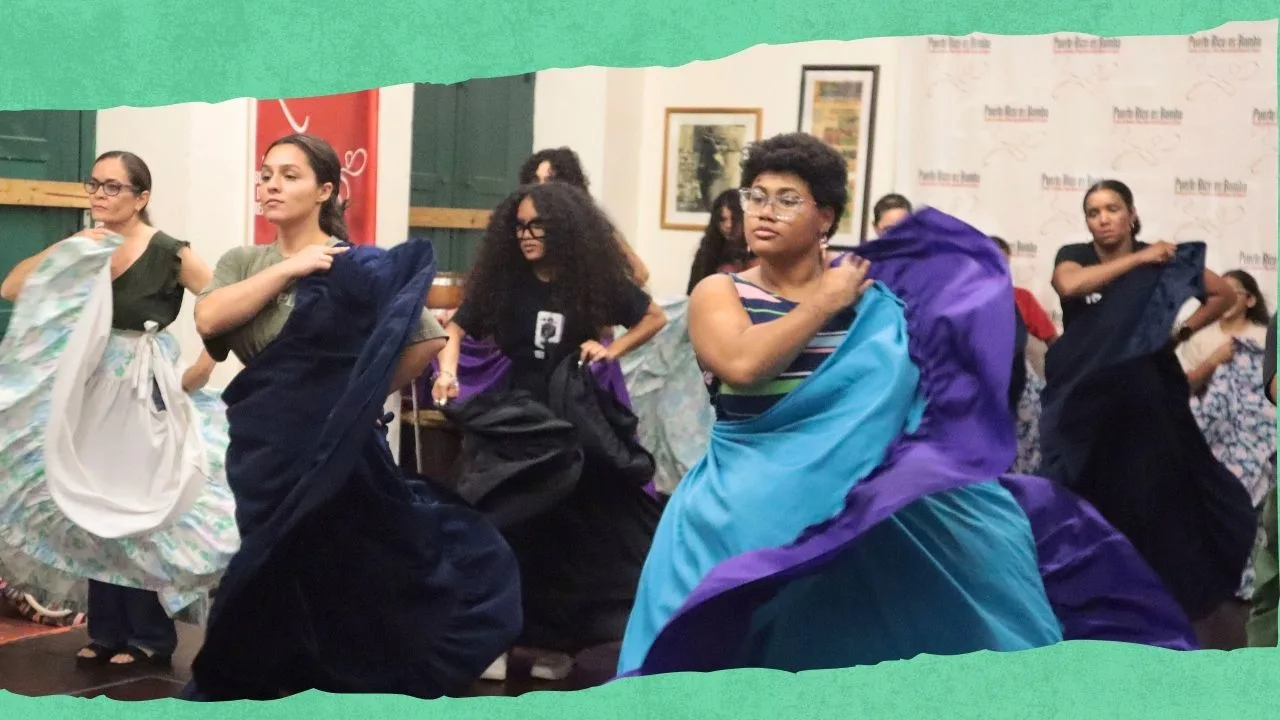
Beyond the sicá, other rhythms such as the yubá, the holandé and the cuembé were born in Santurce. In the bomba tradition, the dancer and the drummer establish a conversation in which the dance speaks and the hands, striking the barrel, respond.
For bomba instructor, actress and professor at the Escuela de Artes, Diseño e Industrias Creativas of the Universidad del Sagrado Corazón, Sara Cristina Cruz Cepeda, the rhythms from Santurce have been transforming in recent years but retain their essence.
"Bomba has changed enormously in the last decade, even after the pandemic. The rhythms characteristic of Santurce, like the yubá and the cuembé, remain very much alive in general terms, but today they are being played faster, or there are variations within those rhythms that are no longer being heard," she said.
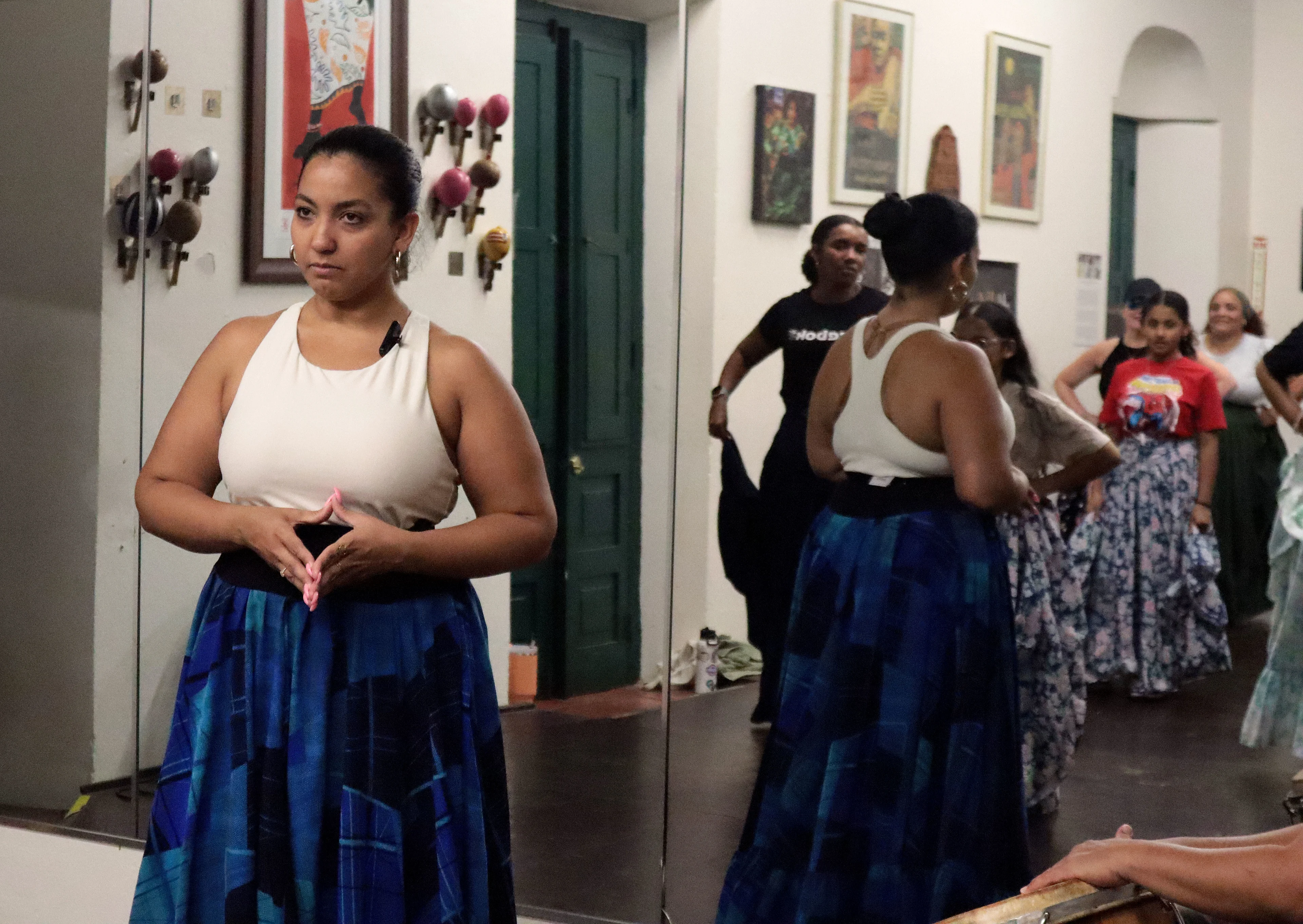
Cruz Cepeda stressed the importance of education about each rhythm, since each one is defined by the way it is played and danced, and by its variations. The holandé is described as a lively rhythm, played faster than the others and expressing enthusiasm, while the yubá is described as somber and spiritual.
The Conservatorio de Artes del Caribe, for its part, characterizes the sicá as the best-known bomba rhythm, made up of four beats, and the cuembé as similar to the sicá but with one additional beat; each rhythm has its own essence.
"To preserve something, you have to know it, you have to know where it comes from and everything that makes it up."
– Sara Cristina Cruz Cepeda, actress and professor at the Escuela de Artes, Diseño e Industrias Creativas of the Universidad del Sagrado Corazón
Cruz Cepeda noted that bomba rhythms have a historical background that must be explored in depth in order to carry on their legacy and avoid misinformation. Bomba, more than a musical genre, was also a symbol of protest used by enslaved people 400 years ago.
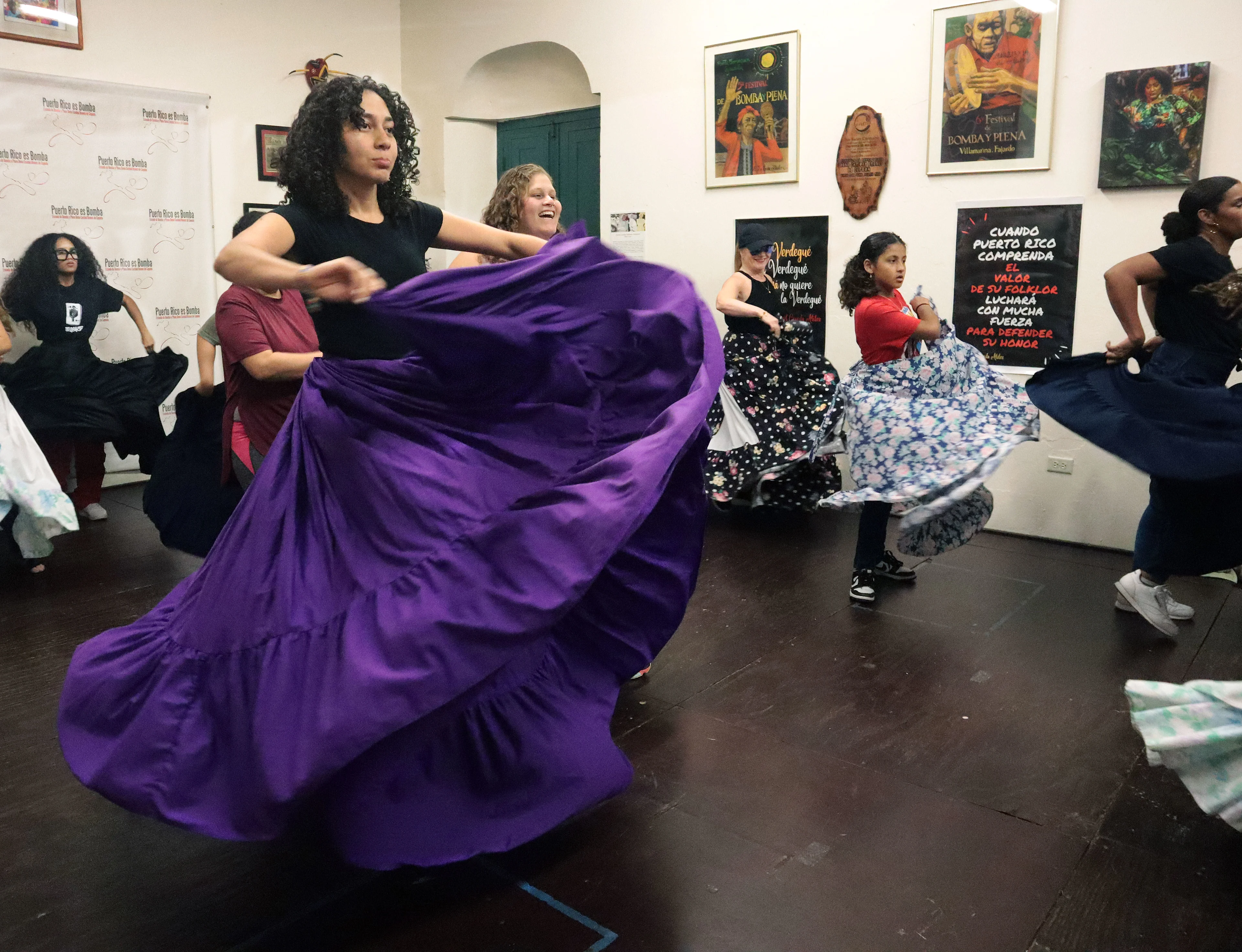
"There is a lot of bomba played in pubs or at venues that usually focus on enjoying the music in the moment rather than going deeper, learning the differences between each rhythm or how they are danced. Sometimes a sicá or a yubá is danced as if it were a seis corrido (a rhythm from Loíza), and all the richness that defines those rhythms gets lost," the expert argued.
Singer and verso negro poet Michael Cruz Rodríguez, better known as Dulce Coco, highlighted the history behind this genre and how the Afro-Antillean community of Santurce has worked to keep the tradition alive.
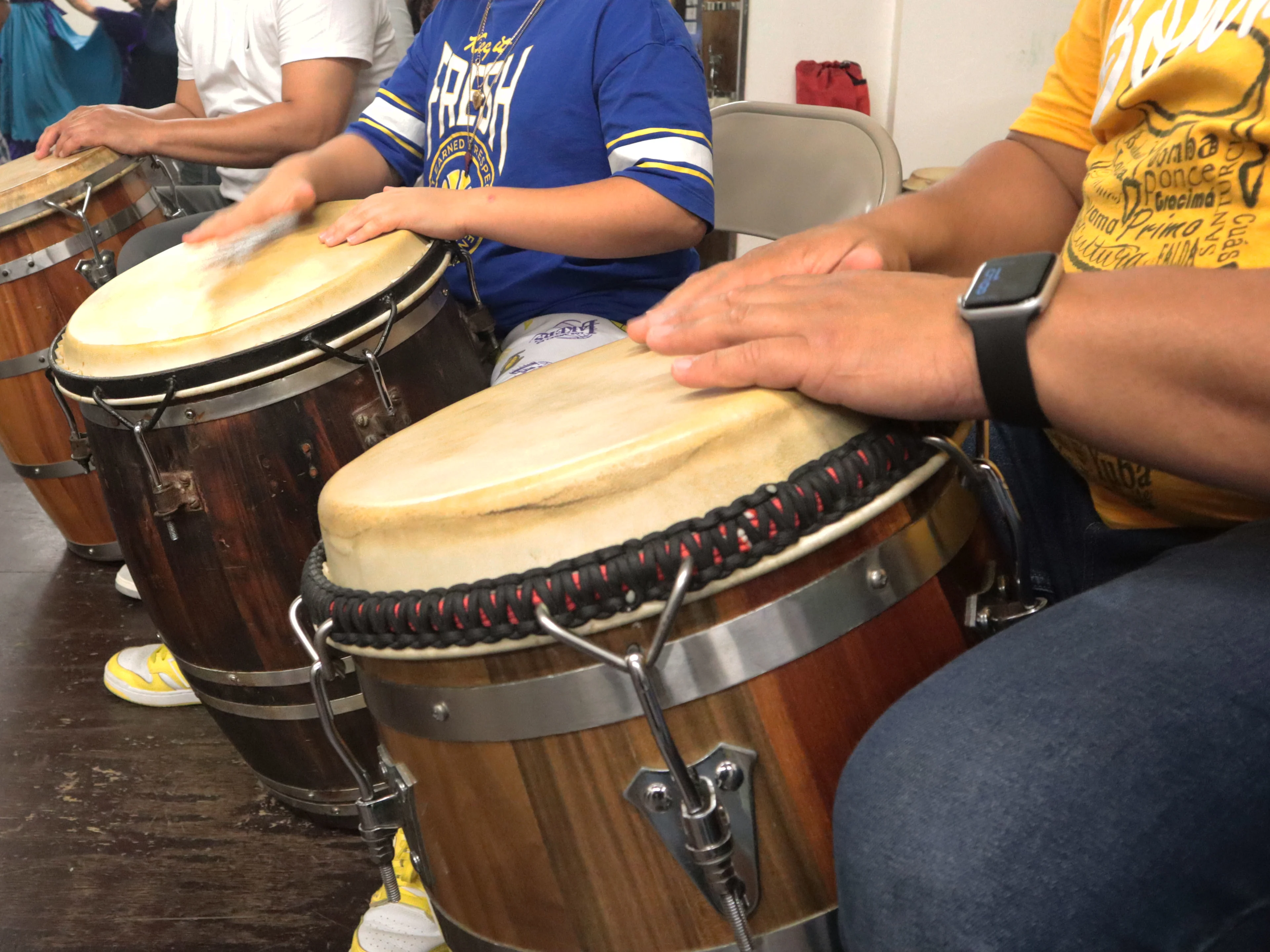
"Those rhythms in bomba are very important, that beat that marks all that ancestry, those people from the past who cultivated what Puerto Rican bomba is… The rhythms of San Mateo de Cangrejos, which is the original name of what is known as Santurce, are a source of Black pride," Cruz Rodríguez said.
Rhythms like the sicá have grown in popularity and have been fused with other genres, as the composers from Santurce Rafael Cortijo Verdejo and Ismael Rivera did with salsa between the 1950s and the 1970s.
According to the poet, Santurce has been a driving force in bomba's resurgence after the music faced the risk of disappearing due to discrimination, racism and rejection of Black roots.
"This community has brought these issues of Blackness to light. If it hadn't been for the work of don Rafael Cepeda Atiles or all the people who felt that calling, bomba would have been forgotten," said Dulce Coco.
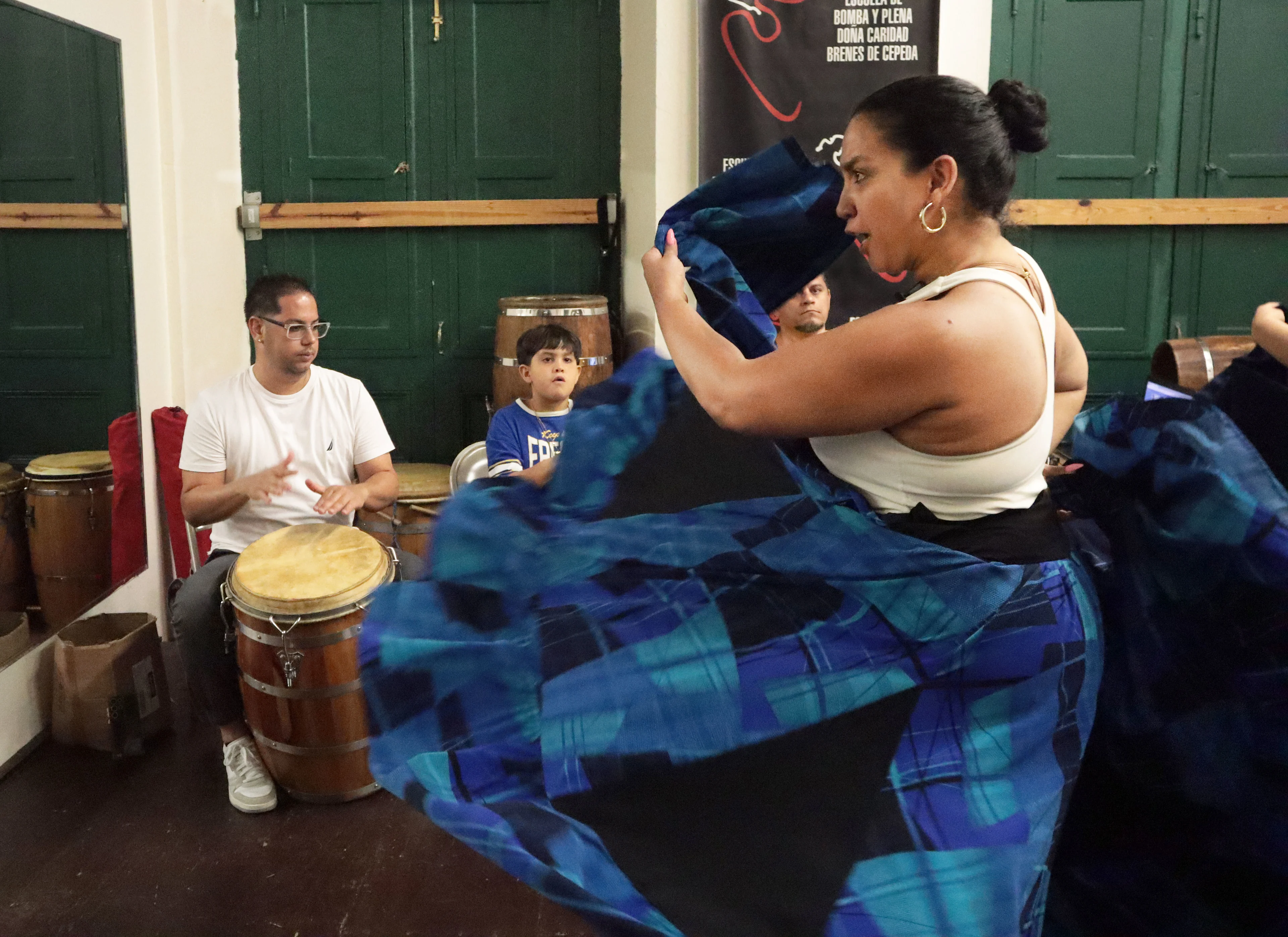
The Cepeda family founded, in 1977, the Escuela de Bomba y Plena Rafael Cepeda Atiles, the first and, for years, only bomba school.
"The Santurce community has brought forward in these times the themes and rhythms of Blackness, which are important to our culture. How do we fight racism? With education and elegance, and what better way than with Puerto Rican bomba."
– Michael Cruz Rodríguez, singer and poet of Black verse
Bomba is present in different spaces inside and outside of Puerto Rico.
For example, there are events such as the Día Nacional de la Bomba, organized by the Escuela de Bomba y Plena Don Rafael Cepeda Atiles, where the practice is shared and the rhythms can be heard from the place where they grew.
In addition, performers such as Jesús Cepeda Brenes, Modesto Cepeda and Tata Cepeda, along with groups such as Taller Tambuyé, Barrileras del Ocho de Marzo and La Bomba Va, contribute to the preservation and spread of bomba.
"Bomba still has enormous room to grow. I see that people are very enthusiastic; children like it, older people like it, young people too, and there is much to learn and contribute," Dulce Coco concluded.
This content was translated with the assistance of Artificial Intelligence (AI).