Since early July, businesses in Puerto Rico have begun phasing out single-use plastic cups, plates and forks — that is, items intended to be discarded after one use — with the entry into force of the law prohibiting the sale or distribution of such materials (Ley 51 de 2022).
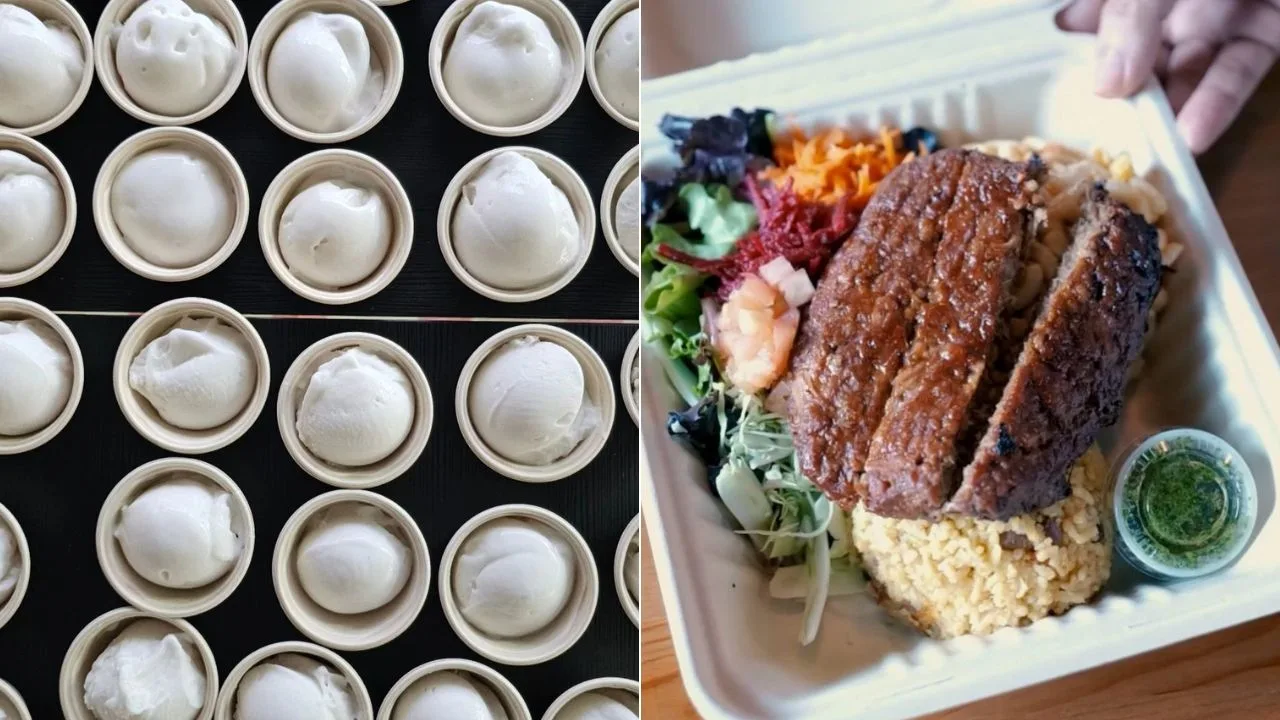
The transition, however, has not had a significant immediate impact on some businesses that had already adopted compostable or biodegradable containers, such as Frescura Vegan Kitchen.
"Since 2017, we have used compostable containers. We made this decision to promote sustainability and reduce our environmental impact, aware of the Island's limited resources and waste capacity," said Jessica Colón, head chef and co-owner of Frescura Vegan Kitchen.
The opportunities. For Colón, businesses in the process of replacing plastic utensils and containers should make the transition "with a mindset of education and adaptation."
"It is crucial to inform both staff and customers about the importance of these changes for the environment. I understand that the initial costs may seem higher, but investing in sustainability is an investment in the future of our planet and in the satisfaction of an increasingly conscious customer base," Colón said.
Biodegradable pints. Christian Rivera, owner of the ice cream shop 183 grados, uses biodegradable packaging and spoons. He made the decision in 2020, when he launched his business, not to use plastic or paper, partly to set himself apart from other ice cream shops and because of the environmental impact of those materials.
"I love growing plants. You can clean those same little cups (for the ice cream) and use them as planters," Rivera said.
Rivera pointed out that the cost of biodegradable items is higher than that of plastic, and recommended that businesses making the transition from plastic to other materials research product prices.
"Always ask the price," Rivera advised. "If you go with the first person you find, it comes out a little more expensive."
The legislation. The Ley 51 de 2022 took effect on July 1. The measure, which seeks to mitigate the environmental effects of plastic pollution, prohibits "the practice of delivering or using single-use plastics," as well as the wholesale or retail sale of these products.
The law includes some exceptions. It excludes, for example, pharmacies, laboratories and hospitals.
What's next. Through Dec. 31, the Departamento de Asuntos del Consumidor (DACO) will not fine commercial establishments that fail to comply with the single-use plastic ban.
During this period, the agency will issue notices of violation (that is, a warning and guidance on noncompliance), according to the joint regulations issued by DACO and the Departamento de Recursos Naturales y Ambientales (DRNA) to restrict single-use plastic.
Starting Jan. 1, businesses that violate Ley 51 de 2022 will face a fine of $500 for a first offense; a second violation raises the amount to $1,000. The fine for each subsequent repeat offense will rise to $5,000.
This content was translated with the assistance of Artificial Intelligence (AI).