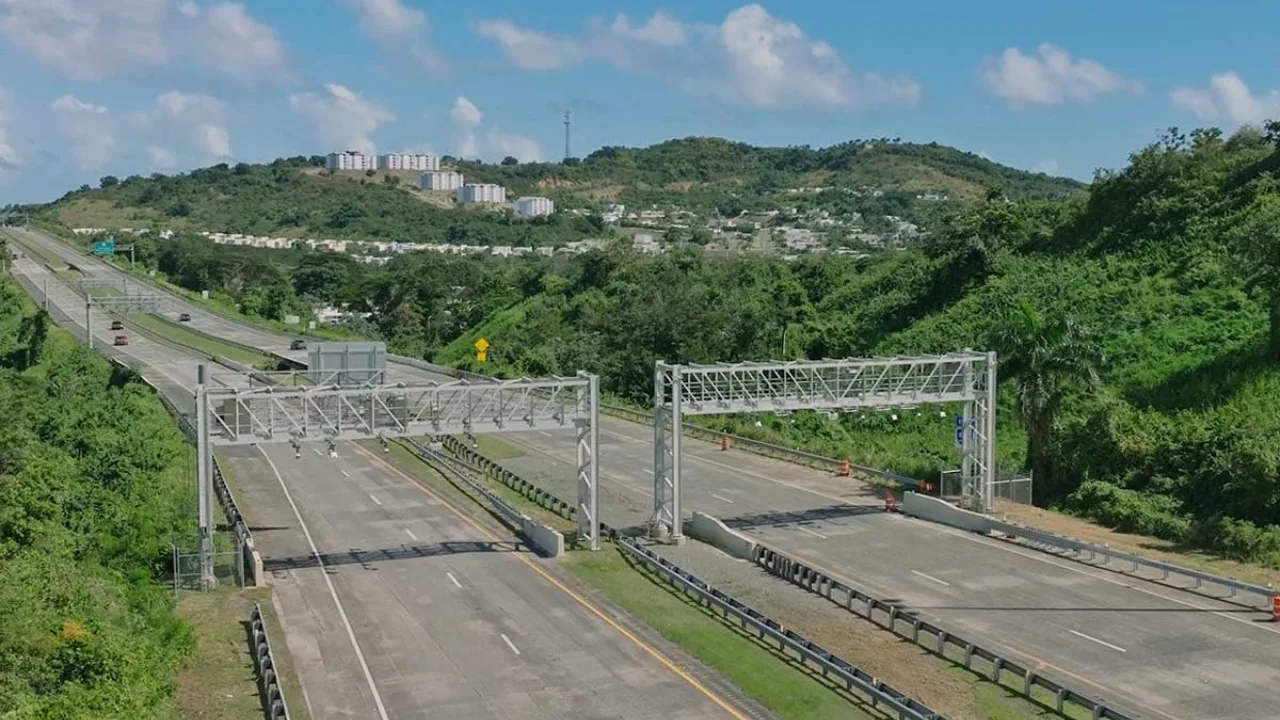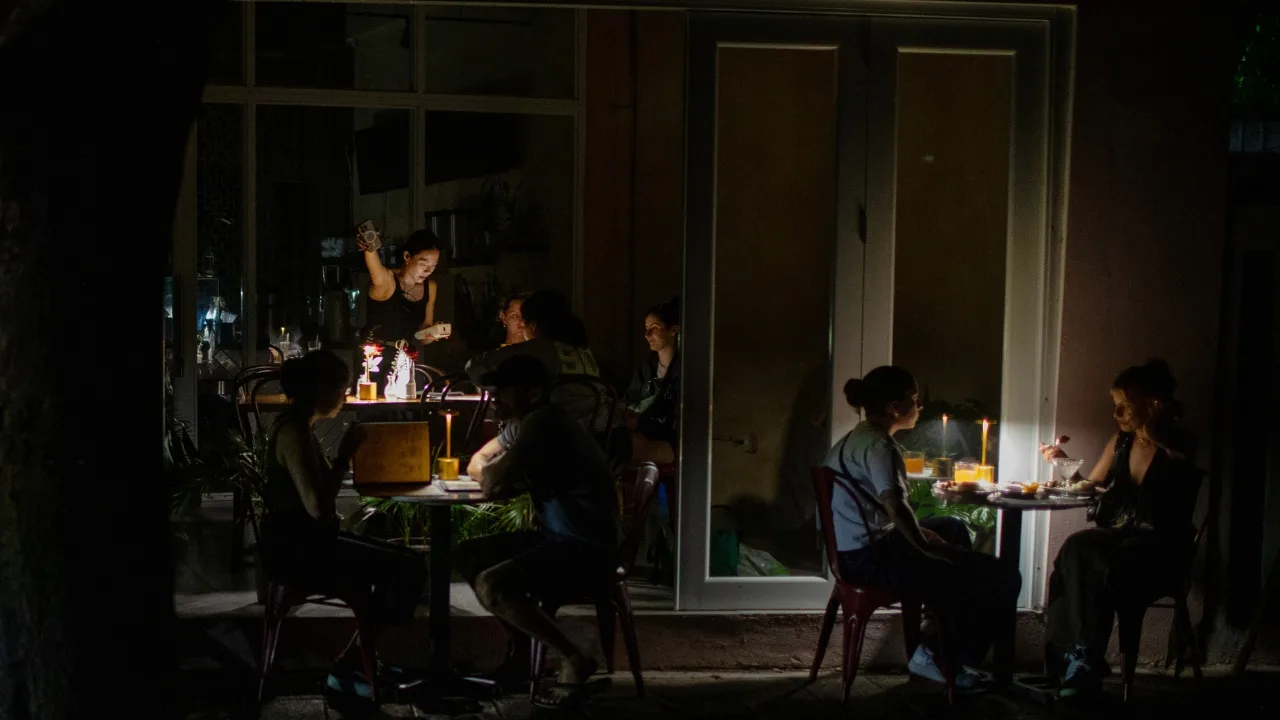
A fault on a transmission line caused all generation plants to go offline, affecting all LUMA Energy customers.
— What is happening? A systemwide blackout caused by a transmission fault occurred on April 16, Holy Wednesday, at 12:38 p.m. and affected all LUMA Energy customers (about 1.5 million subscribers). The incident, for which a preliminary report is available, caused all generation plants to go offline.
Update: On the morning of Friday, April 19, the government and LUMA Energy reported that 99% of the private operator's customers had electricity restored, hours before the minimum 48-hour estimate that had initially been given. About 20,000 customers were still without power, but LUMA pointed out that this was due to outages unrelated to the general blackout.
"Although restoration is complete, the risk of interruptions persists due to the continued instability of generation resources on the island and possible adverse weather conditions. LUMA is aware of the 2,404 customers who may still be without service from the event due to local outages," LUMA said in a statement.
Why did the blackout happen?
"The problem with this blackout was not generation, I want to make that clear. Perhaps we had all prepared for a blackout due to lack of generation, as can be expected for summer, but this time there was a fault in the transmission system on one line," Gov. Jenniffer González said at a press conference Wednesday at 9:00 p.m. At that hour, only 7% of customers had service, and there were protests and pot-banging demonstrations at La Fortaleza against the blackout.
The governor called the event "unacceptable" and noted that "every day we don't have power represents nearly $230 million in losses," affecting primarily small and midsize businesses.
"Although there were multiple pieces of equipment designed to detect and isolate this fault, several key protection systems did not function as designed," LUMA said in a statement.
LUMA delivers preliminary report on Friday:
According to LUMA's preliminary assessment presented in the preliminary blackout report, the service interruption was caused by a fault on a transmission line between Cambalache and Manatí, the result of an "apparent inadequate clearance between the line and vegetation," energy czar Josué Colón said in a statement.
The first fault was recorded at 12:38:46 p.m. on the 230-kilovolt transmission line 50100. Protection systems failed successively to isolate the fault: first the line's primary protection system failed, then the breaker failure protection system, then additional backup protection systems, and finally the line protection systems disconnected the Costa Sur and Ecoeléctrica generators.
This cascade of failures culminated at 12:39:05 with the simultaneous disconnection of multiple generating stations, causing the island-wide blackout.
Colón pointed out that the line from Manatí to Arecibo "remains out of service while private operator LUMA continues with the inspections and work required to return it to reliable service on the electrical system."
The operator responsible for the transmission and distribution of electricity on the island stressed that both this blackout and the one on Dec. 31 "highlight the deep, structural fragility of Puerto Rico's electrical grid, which continues to be vulnerable due to obsolete infrastructure and a historic lack of investment."
On the day of the blackout, engineer Daniel Hernández, spokesperson for Genera PR, the private company responsible for power generation, confirmed that the cause had been a transmission problem, but pointed out that "the good news is that all those (generation) machines are available to come online, as LUMA coordinates energizing all the lines." You can view generation data by plant at this link.
Identified failures
The chief executive noted that, at around 3:30 p.m. Friday, power generation was close to 1,500 MW, meaning more generation is still needed to meet demand across Puerto Rico. Among the failures identified in recent hours, she highlighted:
AES: on unit 1, a failure was identified "resulting from the shutdown on the day of the blackout, with one of the boiler fires." Repairing this boiler could take a week, but would not affect the recovery process, González said. "The risk there will come next week (after the blackout)," she added.
In addition to vegetation on the transmission lines, the governor said she wants to know why several circuit breakers tripped, something that should be identified in the report. "I don't think a system in which millions of dollars have been invested goes down because of a branch… There was more than one breaker that didn't open," she said.
What services were affected?
UPR-Río Piedras: Classes were canceled on the afternoon of April 16; professors would be in touch with students. "Today's evaluations or exams must be rescheduled for a later date," the institution said on its X page.
Water service: Following the loss of electrical service, 7% of Autoridad de Acueductos y Alcantarillados (AAA) customers (131,762) were still without water service at 3:30 p.m. Thursday, down from the 29% that lost service on the day of the blackout. Water service was expected to return once electricity was restored.
Most traffic lights on the roads: With the loss of power, many traffic lights stopped working. The Police activated their contingency plan and sent officers to the 13 police areas and 18 traffic divisions to assist with traffic flow on some roads across the country. They will remain active all week.
What services continued operating?
Tren Urbano: Train service resumed Thursday at 10:00 a.m., after being suspended following the Holy Wednesday blackout, during which 167 people were evacuated when the train lost power. Service resumed after technical staff inspected the tracks "and found no faults," the Autoridad de Transporte Integrado (ATI) said on its X account.
Buses, MetroBus, Metro Urbano and Tu Conexión: All operated normally, ATI executive director Josué Menéndez reported.
Maritime transportation in the metro area (San Juan-Cataño) and to Vieques and Culebra: ATI reported that service to the island municipalities and in the metro area would not be affected by the blackout. They operate on generators and "we have enough fuel to continue operating normally."
Aeropuerto Luis Muñoz Marín (SJU): Aerostar reported that "flights are operating normally and are not experiencing interruptions," but some services at the airport have been affected by the lack of power. They are operating on generators.
Other airports and ports around Puerto Rico: The governor reported Thursday morning that all airports and ports are operating normally and most already have electrical service.
Dialysis centers around the Island: They were already operating on a special schedule for Holy Week. However, they will continue operating on generators for Holy Thursday appointments. According to the secretary of the Department of Health, these centers have not reported any problems with their operations.
Hospitals on the Island: The government reported that all hospitals continue to operate, either on the main grid or on generators.
9-1-1 service: Operations "remain active and uninterrupted." In an emergency, call 9-1-1 or send a text message (NOT WhatsApp), according to the Negociado del Sistemas de Emergencias 9-1-1 on its X page.
Hotels: Acting Gov. Verónica Ferraiuoli said Wednesday that hotels are operating on generators and that the Compañía de Turismo is in contact with them to address their needs.
What steps is the government taking in response to the blackout?
The governor reported Thursday morning that the government's focus, up to that point, had been finding additional power generation alternatives because they considered that "that was our number one deficiency." There had been "almost weekly" meetings with LUMA and Genera PR, as well as with state and federal agencies, on possible actions for the electrical system.
"We are now entering the phase of evaluating the transmission and generation system," the governor said, adding that the energy czar will be responsible for overseeing the private operators, especially LUMA, whom she held responsible for the blackout. In addition to possible fines or sanctions, the government is evaluating which other operators might be available to replace LUMA as operator of the transmission and distribution system.
González insisted that "the cancellation (of LUMA's contract) will happen," but that they are still in a "oversight phase" to carry it out.
At this time, the Autoridad de las Alianzas Público Privadas (AAPP) has a request for proposals (RFP) to "supply possible generation shortfalls in the summer of this year," González said. It opened March 25 and will accept submissions through April 25. More than 72 companies have already submitted proposals, the governor said.
Other energy projects the government is seeking to accelerate, according to the governor, include:
Rehabilitation projects at units 8 and 10 in San Juan
Rehabilitation of unit 1 at Cambalache
Motions requiring an increase in megawatts at peaking units
Budget reassessments
A requirement to switch fuel at Cambalache
A request to the Junta de Supervisión Fiscal to accelerate the evaluation process for purchases related to the electrical system, such as the purchase of turbines and rotors
Combined-cycle changes at Aguirre
Municipal business license filing deadline moved from April 23 to April 28: Because of the blackout, the governor decided to extend the deadline for submitting municipal business license declarations, as requested by the Colegio de Contadores Públicos Autorizados. This will allow filers to submit their declarations with the 5% discount.
Emergency numbers
LUMA Energy
At 3:00 p.m. Wednesday, LUMA reported that it had activated its Emergency Operations Center to "coordinate efforts with the relevant agencies and begin restoring service as safely as possible." It added that it will provide periodic updates on service restoration through its official communication channels.
Departamento de la Familia family centers:
Phone: 1-800-981-8333
Emergency Medical Services
Emergencies: 911
Direct line: (787) 754-2550, (787) 781-5562
This service provides prehospital care for injured or ill persons during emergency situations.
ASSMCA PAS Line
Phone: 9-8-8; 1-800-981-0023; VSR 787-615-4112 (Video Relay Service in Sign Language for the deaf)
The PAS Line is available 24 hours a day, 365 days a year, and offers crisis counseling, emotional support, and psychiatric and psychological coordination, among other services. It also serves individuals with mental health issues such as depression, domestic violence and anxiety disorders.
Of the 780 calls received on the PAS line between yesterday and today, 298 have been related to the blackout, González reported. This shows the emotional harm an event like this can cause, she noted.
This content was translated with the assistance of Artificial Intelligence (AI).