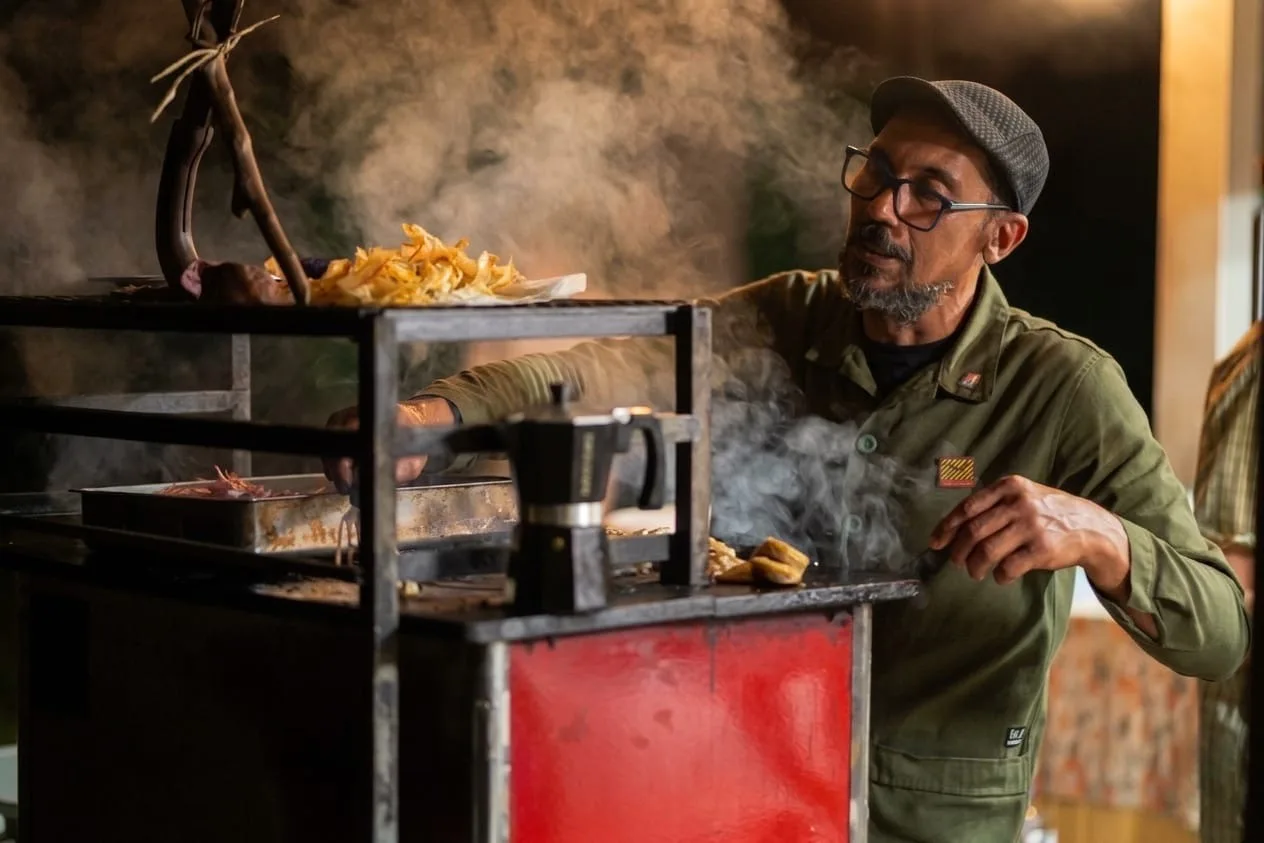
The nonprofit foundation runs various businesses and social initiatives with a community-oriented, solidarity-based approach for the benefit of the older adult population in its area.
What we cover in this story:
Support for older adults: How The Happy Givers provides food and essential services to older adults in Vega Baja and Vega Alta.
Solidarity initiatives: Community and self-sustaining projects that fund the foundation's mission.
Volunteering and community: The role of volunteers and community collaboration in the fight against loneliness and hunger.
Awilda Lara Feliciano has lived alone in a small house in the barrio Carmelita, in Vega Baja, for the past year and a half. The living room has a sofa covered by an old rose-colored sheet and a metal chair. Above the sofa hangs an old painting of people dancing in a forest, and on the opposite wall, a modern television sits on a low, old table. Her only company, her five-year-old dog "Perri," barks outside.
Every Monday, Wednesday and Friday at noon, she waits for a visit from Carmen "Yiyi" Cabreras Martínez and Luis Marreros Robles, volunteers with The Happy Givers, a foundation that provides food and services to older adults in Vega Baja and Vega Alta.
For the past six months, she has been one of the 261 beneficiaries of the program, which includes lunch deliveries three times a week. Her home is the first of 12 stops on one of the lunch delivery routes.
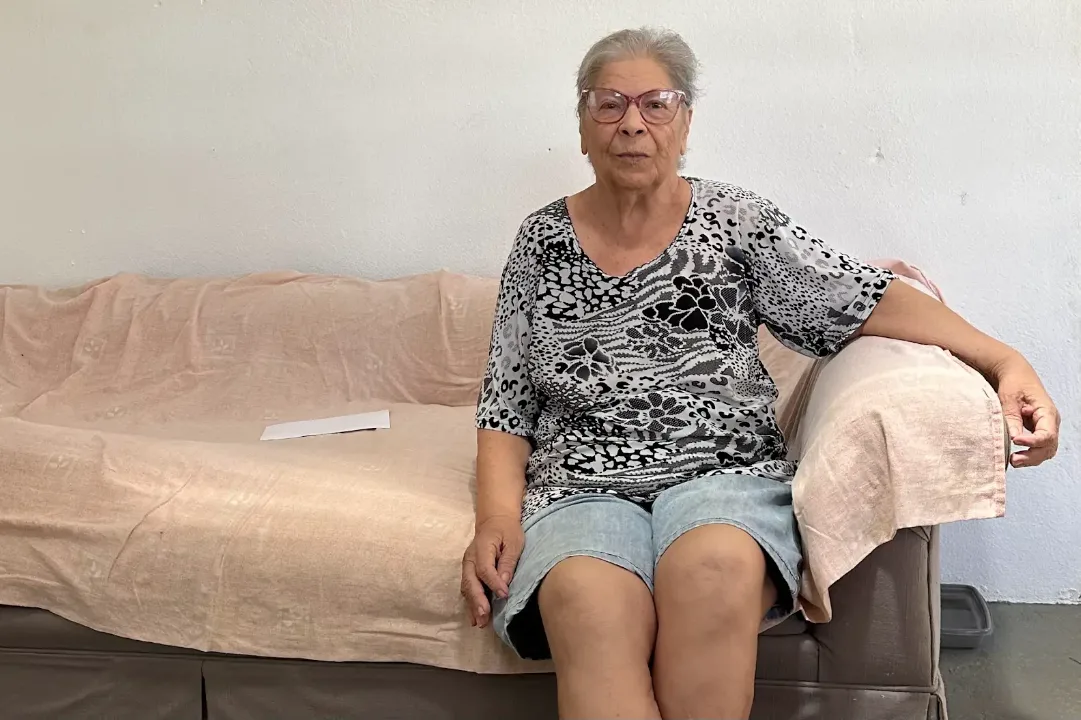
The woman, in her seventies, was happy and pleased to receive Yiyi's warm greeting and the menu from last Sept. 30: rice with chicken, red beans, mixed vegetables and a fruit salad.
"This service has been a godsend for me," the lively woman told Platea PR. "(Yiyi) told me about the seminars. I told her, 'You have to sign me up for all of that. Honey, because I'm stuck here,' and nobody takes me out anymore," she joked.
At the end of her conversation with this outlet, Awilda said goodbye to Yiyi and confirmed she would attend the workshop.
A few stops later, the volunteers, who also do the cooking, stopped at Marta Santana Medina's house to drop off two lunches.
Marta, also in her seventies, is very thin and the bones of her limbs are visible. The meals have fortunately eased the burden of cooking and allowed her to save money. She cannot attend activities, however, because of her responsibilities as caregiver for her husband, who has Alzheimer's.
She also cannot stand for extended periods because she has an ulcer on her left leg, which developed after she was unable to properly care for a bruise.
Like Awilda and Marta, hundreds of older adults live in solitude with unmet needs for food and for caregivers to look after them.
La Fundación Happy, as it is known on the Island, works to ease loneliness and scarcity among older adults, offering essential support to those who need it most.
The humanitarian vision of the Happy Givers
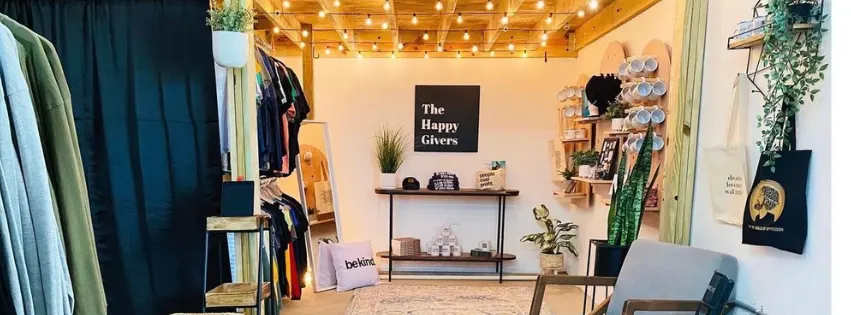
In 2016, Carlos Rodríguez and his wife, Catherine Rachel Roberts, opened the online store The Happy Givers to fund their social work missions in Ethiopia, Mexico and Puerto Rico.
After Hurricane María, Rodríguez gathered resources to feed more than 600 people daily and noticed a pattern: "We kept finding elderly people alone and abandoned," Rodríguez said.
One of the most striking cases for the community worker was that of a family in the barrio Sabana Hoyos in Vega Alta in 2017.
Doña María, 95, and her daughter Justina, 50, who has severe disabilities, were living in a home with no bathroom.
Rodríguez recalled: "CBS News was at Doña María's little house filming, and the cameraman stepped in human excrement outside. That's when everything changed."
That was the moment Rodríguez decided that "Dignity is non-negotiable," the organization's motto.
With that mission in mind, Fundación Happy aims to provide healthy food, shopping opportunities and socialization to elderly residents. It offers health workshops, cultural events, visits to the communal farm and invitations to the Cocina Social. In short, "let them have a good time," says the pastor, who has 18 years of experience.
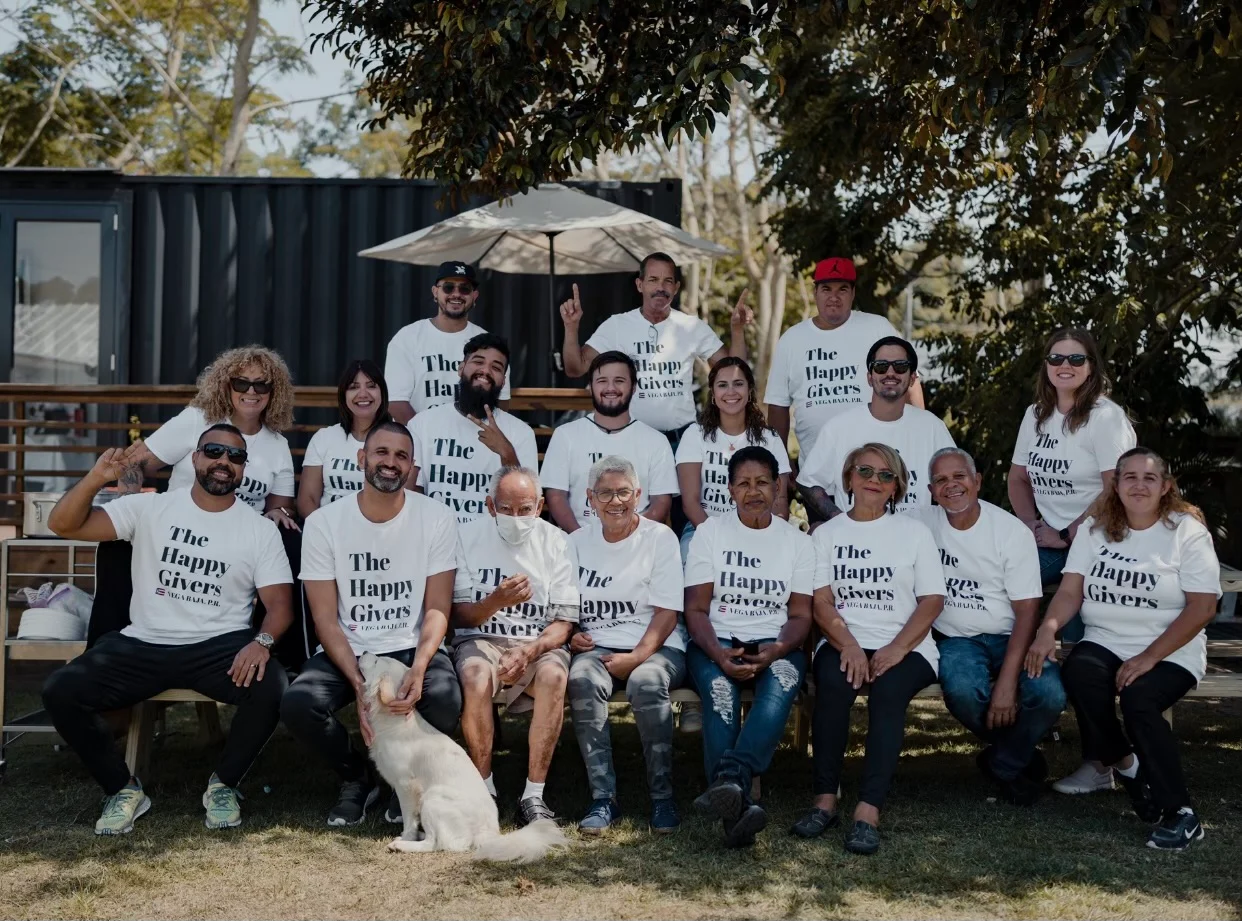
A collective, solidarity-based organization
Older adults are the heart of the organization.
As of July 1, 2023, the population aged 65 or older was double that of children under 15, according to the Puerto Rico Institute of Statistics. This means older adults are the largest population in the country.
Since its founding, TheHappyGivers.com has been the organization's main source of income. Revenue from its sales supports community initiatives; it sells T-shirts, jackets, caps, mugs, stickers and bags with positive messages.
According to Roberts, who manages the business, "people know that when they're paying, it's not going into our pockets," but that the money "goes directly" to those the organization aims to help.
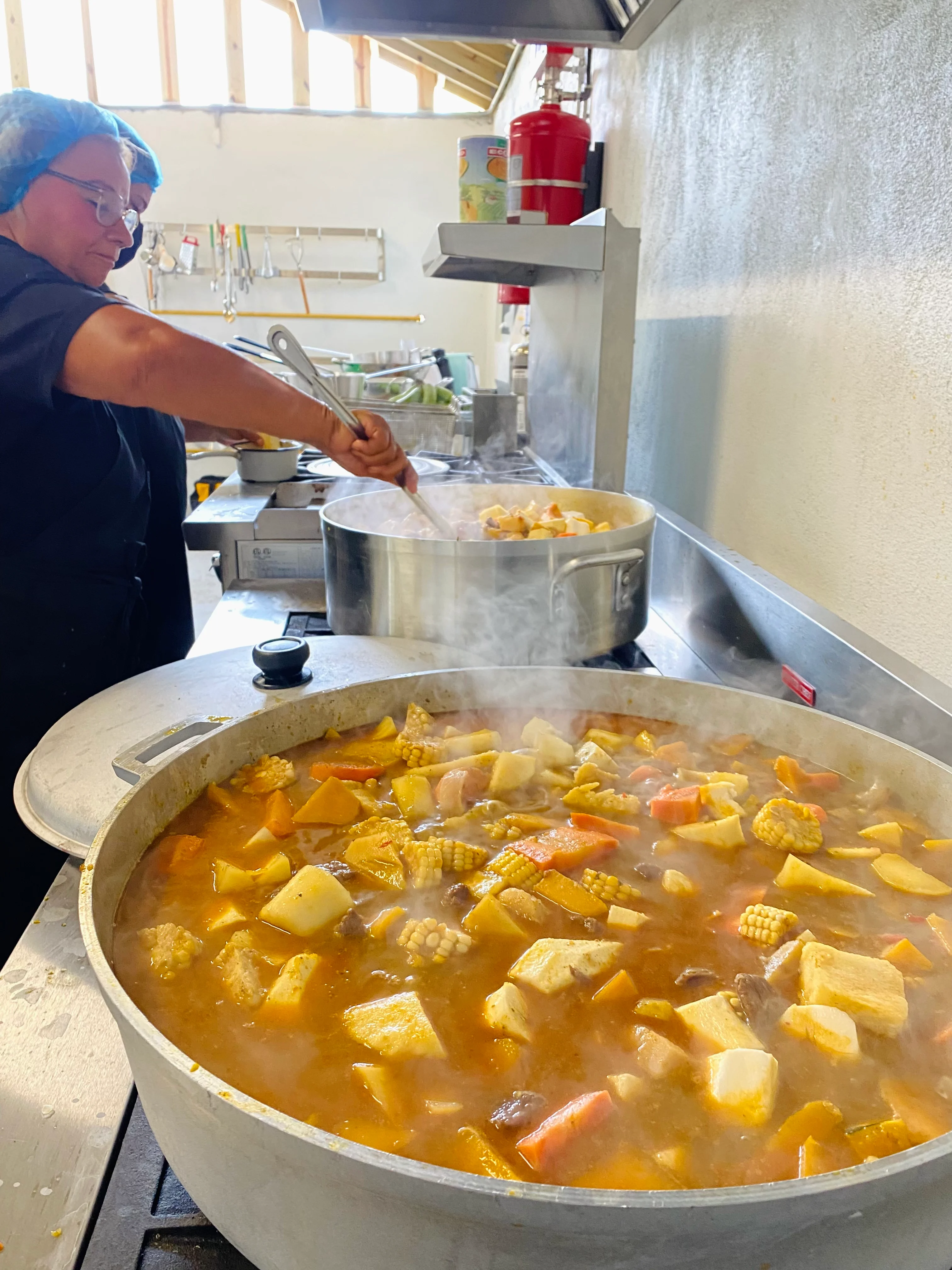
With that income, they have opened the Cocina Social. This is the dining room that feeds older adults, such as Awilda and Marta, about three times free of charge. It also provides food to the foundation's volunteers and visitors.
"You have to complement the food with affection and warmth," said chef Carmen Concepción, who leads the space with six volunteer cooks.
The team works from 7:00 a.m. to prepare nearly 300 dishes. When they finish, they prepare the food for the following day.
"I feel very proud to be able to bring that little bite of food" to the beneficiaries, Concepción said with a smile. This service is made possible by food donations from volunteers and organizations, as well as fresh ingredients from the Finca Social.
"We want, and we will achieve it soon, for the 50/50 to be half ours and half donated," Rodríguez said of his self-sustainability goal.
Another part of the property is dedicated to buying and selling sod, which represents a second source of income for Fundación Happy.
The money generated also funds the Colmado Social, where older adults can "do their shopping" for canned goods and hygiene products using coupons issued by the foundation. The initiative lets older adults decide what they need rather than having their needs assumed for them.
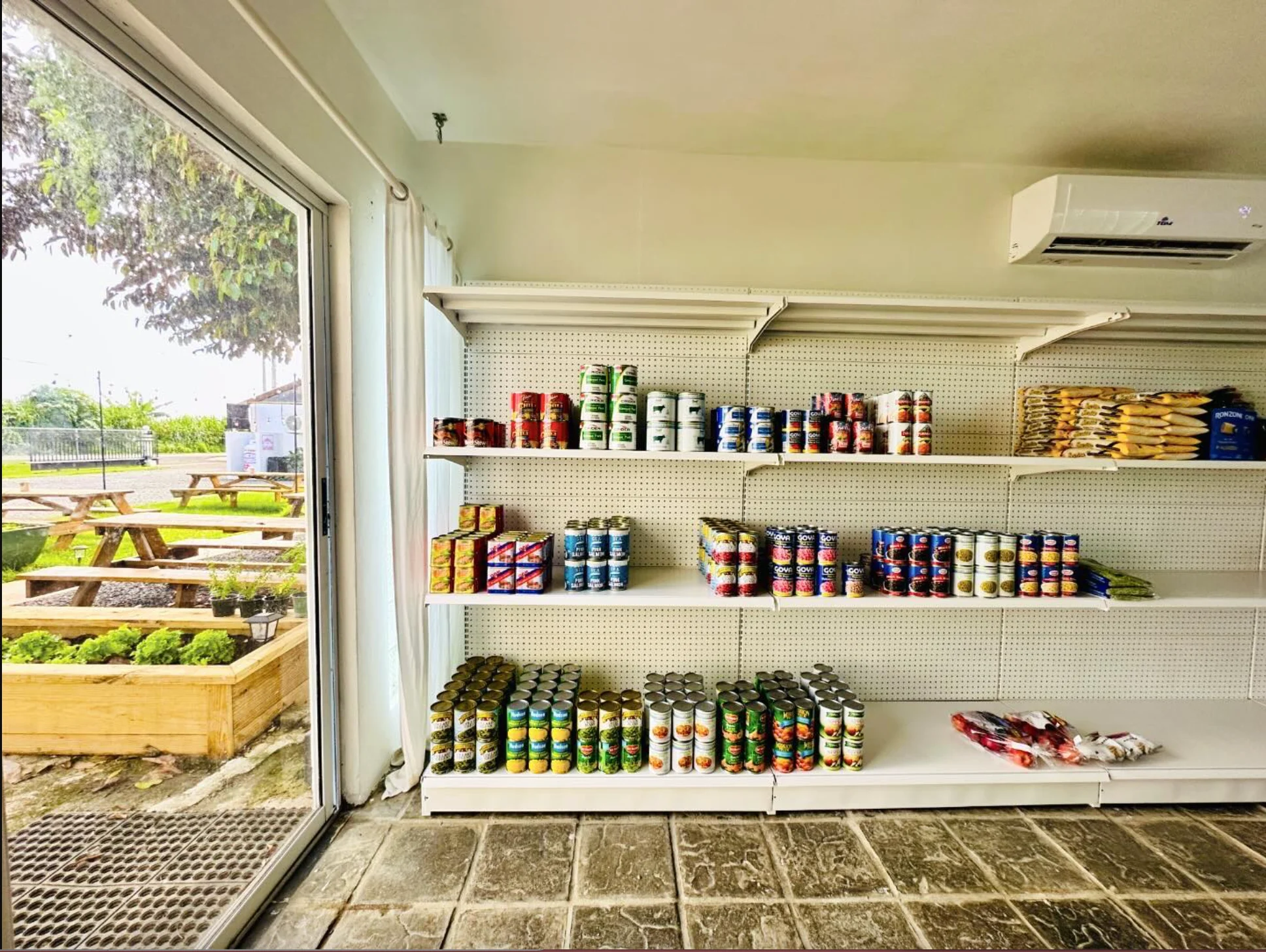
"This space has become a collaboration between the community and our space, so that they can come with dignity, to choose what they want and what they need," said the pastor, who is also the author of the books "Drop The Stones" (2017) and "Simply Sonship" (2016).
All volunteers are welcome
Cristina Méndez came to Fundación Happy this year after seeing a promotional video on social media.
The first time Méndez volunteered, she worked alongside a friend in the Cocina Social for about three hours cutting fruit to make nearly 200 fruit salads. After seeing all the initiatives on the property, she fell in love with the project and the people keeping it alive.
Shortly after, she decided to join the permanent staff, which is made up of 16 employees, as volunteer coordinator. She noted that there are volunteer opportunities in the Cocina Social and that they are looking for drivers to deliver food.
Large groups of volunteers from the local area or from various parts of the United States can stay at Koko House, which accommodates about 35 people.
The house was named in recognition of former basketball player Kyle Korver, who donated it to the foundation for about $220,000 in 2021.
Méndez, who also manages the accommodations, noted that a group must contact the organization to find out available dates. Typically, groups contribute to larger social work projects such as tasks on the farm, labor for cleaning or repairs at the homes of some elderly residents, among other things.
Koko House also operates as a short-term rental lodging, providing a third source of sustainable income to invest in the foundation.
Those interested in joining the volunteer team or learning about the process for receiving the lunch delivery service can visit lafundacionhappy.com or call 939-343-2187.
This content was translated with the assistance of Artificial Intelligence (AI).