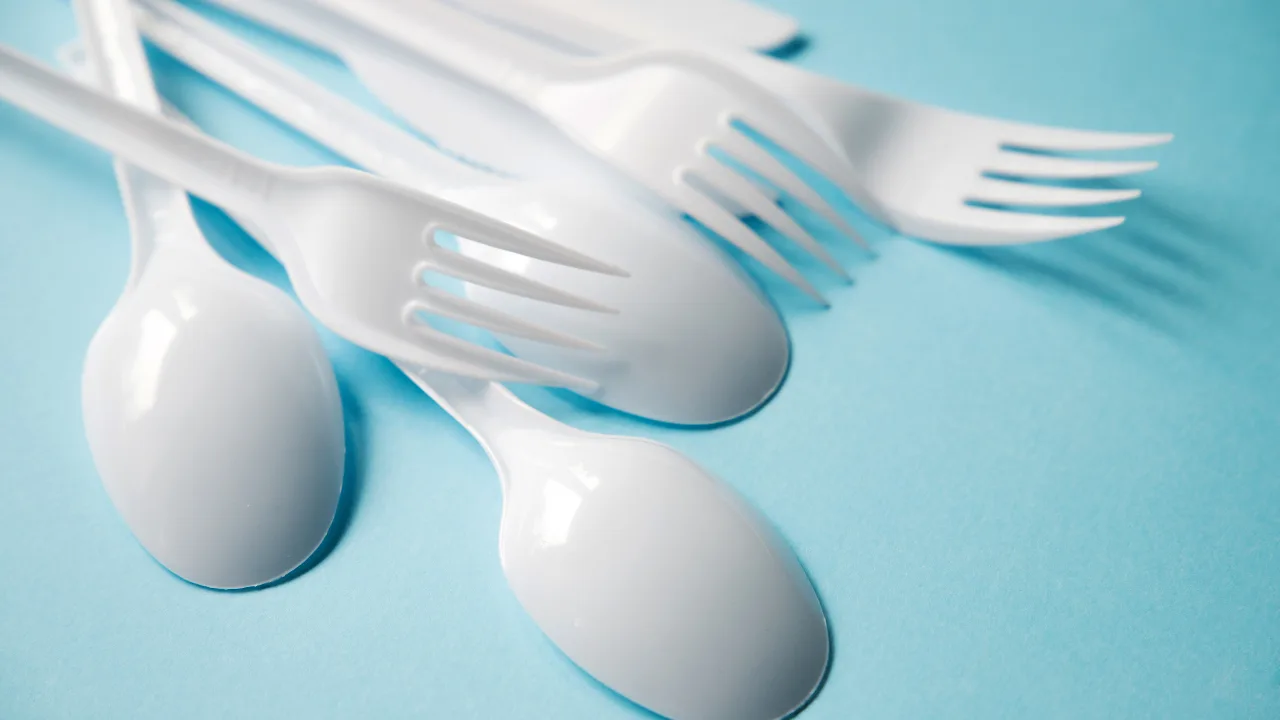
With the law banning single-use plastics (Ley 51 de 2022) taking effect in early July, disposable plastic utensils will soon no longer be found in restaurants and other businesses across the archipelago.
The measure, according to its statement of purpose, aims to reduce the environmental impacts of plastic pollution, which contributes to climate change and negatively affects various species.
Single-use plastics are those designed to be discarded after a single use. Under Ley 51 de 2022, single-use plastics include materials made from expanded polystyrene (better known as foam) "for immediate consumption or to carry some type of unprocessed or processed food."
A health issue. In the view of Maritza Maymí Hernández, spokesperson for Sierra Club de Puerto Rico, the problem of single-use plastics should be addressed as a matter of social responsibility and public health.
"We are already consuming plastic in our food supply chain and in our water intake, because plastics never break down. They degrade, and they degrade into microplastics," Maymí Hernández said, pointing out that the fish we eat, for example, ingest microplastics.
The average person may be ingesting approximately five grams of plastic every week, according to a study conducted in 2019 by consulting firm Dalberg and the University of Newcastle in Australia.
The analysis also found that the average person may be ingesting as many as 1,769 plastic particles per week from water consumption alone.
"We are talking about a material that does not break down in our environment easily and that, because of its characteristics, is already infiltrating everything, including the soil where plants are grown," Maymí Hernández said.
What do business owners say? Business groups have warned that replacing single-use plastics will lead to higher prices. Meanwhile, for businesses that have used compostable and biodegradable containers and utensils from the start, eliminating plastics has not immediately had a negative impact on operations.
Frescura Vegan Kitchen has used compostable containers since 2017 to "contribute positively to the environment and educate our customers about sustainable practices," despite being a small business, said Jessica Colón, head chef and co-owner.
Colón praised the intent of Ley 51 de 2022 but said that resources and education are lacking to implement the measure effectively.
"We believe the law should include campaigns to raise consumer awareness about responsible use. It is also crucial to strengthen recycling and composting systems to ensure that sustainable products are managed properly, maximizing their environmental effectiveness," Colón said.
Gov. Pedro Pierluisi signed the ban into law in 2022, but it took effect on July 1. The statute established a two-year period for implementation, and businesses will have six months to comply with the restrictions without penalties.
Plastic pollution is a global problem. According to the United Nations Environment Programme, approximately 400 million metric tons of plastic are produced every year, and half is designed for "single use."
Globally, according to U.N. data, less than 10% of the 7 billion metric tons of plastic waste generated to date has been recycled.
Plastic makes up 17% of the waste in Puerto Rico's landfills, according to a solid waste characterization study published earlier this year.
Puerto Rico joins other jurisdictions around the world that have banned single-use plastics.
In 2018, Seattle became the first U.S. city to ban plastic utensils and straws, the Seattle Times reported.
India banned nearly 20 single-use plastic items in 2022, including cups and straws, to combat pollution, according to Al Jazeera.
Meanwhile, California passed a law in 2022 requiring a 25% reduction in disposable plastic packaging and utensils by 2032, a measure that Associated Press described at the time as the country's "most stringent plastic reduction rules."
Last April, a law took effect in Hong Kong restricting the sale and distribution of polystyrene products and single-use plastic cutlery, including plates, forks and spoons, Associated Press reported.
France, for its part, is seeking to eliminate single-use plastic packaging by 2040.
How to reduce plastic. Single-use plastic items surround us in daily life, from foam containers to water bottles, and a life without this material can seem impossible. But it has become a threat to the environment and to our health. Plastic pollutes the oceans and other ecosystems, while microplastics can be found even in the water we drink.
Below are some tips on steps you can take to reduce your plastic consumption:
Consider reusable alternatives: "Companies that allow consumers to use their own bags, cups or containers can save on supply and storage costs associated with disposable plastics, while customers can avoid paying extra costs for shopping bags or containers," according to the U.N..
Reuse plastic items: To reduce environmental impact, the U.N. recommends reusing plastic items such as bottles and cups, or finding a new use for them.
Recycle: The federal Environmental Protection Agency (EPA) recommends that people learn about which plastics are accepted in recycling programs in their communities, and notes that plastic utensils can almost never be recycled.
This content was translated with the assistance of Artificial Intelligence (AI).