Since its founding in 1955, the ICP has developed the concept of Puerto Rican identity as we know it today. A bill proposes eliminating it. Here is what you need to know.
As social media hosts a wide debate over Senate Bill 273, which proposes repealing the law that created the Instituto de Cultura Puertorriqueña (ICP) and transferring its functions to the Departamento de Desarrollo Económico y Comercio (DDEC), sponsored by Senate President Thomas Rivera Schatz, a question worth asking is: what does the Instituto do, and how would this affect Puerto Rican culture?
At Platea we summarize its functions and history, some of the problems it has faced, and what has been said about the proposed bill. We also explain how you can get actively involved.
How was the Instituto de Cultura Puertorriqueña founded?
The ICP was created under Law 89 of June 1955 with the purpose of having an institution dedicated to the "study, conservation, dissemination and enrichment of our national culture." It was an initiative led by archaeologist and historian Ricardo Alegría, who also became the ICP's first executive director.
"It is the most important cultural project Puerto Rico has ever had, and it was created by don Ricardo Alegría, possibly the most important humanist in the country."
Carlos Ruiz, executive director of the ICP, in an interview with Platea
The ICP was created seven years after Puerto Ricans were able to elect their first governor and three years after the U.S. Congress established the Constitution of the Commonwealth of Puerto Rico.
According to the ICP's website, the institution was created for reasons "of a historical and sociological nature" and to "counterbalance decades of ignorance and neglect" regarding Puerto Rican culture.
The ICP's founding was not without controversy, however, as opponents of the law argued that it gave "excessive importance to our insignificant indigenous cultural heritage."
Instituto de Cultura Puertorriqueña
Founded in 1955, it is the principal government body dedicated to the research, preservation and promotion of Puerto Rico's cultural heritage. Over seven decades, the institution has been central to the development and conservation of the Island's cultural expressions.
Source: Historia del Instituto de Cultura Puertorriqueña
How is the ICP organized?
The ICP is a public corporation, meaning it is part of the government of Puerto Rico but operates as an independent legal entity that can issue shares, carry out commercial activities, own movable and immovable property, tangible or intangible assets of value (such as museums, parks and cultural centers) and generate its own revenue. It was created out of the need for a government body "that would develop public policy on all existing cultural expressions, something that did not exist" in the country until that point, Ruiz explained.
It has a board of directors that appoints its executive director. They are responsible for managing the ICP's movable and immovable assets and setting public policy on culture.
What does the ICP manage?
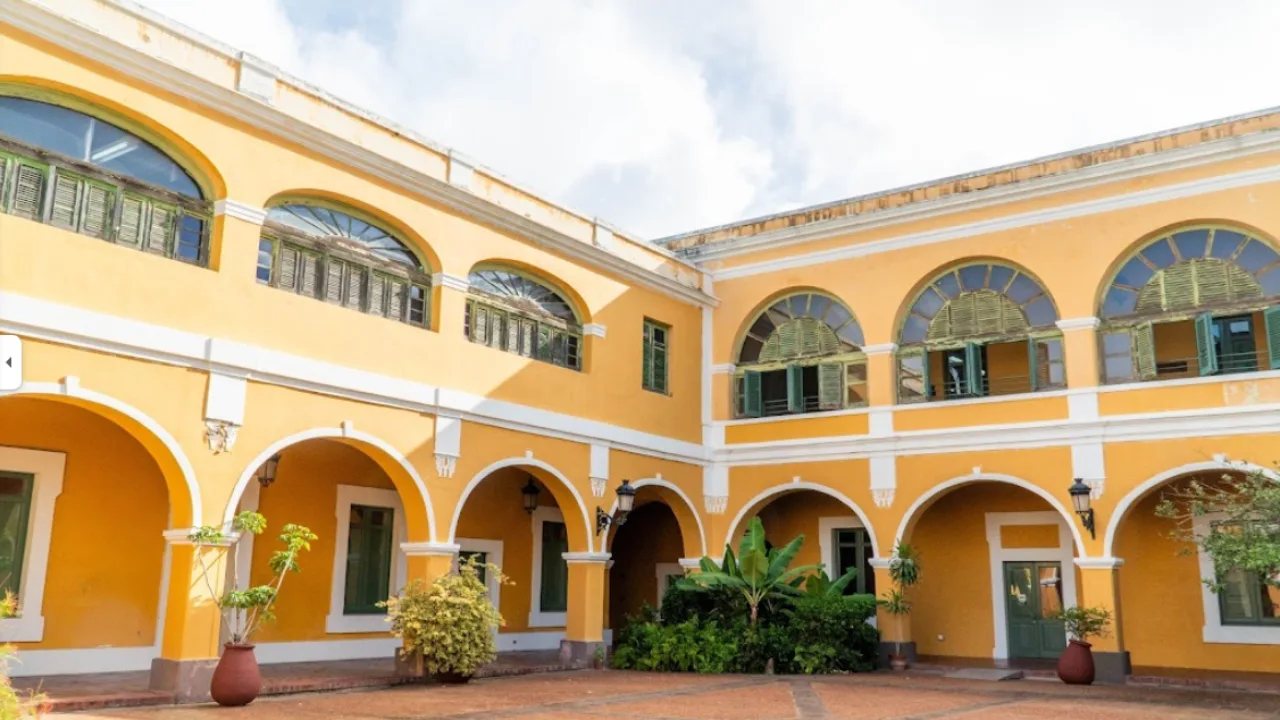
The ICP's director noted that the public corporation owns more than 39 historic structures, including the ICP's headquarters and the Antiguo Arsenal de la Marina Española in Old San Juan.
It has also been responsible for creating the Patrimonio Histórico Edificado, which includes the development of various historic districts, among them the historic districts of Old San Juan, San Germán and Ponce, and it oversees the protection of archaeological zones as well as a collection of more than 20,000 pieces in that field.
The ICP created the Archivo General and the Biblioteca Nacional, where tens of thousands of old and current books are stored, along with more than 20,000 historical documents.
According to Ruiz, the ICP has created various programs to preserve the arts in Puerto Rico, including the only government theater program, as well as programs in music, crafts and more. It sponsors or coordinates more than 400 activities throughout the year, including theater festivals, traditional music festivals featuring trova, bomba and plena, and various crafts fairs, including the Campechada.
It administers about 11 museums and parks across the archipelago, among them the Museo Casa Blanca, the Museo de Arte Religioso Porta Coeli and the Casa Natal Celso Barbosa. It also has 36 affiliated cultural centers across the country.
Currently, it has implemented a "new direction" to create creative industries that drive economic development and has also begun to view artists "as economic assets," Ruiz explained.
Why does the ICP matter?
For Ruiz, the ICP's importance lies in the development of what has long been recognized as Puerto Rican identity. "That definition of Puerto Rican identity was expressed and developed by don Ricardo Alegría when he began to speak of the three races," one of the elements included in the ICP's logo, he pointed out.
It has helped create cultural programs in various municipalities and protect Puerto Rican cultural heritage as we understand it today, ranging from musical and artistic expression to the protection of documents, crafts and objects produced in the archipelago.
For his part, historian, journalist and cultural promoter Pedro Reina Pérez explained that the ICP has been essential for "protecting, promoting and making use of the historical heritage" and that, today, its importance lies in "organizing that part of life that has to do with Puerto Rican cultural production."
Despite the financial difficulties it has had to face, the ICP has lost nearly 90% of the government funding it received since 2017, as Ruiz Cortés has pointed out before the Legislature, and it has been effective "in securing outside funding to keep operating," Reina Pérez noted.
What does Senate Bill 273 do?
In general terms, the six-page bill proposes eliminating the ICP and transferring its functions to the DDEC as a Puerto Rican Culture Program, on the grounds that the structure "is obsolete" and has a "duplication of functions" that causes delays. The ICP's movable and immovable assets, staff and budget would be transferred to the DDEC in their entirety, with the aim of developing culture as an element of economic development.
Criticism of S.B. 273
However, for Reina Pérez, this bill "is quite flawed," since "the text is vague and attempts to reduce 70 years of a public corporation into a small program attached to the DDEC."
"It strikes me as a capricious and insufficient bill," since it does not explain what those duplications of functions are or why the structure is obsolete. "It cites no cases," he said. "The main flaw, among other things, is that it does not explain which exclusive sector has been favored by the ICP," he added.
The historian also considered that the DDEC already has "a massive portfolio of responsibilities" and it is unclear whether it could take on another.
For her part, Ruiz said the ICP was not consulted on this bill, but left the door open for a conversation about it, including possible improvements to how the corporation operates.
"I express our absolute rejection of S.B. 273… The mere possibility of transferring these functions to another entity focused solely on economic development puts at risk the preservation of our rich history and cultural heritage," Ruiz said in a press release.
Stay informed on the issue with fact-based sources (fact-based media).
Follow the bill's progress in the Sistema Único de Trámite Legislativo (SUTRA), which lists all bills introduced in the Legislature, their current status and related documents. You can filter the search by typing PS0273.
Write or call your legislator. Both the House and Senate websites list legislators along with their office phone numbers and email addresses. To reach Senate President Thomas Rivera Schatz, the author of P. del S. 273, you can call 787-724-2030 or write to trivera@senado.pr.gov.
This content was translated with the assistance of Artificial Intelligence (AI).