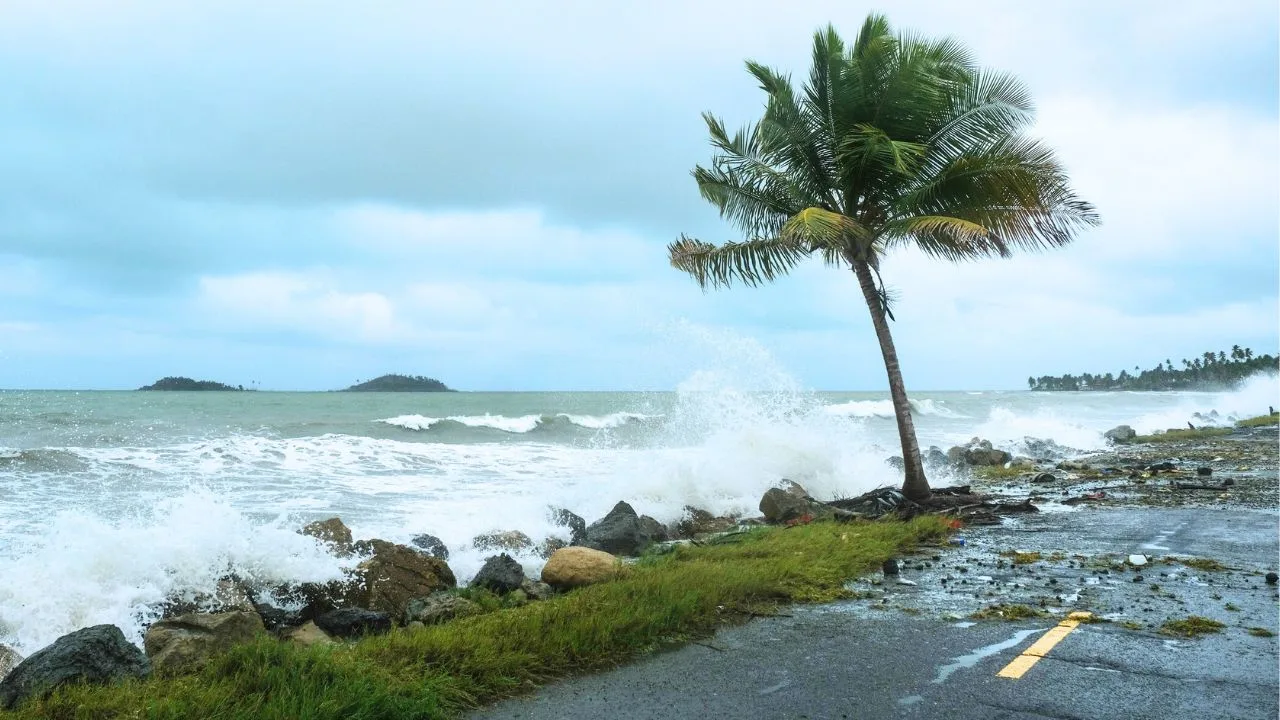
With help from Jaime González, director of the San Juan zone for the Negociado para el Manejo de Emergencias y Administración de Desastres, we want to answer some relevant questions about the preparations you should make before a hurricane.
If a hurricane is coming but is still far away, what should I do?
"If it were a direct or near-direct impact event, meaning it passes fairly close to our region, the first step is definitely evacuation. If you live in an area prone to coastal flooding or rain flooding, the announcement is evacuation. We move immediately with the mayors and their emergency management staff to support them in evacuating people who are in imminent danger."
"We already have shelters identified, including schools, community centers and recreational areas, that are part of the Departamento de la Vivienda shelter plan, and with reasonable lead time before these direct or indirect impacts, people will be moved to these shelters to get them out of the danger zone."
Is it possible that communications could fail again, as they did during Hurricane María?
"Communications are more robust now, and there is greater unity among the telecommunications companies, because Hurricane María taught them that no one can operate independently. Here in San Juan, communications went down, but we had one that kept working, and through that company we reconnected the others and were able to restore cell service more quickly."
"The government and the municipalities had to strengthen ourselves on the communications front. We now use satellite communications, and we have antenna-to-antenna links that don't require repeaters. I can easily reach Ponce or Mayagüez without needing a repeater."
What would you recommend regarding the operation of generators or gas-powered equipment?
"People should get informed. This happens in urban areas, but mostly in rural ones: if you buy a generator, that generator comes with instructions, or the seller is obligated to tell you how to use it. If not, visit our offices and we will advise you, help you, or even come to your home."
"People who use gas stoves need to be checking that tank and the gas lines, because in emergencies, when we lack electrical service, that is when they get used the most."
Given your experience, what do you suggest to residents heading into this season?
"Hurricane María was a lesson, we all know that. Anyone who did not learn from María will, unfortunately, face the same consequences. The message we have always had, from the central, local and federal governments, is that people need to prepare."
"We are living in a time when we have to be self-sufficient first and rely on governments second. That is the logic. We need to have our family plan, our community plan, and the two go hand in hand. The community plan is extremely important: communities need to come together."
"We cannot depend on the government when situations are catastrophic, as Hurricane María was. We know that some areas will be cut off, that there will be a larger number of people with needs that we cannot all attend to at once. That is why we have to prepare."
This content was translated with the assistance of Artificial Intelligence (AI).