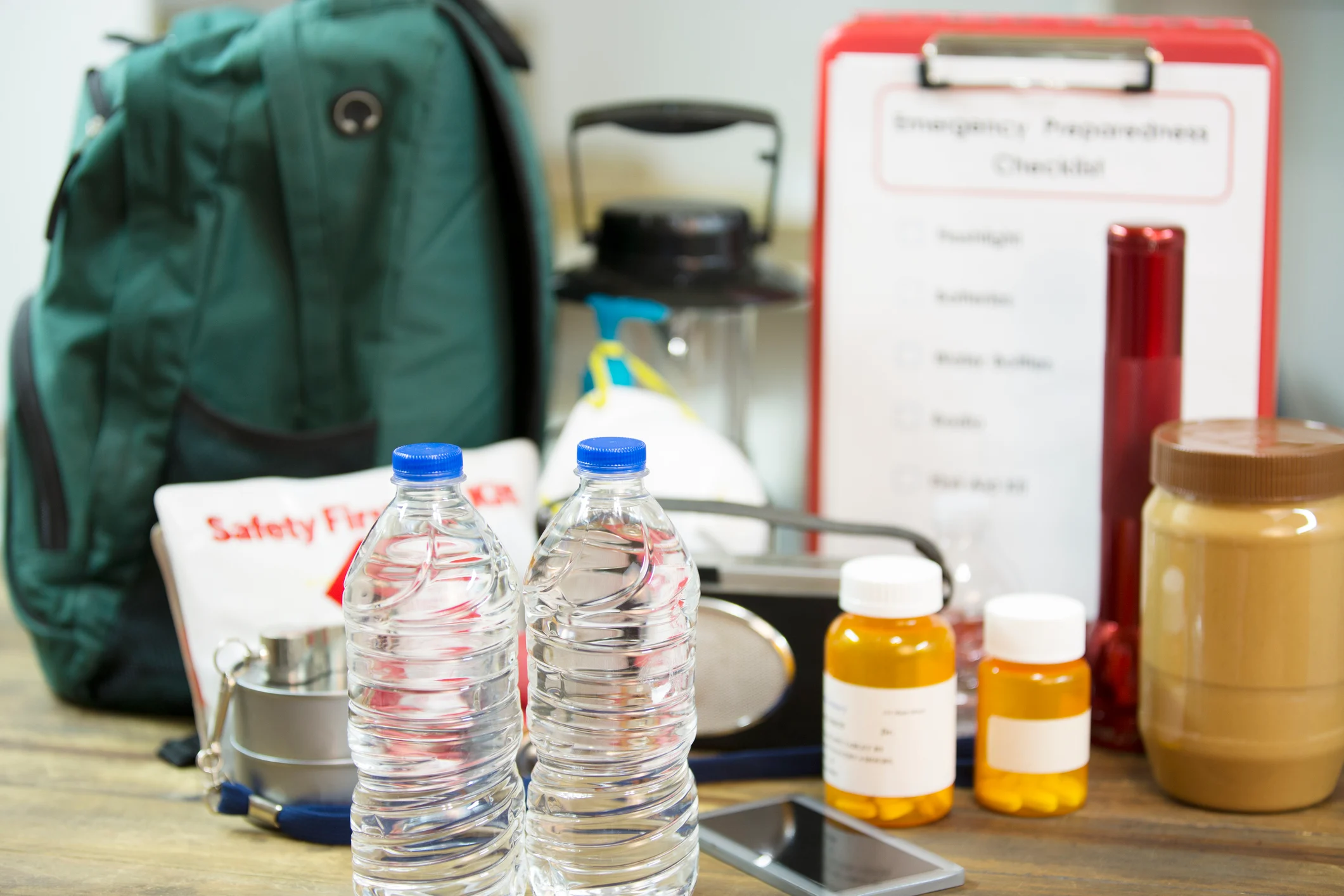
Here is a list of what your first-aid kit and disaster supply kit should contain.
Preparation is key when a storm or hurricane is approaching. With hurricane season (June 1 to Nov. 30) in mind, here is a guide to the basic supplies for this type of disaster and what your first-aid kit should include.
Before assembling the kit: assess your risk and create an evacuation plan
Before putting together your essential supply kit, the National Oceanic and Atmospheric Administration (NOAA) recommends determining the risk level of your home and establishing an evacuation plan.
How do you assess your risk? Check whether your home is in an area exposed to:
Storm surge,
Flooding and rain,
High winds,
Rip currents.
When should you create an evacuation plan? If your home is exposed to any of the risks listed above, create an evacuation plan that includes:
Multiple escape routes (roads to take to get out of the risk zone),
Have your supply bag ready (keep your family in mind),
Plan for your pet,
Follow evacuation orders if they are issued.
Checklist for preparing your kit
This list will help you put together your essential supply kit or bag in case you face an emergency or weather disaster. According to the Federal Emergency Management Agency (FEMA), your kit should be in a bag or container that is easy to carry and should contain the following:
Water: one gallon per person per day for several days. You should also have water for personal hygiene.
Food: a supply of non-perishable food for at least 3 days
A battery-powered, hand-crank or solar radio: FEMA also suggests having a NOAA weather radio with an alert tone
Flashlight: battery-powered and solar options are available
Candles: useful if the flashlight runs out
Matches and lighters: stored preferably in plastic bags to keep them dry
Spare batteries: for flashlights, radios or any electronics that require them
Whistle: to signal for help
First-aid kit (detailed below)
Wet wipes: for personal hygiene
Garbage bags
Manual can opener: for food
Maps
Cell phone, chargers and a backup battery
Mask: to filter contaminated air
Scissors, plastic sheeting and duct tape: to build a shelter in place, if necessary, FEMA recommends
Wrench or pliers: to shut off utilities such as water or electricity
Emergency phone numbers: keep an accessible list in case your phone runs out of battery
Additional items for the kit
Depending on your particular situation, here is a list of items you should consider adding to your kit:
Soap
Hand sanitizer
Disinfecting wipes (to sanitize surfaces)
Prescription medications
Glasses and contact lens solution
If you have infants: formula, bottles, wet wipes, diaper rash cream
If you have a pet: extra food and water
Cash
Important family documents (this list may help you)
A sleeping bag or blanket for each person
A complete change of clothes
Sturdy footwear
Fire extinguisher
Feminine and personal hygiene products
Kitchen supplies (paper plates, napkins, cups, etc.)
Paper and pencil
If you have children: books, games, puzzles and other activities
Kit maintenance and storage
Keep in mind that some items (such as food and water) have expiration dates, so it is important to check those dates and replace anything that has expired.
You should also store the kit in places that are accessible but secure. In the case of hurricanes, you have time to prepare, but for other types of emergencies, FEMA suggests keeping kits at home, at work and in your vehicle.
How to put together a first-aid kit
To put together a good first-aid kit, keep in mind that it should contain items that allow you to treat common emergencies, injuries and certain symptoms. You should also include any medications a family member with an illness or condition may need.
Below is a list of everything you need to include in that kit for any contingency:
Basic supplies:
Adhesive tape
Hydrogen peroxide for disinfecting
Cotton balls and cotton swabs
Thermometer
Latex-free disposable gloves, several pairs
Elastic bandages
Extra-strength adhesive
Sterile non-stick bandages and gauze rolls in various sizes
Eye shield or eye pad
Instant cold packs
Petroleum jelly or another lubricant
Plastic bags in various sizes
Scissors and tweezers
Hand sanitizer
Antiseptic solution and wipes
Sterile saline solution for irrigation
Syringe, cup or spoon for medications
Basic medications for cuts or injuries:
Personal medications that do not require refrigeration
Aspirin
Pain relievers such as acetaminophen (Tylenol, others) and ibuprofen (Advil, Motrin IB, others)
Cough and cold medications
Antihistamines, such as diphenhydramine
Hydrocortisone cream or lotion for itching
Antacids
Laxatives
Anti-diarrheal medications
Calamine lotion for bites
You can also include over-the-counter medications, such as those for pain, colds and indigestion.
Prepared kits from the Red Cross: The American Red Cross has a page with first-aid kit supplies and prepared kits with everything you need for an emergency. You can view and purchase them here. Prices for small, prepared kits start at around $30, and there are also some for 25 people or more.
Keep in mind: Water storage containers
FEMA recommends that each family store at least one gallon of water per person for each day following a storm, in case the drinking water supply is cut off.
Such containers should be made of plastic, fiberglass, glass or another non-degradable material, and should not have been previously used to store chemicals. Containers with lids that seal out the outside will also protect your supply from contact with insects or other foreign contaminants.
This content was translated with the assistance of Artificial Intelligence (AI).