Puerto Rican artist Rafael "Rafique" Vega painted a collaborative mural at a school in Japan connecting Taíno iconography with local rice-farming culture.
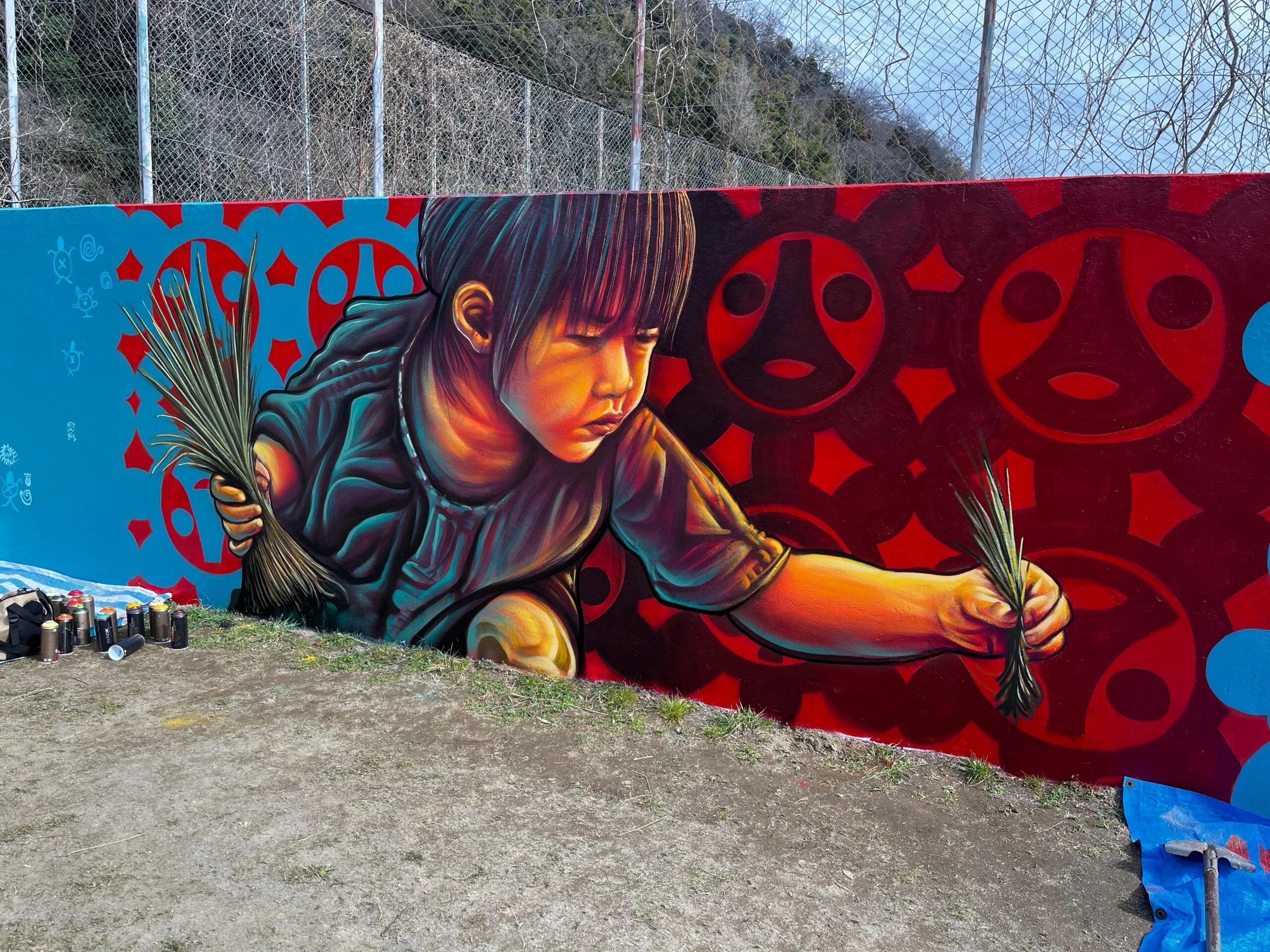
What's happening? The 25-year-old Puerto Rican artist, known for incorporating indigenous cultural references into his work, painted a mural in the courtyard of Escuela Elemental de Kamiyamaguchi, northeast of the town of Hayama, in the prefecture of Kanagawa, Japan.
The piece, titled "Sembrando Conciencia," is part of his project "Encuentros Transculturales", through which he seeks to build bridges between his Taíno and Caribbean roots and the local culture, historically tied to rice production.
Provided by: Rafique
The work depicts a Japanese girl planting rice, framed by a pattern inspired by the Taíno sun.
The symbol works as a bridge between both cultures: the sun is central to Japan's visual imagery, present even on its flag, and is a key element of Taíno iconography.
The Taíno sun rises in the east
The initiative came from Rafique himself, who contacted a local arts organizer to obtain the necessary permits and carry out the intervention at the school.
After speaking with local artists, teachers and students, the artist proposed that the work be collaborative. The school's children reinterpreted and drew Taíno symbols "so they learn about the connection of these symbols not only with Asia, but also with the Caribbean, and how they repeat across different cultures, even with the same meaning," he explained.
The section the artist worked on is done entirely in spray paint, while the students' section was made with acrylic paint.
Why does it matter? "This mural is at the same time an attempt to preserve the history of Kamiyamaguchi, a rice-farming town that has been gradually losing that tradition," Rafique noted.
Beyond the piece itself, the project represents an uncommon exercise: a Puerto Rican artist bringing Taíno references to Asia and putting them in dialogue with a Japanese school community.
"This is a record of the cultural exchange that came out of this trip, a dialogue between two islands that promotes Puerto Rican culture in the world," he concluded.
What goes into the murals we enjoy around Puerto Rico?
Watch our interview with the artist, where he explains his process and what inspires him.
This content was translated with the assistance of Artificial Intelligence (AI).