Puerto Rico's restaurant industry continues to grow. In 2026, the Island has 5,019 restaurants and food establishments, 25% more than in 2020, and the sector generates more than 73,000 jobs, 40% more than six years ago. Faced with higher operating costs and fewer customers, many owners are adjusting their business model to stay profitable.
The data come from the study Proyecciones 2026, commissioned by the Asociación de Restaurantes (ASORE) and prepared by the firm Inteligencia Económica, based on surveys of representatives from 898 establishments conducted between Sept. 15 and Oct. 14.
Why it matters: Growth in establishments and jobs since 2020 shows the industry's contribution, while the survey results help explain the adjustments businesses need to sustain profitability. Some 95.7% of respondents reported higher operating costs than in 2025, and 57.4% saw fewer customers.
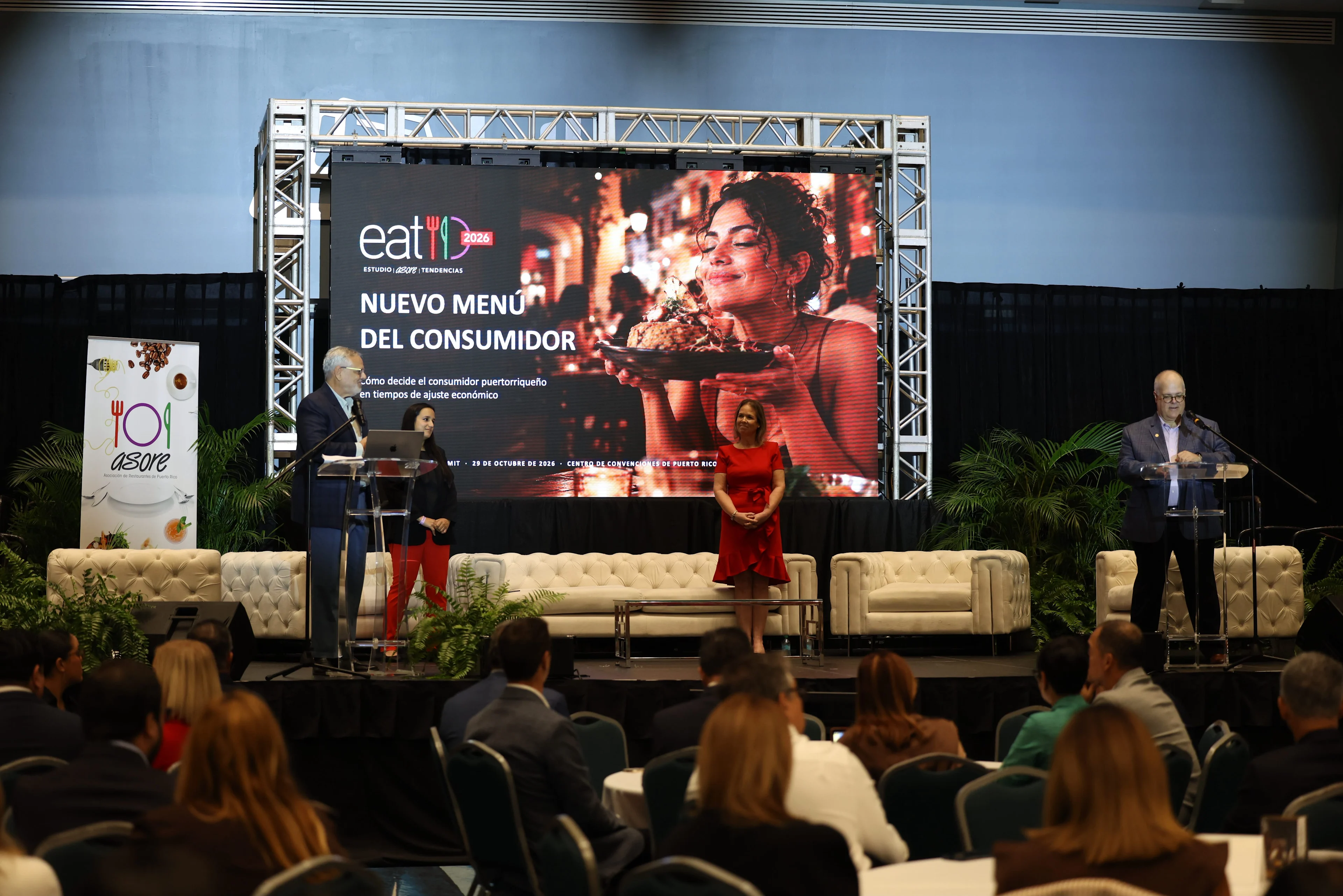
ASORE president Sonia Navarro anticipated that restaurants could prioritize diversifying their revenue through delivery services, catering, special events and lunch offerings, with less emphasis on opening new locations.
"You're going to see fewer expansions, less knocking down walls, but more opening of channels," said ASORE president Sonia Navarro, during the presentation of the study at the ASORE Restaur
Jobs and sales in the restaurant industry
Jobs. The restaurant industry generates about 73,309 jobs in 2026, 40.8% more than in 2020, equivalent to 21,255 additional jobs. Compared with 2025, employment fell 0.9%.
Industry activity also supports 36,700 indirect and induced jobs. Adding those to direct jobs, its total impact is around 110,000 jobs in Puerto Rico.
Higher wages. The average wage in the industry rose 4.9% between 2024 and 2025. During that period, the average for chefs went from $35,780 to $41,480; for bartenders, from $24,910 to $28,160; for servers, from $27,940 to $29,690; and for fast-food cooks, from $21,500 to $25,130.
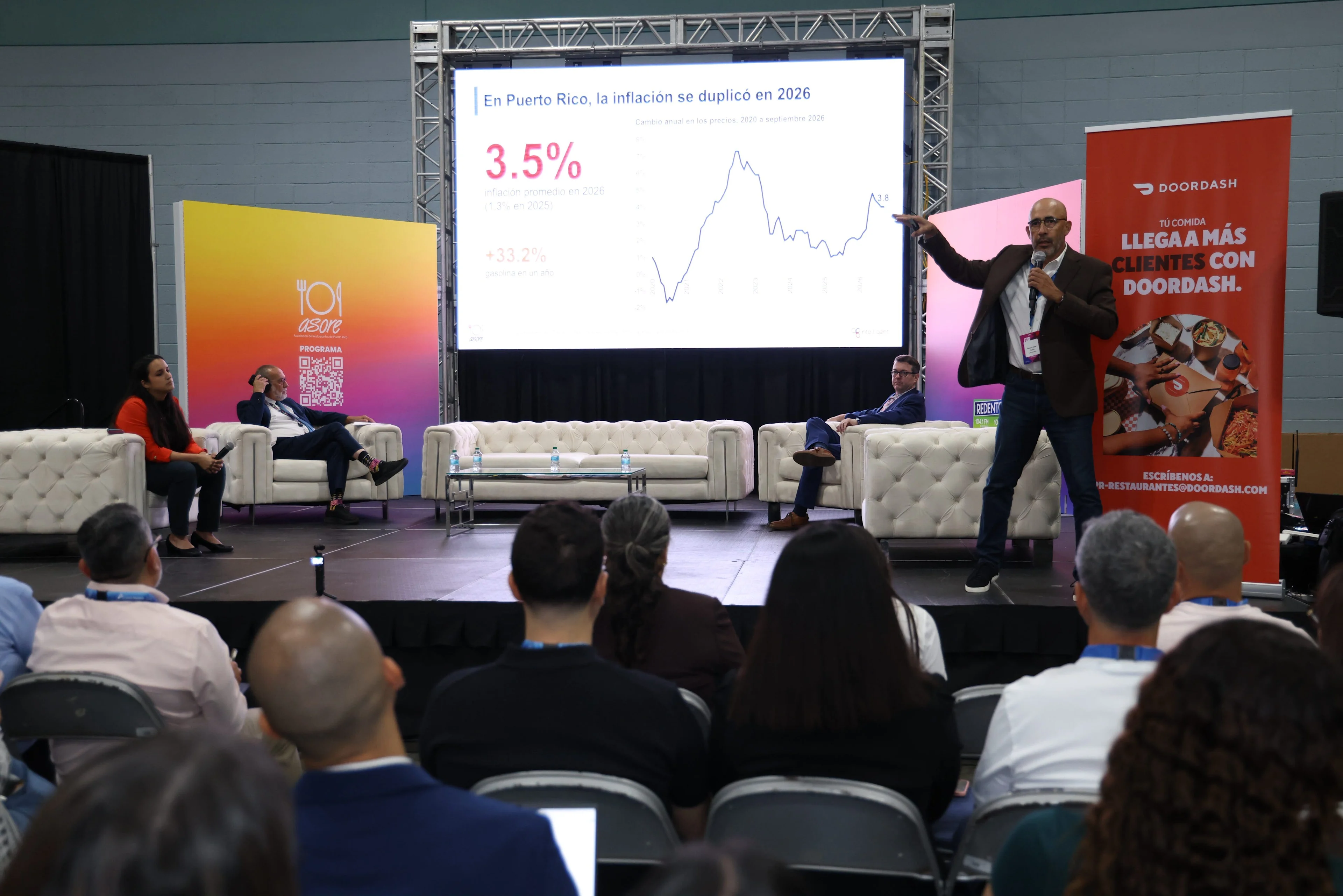
Chantal Benet Arbona, vice president of Inteligencia Económica, attributed the wage increase to the implementation of the minimum wage increase in 2024. For his part, Gustavo Vélez pointed out that the statewide wage rose, on average, to $16 per hour.
Sales up. Restaurant sales increased from $340 million in January to $379 million in July. However, sales volume and customer traffic did not rise; what increased was "nominal sales," Benet Arbona explained, also pointing out a 3.3% increase in the price of food away from home.
Abrir nuevos canales de venta.
Ofrecer menús más reducidos y especializados.
Ajustar los horarios de operación.
Desarrollar ofertas de almuerzo.
Menús especiales para quienes buscan alternativas saludables o con porciones reducidas (ante alza en uso de medicamentos GLP-1).
Eventos especiales de temporada para atraer clientes.
Ofrecer servicios de catering por temporada.
What restaurant owners say
The Proyecciones 2026 study captures owners' perceptions of the economy, based on the interviews and not necessarily on each restaurant's specific data.
Interest in more local product. All participating restaurants indicated they use some local product, and 40% expressed interest in increasing their use of it. Some 76.1% noted that local product accounts for less than 12% of what they use.
The main barriers to increasing the use of local product are availability (73.8%) and price (64.3%).
Fast foods sell more. Some 70% of quick-service restaurants (fast foods) said they sold more than in 2025, the only segment that saw increases. Fine dining restaurants showed the steepest decline, with 80% saying they had lower sales.
Fewer sales. Some 46.8% of respondents said they sold less in the first half of 2026 than in the second half of 2025, the highest figure since the survey began in 2020. However, 38% said they sold more, and another 15% said they saw no change.
Customer traffic. A total of 57.4% of restaurants said they received fewer diners than in 2025, attributing this to lower foot traffic (72.7%), higher menu prices (54.5%) and more competition (36.4%).
Profit margins. The share of surveyed restaurants reporting profit margins below 8% fell from 77% in the second half of 2025 to 66% in the current survey. Even with that decline, close to two in three participants still operate below that margin, which is considered low in the industry. A total of 17% of respondents said they are operating at a loss.
Costs. A total of 95.7% have higher costs than in 2025, and 46.8% have costs that are more than 10% higher. Water has emerged as a new pressure point amid the drought, appearing in the top 3 for 29.8% of respondents.
Electricity, the biggest cost. A total of 51.1% of respondents said electricity is their greatest cost pressure. Food came next, cited by 19%; staff, by 12.8%; and taxes, by 8.5%.
Jobs. A total of 72.1% of respondents have open positions, while 52.2% have reduced staff or frozen hiring. Benet Arbona pointed out that most have low staff turnover.
Lower alcohol sales. A total of 36.1% of respondents reported a drop in alcohol sales. Reasons cited include less disposable income (67.6%) and lower consumption among young people (41.2%).
Distributors. A total of 40% of distributors reported higher sales, the lowest share since 2023. A total of 60% said they have not passed on a fuel surcharge, despite rising costs and a fleet that costs them 10% more. A total of 40% raised their minimum order cost.
A total of 60% of distributors cut costs to attract customers, and electricity is among their main expenses.
La deuda está “a la mitad” que en 2016, cuando llegó la Junta de Supervisión Fiscal (JSF) y “la deuda no se podía pagar”.
“El empleo está en el nivel más alto, el desempleo ha bajado a los niveles históricos más bajos. La tasa de participación laboral aumentó”.
“El turismo está al doble: de 3 millones estamos cerca de 7 millones de turistas”.
Vélez cerró con una proyección que depende de factores externos e internos: “Mi hipótesis es que si se acaba la guerra y el petróleo baja, si los aranceles se estabilizan e internamente podemos implementar una agenda de los temas que afectan a la economía de los comerciantes, esto va a retomar su curso. Y esto apoyado por los cerca de $40,000 millones que están estacionados para financiar la reconstrucción”.
Factores externos a observar: el conflicto con Irán y el precio del petróleo; los aranceles; las tasas de interés más altas; y los recortes en fondos federales.
Factores internos a observar: el costo de la luz; el costo de vida; los ajustes en el gasto de los consumidores; y los costos operacionales y de nómina.
This content was translated with the assistance of Artificial Intelligence (AI).