After DACO and DRNA issued an order voiding the regulation's interpretation, the House Committee on Consumer Affairs summoned the agency heads to discuss the law's future. Here's what you need to know.
,
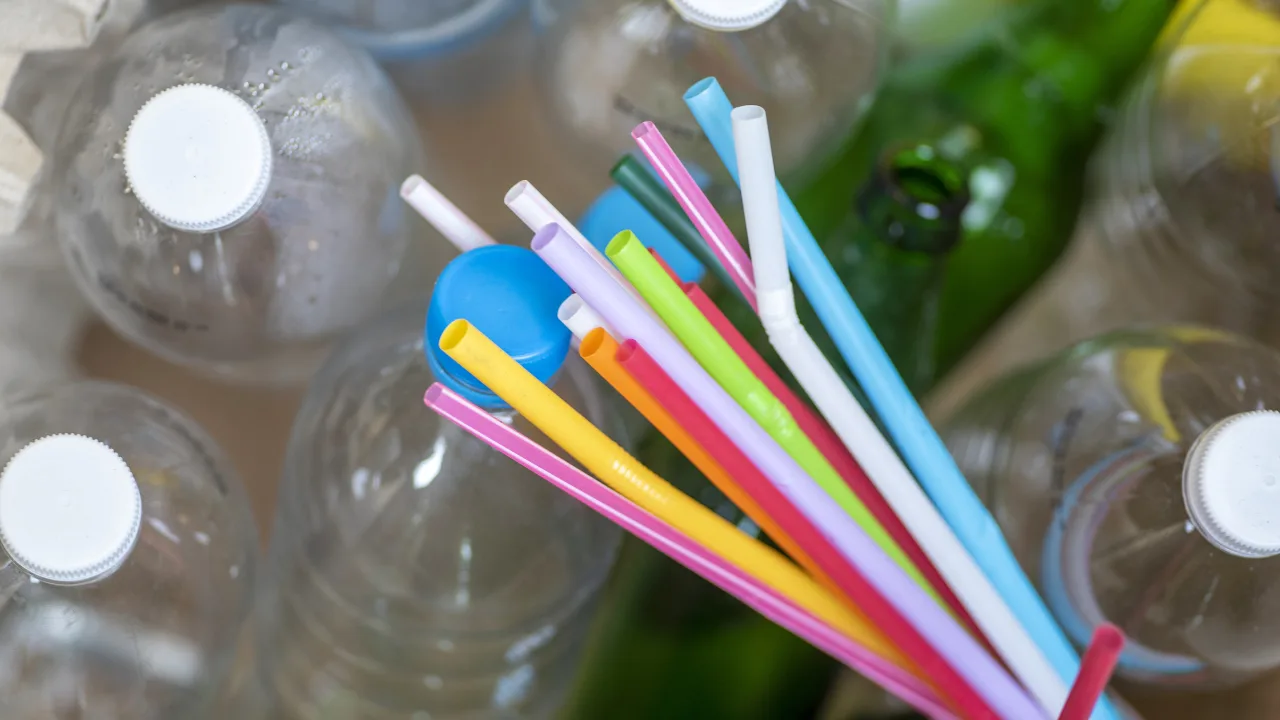
The Comisión de Asuntos del Consumidor of the House of Representatives summoned the designated secretary of the Department of Consumer Affairs (DACO), Natalia Cantoni, to discuss possible amendments to Ley 51 de 2022, which prohibits the use and distribution of single-use plastics and foam in commercial establishments.
In context:
The meeting, scheduled for Feb. 3, comes after DACO and the Department of Natural and Environmental Resources (DRNA) voided the interpretation of the regulation for that law, which both agencies had created jointly, through Orden Administrativa 2025-02.
The meeting will be at 11:00 a.m. in the office of House Vice President Yashira Lebrón, and will include the participation of Rep. Joel Franqui, one of the authors of Ley 51, as well as the chair of the Comisión de Asuntos del Consumidor, Edgar Robles.
📝 What you need to know about how the order affects the implementation of this law
What does the DACO and DRNA order voiding the regulation's interpretation mean?
Orden Administrativa 2025-02 voids the interpretation of Reglamento 9570 of Ley 51, which established the procedures for overseeing and enforcing compliance among commercial establishments that must stop using single-use plastics.
In practice, this order has two immediate effects:
It prevents the lawsuit filed by the Asociación de Restaurantes de Puerto Rico (Asore) before the Court of Appeals from moving forward. That lawsuit, filed against DACO and DRNA, sought to halt the regulation because Asore considered it insufficiently clear for business owners. With this order, the lawsuit would become moot, since the regulation's interpretation is suspended, as Asore had requested.
It halts enforcement of Ley 51 in commercial establishments. This comes on top of the fact that fines had already been postponed until July 1 under Orden Administrativa 2024-019.
According to the order, voiding the regulation's interpretation takes into account "the best interests of consumers and public policy."
"We have made this decision jointly to prevent the lawsuit before the Court of Appeals from continuing. (With) the issuance of joint order 2025-002, we void the previous official interpretation, clearing the way for more effective and fair management of Ley 51-2022. We want to guarantee a fair and effective transition toward compliance with Ley 51-2022. Our priority is to offer the necessary support to business owners and consumers to ensure they understand and adopt the provisions of the law," the designated DACO secretary said in a written statement.
Despite the orders, Platea was told that DACO and DRNA are expected to continue educating consumers and businesses about the implementation of Ley 51.
What are business owners' concerns about Ley 51?
Both Asore and business owners consulted by Platea explained that Ley 51 and its regulation were not entirely clear about which products can be used to replace single-use plastics and foam.
The definitions could be ambiguous, and implementation was moving too quickly for business owners to make an adequate transition.
They also noted that local suppliers did not necessarily have biodegradable or compostable products available to replace single-use plastics.
Why do they want to change Ley 51?
The purpose of the citation by the House Committee on Consumer Affairs is to amend Law 51 to bring it in line with "the reality that exists in businesses," House Vice President Yashira Lebrón said in a written statement. She will also take part in the meeting.
"The DACO secretary showed her willingness to engage in this dialogue from the start. The space is there to work on this matter in a thoughtful way and, as I explained, addressing both things, commerce and the environment," Lebrón added.
Importance of the law for the environment underscored
The House vice president emphasized the importance of Law 51, arguing that "it is a forward-looking law that seeks to protect the environment for future generations." The law itself states that it aims to reduce plastic pollution, something associated with climate change.
For her part, engineer Ingrid Vila, president and co-founder of CAMBIO, an organization that promotes the implementation of sustainable policies, defended Law 51 and objected to DACO's intention to delay the statute's entry into force.
"DACO does not have the authority to delay the entry into force of a law. In addition, the government has a responsibility to protect the health of the people of Puerto Rico and to prevent citizens from ingesting or being exposed to harmful substances such as plastics, which have already been shown to cause chronic diseases," Vila said in a statement from Generación Circular, a multisectoral plan under the direction of CAMBIO.
According to the president of CAMBIO, it is not only plastic polymers that threaten health and the environment. "Also the additives in plastics, which are used to give products their durability and flexibility. These chemical additives have been linked to diseases such as breast and prostate cancer, heart disease and diabetes, as well as problems with children's brain development, adult fertility and effects on the endocrine system," she added.
Eight states have already banned plastic bags: Connecticut, California, Delaware, Hawaii, Maine, New York, Oregon and Vermont
The Department of the Interior will gradually phase out single-use plastics in national parks and public lands by 2032. The initiative aims to reduce the more than 14 million tons of plastic that reach the ocean every year.
In Europe, the European Union began a plan in 2019 to gradually reduce these products, increase recycling and alter their composition. By 2030, certain single-use plastic packaging will be banned in all member countries.
In Spain, for example, since 2023 businesses must charge for non-reusable containers.
In the Caribbean, several neighboring countries have already taken similar steps, including Costa Rica, Dominica, Grenada, Trinidad and Tobago, Haiti, and Antigua and Barbuda.
This content was translated with the assistance of Artificial Intelligence (AI).