
Restaurants and food businesses in Puerto Rico will have six additional months to eliminate single-use plastics and foam from their operations. The Department of Consumer Affairs (DACO) extended until July 1, 2025, the period before fines begin for those who do not comply with Law 51 of 2022, which calls for a transition to reusable, compostable or biodegradable containers and utensils.
Here is what this extension means and how the Island is preparing for the change.
Originally, the statute provided that fines of between $500 and $5,000 were to begin on Jan. 1, 2025. While some businesses have already made the transition, others are facing challenges with inventory and costs.
The extension of the fine-free period, signed Dec. 27, aims to "offer a reasonable period for businesses to adjust their practices, while we continue providing guidance and education so that compliance is achievable for everyone," DACO acting secretary Francisco González de la Matta said in a written statement.
The decision comes as the Asociación de Restaurantes de Puerto Rico (Asore) maintains a legal proceeding before the Court of Appeals over the joint regulation issued by DACO and the Department of Natural and Environmental Resources (DRNA) for this law, arguing that it needs greater clarity for implementation.
What products will and won't be allowed?
Single-use plastics are products designed to be discarded after one use. Under this law, the sale and use of plastic utensils, plates and straws will be prohibited, as will cups, glasses and food containers made of expanded polystyrene (foam) for immediate consumption or for carrying food.
As an alternative, businesses may use and sell:
Reusable plastics
Biodegradable materials (which can be broken down by microorganisms)
Compostable materials, which can break down in 90 to 180 days through the "action of bacteria or other biological means, without leaving harmful residues, as certified by the Biodegradable Products Institute.
What is the difference?
Biodegradable
"Refers to the capacity of a substance to be broken down physically or chemically by microorganisms. For example, many chemicals, food scraps, cotton, wool and paper are biodegradable; plastics and polyester generally are not."
Compostable
"Refers to items or products made with materials that can break down completely through the action of bacteria or other biological means, without leaving harmful residues, as certified by BPI, whose testing criteria are based on the standards of the American Society for Testing and Materials."
Everything compostable is biodegradable, but not everything biodegradable is compostable.
How much are the fines, and who issues them?
Fines will be issued by DACO inspectors following an inspection of the business. They start at $500 for a first violation, $1,000 for a second and $5,000 for additional violations.
During these six additional fine-free months, DACO inspectors are expected to strengthen their guidance and oversight programs so that all businesses can comply with the law.
There are exceptions, however
The law provides for specific situations in which single-use plastics or foam may continue to be used:
In the sale of meats and food items at supermarkets where "no single-use plastic alternative exists that could substitute for them, given their composition."
In pharmacies, laboratories, hospitals and institutions where the federal or state government has determined that non-plastic materials are restricted. For example, medications will continue to be sold in single-use plastic containers, as established by the Food and Drug Administration (FDA).
During emergency periods declared by the governor of Puerto Rico or the president of the United States.
It is worth noting that cafeterias in hospitals and other exempt institutions will still be required to comply with Law 51 of 2022, Platea Antonio Ríos, sustainability adviser at the DRNA, the other agency responsible for enforcing this law, said.
Challenges in implementation
The legal process and the sector's concerns: On Dec. 6, 2024, the Court of Appeals issued a resolution pausing the enforcement of Regulation 9570 and gave the DRNA and DACO 30 days to present their arguments. This came in response to a motion by Asore arguing that the regulation needs greater clarity to avoid disrupting food business operations.
Following that resolution, merchants such as Mateo Cidre, owner of Sobao Bakery & Restaurant, understood that DACO could not issue fines to businesses, since the matter was still being argued in court. "They can't fine you because the law is so ambiguous that it doesn't define what a single-use plastic is. It doesn't specify which products you can use," Cidre said in an interview with Platea, before DACO announced the extension.
One significant challenge is ensuring that there is enough inventory of biodegradable and compostable products in Puerto Rico. The government says distributors are prepared, but merchants report difficulties:
Some businesses report frequent shortages of sustainable alternatives.
Many products are not made locally and can take months to arrive, such as single-use plastic lids for coffee cups, according to Cidre.
Costs are significantly higher: between 30% and 40%, according to Asore.
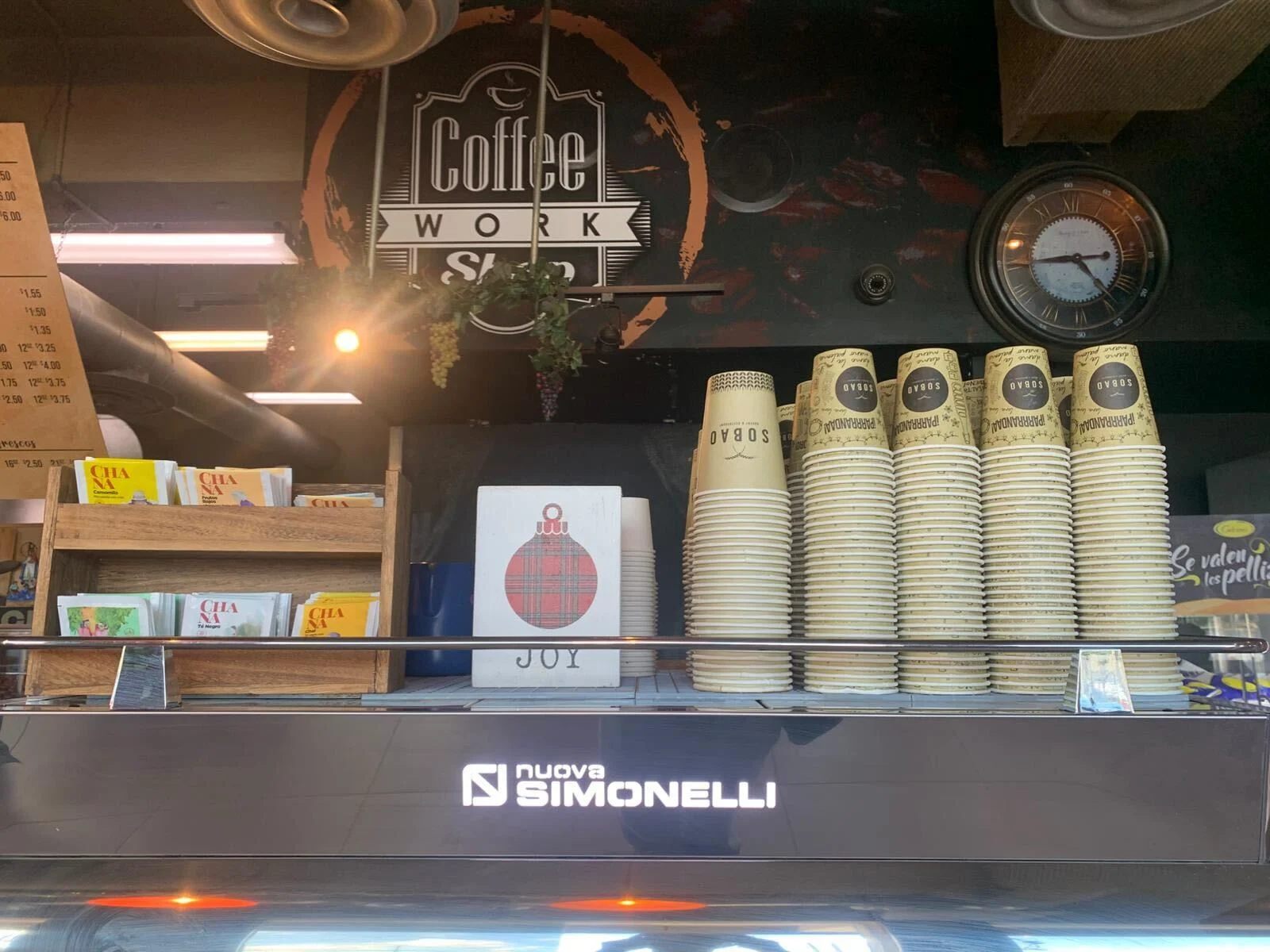
"It has been an ordeal because they run out of the product constantly. You have to turn to plastic or foam because they are not prepared to supply them," said Cidre, who began this transition in 2018.
For its part, the DRNA sustainability adviser said the government has been in contact with distributors and suppliers of these packaging products so they know which ones they can sell.
"As far as we understand, distributors have been getting ready and have products available," said Ríos. Even so, he suggested that merchants contact their suppliers directly to identify products certified as biodegradable and compostable.
What are businesses doing?
At Sobao, Cidre has been pushing the shift to multi-use plastics and biodegradable and compostable packaging since before this law, but he still doubts he can offer 100% of his products in these materials, precisely because of the supply problems he has encountered.
For its part, the ice cream shop Mucho Gusto in Río Piedras has favored eco-friendly alternatives since it opened, using wooden sticks, cardboard straws and compostable cups, though it also occasionally faces inventory problems, according to Charlie Lugo, an employee of the shop. On the day we visited, only one size of milkshake was available because the supplier did not have the smaller cup they also typically offer.
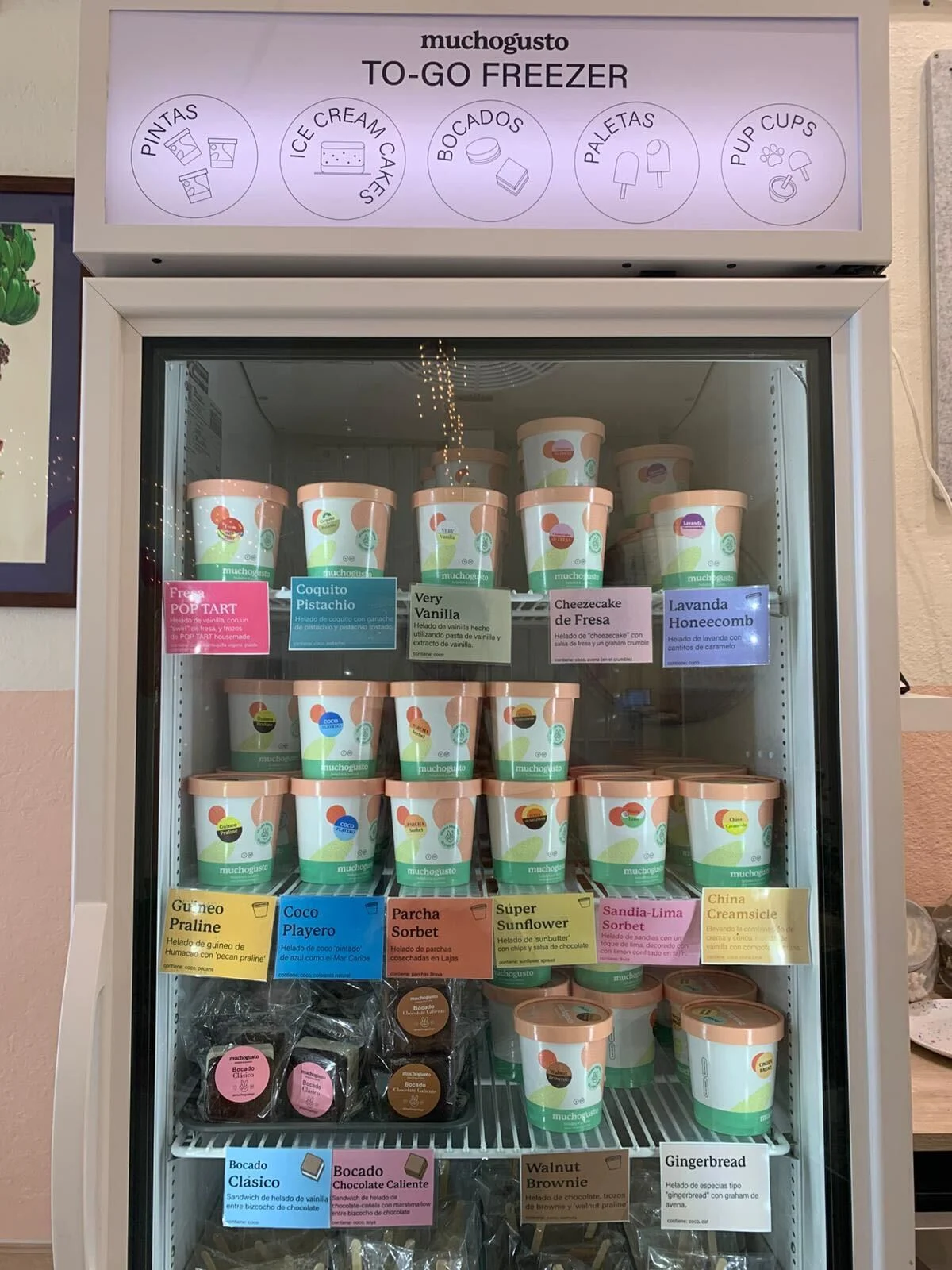
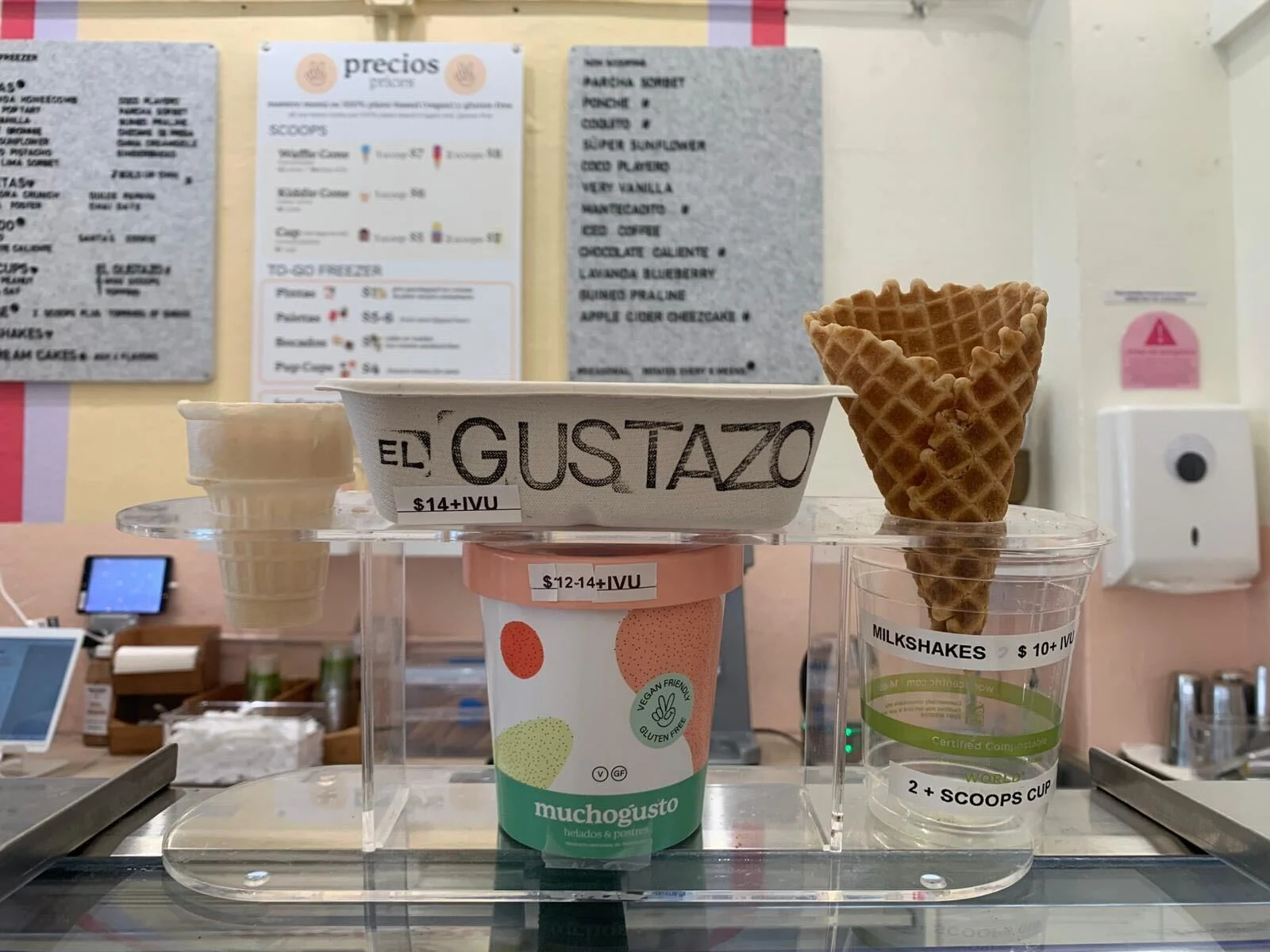
Still, there are businesses that have not yet begun the transition. That was the case with one merchant at a Chinese restaurant who was consulted and was still buying single-use plastics and foam because he believed they kept food fresher and because his supplier was still selling them. "When they stop selling them, we'll see what the substitute will be," he told Platea.
For his part, Ríos said that both the DRNA and the DACO have participated in several forums and have conducted a media tour to inform consumers and businesses about the law.
The picture beyond Puerto Rico
The elimination of single-use plastics is a global trend aimed at reducing environmental pollution. In the United States, the effort is advancing at different levels:
Eight states have already banned plastic bags: Connecticut, California, Delaware, Hawaii, Maine, New York, Oregon and Vermont
The Department of the Interior will gradually eliminate single-use plastics in national parks and public lands by 2032. The initiative seeks to reduce the more than 14 million tons of plastic that reach the ocean each year.
In Europe, the European Union began a plan in 2019 to gradually reduce these products, increase recycling and alter their composition. By 2030, certain single-use plastic packaging will be banned in all member countries.
In Spain, for example, since 2023 businesses have been required to charge for non-reusable containers.
In the Caribbean, several neighboring countries have already taken similar steps, including Costa Rica, Dominica, Grenada, Trinidad and Tobago, Haiti, and Antigua and Barbuda.
Check with DACO for details on the law and which products you could use to replace single-use plastics.
Check with your distributors to find out what sustainable alternatives they offer for food packaging.
Invite customers to bring their own utensils, straws or reusable containers when they visit your establishment. Just as many people have learned to bring reusable bags to the supermarket, this could become the new norm.
Keep an eye on the news for the outcome of the lawsuit filed by Asore, as it remains active and could affect the law's implementation.
Keep in mind that fines will not begin to be issued until July 1, 2025.
This content was translated with the assistance of Artificial Intelligence (AI).