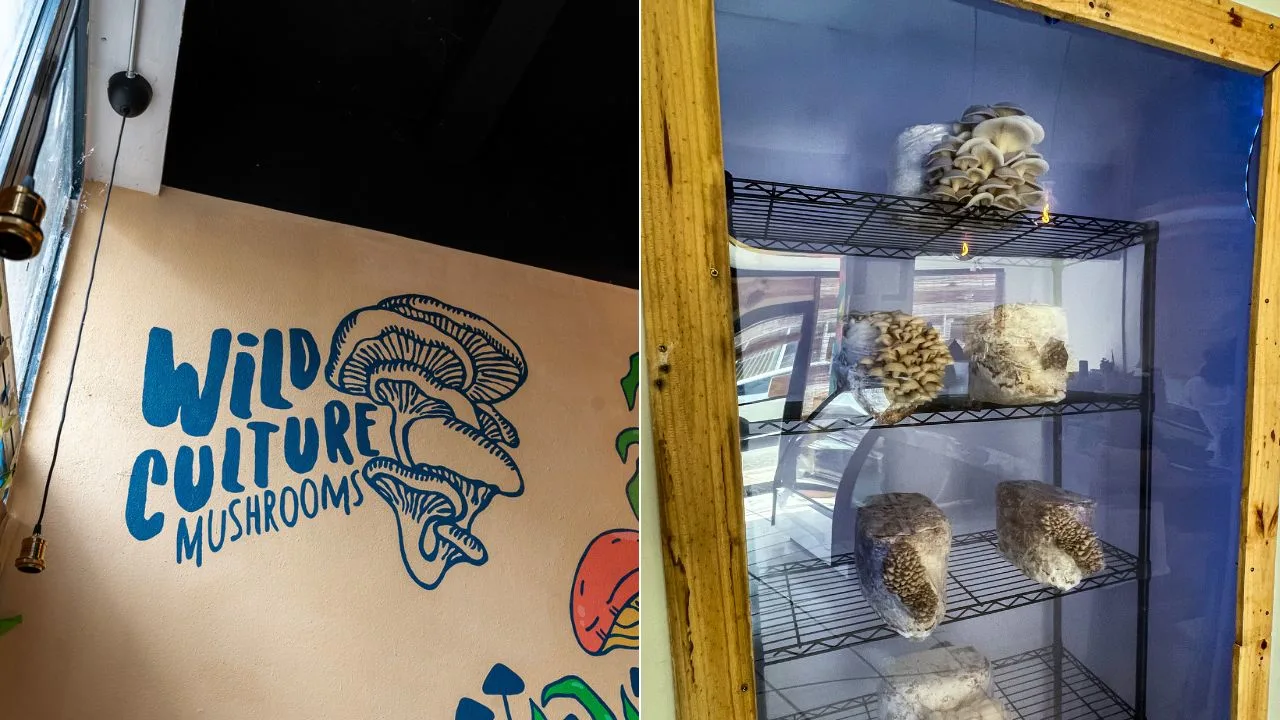
In the municipality of Aguada you'll find Wild Culture Mushrooms, Puerto Rico's first and only medicinal mushroom farm and market, with a commitment to promoting the health benefits of these foods.
The café-style business offers a wide variety of foods, desserts and drinks infused with fresh mushrooms, along with derived products such as mushroom powders and extracts, among others.
Max Rosales and Micku Murgolo, a Venezuelan-born couple dedicated to mycoculture, the cultivation of mushrooms, launched this innovative market on the Island after learning about medicinal mushrooms through their use in Chinese medicine in Beijing, where the two happened to meet.
They lived in Thailand for five years and there learned about the controlled cultivation and trade of mushrooms.
They later moved to Puerto Rico and decided to start a business after observing the Island's lack of food self-sufficiency.
"During the pandemic and the earthquakes, [many people] started growing [food] because there was scarcity and need," Murgolo recalled.
They questioned why not do it. To their surprise, they found a clientele that already knew about mycoculture and appreciated their initiative in filling that market gap on the Island.
The benefits of mushrooms as medicine and food
According to Wild Culture Mushrooms.com, the Aguada farm grows about six types of mushrooms:
Melena de león: supports cognitive function and the nervous system.
Reishi: helps the immune system and promotes sleep.
Chaga: contains antioxidant and antiviral properties and supports the digestive system.
Cordyceps: considered a natural aphrodisiac, it boosts energy and supports testosterone production.
Cola de pavo: supports the immune system and gut health, and has anticancer properties.
Setas de ostras: acts as an anti-inflammatory and regulates blood sugar levels.
To ensure a quality product and maintain their eco-friendly philosophy, they incorporated solar energy, compostable or cardboard packaging, and spent mushroom substrate to fertilize the crop.
"Mushrooms are like a filter of nature. The mushroom absorbs what surrounds it. It doesn't coexist cleanly. A mushroom next to a road wouldn't be fit to eat, but if you see that mushroom in the middle of El Yunque National Forest, that's a different story entirely," Murgolo said, pointing out the importance of where mushrooms come from.
The quality of the mushrooms ensures the best flavors for preparing dishes and drinks, as well as for producing derivatives that offer customers a wide range of consumption options.
"It's a matter of being creative and seeing what the person's lifestyle is like," the co-owner said.
They also offer cultivation workshops on a variety of mushrooms, as they understand the importance of education and destigmatizing these medicinal, high-plant-protein foods.
"Education is so fundamental. For those who aren't open to eating mushrooms, let me change your perspective," Murgolo said.
Expansion to San Juan
Noticing a small boom in the local mushroom industry and growing demand for their products from various restaurants, including Flora in Aguadilla and Ariel in San Juan, the owners decided to open a second location in Santurce, which will help them build a more practical system for reaching the whole Island.
The new space also helps them reach customers who want to try their myco-lattes and buy their fresh mushrooms.
The new location promises a more interactive experience that will allow consumers to learn about the benefits of mushrooms.
Journalist Luis Alfaro Pérez contributed to this story.
This content was translated with the assistance of Artificial Intelligence (AI).