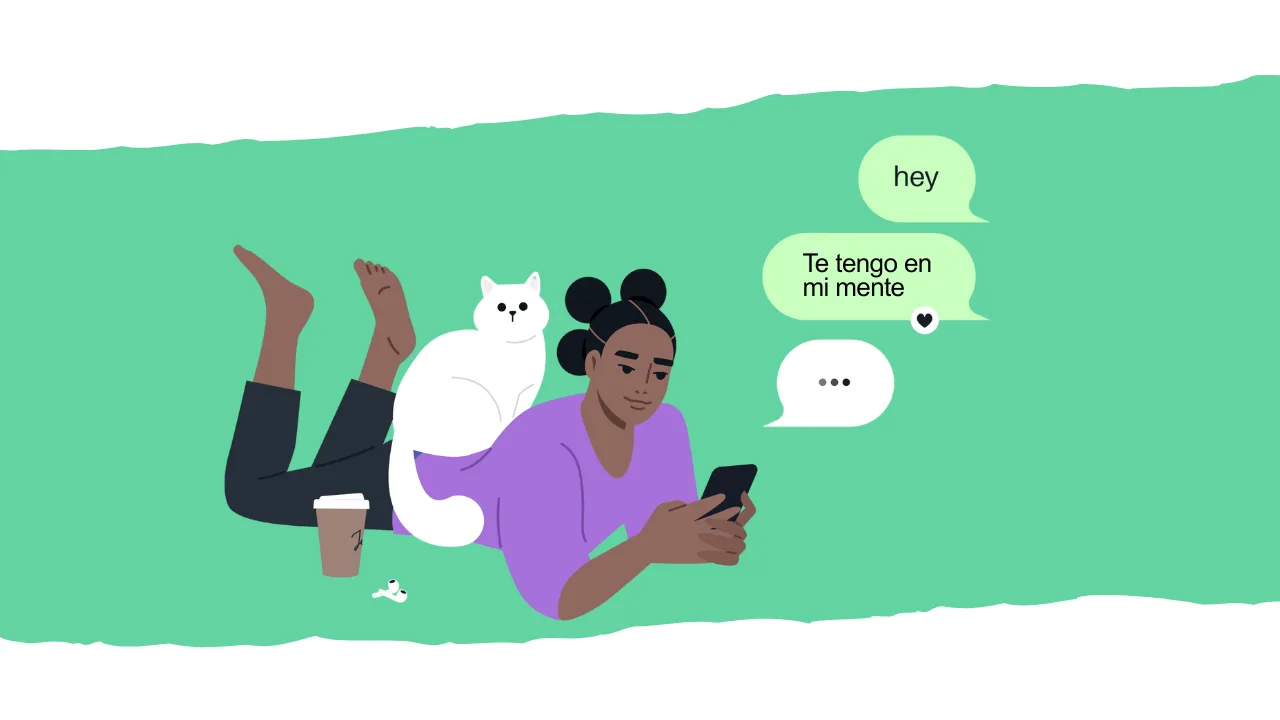
A message to a friend. A call to your grandmother. A mindful hug to your partner. Valentine's Day is not just for couples, and it does not have to cost anything. "Social connection is absolute medicine for us as human beings," psychologist Giselle Torres Padín tells Platea.
People who nurture their relationships tend to live longer and with better physical and mental health, according to multiple studies. The dose can be as simple as asking yourself: when was the last time I called someone just to see how they were doing?
Together with Torres Padín and clinical psychologist Gladiminet López, we explore keys and rituals for strengthening relationships.
💡 The detail: The word ritual comes from the Latin rituālis and means "belonging or relating to a rite" or something "imposed by custom," according to the Real Academia Española. "Relationships are strengthened a great deal by rituals. They are repetitive moments" that can be shared as a couple, as a family or among friends, Torres Padín says.
Why cultivate self-love?
Cultivating self-love "frees us from the need for constant social approval," Torres Padín points out. It is not about perfection but about self-compassion: treating yourself with the same kindness you would give a good friend.
Studies in psychology have linked that practice to less anxiety, greater resilience and more motivation to make changes.
"A healthy relationship with ourselves has to be one where you feel satisfied with who you are, with what you want," Torres Padín explains. "Recognizing and validating our experiences as they are, with mistakes and successes, allows us to focus on our own journey."
Rituals you can try:
Spend a few minutes a day writing down what you feel, without judging yourself.
Talk to yourself the way you would talk to a good friend when you make a mistake, with love and compassion.
Set aside time each week for an activity you enjoy just for yourself.
How do you cultivate friendship?
Friendships are nourished with intention. Torres Padín puts it in practical terms: "Many times we do not know what our friends are going through until we make a call and ask for real." A regular call or an intentional message can reactivate bonds that the daily rush has put on pause.
Rituals you can try:
Set up a regular call or message with someone you care about but do not see enough. It can be every two weeks, monthly. The important thing is to be consistent.
At your next get-together with friends, ask how they are really doing.
Send a spontaneous message: "I'm thinking of you" can do more than you might expect.
Family relationships
Quality time increases closeness in family relationships. Torres recommends fostering it by coordinating visits, calls and messages.
For the psychologist, a key step is to put your feelings into words without fear of vulnerability. "It means daring to say I miss you, I love you, I want to see you."
Rituals you can try:
Choose a weekly screen-free moment to spend together: a dinner, a walk, a coffee.
Coordinate a visit or call on a regular basis with a family member you have lost touch with.
Dare to say it out loud: an "I miss you" or "I want to see you" strengthens the bond more than you might imagine.
Romantic relationships
Creating rituals also benefits romantic relationships. They help build "moments of intimacy and getting to know each other better," Torres Padín said. A ritual can be something as simple as greeting each other and hugging every morning "in a conscious and intentional way."
Another expert recommendation is to set aside space for deeper conversations, with the intention of listening and talking with mutual respect.
"Being able to be vulnerable with our partner and have those conversations has the benefit of making the relationship deeper. That helps make the time with your partner your safe place. You feel loved, heard and protected… That is why it is beneficial," clinical psychologist Gladiminet López explained to Platea.
Rituals you can try:
Learn something together: a language, a dance, a new recipe.
Say goodbye each morning with a six-second kiss or a 20-second hug. These are proven techniques that help improve intimacy.
If you have children, find time to spend as a couple without the kids. That helps you reconnect with each other.
Set aside an hour at the end of the day to spend together or half a day on the weekend for a shared activity.
Make time for yourself, since that helps with emotional regulation for when you return to your partner.
Never go to bed angry with each other.
This content was translated with the assistance of Artificial Intelligence (AI).