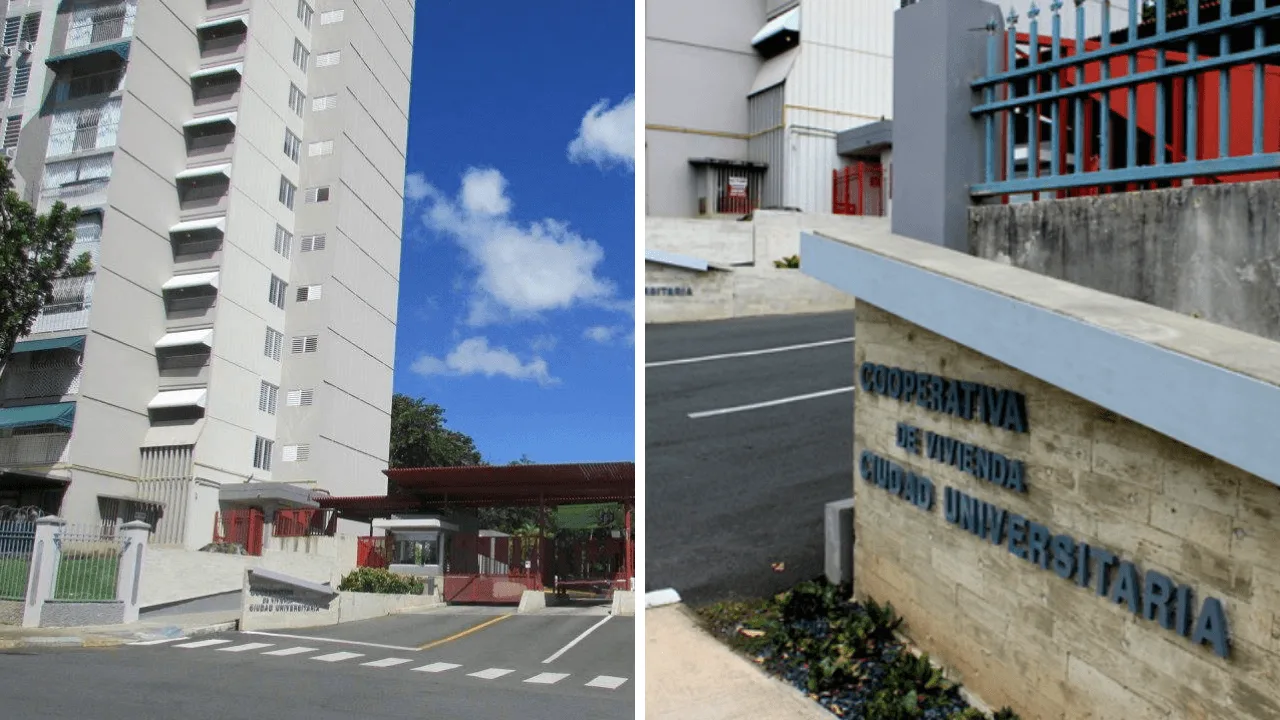
Imagine your toilet breaks down and, instead of calling a private plumber, a handyman hired by your community comes and charges you only for the part.
Or that, while you recover from surgery, several neighbors call to ask whether you've eaten or need help with anything. Or living in a complex where the community organizes to tend a garden, deal with stray animals, or create an emergency fund for residents who lose their jobs.
That is what it is like to live in one of the 13 active housing cooperatives in Puerto Rico: communities with their own rules, shared services and costs lower than many rentals in the metropolitan area. It is not a perfect model, waiting lists can stretch for years and there are strict rules of coexistence, but for those who live there it represents a more affordable and community-oriented housing alternative.
"You live well in housing cooperatives," Tibisay Andújar, administrator of Cooperativa de Vivienda Ciudad Universitaria in Trujillo Alto and a resident of Cooperativa de Vivienda Jardines de San Ignacio in San Juan, told Platea.
What is it like to live in a housing cooperative?
In housing cooperatives, residents are members, pay a monthly contribution and take part in community decisions through assemblies and boards of directors. Many also offer shared services and common areas that are collectively maintained.
Most are multifamily buildings located across San Juan, Bayamón, Carolina and Trujillo Alto, with the exception of La Ceiba, in Ponce. They are home to more than 8,000 residents in 3,337 housing units.
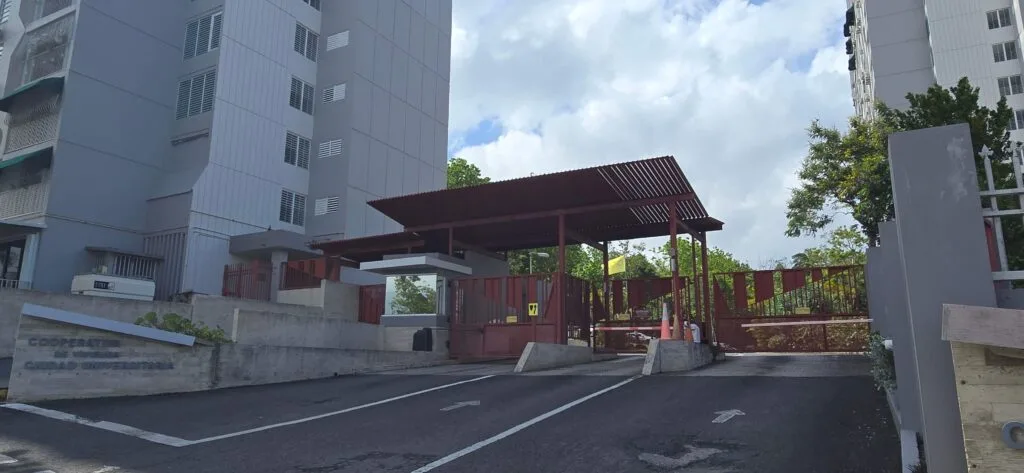
"Community life in the cooperative is the closest thing to when I grew up in the seventies and eighties in barrio Cialitos Cruces de Ciales, where we neighbors kept an eye on what was happening to our neighbors, whether they needed anything," Iván Otero, president of the Housing Commission of the Liga de Cooperativas, a resident of Ciudad Universitaria and a committed believer in the cooperative movement, told Platea.
He recounted that after a knee operation, "not a single day went by in my apartment without three or four members calling to ask if I had eaten, bringing me soups… That is cooperative housing… Here we are all like a family."
There are two main models:
Mancomunadas: the building belongs collectively to the cooperative and members have the right of use and occupancy.
De titulares: residents hold title to their apartment, though common areas remain collective.
13 active housing cooperatives
1 housing cooperative in the process of acquiring its building (La Torre de Sofía)
3,337 housing units*
8,075 residents*
Law 239-2004, chapter 35, governs housing cooperatives
*Information drawn from the presentation El Cooperativismo de Vivienda en Puerto Rico, by Carmen Rosado León
How much do you pay and what does it include?
At Ciudad Universitaria, which has two buildings with 355 units, monthly fees range from $380 to $397 for two- and three-bedroom apartments, according to Andújar.
This includes:
Cable TV
24/7 security
Surveillance cameras
Laundry facilities
Water cistern
Generators for common areas
Handyman for minor repairs
Recreational and community areas
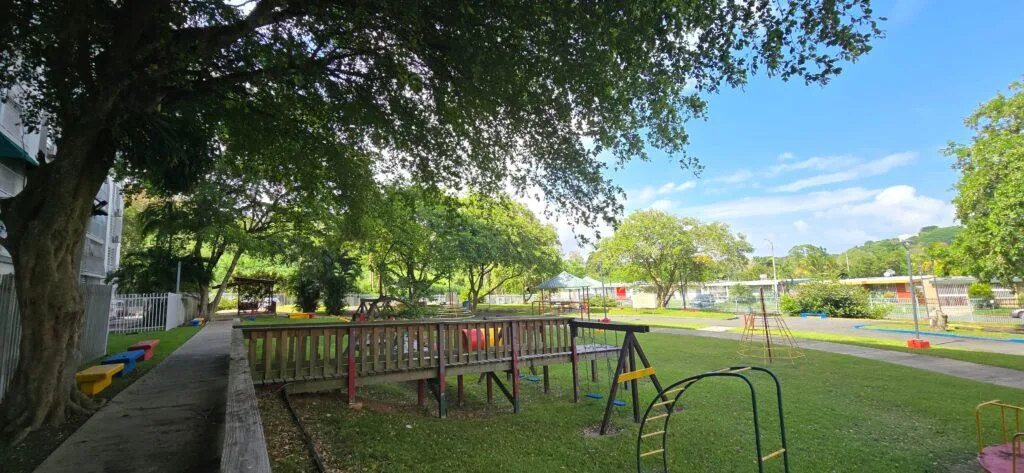
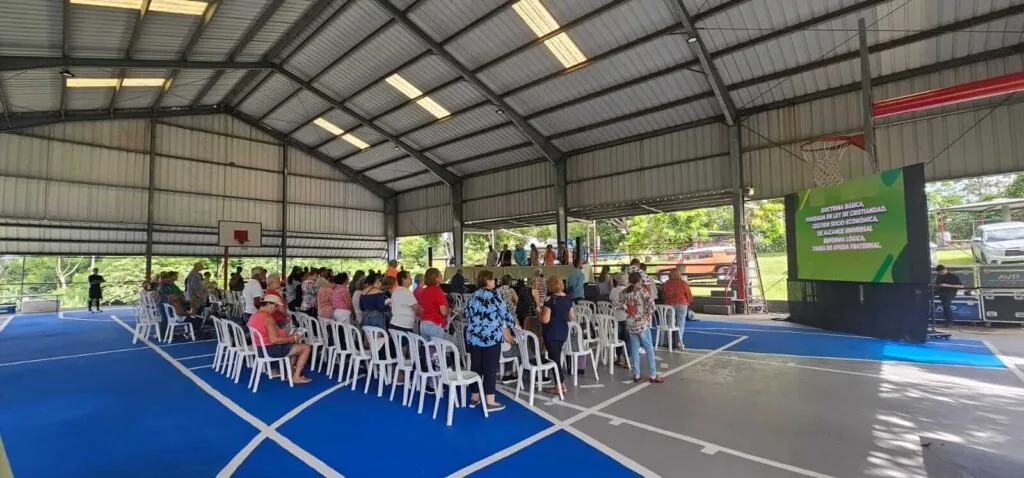
There is also an indoor court, a walking track, a children's park, a community garden, a recycling program and small businesses. Residents organized to address abandoned animals and have an assistance fund for members facing emergencies, Andújar said.
"Paying three hundred and some dollars, four hundred dollars at most per month, for that location and for the services I just described, you won't find that anywhere else," said Andújar, who also chairs the Asociación de Administradores de Cooperativas de Vivienda.
According to the Census, the median housing cost among renters in Puerto Rico is $545 per month.
In Jardines de San Ignacio, where she lives and which is among the largest housing cooperatives, with more than 500 apartments across two towers, monthly fees run around $305 for two-bedroom units.
It has a court, an outdoor gym, a garden, a laundry room, generators, recycling and 24/7 security, among other services. It also has a small wooded area that connects to the Cooperativa de Vivienda Jardines de San Francisco.
At other cooperatives, the services and facilities may differ, and prices can vary as well.
How do you get into a housing cooperative?
This can be one of the most complex points: getting into a housing cooperative "takes years of waiting," said Andújar, who was on a waiting list for more than two years before getting into Jardines de San Ignacio.
The process typically includes:
Waiting list
Proof of income
Certificate of good conduct
Credit check
Interview with the board of directors
Initial contribution
New members must also make an initial contribution known as equidad. That term also refers to the accumulation of a member's investment within the project.
Currently, that amount can run between $10,000 and $14,000, depending on the cooperative and the size of the apartment.
"That money you deposit there (in the cooperative) is yours, not the cooperative's, it's yours," Otero explained. If you were to leave the cooperative, that money is returned to you, in the case of mancomunadas cooperatives.
Also, each month you must pay the monthly fee that corresponds to the services of the cooperative where you live. That money is distributed to cover services, employees, security and a reserve fund for repairs and other expenses.
In the case of titulares cooperatives, the initial contribution of many members became the money with which they acquired their title of ownership.
How does coexistence work, and what happens if you break the rules?
Each housing cooperative has its own internal regulations and social conduct rules, discussed and approved collectively, in the same way that many internal situations are handled.
Some limit alcohol consumption in common areas, set schedules for renovations or require permits before making structural changes to apartments.
"It helps us maintain an orderly community, a community of respect," said Andújar.
Cooperatives also have disciplinary processes that can include warnings, probationary periods or expulsions in serious cases, though both people interviewed say these situations are uncommon. Even so, if you are in a mancomunada cooperative, your equidad is returned to you and you can always file a claim in court.
"One of the reasons you may have to stop living in the cooperative is delinquency (debt)… If we allow delinquency to get too high, we won't be able to pay for the services we receive," Andújar explained.
Potential for growth of the cooperative model
For Andújar, the long waiting lists at active housing cooperatives show that the system is still working decades after its creation and that it could still expand, not only as an affordable housing option but for the sense of community life it offers.
"I would love for us to have more spaces, not just have people limited to the 13 cooperatives that exist right now because we are completely full, but for the government to be able to develop more housing cooperatives," she said.
A call to the government
In March, Andújar was invited by Gov. Jenniffer González to join the Consejo Permanente de la Mujer, made up of 140 women from public service, the private sector, nonprofit organizations and academia. The purpose is to advise the governor on issues such as housing, health and the economy through eight working groups, from a women's perspective.
"We signed up for the Housing Council and we are waiting for that call from the government to get to work, which is entirely volunteer work, with the simple desire for these things to develop (the cooperative model) both for our elderly and so that young people who stay in Puerto Rico have affordable, quality housing," Andújar said in May.
Monthly fees lower than many private rentals in the metropolitan area
Various services (from handyman services in some buildings to recycling or cable TV)
Reserve funds that prevent large, unexpected special assessments
A sense of community and mutual support among neighbors
Democratic participation: one member, one vote
Greater stability in housing costs
Recreational and community areas
Stricter security and coexistence rules
Possibility of recovering equity if you leave the cooperative (in mancomunado models)
Prime locations in the metropolitan area
Less dependence on outside services for basic maintenance
Disadvantages:
Very few spaces available and the model is limited (only 13 active cooperatives)
Waiting lists that can last years
Requires a high initial contribution (approx. $10,000-$14,000 currently)
Strict coexistence rules apply
The Junta de Directores can reject membership applications
In mancomunado cooperatives, you are not the individual owner of the apartment
Disciplinary processes may apply if rules are not followed
Cover photo: Screenshot atriumpr.net
This content was translated with the assistance of Artificial Intelligence (AI).