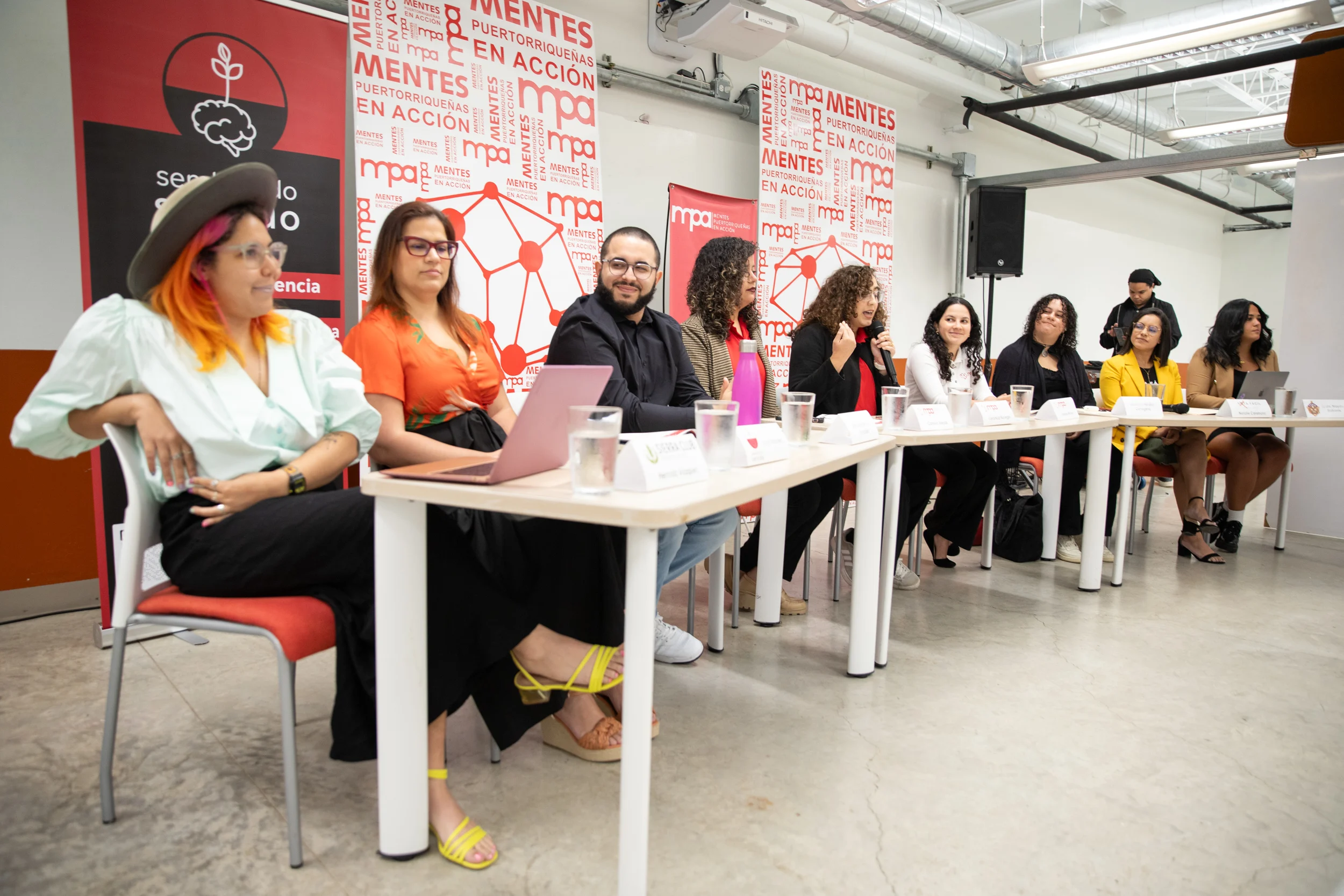
To strengthen the role of young people in Puerto Rico's political leadership, a coalition of civic organizations led by Mentes Puertorriqueñas en Acción (MPA) published, in July, the Agenda de las Juventudes, a report that defines and presents the political thinking of young voters ahead of the Nov. 5 elections.
The document, developed by 25 young people between the ages of 17 and 35 from across the Island, sets out starting points for shaping public policy on issues such as health, education and the labor market, and responds to a need to bring more young voices and perspectives into the Island's representative political sphere.
"Puerto Rico has a generational handoff problem. We are not building a valid structure for those who are here and know things to pass that knowledge on, and for the transformation we want to happen. It has to start somewhere. I think the agenda has been that tool, and we are fully committed to continuing to broaden the conversation and having more young people at the table," said Danisamuel Soto González, 25, director of the Conocimiento Digital en tus Manos initiative and a contributor to the report.
Confronting electoral apathy
Held against the backdrop of the Verano del 2019 protests and the COVID-19 pandemic, the 2020 elections were the first in which Puerto Ricans born after the turn of the century could cast a vote.
This generation of Puerto Ricans, belonging to what is called "Generación Z" (spanning the late 1990s through the early 2010s), was the first born after the 1995 repeal of Section 936 of the Internal Revenue Code, and grew up largely within the context of Puerto Rico's government fiscal crisis and the austerity policies that followed.
The 2020 election results, in which statehood advocate Pedro Pierluisi Urrutia won the governorship with the lowest recorded margin of votes in favor since 1950 (33.24%), also confirmed a troubling trend regarding the youth vote: of more than 406,000 eligible voters between the ages of 18 and 29, only 192,431 participated, 47 percent.
Additionally, as of last May, only approximately 52,000 voters had registered out of the roughly 150,000 Puerto Ricans of voting age, about 70,000 fewer than in the 2020 electoral cycle.
by ianma24
"I think young people in Puerto Rico are certainly tired, because all their lives what they have seen is decline. They have seen displacement, they have seen how health care is deteriorating, how education is deteriorating, so I think there is a lot of frustration," Platea PR 's Camille Padilla Dalmau said. She is the founder and director of the solutions journalism outlet 9 Millones.
The 9 Millones initiative, named for the nine million Puerto Ricans spread across the Island and the diaspora, operates as a network of community-focused journalists that aims to raise awareness among communities in Puerto Rico and abroad so they "take control of their narratives and stories."
In keeping with its mission, the project joined mid-year as a media partner of the "Prende Tu Voto" campaign, a coalition of multiple local organizations that seeks to encourage young people to register to vote through educational and entertainment activities.
Among the groups that make up the effort, in addition to MPA's work gathering young people's opinions, talks and registration events have been organized at educational centers, and analyses have been prepared on LGBTQ communities, Padilla Dalmau explained.
As the culminating event of its campaign, Prende Tu Voto will hold a concert on Saturday, Sept. 7, for which the only admission ticket will be proof of a voter registration card.
"There is definitely frustration, but I also feel there is a lot of hope in the fact that so many people are involved in protecting and defending the territory through art, culture and various projects, from agriculture to advocacy," the journalist and spokesperson pointed out.
"Democracy is built day by day, and the vote is only a small part of the whole puzzle of how to achieve more justice. But it is certainly important that the people in power who are making decisions about our laws listen to our demands and consider our proposals as a path forward," she added.
What does the Agenda de las Juventudes consist of?
The requests in the 41-page document were organized around five main topics. These are some of them:
Climate action
Community management and energy transition: Create a climate action archive, provide incentives to community organizations, and prioritize the transition to renewable energy sources.
Education and awareness: Promote education about climate change and designate an independent environmental ombudsman's office.
Quality of life
Comprehensive health and safety: Implement an equitable and accessible universal health plan, and rehabilitate abandoned spaces for diagnostic and treatment centers.
Housing and transportation: Improve housing infrastructure, promote cooperative housing models, and develop an efficient public transportation system.
Labor landscape
Education and wages: Expand the offering of workshops on labor rights, adjust wages to the cost of living, and evaluate salary structures for public employees.
Fringe benefits: Equalize paternity leave for private-sector employees and allow leave extensions with medical justification.
Electoral process
Civic education: Develop educational campaigns about the importance of voting and propose including electoral education in the school curriculum.
Transparency and reform: Improve digital platforms for voter registration, assign an independent agency to handle absentee and early voting, and implement runoff voting and ranked-choice voting.
Building bridges between generations is necessary
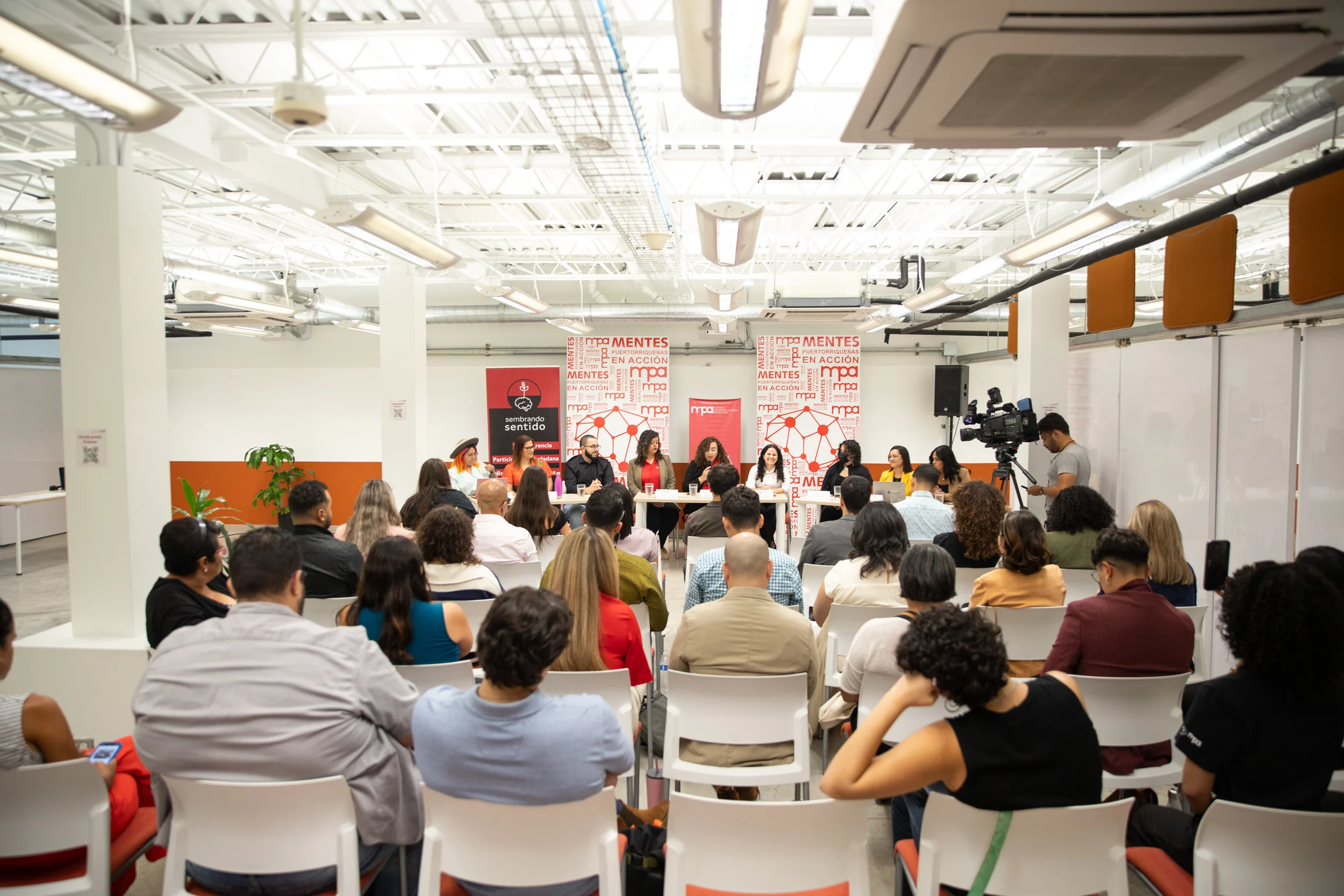
Beyond participation at the ballot box, the Agenda de las Juventudes and parallel projects seek to reverse an alleged depoliticization of Puerto Rican youth.
"There are two very different things within the electoral process: keeping track of who my candidates are, and the process of advancing concrete political actions in communities and organizations," said Hernaliz Vázquez Torres, spokesperson for the environmental organization Sierra Club in Puerto Rico and a contributor to the report.
"I think there is a lot of political action around where we should be going, but there is a lot of political action that has not translated into a national project. That, as a consequence, makes people feel some apathy toward who is going to govern or make the laws," she added.
What do the experts think?
Allies of these efforts highlighted participatory community action as a highly valuable tool for integrating young people into political spheres.
"As young people, we have to give ourselves the opportunity to know and understand that adults need to have a seat at the table. Everyone has to be part of that conversation, because just as people say that the two-party system has brought us here, there are also many people who are probably tired of the structures that exist. If we don't sit down and talk through our needs, we won't get anywhere."
Danisamuel Soto González, director of the initiative Conocimiento Digital en tus Manos and a contributor to the Agenda.
"If our institutions weaken, so do the spaces and tools we can use to participate. In the face of this institutional weakening, we need organized civic action and we need to find ways to insert ourselves into governmental spaces so that we, from the inside, can create the spaces we believe in and need to be part of."
Natalie Caraballo Vélez, spokesperson for the Vota Fácil PR initiative, political communicator and Agenda contributor.
"I've realized that community work in Puerto Rico is very intergenerational. I think this campaign can promote more dialogue between generations, that there can be this exchange about which issues matter when it comes to voting. There are many older people who want their children and grandchildren to stay in Puerto Rico. Everything is connected. Sometimes we separate ourselves by age, but what affects my grandmother, my father, my child, affects me."
Camille Padilla Dalmau, of 9 Millones, on the collaboration within the #PrendeTuVoto project.
What comes next?
According to Agenda de las Juventudes coordinator Verónica Noriega Rodríguez, Mentes Puertorriqueñas en Acción will be collecting endorsements and recommendations from the public through the report's official portal until Sunday, Sept. 15.
Then, on Oct. 3, the organization will hold a legislators' forum, where the document's findings will be presented with the intention of having them included in public policy proposals.
Want to stay on top of everything related to the Agenda de las Juventudes? Access the Mentes Puertorriqueñas en Acción Instagram page here.
This content was translated with the assistance of Artificial Intelligence (AI).