La Jolla Cuisine
- Ideal for:
- Parejas, familias, ir un día después de la playa y probar platos distintos.
- Accessibility:
- Hay espacios para estacionar en el local y en la calle alrededor del mismo.
- Prices:
- Aperitivos: $10 a $25; platos para compartir: $12 a $15; principales de $21 a $42; cócteles: $10 a $14.
- Atmosphere:
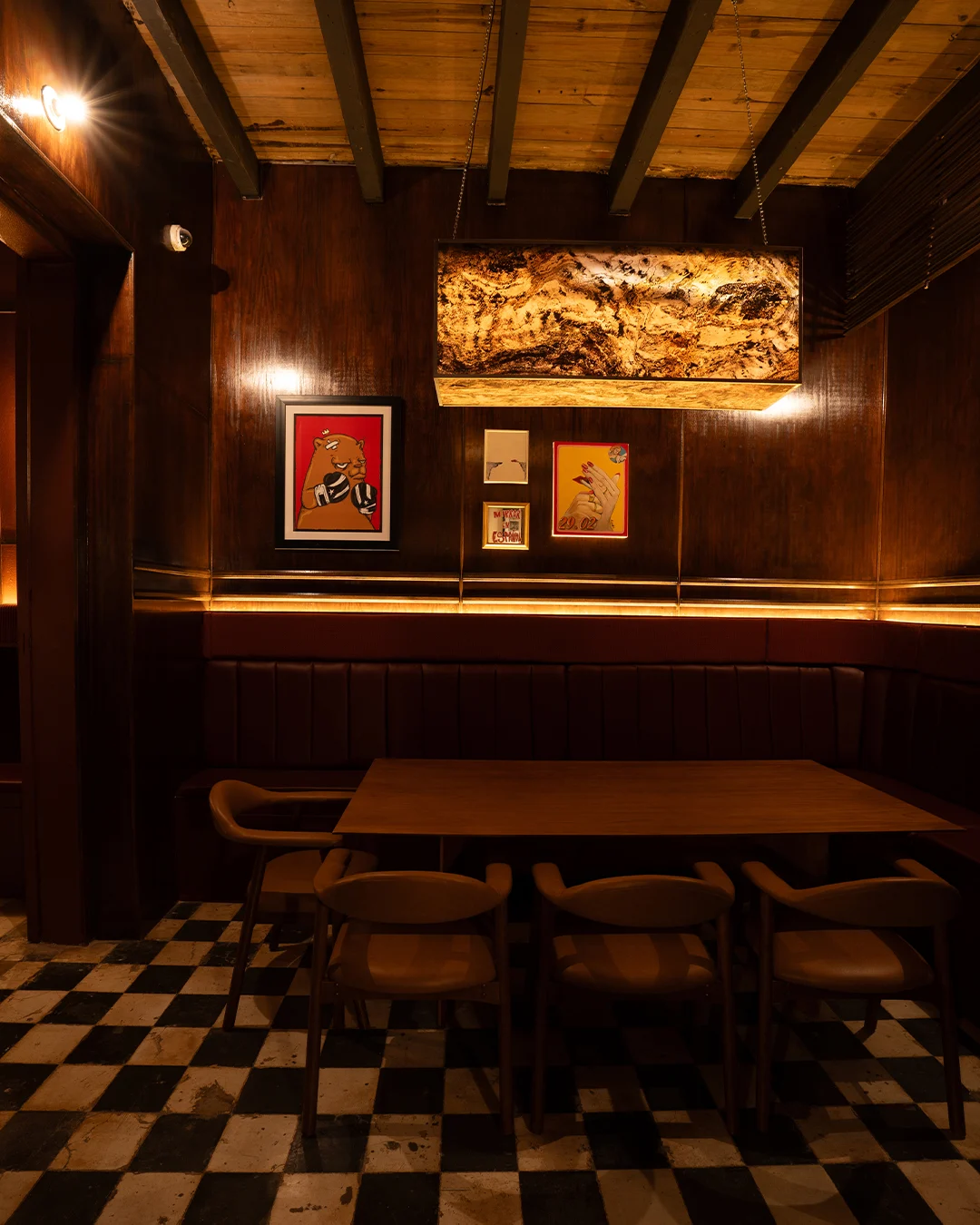
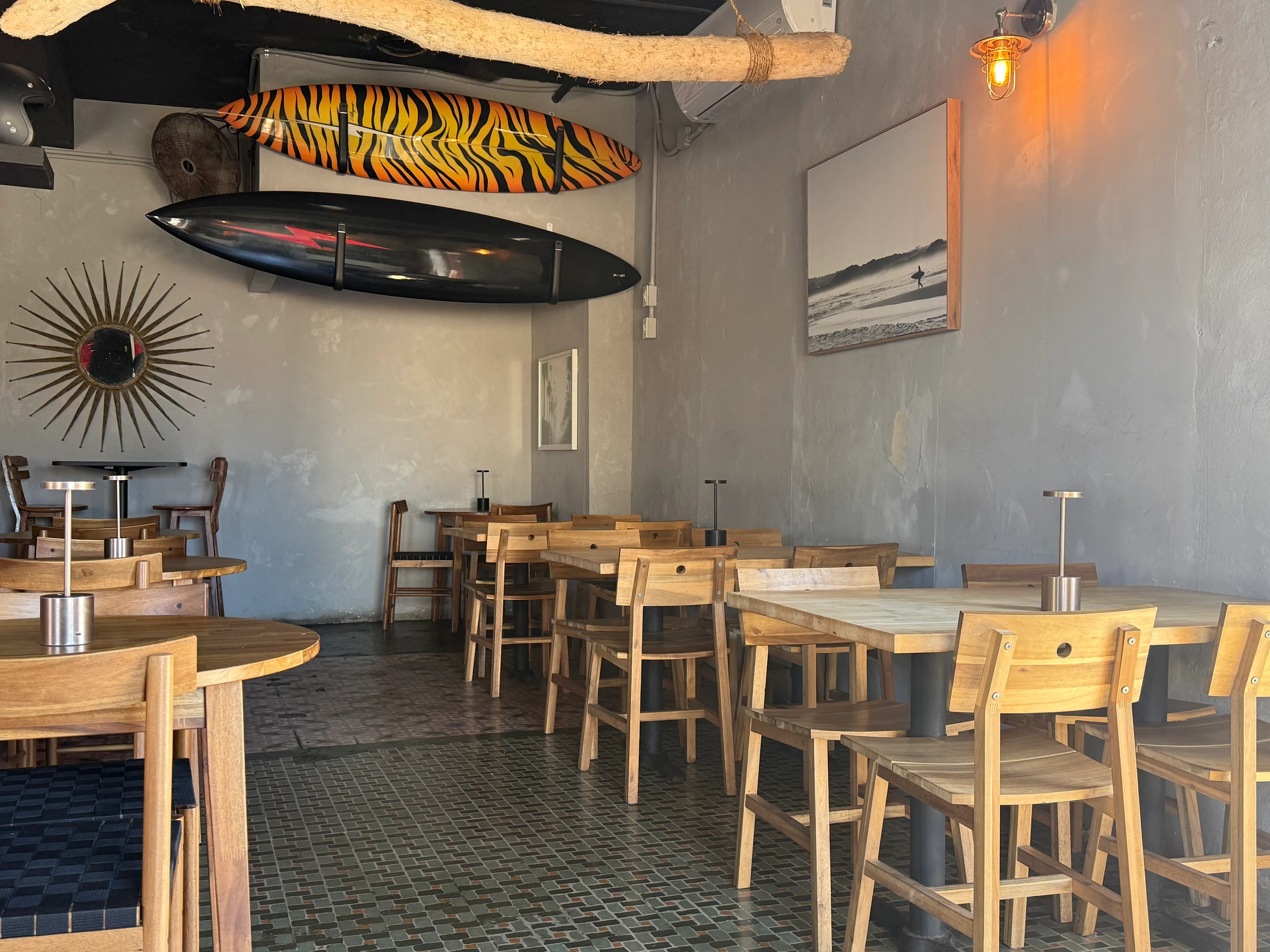
- Playero, con tablas de surf como parte de la decoración y a pasos de la costa. Puertas abiertas y casual de día, más íntimo de noche.
- Hours:
- Jueves de 12:00 p.m. a 9:00 p.m., viernes y sábado de 12:00 p.m. a 9:30 p.m., domingo de 1:00 p.m. a 8:00 p.m.
- Address:
- 305 C. Manuel Pérez Avilés, Arecibo.
At the bar of La Jolla Cuisine, the stools are heavier than they look, because they are made from the metal gates that once surrounded this same space when it was a corner store all of Arecibo knew as Centro Médico, a chinchorro (a casual roadside food and drink spot) with a pool table and a small candy shop where chef Marwil de León, who grew up a block away, still remembers buying candy as a child.
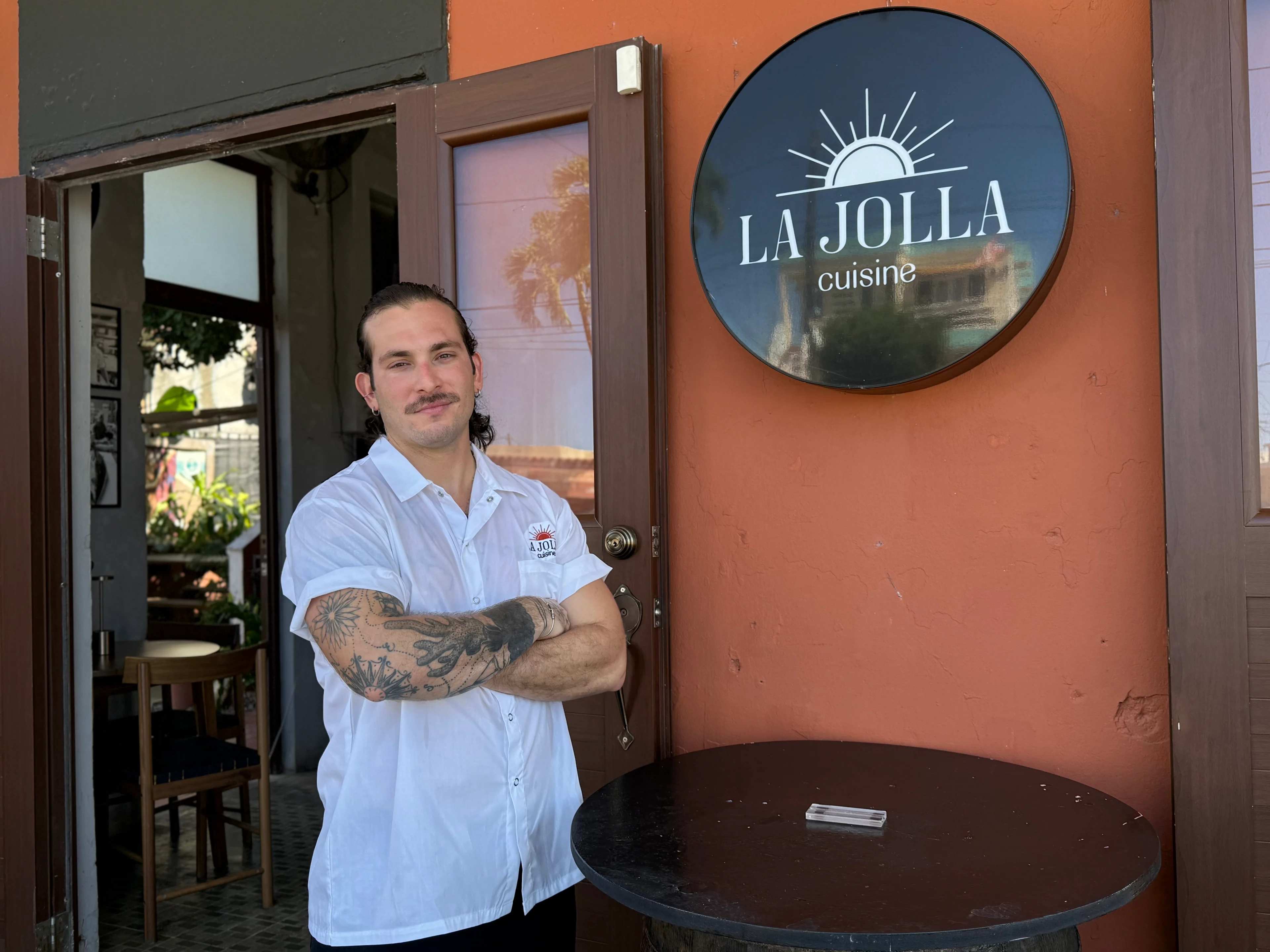
After years training in kitchens in New York and California, the 32-year-old chef returned to Puerto Rico and found the space available. He didn't think twice. "I wanted to stay here and do this here, to move the town forward too," he tells Platea during a visit to the restaurant.
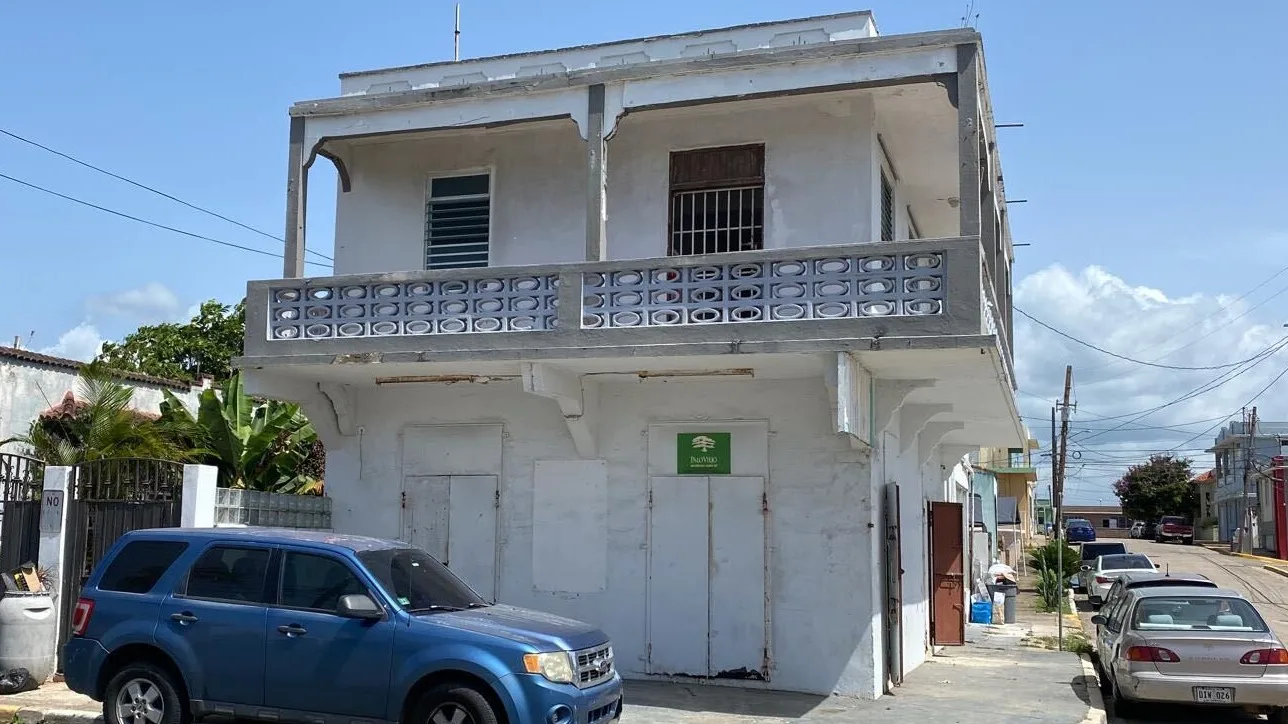
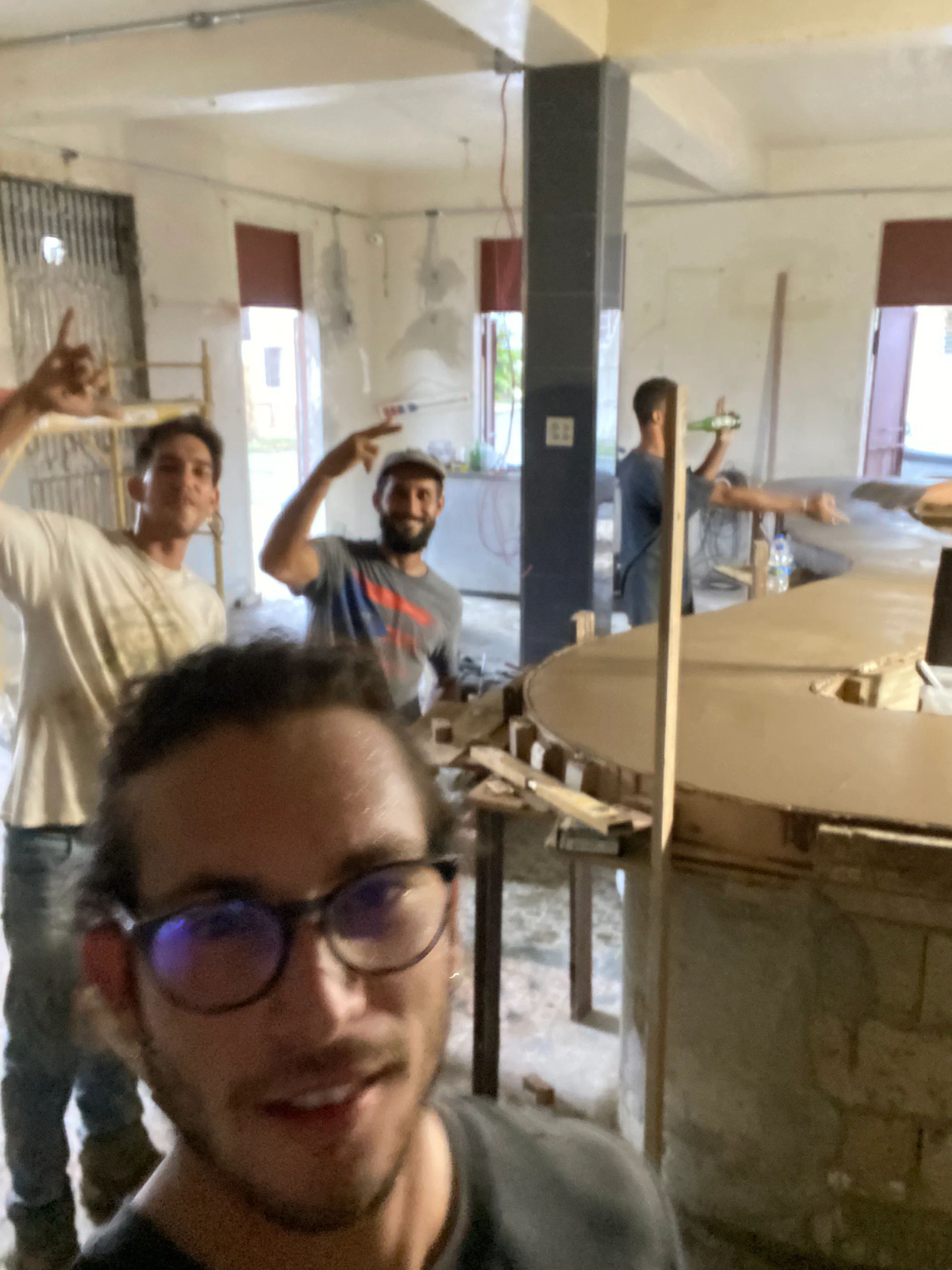
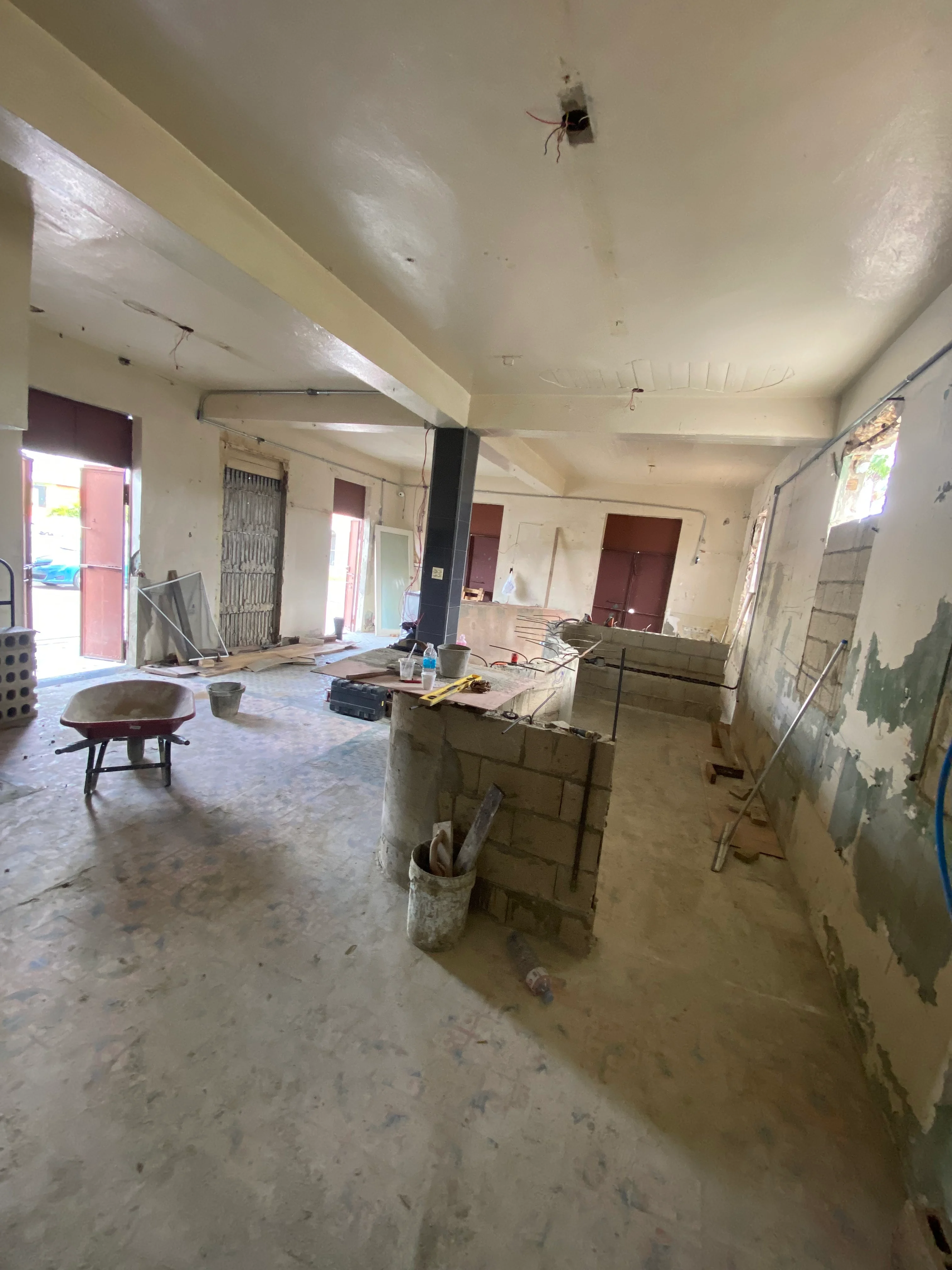
When he acquired it, one of the walls still showed the waterline left by a flood years earlier, a reminder of everything that space had to endure before becoming a restaurant. "It gives you a brutal feeling," De León admits. He rebuilt the space with his own hands, the support of his family and a couple of friends, with no architects or engineers involved. La Jolla Cuisine opened in 2023.
A chef of the world
De León grew up surfing at what is now known as the Coliseo del Surfing, in a childhood spent between beaches and friends. It was Sébastien Lamer, a hospitality school teacher, who made him fall in love with gastronomy. At 19, he left the Island to sleep on the couch of his mother's cousin, who lived in New York, and break into the food industry.
He arrived in the Big Apple with no contacts and no guarantees, but he tracked down the email address of well-known chef Rob Aikens. He recalled "bombarding" him with messages: "that I want to come work, that I'm from Puerto Rico, that I'm willing to do whatever it takes, on and on"
His persistence paid off and he was given a three-day trial, unpaid. After those three days he was offered the job at The Peacock and the Shakespeare, a Manhattan spot that combined an irish bar on the ground floor with a fine dining restaurant upstairs.
After a while he moved to California. From there he went on to work in catering until he landed at a job fair at Rancho Valencia Resort, where he started as a prep cook and worked his way up through its two restaurants, the casual Pony Room and the fine dining Veladora.
After years of nonstop work in an industry he himself describes as "tough," De León felt he needed to slow down and return to his roots. He chose his hometown for his kitchen. "Arecibo is everything to me. I grew up here," he says proudly.
Fine casual dining, day and night
The concept at La Jolla Cuisine shifts depending on the time of day, as if two restaurants shared the same space. "It would be a fine casual dining, yes," De León says of the style that defines his space.
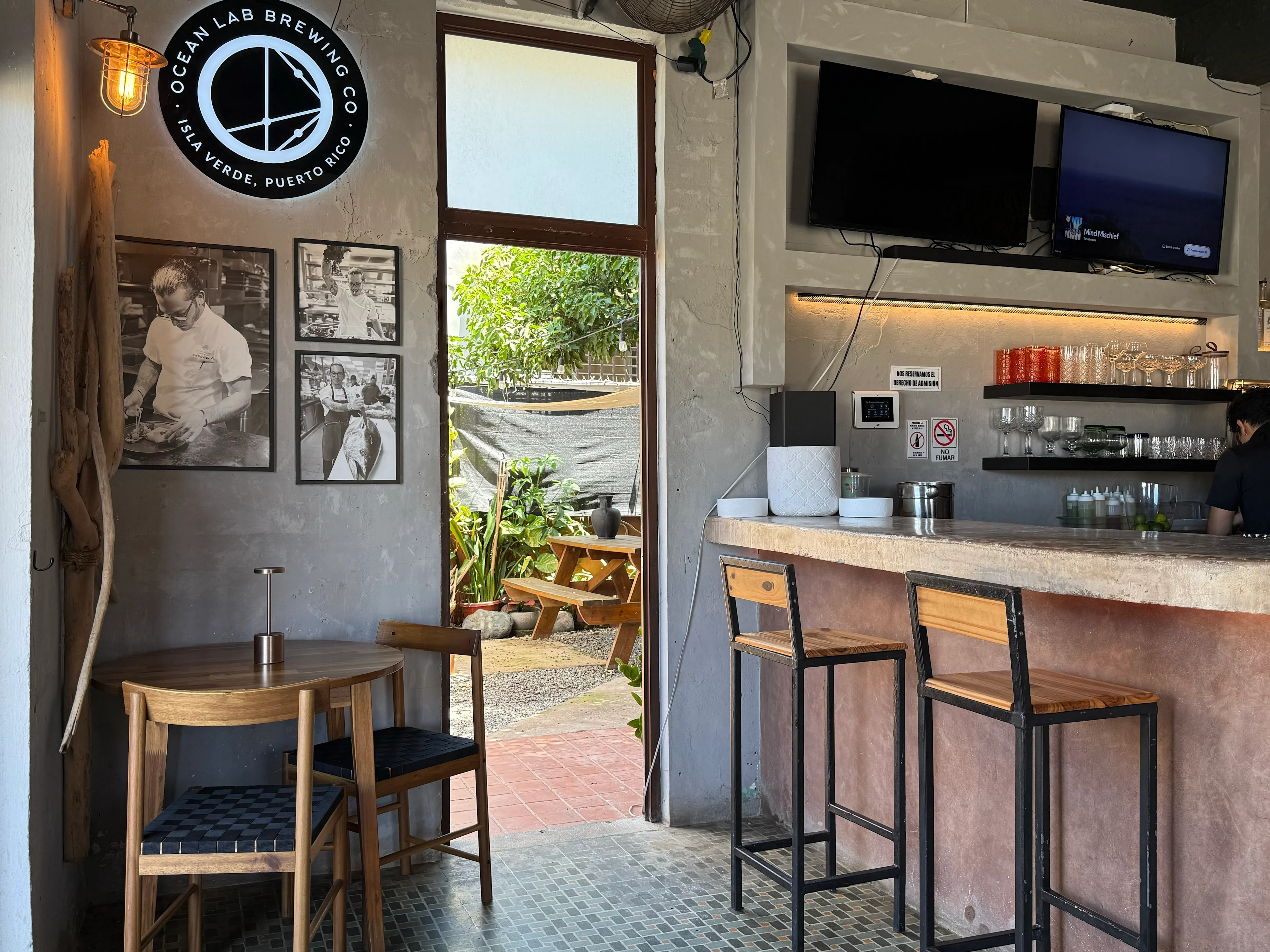
During the day, the menu leans toward the healthful: rice bowls, salads, wraps, salmon and fresh juices that grew out of, the chef says, some surfing events in the area.
At night, the tone changes entirely: meat cuts come into play, from tomahawks to the catch of the day, seasonal risottos and pasta carbonara, in a fresh menu that the server explains table by table according to the season.
I want it to be accessible to everyone, I want it to be somewhere between casual and refined, without looking too refined so people aren't put off
What we tried
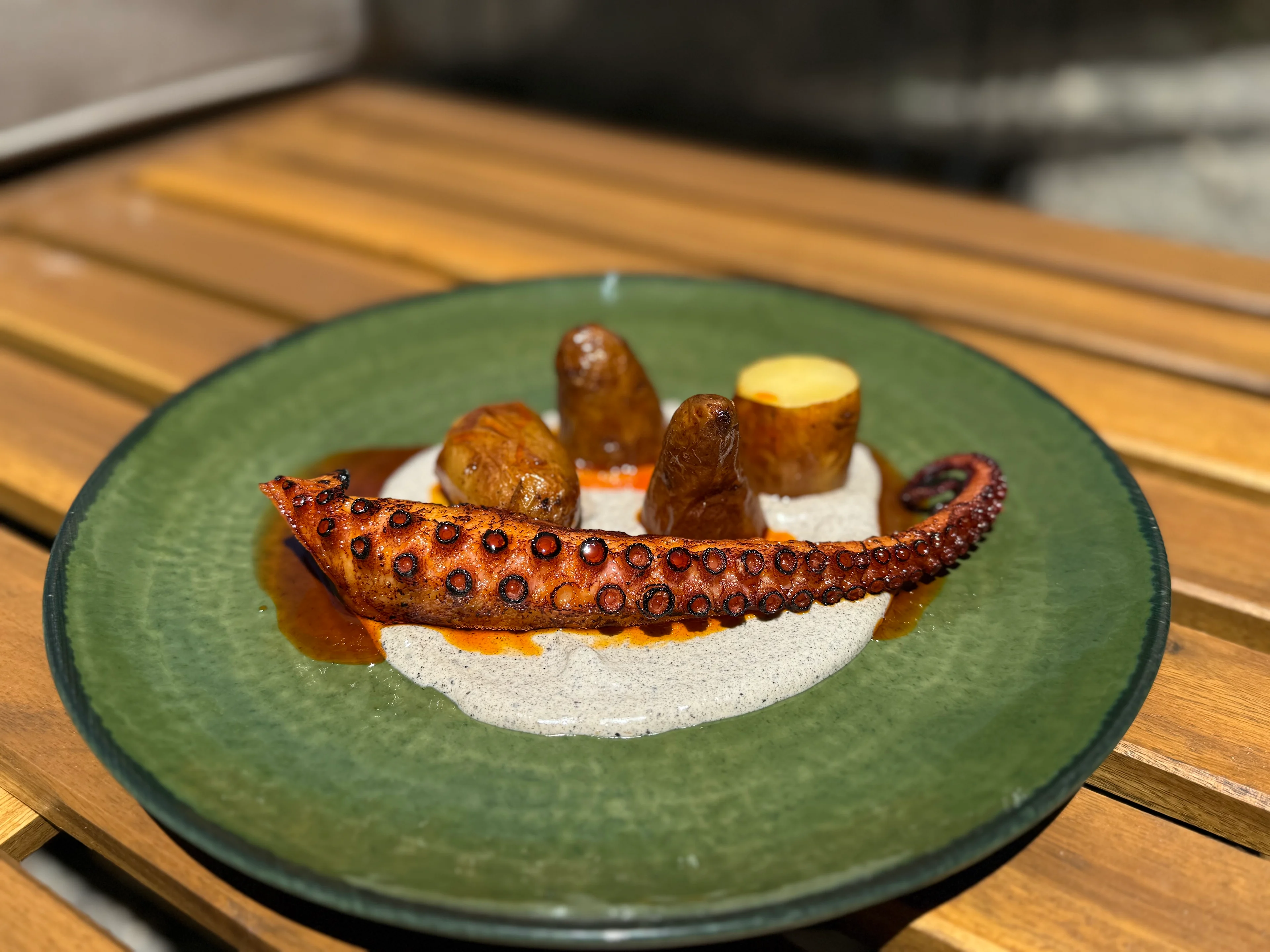
We ordered the Pulpo Brasato to start, a dish that arrives with confit potatoes, a smoked eggplant aioli and pepper oil. The octopus is tender inside with a light char outside, while the distinctive flavor of the aioli, softened by the eggplant, adds depth without overshadowing the main ingredient.
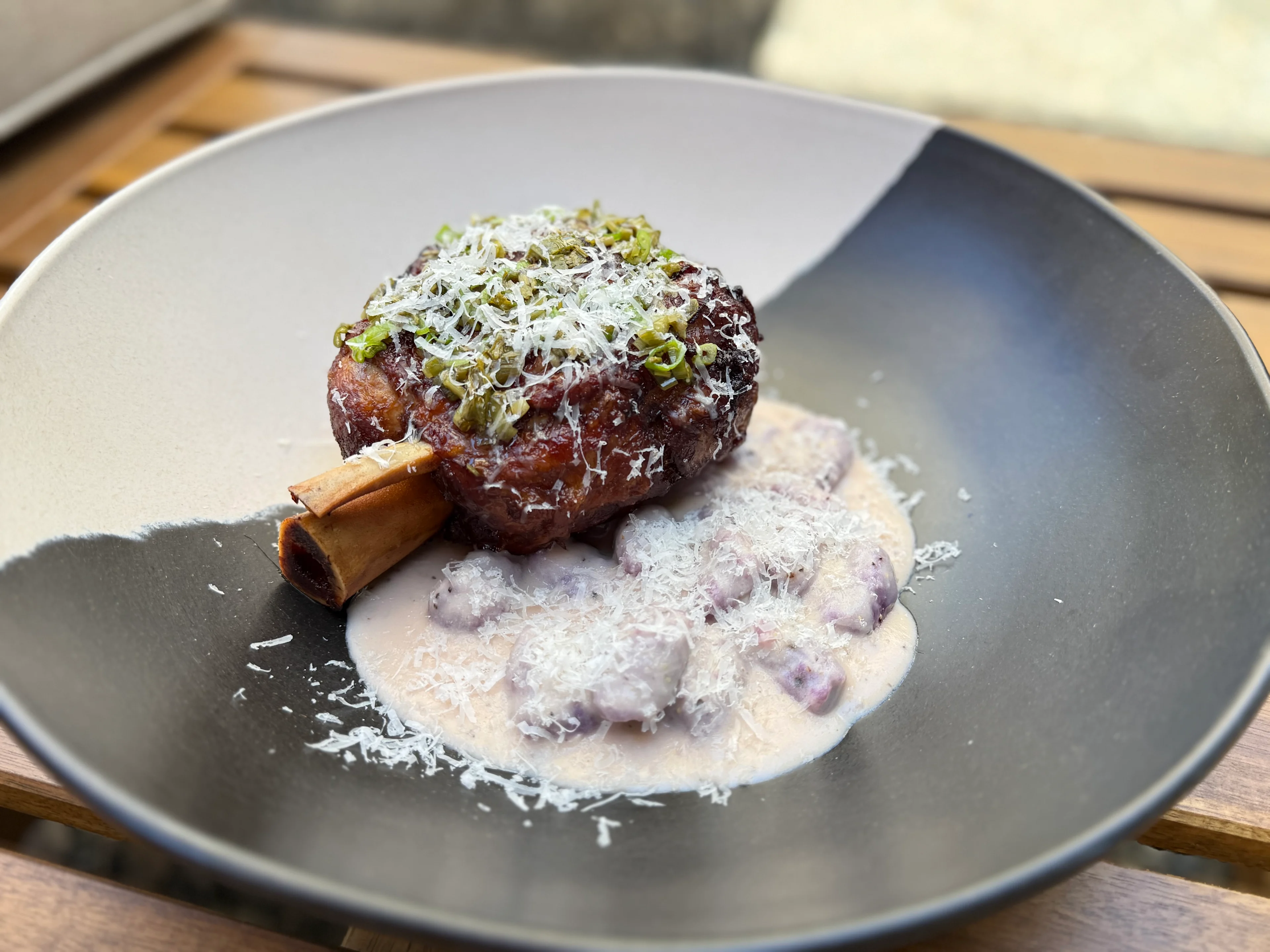
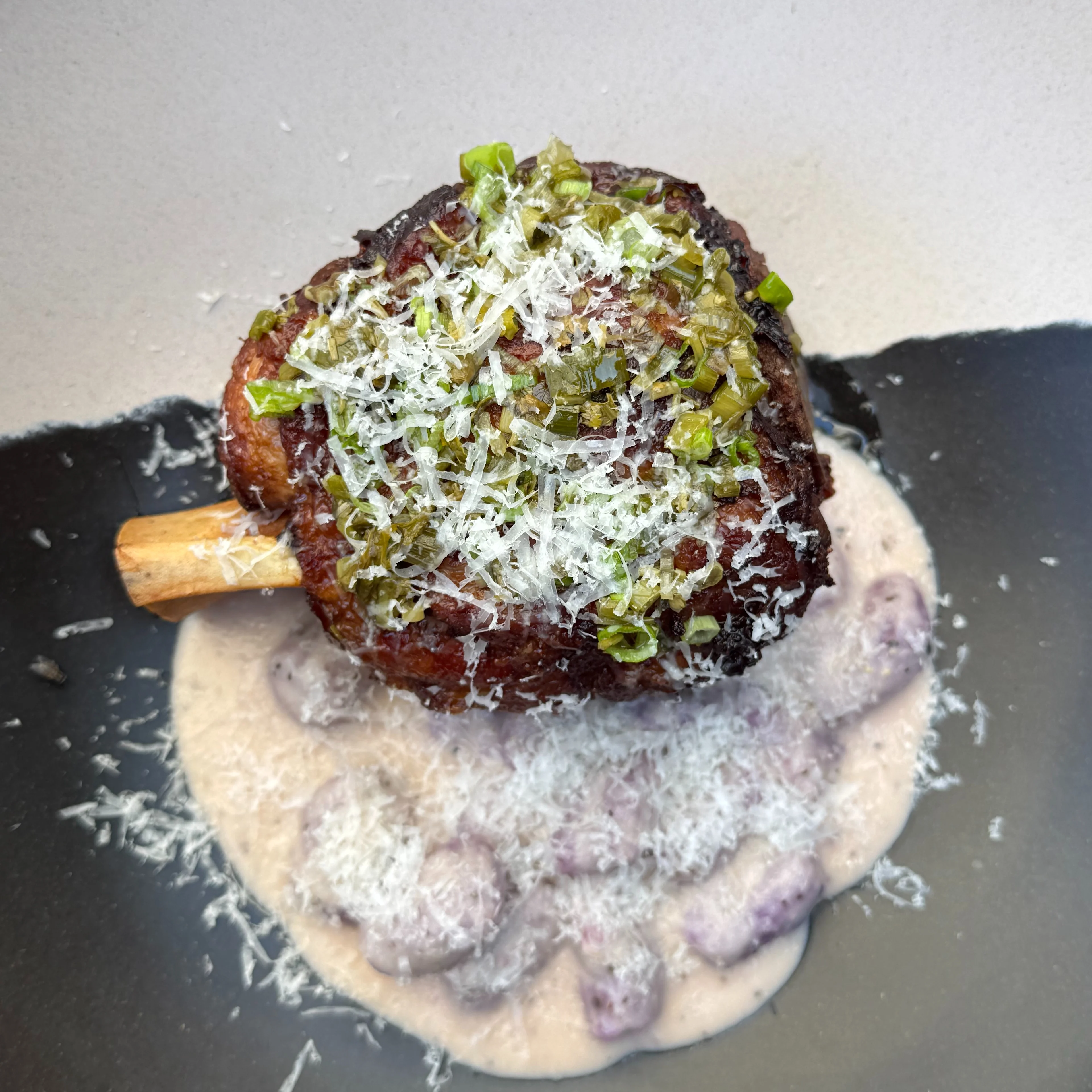
For a main, the Osso Buco de cerdo, marked on the menu as the chef's inspiration, came with purple sweet potato gnocchi (local, and subject to availability by season), bathed in a creamy Parmesan fondue sauce. It is a dish that merges classic technique with Puerto Rican ingredients. It is substantial: a comfort dish that maintains a high level of technical precision.
There is a third dish they didn't try, but one that De León points out as the most his own: the Chicken Roulade, a deboned and rolled chicken prepared with a French technique, served over a sweet pepper and cilantro risotto, the same fusion that, he says, sums up the cooking at La Jolla.
"That fusion won me over, and I feel like that's one of our star dishes," he says.
Cocktails with a Mexican accent
La Jolla's bar has an influence it doesn't hide, inherited from the years De León spent near the Mexican border during his time in California. "Mexico fascinates me," he says. From that come drinks like the Tulum, made with mezcal, chile liqueur and tajín on the rim.
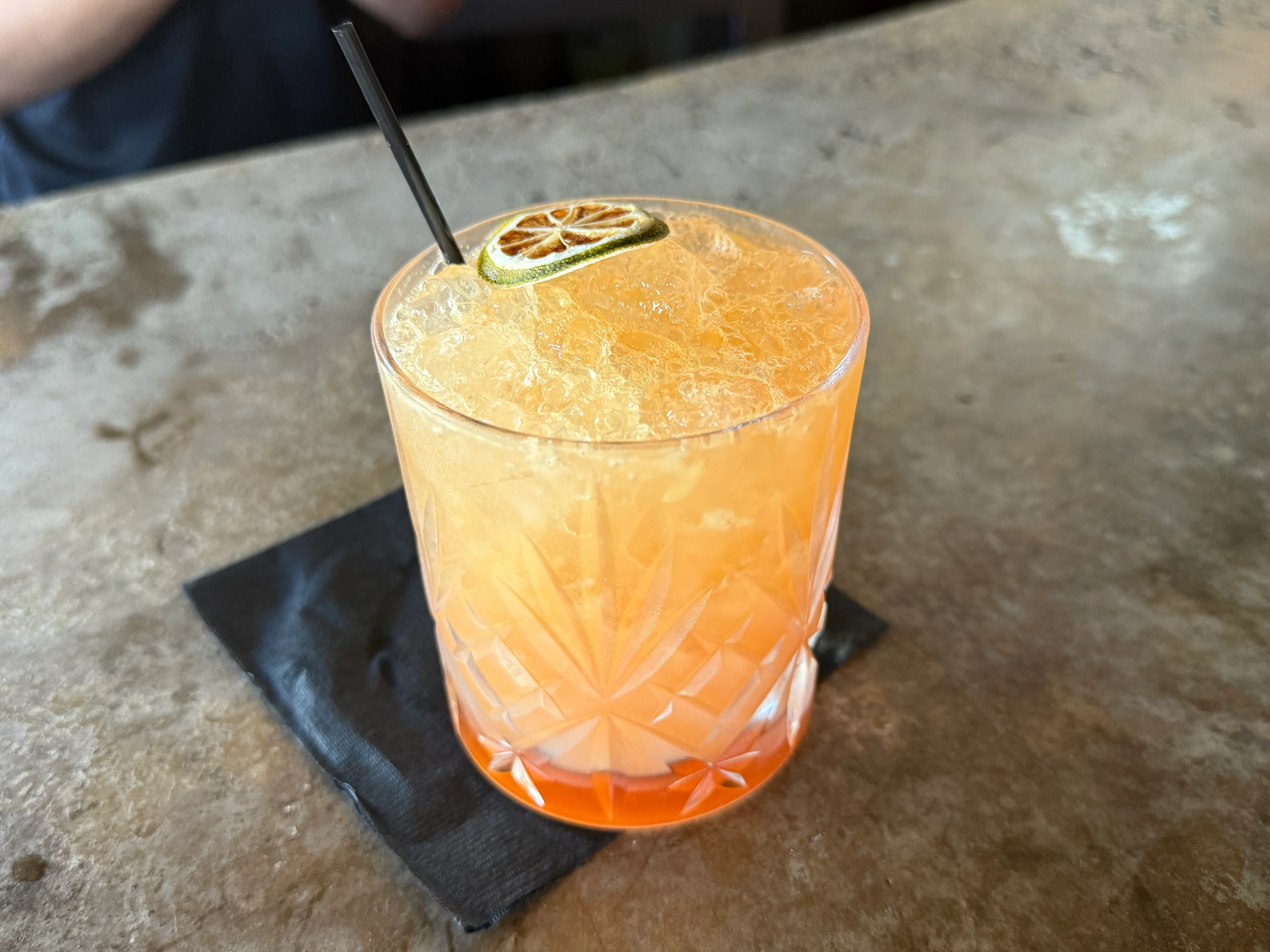
The drink with the most history on the menu, though, is the Centro Médico. It's a creation by Juan Román, the bar's bartender. It contains Don Q Spiced, fresh orange, a touch of angostura and guava.
It's a direct tribute to the orange-based drinks that were served at the chinchorro (a casual roadside food and drink spot) that occupied this same space before the restaurant, where doctors from the area would stop in after work.
De León explained that the bartenders also have their own space to create cocktails outside the fixed menu, without the pressure of every experiment ending up on the list. "It's like a laboratory. If I have a laboratory, they deserve one too," he says.
The philosophy of La Jolla
Beyond techniques, De León also learned about sustainability outside of Puerto Rico. He insists on using every part of what he buys, whether by marinating, fermenting or curing what's left over. "That really comes from respect for the product," he says.
At the time of Platea's visit, the chef was experimenting with an aioli made from the parts of Brussels sprouts that normally go to waste.
The chef is already working on a more refined version of the dinner menu, with a selection of fixed dishes and a special reservation-only experience that will include wine, beer and whiskey tastings.
"We're going to add a chef's experience, and that will happen on weekends, by request, for special reservations," he says.
This content was translated with the assistance of Artificial Intelligence (AI).