Each year, the art of muralism is more celebrated in Puerto Rican culture. Whether because it brings people closer to art in the streets, honors cultural symbols or carries political messages, murals have become an undeniable part of local culture.
It is out of this muralism renaissance that Colectivo Moriviví was born, a group of women artists who practice community muralism and public art. The collective will celebrate its 10th anniversary on Thursday, Nov. 30, at :Pública|Espacio Cultural.
The exhibition, titled "Moriviví: Una década de muralismo, artivismo y comunidad," will gather the processes, learning and memory the collective has built through muralism, artivism and the creation of community spaces.
The beginning of Moriviví and “Paz para la Mujer”
Moriviví, led by artists Chachi González and Raysa Rodríguez, began on April 7, 2013, as a project they created during their time as students at the Escuela Central de Artes Visuales.
Resistance against social problems in the Puerto Rican archipelago is a common theme in Moriviví's murals. In part, it represents their artivism: the use of artistic expression to raise awareness about issues and organize people to achieve social change.
Such was the case with their mural “Paz para la Mujer”, painted on Avenida Fernández Juncos in January 2015 to commemorate the Día de la Erradicación de la Violencia contra la Mujer. The mural, which originally showed a nude woman being transformed, liberated from the weight of violence and connected with nature, was altered with the intent of covering the nudity.
The incident generated protests by feminist groups who saw it as an act of censorship. Since then, Moriviví has restored the mural twice to reflect the social impact of their work and highlight other events in recent history, including attention to the troubling rate of femicides in Puerto Rico.
The collective has held firm in its artivism, rejecting the idea that murals exist purely for aesthetic value: "The idea of showing up just to beautify is naive and can do a lot of harm," González told El País earlier this year.
In an interview with Platea, both agreed that community muralism is not new in Puerto Rico and that masters of this artistic genre already existed. According to Diálogo UPR, Puerto Rican muralism began in 1939, with a strong influence from Mexican muralism and its respective themes.
However, according to the artists, a generational pause meant that many potential muralists grew up without the references of the past. For that reason, the collective has created spaces and workshops for the benefit of future generations of community muralists.
With their exhibition, they aim to close the gap between museums and galleries and the different social groups that might feel excluded from those spaces.
They will have prints of their work for sale
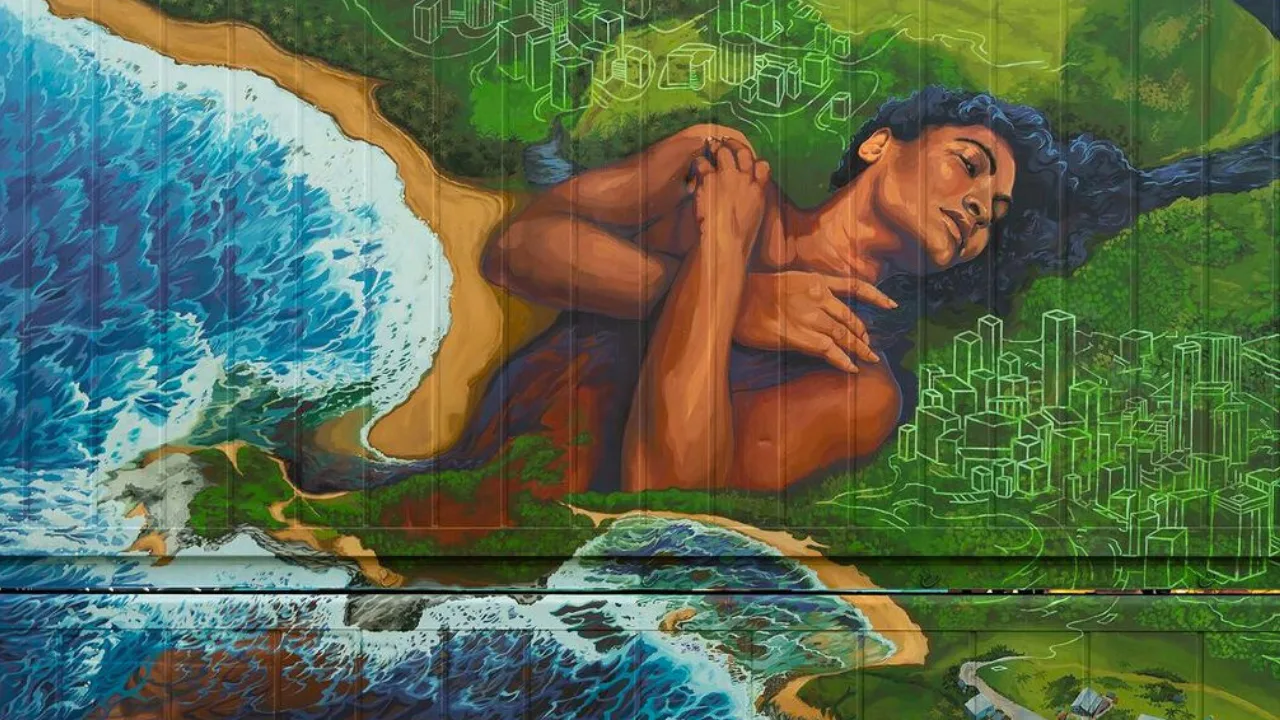
Those who want to purchase a print of their mural "La historia se cuenta de la gente que ama la tierra," which was exhibited at the festival Color Caribe, will find the last physical copies available for sale during the opening, which begins at 7:00 p.m.
This mural also carries a political message. According to the mural's text, which they shared online, it represents the vulnerability that communities and ecosystems face as a result of urban planning and the management of natural resources that does not account for them.
This content was translated with the assistance of Artificial Intelligence (AI).