What's happening? 97% of Puerto Rican consumers buy products made in Puerto Rico, and a growing number are seeking greater well-being in terms of physical health and diet, according to the Radiografía del Consumidor 2026, presented Thursday by the Cámara de Mercadeo, Industria y Distribución de Alimentos (MIDA).
The study, which surveyed 1,600 people responsible for household shopping, also showed a rise in online food purchases as well as slight reductions in consumers' monthly spending on food and household products.
What should local brands do to sustain the momentum? Juan Alvarado of Molcajete Foods, who presented the brands section, told Platea: "The public is already showing local support. Local products will keep growing along those lines, and my recommendation is that brands need to position themselves in the market and offer competitive value, not just on price."
Why does it matter? The study helps explain current consumer trends and what companies could do to adapt. It analyzes not only how consumers divide their budgets and what their income sources are, but also how they perceive the country's situation and how various social and economic changes are shaping consumption trends.
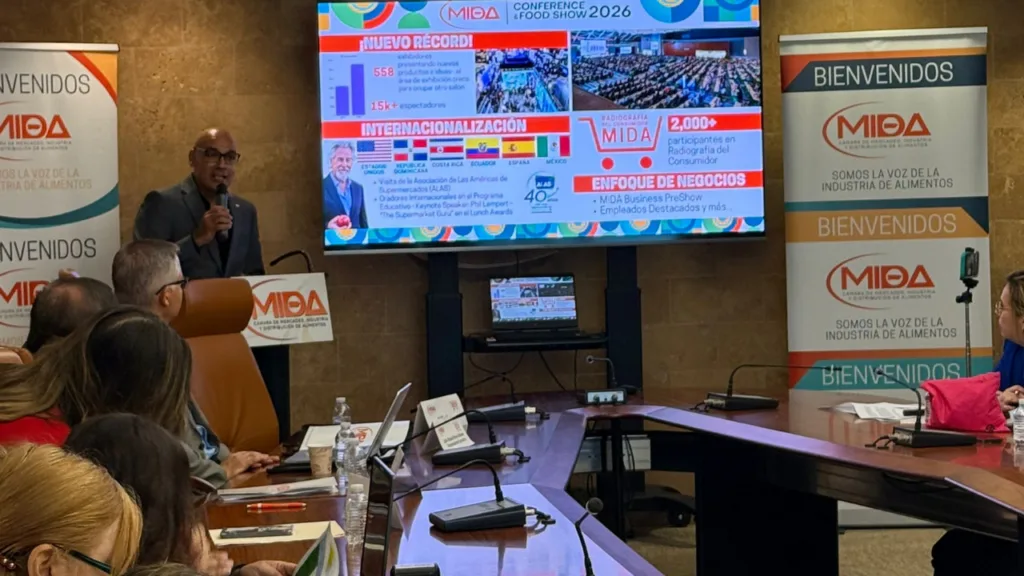
It is "the most important study in the industry" for food in Puerto Rico and has been conducted for 34 years, said Richard Valdés, president of the Comité de Radiografía del Consumidor, during a preview of the study on June 9.
Here are the main findings from the Radiografía del Consumidor 2026 preview:
🇵🇷 Local consumption dominates
97% of respondents said they buy products made in Puerto Rico, which may be linked to a greater focus on fresh products and well-being.
"This effect is not going away anytime soon. This cultural affection, this patriotism around buying local, has been more visible since last year, and we all know why," said Diana Rodríguez, president of Lighthouse Strategies, the firm behind the research, during the study preview.
🛒 Store selection. When asked where they choose to shop, consumers responded:
Low prices: 23% (versus 25% in 2025)
Product variety: 17% (versus 11% in 2025)
Close to home: 17% (versus 19% in 2025)
Quality of fruits and vegetables: 12% (versus 7% in 2025)
For Rodríguez, the fact that product variety and quality of fruits and vegetables saw the largest increases points to a new consumer profile, one that is more health-conscious.
The brands consumers prefer
Among the food brands consumers buy most often, Goya remains at the top, followed by Arroz Rico, Great Value, Tres Monjitas and Econo.
In the vodka category, the Puerto Rican brand Bravada ranked as the most purchased at 15%, up from just 2% in 2025.
Goya, Café Oro, Medalla, Café Lareño, Arroz Rico, Café Oro, To-Rico and Econo appeared as the brands that best reflect Puerto Rican culture.
🧘🏻♀️ Greater focus on well-being
This edition of the study included new questions on well-being, a category that is gaining ground among consumers.
When thinking about well-being, consumers associate it with:
Physical health (47%)
Natural, balanced diet (37%)
Exercise (25%)
Rest (16%)
Having energy for daily activities (14%)
"The Puerto Rican consumer has already decided to take care of themselves. Now, we are all ready to meet those needs," said Rodríguez. "We had never gotten a response so direct and so connected to what this industry is about: food," she added.
Good nutrition and local products. Thirty-seven percent of respondents associate "being healthy" with good nutrition. Victor Curet, of Farmacia Caridad, who presented the wellness section, explained to Platea this connection and its impact on local products: "There is a direct link in what we see with fruits and vegetables that we know are grown here (…). I want to have good physical health, and what leads me there is my diet. And when we talk about diet, we're talking about fresh foods, natural foods that precisely correspond to options that are from here, mainly."
Growing demand for freshness. The preference for freshness shows up in the shopping cart. Sixty-five percent of those who buy beef prefer it fresh, and 62% of those who buy seafood or fish also opt for fresh. The main obstacle to sustaining these habits remains price (47%).
💉 Use of GLP-1 medications.
Eight percent of respondents said they use GLP-1 medications such as Ozempic, Mounjaro or Semaglutide.
This points to "a new consumer profile with specific needs for protein, supplements and nutritional monitoring," Rodríguez said about the opportunities, noting that in the United States the figure reaches 12%.
More GLP-1, lower household spending. The study captured how these medications are shifting consumption, citing data from Cornell University and KPMG. Households with one GLP-1 user reduce their food spending by between 6% and 9%, mainly on cookies, chocolates, chips and soft drinks. KPMG projects that this trend represents a $48 billion reduction in annual food and beverage spending by 2034.
📉 Food spending is down.
Between 2025 and 2026, food spending dropped from $382 a month to $363, a decrease of 5%, or $19. Average spending on household products fell from $127 a month in 2025 to $109 in 2026, a drop of $18, equivalent to 14%.
Why is spending down if prices and inflation went up? MIDA Vice President Manuel Reyes explained that this decline could be due, among other factors, to what he described as "the psychology of uncertainty affecting the consumer," which is when people become cautious with their spending in the face of an uncertain future, as would be the case with the prospect of armed conflict, tariffs and rising fuel costs.
"When asked about their household's economic situation compared to last year, 31% of respondents say they are worse off," Reyes added.
🧑🏽💻 Amazon gains ground in online shopping
Puerto Rican consumers are increasingly shopping across multiple channels, and within that shift, Amazon is the fastest-growing platform. Among the digital sites people use to buy food, Amazon went from 17% in 2025 to 22% in 2026, while the other major platforms, Walmart (-3%), Sam's Club (-2%), Econo ToGo (-5%) and SuperMax Online (-10%), declined.
What people look for on Amazon says a lot about their shopping logic. The main reasons for buying food there are:
Price (46%)
Variety of products not available in supermarkets (43%)
Convenience (23%).
More online shopping:
19% buy food online.
In 2025 it was 16%.
💸 Budget and household
Annual household income. The average annual income of respondents is $27,115, with more than 51% earning above $20,000, 21% earning between $10,000 and $19,000, and 25% earning less than $10,000.
This is similar to the median household income in the 2020-2024 Census, which was $26,297.
Sources of household income. The majority comes from wages (55%), followed by Tarjeta de la Familia (43%), Social Security (35%), pensions (16%), business earnings (4%) and rent (3%).
Monthly spending. The average monthly budget was $2,873, distributed as follows:
Transportation: 24% | $677
Mortgage/rent: 20% | $581
Food and household products: 17% | $472
Utilities: 13% | $358
Education: 10% | $289
Entertainment: 5% | $129
Clothing and footwear: 4% | $125
Home maintenance: 4% | $107
Health: 3% | $99
🛫 Have they considered leaving Puerto Rico?
Of the 1,600 respondents, 526 have considered leaving Puerto Rico, mainly to seek better economic opportunities (36%). Of those 526, Generation Z (ages 18-27) is the group that has most considered leaving (57%), followed by millennials (ages 28-48, 37%) and Generation X (ages 43-58, 30%).
📝 Conclusions and methodology
Consumer mindsets and priorities are shifting. They are looking to protect their budget, incorporate health and wellness into their decisions, and combine shopping channels based on convenience.
They also value every dollar spent and are looking for solutions to navigate a changing economic reality.
Methodology. The study sample consisted of 1,600 in-person interviews with purchasing decision-makers, conducted door to door across the Island. In addition to quantitative matters, household pantries and storage patterns were analyzed qualitatively.
The interviews were conducted between February and March of 2026, which the researchers consider influenced consumer perceptions, as respondents at that time were affected by the conflict in Iran and rising fuel costs.
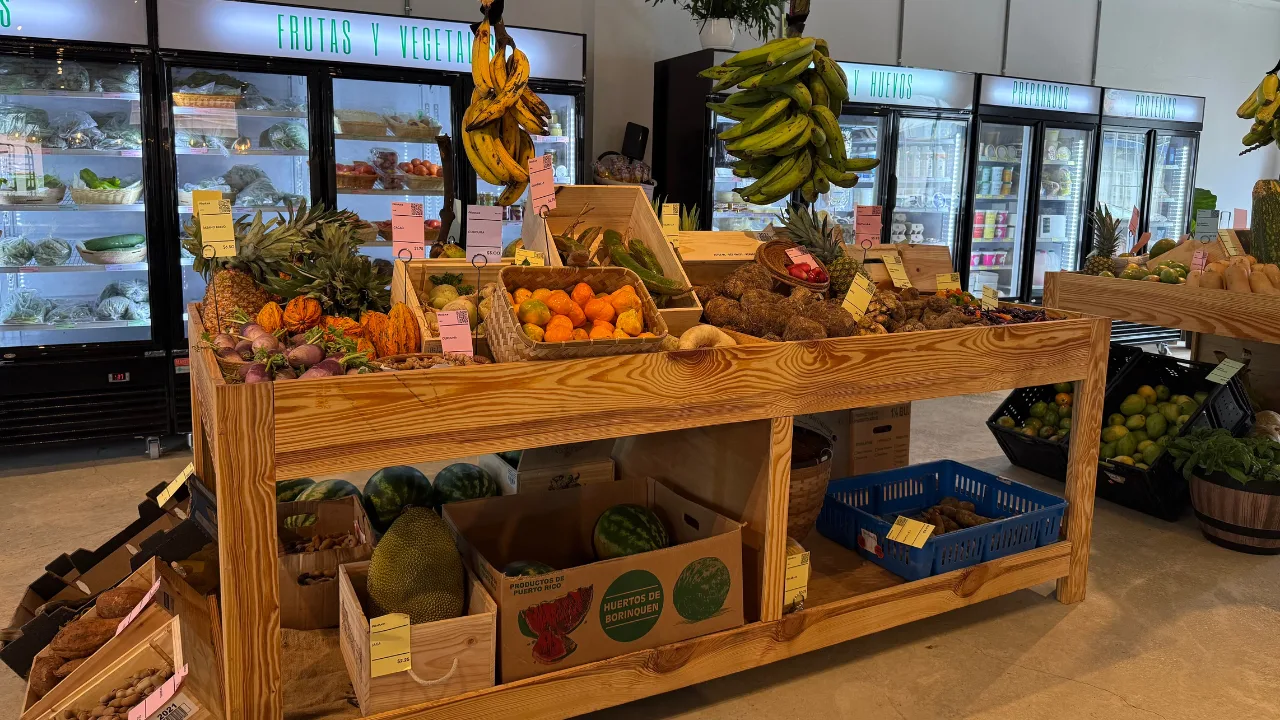
Cover photo: PRoduce storefront in Miramar (Mariana Betancourt)
This content was translated with the assistance of Artificial Intelligence (AI).