The Comerío Municipal Legislature is considering an ordinance to regulate public nuisance auctions that the municipality plans to hold in 2027.
Mayor Irvin L. Rivera González told Platea that he expects approval on or before Dec. 3 in order to hold the first auction before June 30, 2027 (when the fiscal year ends), under two formats: affordable housing auctions for pre-qualified participants and public auctions open to the general public. Both could be held as live, open-bid events.
The first auction could include between 10 and 12 properties, the mayor projects.
Why it matters. With around 685 possible nuisance properties identified, Comerío is looking to reduce the number of abandoned properties in its communities and make it easier for them to be put back into use as housing or other spaces. Money recovered would be reinvested in expropriations and in the public nuisance program itself.
"The municipality's intention is not to make money; it's to eliminate the nuisances and give people the possibility of having housing, and to do that without relying exclusively on municipal funds. That's why we intend to auction them one way or another," Rivera González said.
The challenge. Although public housing is full and the Section 8 waiting list exceeds 100 applicants, the mayor is concerned there may not be enough buyers for the entire inventory.
"I think we're not going to have enough demand for the 600 cases (of identified public nuisances)," the municipal executive said. "That's where you have to be creative about what we do with the rest of the inventory (that has no buyers)."
How would the auctions work?
Comerío proposes holding two types of live, open-bid auctions: one for affordable housing and one for the highest bidder, with no pre-qualification requirements.
1️⃣ Affordable housing auction
The mayor looked to the models used by Isabela and Manatí, which held affordable housing auctions in which participants were pre-qualified by meeting income, residency and primary-residence-use requirements.
In both cases, participants submitted their proposals in a sealed envelope and the auction board later evaluated who should receive the property based on how well they met each requirement.
In Comerío's case, they would not use the sealed-envelope format; instead, it would be a live, open-bid auction among eligible participants.
"They will be open-bid, except that only people who have the highest preference based on how they qualify will be authorized to participate," the Comerío mayor explained. "When sealed envelopes are used, you don't get this dynamic of bidding among different bidders, you don't get that back-and-forth, and that's what ultimately drives the price of the property up."
Who will be eligible. "Low-income or moderate-income people qualify, but also primarily people who do not have a primary home, giving priority first to people from the sector where the property is being auctioned, then to people from other barrios, and then to people from other towns," Rivera González said.
Which properties would qualify? The affordable format would be reserved for structures that can be rehabilitated with a relatively low investment and converted into a residence for a person or family.
2️⃣ Highest-bidder auction
The second format would be open to the general public and would be used for commercial properties, multi-family properties, lots and structures slated for demolition. It would require no pre-qualification.
"All commercial properties will go to live public auctions, and those that are multi-family will also go, because they will be considered a business," Rivera González said.
What happens after a blighted property is purchased? "The regulation gives the buyer one year to eliminate the blight and make the repairs," the municipal executive said. If the repairs are not made, the person could lose the title to the property, since the municipality can request rescission.
The specific rules will depend on the municipal ordinance that is approved.
Where does Comerío stand?
While the ordinance is being evaluated, the municipality continues identifying and notifying potential blighted properties barrio by barrio through its Programa de Estorbos Públicos, attached to the Oficina de Ordenamiento Territorial.
It already has an inventory of about 685 potential blighted properties, although the mayor projects that some of these will be addressed by their owners and will not reach the declaration or expropriation stage.
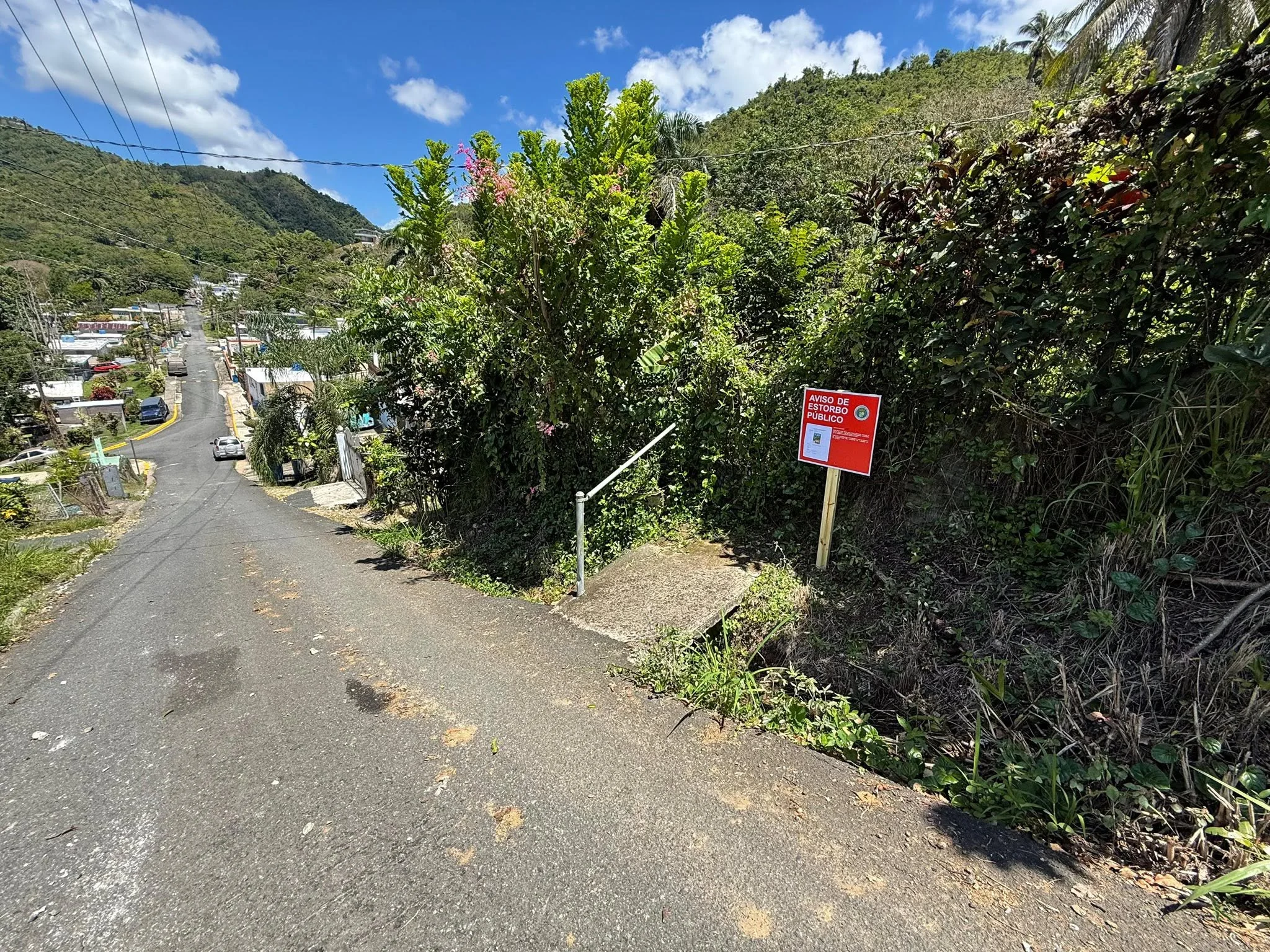
How does it work? The process for declaring public blights includes notification, by sign, letter and public notice in a newspaper, of the intent to declare the property a blight, and a 30-day period for owners to request an administrative hearing or correct the blight condition. If the condition is not corrected, the municipality can declare the property a public blight and impose progressive fines before initiating a possible expropriation.
Only expropriated properties, those whose title the municipality acquires, can go to public auction.
In barrios such as Río Hondo, Comerío identified about 80 potential blighted properties, and following the first notification, about 40 properties were repaired, according to the mayor.
How many properties have been expropriated? The municipality acquired about five properties through purchase and expropriated four others for a flood mitigation project and a passive park. These will not be available for auction.
Funds for expropriations. For properties that are declared blights, the municipality has a fund of $300,000 set aside to begin expropriations. This would allow it to acquire the properties that will be sold at the first public auction, the mayor of Comerío explained.
The municipality projects it will begin expropriating properties destined for auction in January 2027. Rivera González acknowledged that he does not yet know how many he will be able to acquire with the reserved fund.
The process that already exists for blighted properties. Apart from auctions, in all municipalities residents can go to the mayor's office and ask the municipality to declare a potential blight because they are interested in acquiring it. This is called direct purchase.
"Any person interested in a property already declared a public blight can communicate their intent directly to the municipality, and by paying 110% of that property's value, the municipality can then expropriate it and transfer it directly to that person," the mayor of Comerío explained.
The biggest challenges identified in Comerío
In addition to the possibility that there may not be buyers for all the blighted properties that go to auction, the mayor identified other challenges:
Lack of CRIM records. "(Approximately) 40% of properties in Comerío are not in the CRIM (Centro de Recaudación de Ingresos Municipales)," which amounts to "over 3,000 properties," the official said. The municipality is also working to create those records. This lack of registration makes it difficult to identify owners and notify them of the public blight declaration process.
The challenge of special communities. The mayor noted that the first blighted properties were identified in a barrio that later turned out to be a special community where expropriations are more complicated. More than 100 blighted properties were identified and about 50 could be declared, but they did not reach the expropriation process, he said.
"That requires community assemblies and so on, and they have to be run by the Oficina de Comunidades Especiales, which is the ODSEC, and we never managed that because that office is essentially inoperative inside the Departamento de la Vivienda. So we said, no," he explained.
What other models did Comerío consider?
Banco de Tierras. Another format municipalities use to address public nuisance properties is Community Land Banks.
However, Rivera González said he ruled out this model because it is "a slow process." "Given Comerío's high numbers, I didn't see it as the answer for us."
Municipal financing. He also looked at the experience of Jayuya, where, he explained, mechanisms exist to finance housing for people with limited incomes. He does not favor Comerío becoming a loan administrator, given the financial and administrative risks.
These alternatives help explain that Comerío's model responds both to its housing goals and to its budget constraints.
This content was translated with the assistance of Artificial Intelligence (AI).