The nonprofit foundation provides educational programs for students, entrepreneurs and STEM professionals interested in exploring the field of space sciences.
—-
On April 12, 1961, Russian astronaut Yuri Gagarin became the first man to orbit the Earth aboard the spacecraft Vostok 1.
To commemorate this historic feat, engineer José Molina and venture philanthropist Gina Morales founded the Fundación Espacial de Puerto Rico, better known as the Puerto Rico Space Foundation (PRSF), on the same date in 2023.
The nonprofit organization aims to make the island the "Caribbean Space Hub", the center of the aerospace industry in the Caribbean, through its mission to drive and promote an emerging economic development sector: the space industry.
"The main vision is to establish an organization that helps young people in Puerto Rico, and the public at large, develop careers in technology and science, with the idea that this talent will want to stay on the Island," said Orlando Figueroa, a member of its board of directors and retired senior executive at the National Aeronautics and Space Administration (NASA).
To achieve that goal, the founders say that education, entrepreneurship, collaboration across different economic sectors and technology are essential pillars.
"(We are) empowering the community of scientists and entrepreneurs to develop the economy through their space initiatives," said Molina, who serves as PRSF's executive director.
The larger goal, however, is to retain and develop the talent of Puerto Rican scientists and STEM professionals interested in the cosmos, including engineers, physicists, chemists, biologists and entrepreneurs, among others.
Microgravity as a draw for the Island
The Fundación Espacial has focused on attracting companies and scientific organizations interested in studying space phenomena such as microgravity, better known as free fall or "zero gravity."
"Microgravity is the condition in which people or objects appear to be weightless. The effects of microgravity can be observed when astronauts and objects float in space," according to a NASA article.
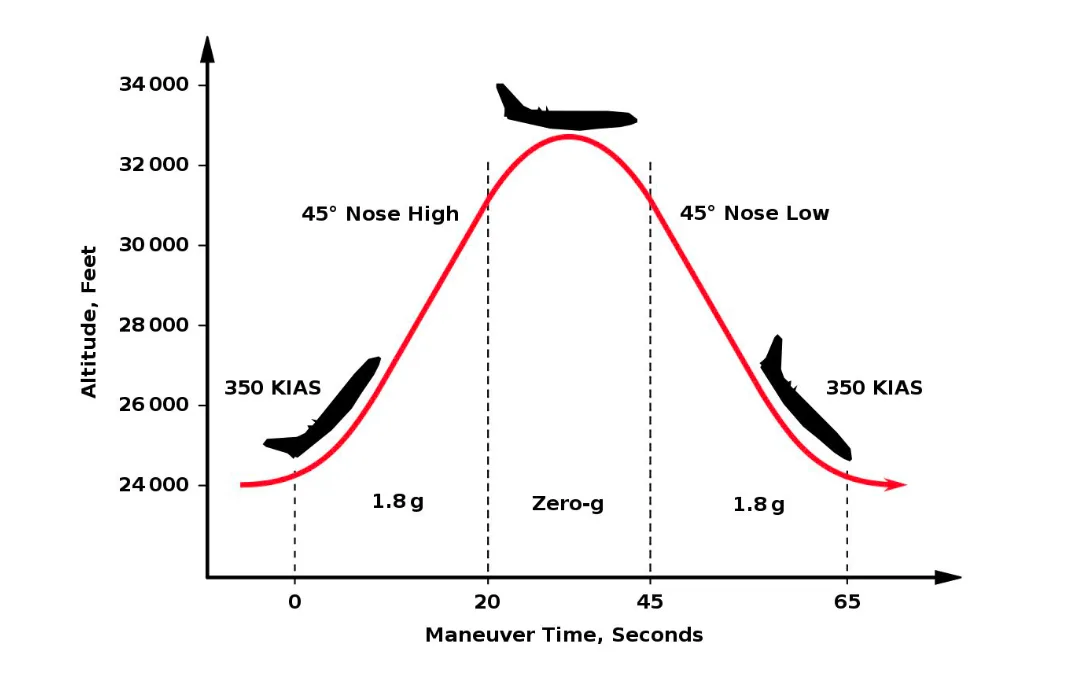
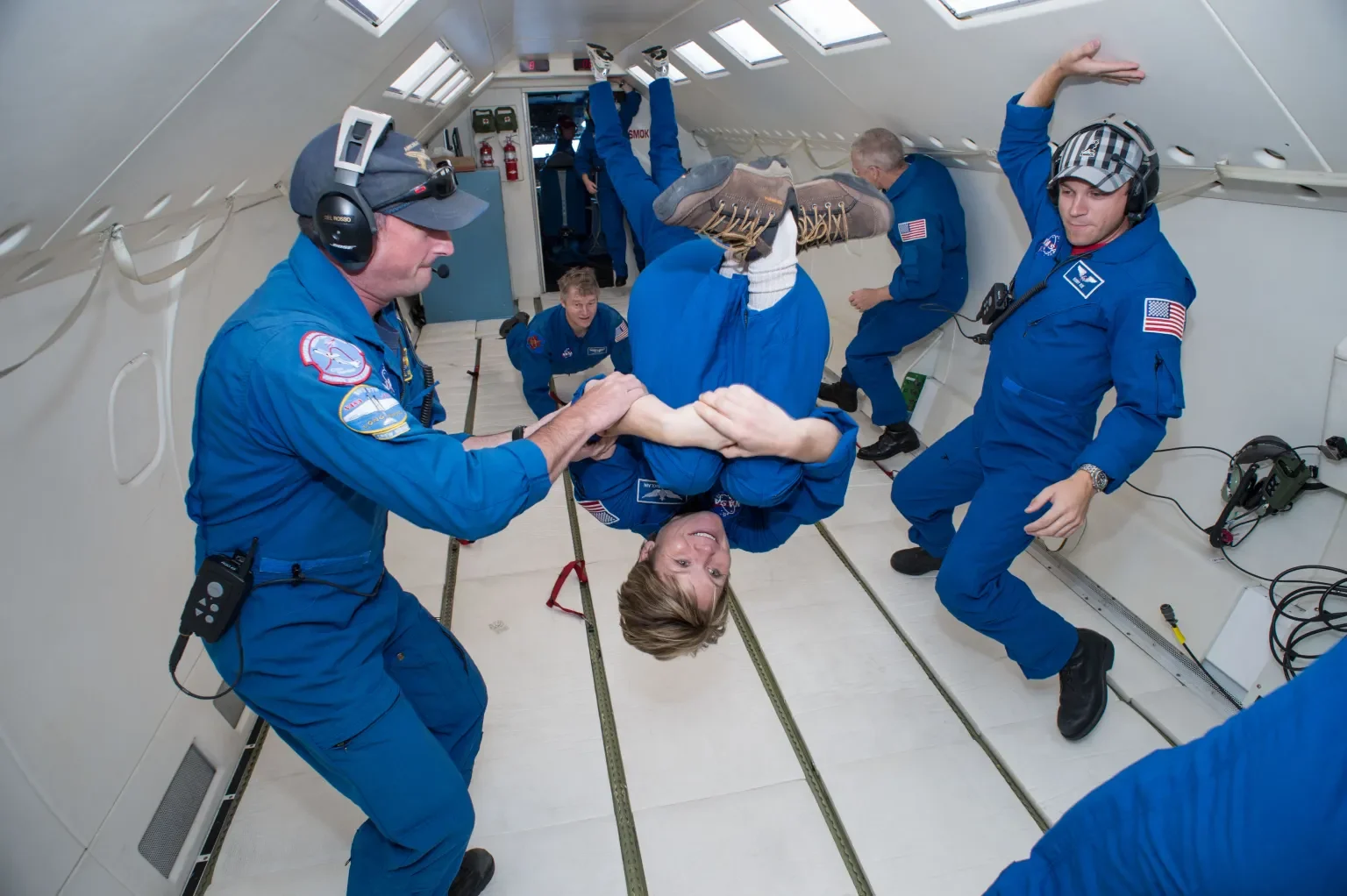
Technologies such as parabolic flights, which recreate the experience of being in zero gravity, allow the study and experimentation of this extraordinary phenomenon without the need to send people or instruments outside Earth's atmosphere.
This type of flight involves a plane, specially designed for parabolic maneuvers, ascending and descending at short intervals, similar to a roller coaster, at an altitude above 6,000 meters. As a result, passengers on board can feel as though they are floating freely in the cabin.
In other words, the aircraft climbs for about 20 seconds "at an inclined angle. Then it reaches a high point and begins to 'fall' along a curved trajectory (or a parabola). During that fall, because the people inside are in free fall, it creates the sensation of zero gravity for about 20 to 30 seconds. Afterward, the plane regains control and climbs again to repeat the maneuver," the entrepreneur explained.
Molina added that these flights are excellent educational opportunities for students and emerging scientists, as they can be "much more accessible and affordable" than space missions for academic institutions, laboratories and companies interested in studying the effects of microgravity.
"This is crucial for studying how different materials, organisms and systems behave without the effects of gravity, which can have applications in biology, physics, medicine and other disciplines," the expert emphasized.
An accessible space for everyone
The PRSF is also looking to integrate educational initiatives, such as "a microgravity research program in the public school curriculum of Puerto Rico for students ages 12 and up," the CEO noted.
The free program, which does not yet have a start date because it is in a testing phase, would include support for teachers on the subject through training workshops and experiment guides. Among them, a microgravity tower that would provide "hands-on learning experiences" for children and young people.
"This tower was designed and developed by a group of four students from a school in the west (of the island) under the guidance of expert engineers from Collins Aerospace. They created a series of guides for other students with a simple assembly approach, which allows students themselves to put it together and explore ways to improve it."
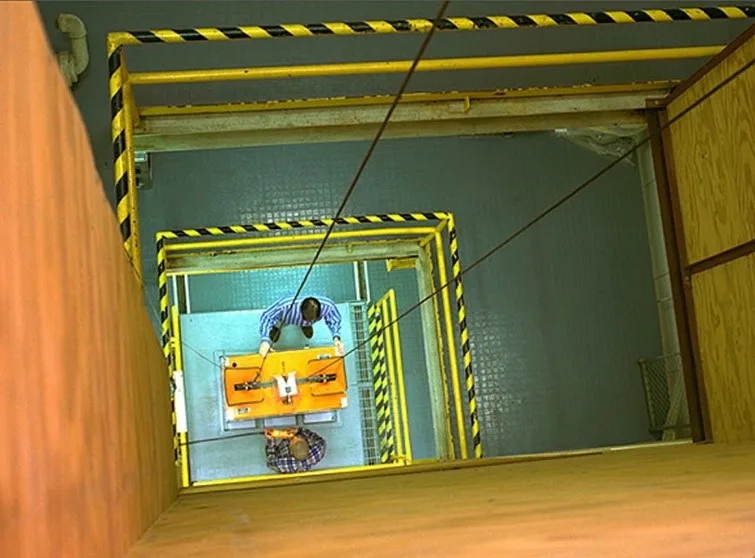
Morales, the PRSF's director of operations, explained that the microgravity tower was built using PVC pipes, an object and a camera, placed inside a small box. The goal is for the camera to capture the effect of microgravity on the object, which appears to be suspended in the air for about 30 seconds.
Once the innovative program is ready to be included in school curricula, The Palmas Academy, in Humacao, and Escuela Superior Urbana Carlos Colón Burgos, in Salinas, have agreed to be the educational institutions where the pioneering project would be implemented.
In this way, the foundation will be able to evaluate, optimize and expand the initiative with the intention of "providing access to unique experiences, like this one, from an early age," Molina said.
In the long term, the organization hopes that young Puerto Ricans will participate in the NASA Drop Tower Challenge, an annual competition in which high school students can submit their drop tower experiments.
They would also look to establish a similar island-wide competition in which participating students could send and test their microgravity models on a parabolic flight or, even, on the International Space Station.
Another initiative offered by the Fundación Espacial is the Programa de adiestramiento virtual de Astronáutica Analógica Nivel Uno, in collaboration with the Mars-Moon Astronautics Academy and Research Science (MMAARS) academy.
The module plan offers comprehensive training in analog astronautics, and is designed to simulate conditions similar to those experienced on a space journey and on other celestial bodies, such as the Moon and Mars.
The training is open to participants ages 18 and up, including students, professionals, scientists, researchers and citizens interested in astronautics who want to "access cutting-edge training in analog astronautics, research and workforce development," the PRSF states on its website.
They also offer the Space Masterclass, a seminar series in which they provide leadership skills focused on the astronautics industry (the study of navigating space), and connect participants with experts and entrepreneurs in the field to help them find employment opportunities or career guidance.
For more information about Puerto Rico Space Foundation's educational offerings and projects, you can visit its website.
This content was translated with the assistance of Artificial Intelligence (AI).