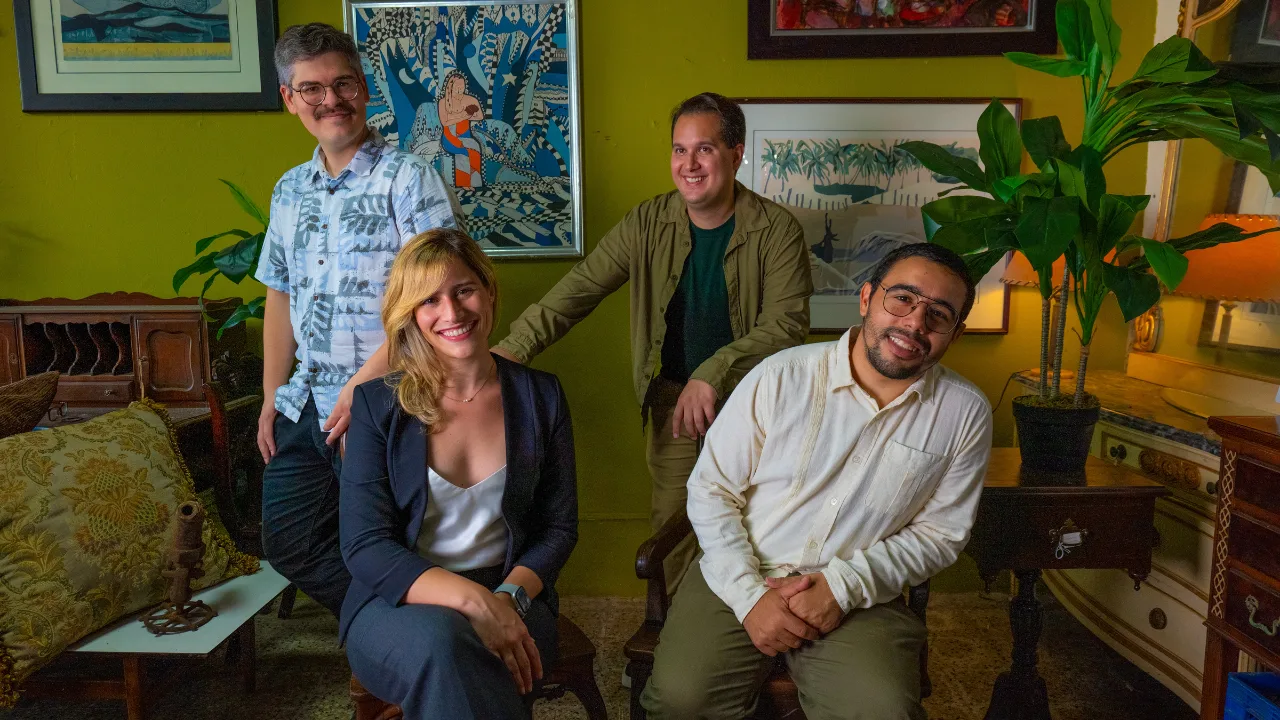

Two business owners who have already received reimbursement explain how to stay organized, plan cash flow and meet key deadlines.
Paying rent on a first location. Buying specialized equipment to start operating. Covering the salaries of first employees. Strengthening the business. Growing. For owners of small and midsize businesses (SMBs) in Puerto Rico, taking those first steps requires more than drive and rolled-up sleeves. They need financial support and someone to guide them through the process.
Not all SMBs qualify for tax decrees or traditional loans. The Incentivo de Capital Semilla, administered by the Departamento de Desarrollo Económico y Comercio (DDEC), is a viable option that provides funds to business owners at critical stages: when they are just starting out and when they are ready to grow.
In either case, managing the process, obtaining the funds and sustaining the business requires strategy, patience and organization. That is why we spoke with local business owners who have used this incentive to move their operations forward.
Below, we share their experiences, lessons and advice so you can do the same.
📝 5 basic things you should know about the incentive
Who it is for: It applies to both newly created SMBs (fewer than 3 years in operation and up to 25 employees) and existing SMBs (more than 3 years in operation and annual sales of up to $3 million).
What it can be used for: Funds are granted for specific uses. These can include purchasing machinery and commercial equipment, paying rent on a commercial space or improving its structure, or covering part of the salary of newly hired employees, among other uses.
How it is received: It is a reimbursement-based incentive. That means you must make the purchase first, then submit the invoice and proof of payment from your bank statement to the DDEC, and wait for reimbursement.
The process: You apply online through the DDEC incentives page, where you must submit a detailed business proposal along with the required documents.
👉 See our guide on applying for the Incentivo de Capital Semilla for SMBs.

Find more information on the DDEC main page
This article is presented by the Departamento de Desarrollo Económico y Comercio (DDEC).
Start hereAdvice from those who have done it: Jesús Feliciano and Benjamín Negrón
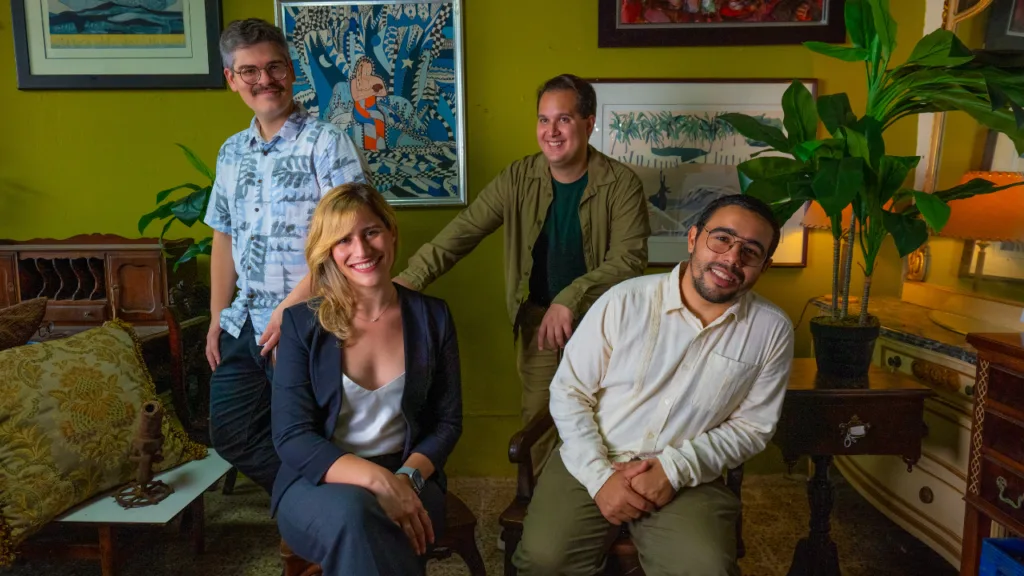
Partners at Desvío Productions.
Paying rent on a first location. Buying specialized equipment to start operating. Covering the salaries of first employees. Strengthening the business. Growing. For owners of small and midsize businesses (SMBs) in Puerto Rico, taking those first steps requires more than drive and rolled-up sleeves. They need financial support and someone to guide them through the process.
Not all SMBs qualify for tax decrees or traditional loans. The Incentivo de Capital Semilla, administered by the DDEC, is a viable option that provides funds to business owners at critical stages: when they are just starting out and when they are ready to grow.
In either case, managing the process, obtaining the funds and sustaining the business requires strategy, patience and organization. That is why we spoke with local business owners who have used this incentive to move their operations forward.
Below, we share their experiences, lessons and advice so you can do the same.
1. Educate yourself on entrepreneurship and learn the processes
Few school curricula include entrepreneurship courses. There are, however, organizations dedicated to guiding aspiring business owners free of charge. Programs such as Colmena66, Parallel 18 and Fase 1 offer courses on planning, legal business structures, finance and marketing, among many other topics.
"The more you can educate yourself about what it takes to have a company that is legally established and up to date, which is necessary to apply for any of these government programs, the more time and effort you will save," advised Jesús Feliciano, co-owner of Desvío Productions, a startup that offers commercial audiovisual production and film services.
2. Plan your cashflow before you spend
A common mistake when applying for the Incentivo de Capital Semilla is assuming you will receive the funds in advance. Because it is a reimbursement program, you need to have the money available to make the initial purchase and enough cashflow to meet your financial obligations while you wait for the reimbursement.
"Three months ago I submitted the invoice to pay rent so I could use the money I save on that for other business functions. (With the reimbursement) I could strengthen the company and plan the next step in its growth. Because what I'm going to invest in that, I could use toward that next step," said Benjamín Negrón, owner of Western Imports, a startup wholesale healthy food company.
3. Get organized from day one and stay consistent
You will need to submit proof of your investments for the DDEC to process your reimbursements. All the information in the documents you submit must match. For example, if you invest in the purchase of new equipment:
The receipt 🧾
Your bank statement 🏦
Images of the purchase (if it involves commercial equipment) 📷
If one document has your name and another has the business name, it will raise a red flag that will delay your reimbursement.
"We already made the first purchase and received the reimbursement. It took more than a month to process because of technical errors between the receipt, the invoice and the contract. But we kept up efficient communication with the DDEC throughout the process and were able to resolve it quickly. We are getting ready to make the second investment," said Feliciano.
4. Be aware of expiration dates and other important deadlines
The incentive application process requires gathering many documents that have different expiration dates. The contract also includes terms for carrying out the activities eligible for reimbursement. If you miss those dates, you may have to go back and obtain and resubmit the required certifications, which delays the entire application and award process. And if you do not carry out the activities within the period specified in the contract, it may become void and you may lose the incentive.
"It takes time to gather the number of documents you have to submit (to apply). The validity periods of the documents are not synchronized, and that doesn't help when you're trying to complete the process. In my case, approval of the incentive took 60 days from when I applied, which is pretty fast, but not every process goes that way," Negrón explained.
"Read the contract carefully and be very clear on all the terms and conditions so you meet the requirements and don't put the incentive at risk through lack of knowledge or doing something at the wrong time," Feliciano advised.
5. Act strategically
The Incentivo de Capital Semilla is available to both new small and midsize businesses (fewer than 3 years in operation) and existing ones (3 years or more). Feliciano recommends that interested parties be strategic about when to apply for the incentive, especially if it is a newly created small or midsize business, which requires an investment for fund matching.
"The sweet spot, I would say, is around the one-year mark of the operation, when you already have some investment in your business and can test something. You also have to be strategic about how you use the money. You need to have the entry capital, and it helps for the business to have financial health or a line of credit so you can wait for the reimbursement to arrive without that threatening the operation of the business. You have to be strategic with timing and business development," Feliciano suggested.
Both Negrón and Feliciano noted that DDEC support staff guided them through every step of the application and approval process for the incentive.
Apply these tips and, if you meet the requirements, develop your proposal, secure your fund match, take the leap and apply.
If you want to learn more about other incentives from the Departamento de Desarrollo Económico y Comercio, we have put together guides that explain point by point what they are, who qualifies and how to apply:
Guide to applying for manufacturing economic and tax incentives
Comparative guide to understanding Incentivo Económico vs. Incentivo Contributivo
Guide to applying for the Incentivo para Profesionales de Difícil Reclutamiento
This content was translated with the assistance of Artificial Intelligence (AI).