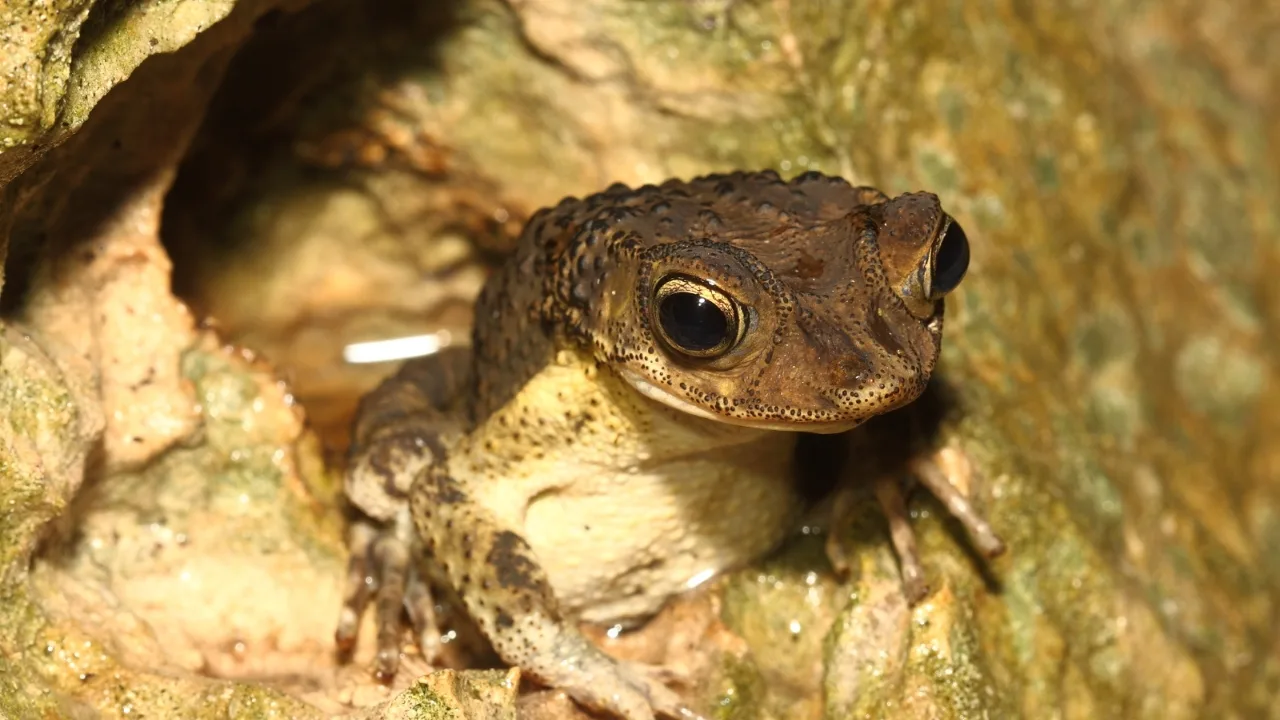
Ciudadanos del Karso and Puerto Rican Crested Toad Conservancy are collaborating to create a center for breeding the sapo concho in Arecibo, Puerto Rico, which would support conservation efforts for this endangered amphibian.
The sapo concho keeps making news. The popularity this endangered amphibian gained through the character Concho in the short film accompanying the album DeBÍ TiRAR MáS FOToS (2025), by artist Bad Bunny, has brought its story and importance into wider discussion and given long-standing conservation efforts greater visibility.
Now, a landmark agreement between Ciudadanos del Karso (CDK) and Puerto Rican Crested Toad Conservancy (PRCTC) will allow the breeding of the Puerto Rican crested toad, or sapo concho (Peltophryne lemur), to be relocated to Puerto Rico for the first time, specifically to Arecibo.
💡Learn what this initiative involves and why it matters
The sapo concho: an endangered species
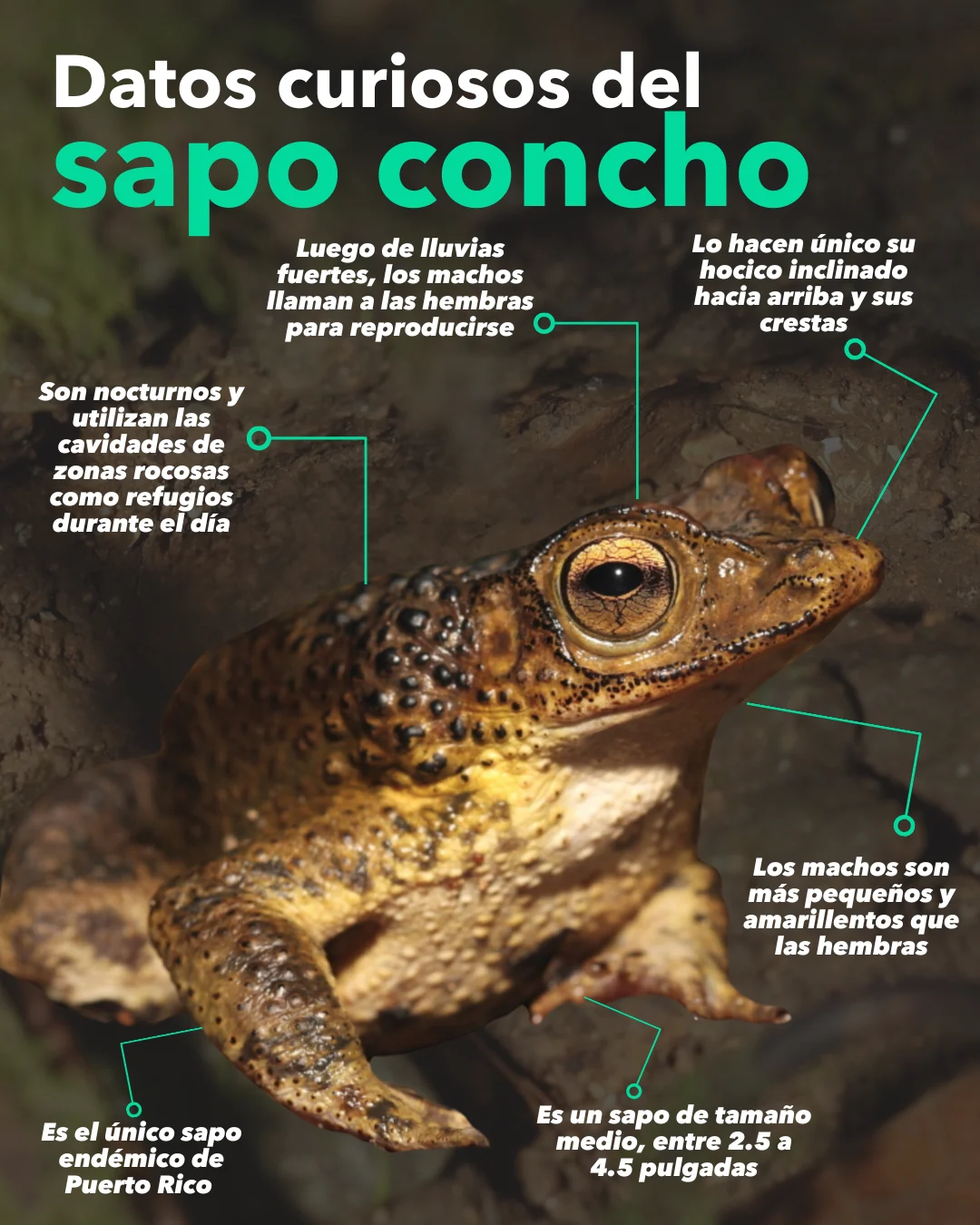
The sapo concho is one of two toads that live in Puerto Rico, but it is the only endemic one. The other, the common toad, was brought from South America in the 1920s and is considered an invasive species. For decades the sapo concho was believed extinct, but in 1967 it was rediscovered in Isabela, and efforts to protect it began from that point.
The Puerto Rican crested toad has been listed as threatened by the U.S. Fish and Wildlife Service since 1987 and as "endangered" on the International Union for Conservation of Nature (IUCN) Red List of Threatened Species since 2004. This means its area of occupancy is less than 100 square kilometers, its population is fragmented, and the number of individuals continues to decline.
Efforts to protect the sapo concho
Since 1980, PRCTC has carried out captive breeding of the sapo concho at various zoos affiliated with the Association of Zoos and Aquariums (AZA). Those efforts, however, were concentrated at zoos in different parts of the United States and Canada, from which tadpoles were flown to certain reserves in Puerto Rico.
Since 2006, CDK, PRCTC and the Departamento de Recursos Naturales y Ambientales (DRNA) have maintained a collaboration agreement to work on the conservation and recovery of the Puerto Rican sapo concho. Under that agreement, tadpoles are reintroduced into a pond that CDK created at the El Tallonal nature reserve in Arecibo.
The sapo concho is currently found in several areas of the island, including Coamo, Yauco, Manatí and Guayanilla, according to PRCTC.
Cronología del Sapo Concho
The sapo concho was first described in 1868 and has been reported at only 19 sites in Puerto Rico. It was believed extinct in the mid-1960s. This timeline from Puerto Rican Crested Toad Conservancy shows key events related to the toad's rediscovery and recovery efforts.
1967
Sapo concho rediscovered in Isabela, on the northern part of the island
Breeding the sapo concho in Puerto Rico
The agreement between CDK, which focuses on researching, educating about and conserving the northern karst region, and PRCTC, the first organization created to conserve this amphibian, will allow sapo concho breeding to take place in Puerto Rico for the first time, at a facility on a 1.5-cuerda property in the Dominguito barrio of Arecibo, CDK announced in a press release.
"With this new agreement with Puerto Rico Crested Toad Conservancy, Ciudadanos del Karso reaffirms its commitment to the conservation and breeding of this endemic and endangered species. Being able to breed sapos conchos in a dedicated, specialized center for those purposes can increase the breeding rate compared with what zoos are able to provide."
Abel Vale, president and founder of Ciudadanos del Karso
The purpose of this agreement is to simplify the reintroduction of the sapo concho into its natural habitat, since the ponds will be closer and this is expected to increase the species' chances of survival in the archipelago, "which would be a great achievement for Puerto Rico," he added.
These new facilities will be built this year next to the Reserva Natural y Estación de Campo de Mata de Plátano and near the El Tallonal nature reserve, where CDK currently carries out the reintroduction and monitoring of the amphibian. These lands include mogote areas with native forests that serve as natural habitat for the sapo concho and many other plant and animal species of conservation interest.
This content was translated with the assistance of Artificial Intelligence (AI).