What's happening? Competing on price against imported meat is not viable, and a group of local producers knows it. Their bet is on something else: quality, freshness and new markets.
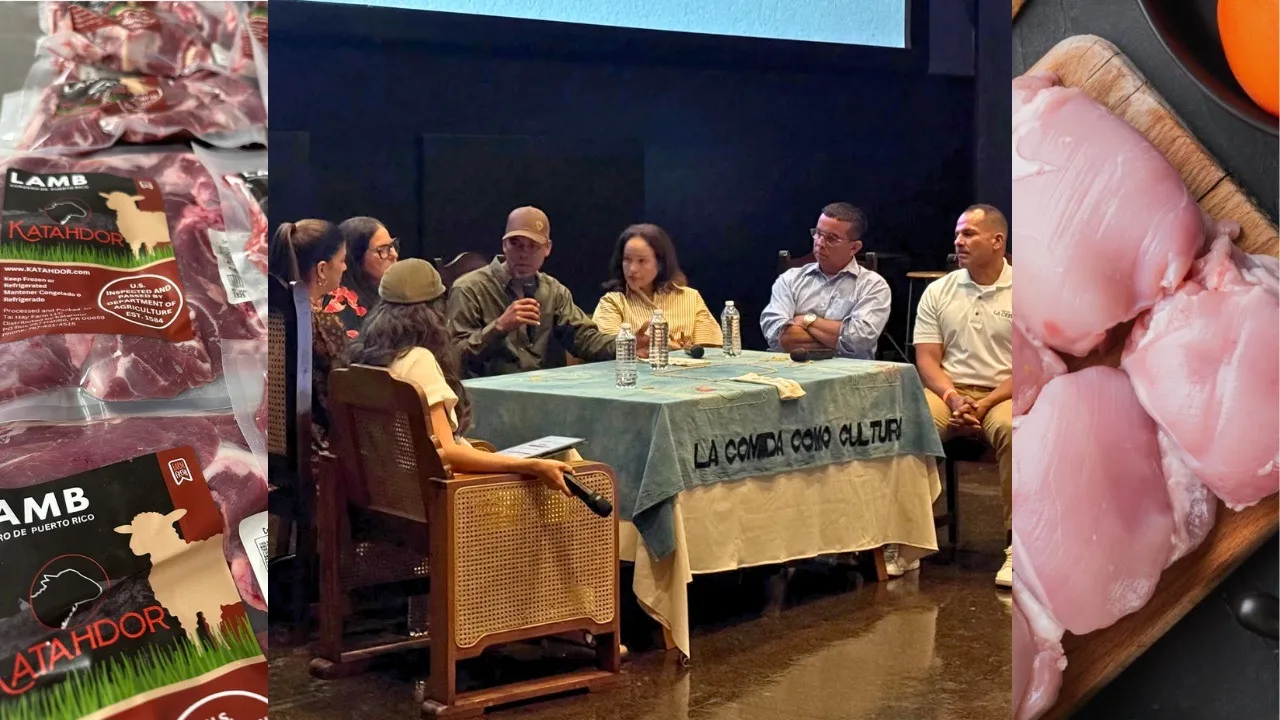
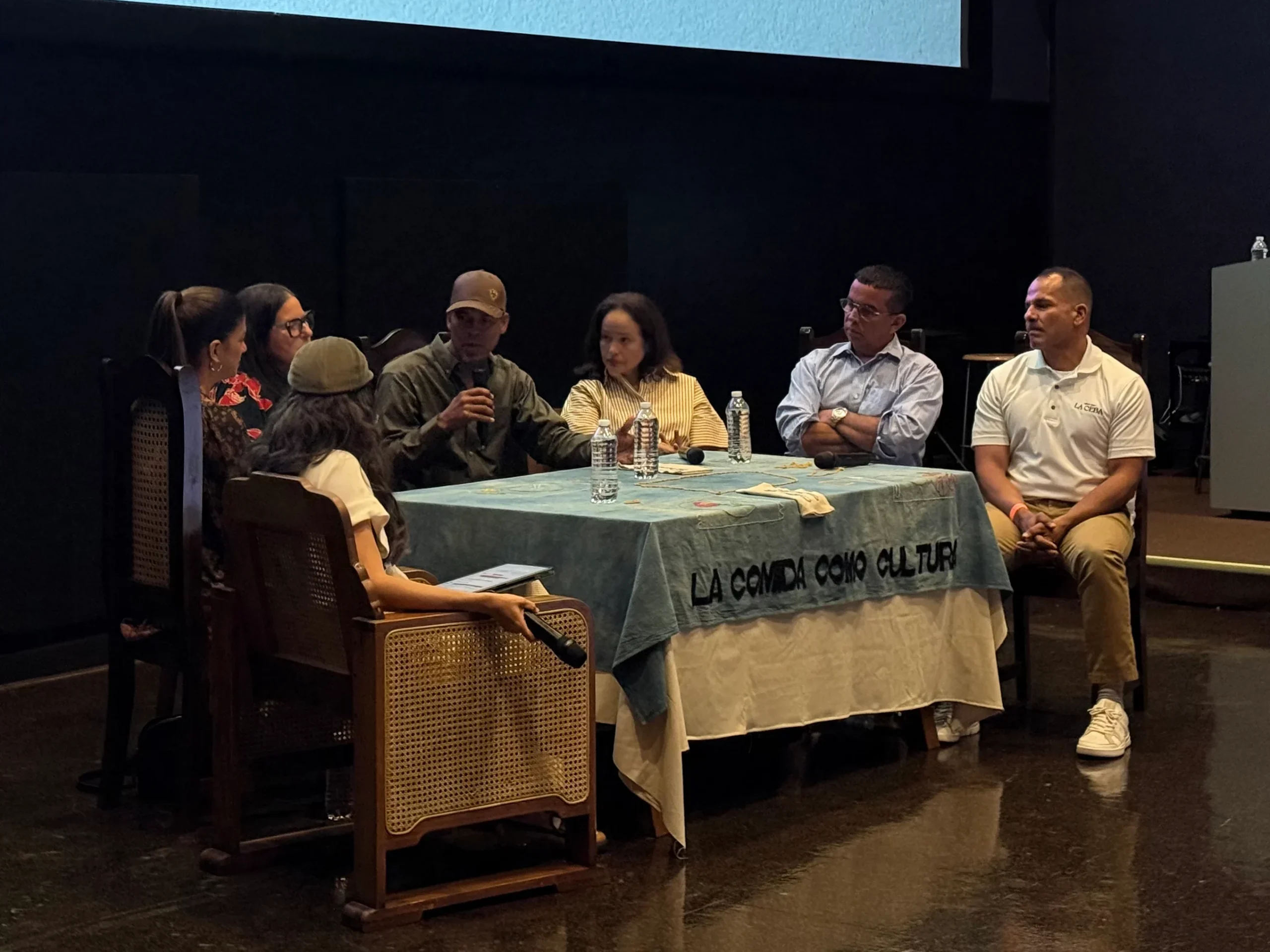
Six of them met on May 23 at the third gathering of Diálogos de Sobremesa, at the Centro Criollo de Ciencias y Tecnologías del Caribe (C3Tec) in Caguas, to share their vision of the opportunities and future of the sector. The panel "Producir, procesar y distribuir carne en Puerto Rico," moderated by PRoduce founder and food policy expert Crystal Díaz, brought together producers of chicken, lamb, beef, pork and rabbit.
Zoom in. 86% of the meat Puerto Ricans consume comes from the United States, according to the report "Carne nuestra de cada día" (2026) by researcher Yamil Corvalán Santiago. Only 7.75% of beef and 3% of pork are produced locally.
Meanwhile, 78% of consumers buy fresh and frozen meats regularly, according to the Radiografía del Consumidor 2025 de la Cámara de Mercadeo, Industria y Distribución de Alimentos (MIDA). The numbers point to a story of dependence, but also of opportunity.
Why does it matter? If you buy meat in Puerto Rico, the choice between local and imported product directly affects what ends up on your plate. Local meat doesn't travel for weeks by ship or arrive frozen. And in some cases it meets standards that imported meat doesn't guarantee, such as the antibiotic- and hormone-free raising that Pollos To-Ricos certifies.
Quality over price
The reason is in the numbers. Ángela Padilla, of Pollos To-Ricos, pointed out that imported chicken arrives at 95 cents a pound, while local chicken costs around $1.50. Energy costs are the most immediate obstacle for the poultry sector, so the focus is on quality and added value.
To-Ricos chicken is never frozen, carries certification for antibiotic- and hormone-free raising, and control over incubation allows them to guarantee the animal's biosecurity. "The differentiation of the chicken product is what keeps us relevant all the time," Padilla said.
Rosa Martínez, of Katahdor, took a similar path with lamb. Instead of competing on price, she invested in consumer education. "We have created a culture of consumption for that premium product," Martínez said. The breeds raised in Puerto Rico are hair sheep, with a milder flavor than imported ones, and they arrive fresh to the table, without weeks in transit.
Freshness is also the calling card of Roselyn Hernández, of Fondo de Res. Her traceability project creates a tracking system for the animal from birth to sale, to show consumers exactly where the meat on their table comes from. Through Las Finqueras, she opens her farm in Río Grande to the public on the first Saturday of each month for a direct sale of beef cuts.
Those who created their own market
The story of local meat in Puerto Rico is not only about those who hold on in a competitive market. It is also about those who decided to create a new one.
Néstor Maldonado, of La Ceba, identified that raising pork for lechoneras was not giving them the economic return they were looking for. The bet was to produce a 250-pound cut pig, with fine fat capacity, which opened the door to the food service market. Today, around 20 well-known restaurants on the Island serve La Ceba chuleta. And "when conditions align," they plan to add 150 more pigs to their operation.
Óscar Torres noticed that the rabbit arriving in Puerto Rico came from China and took weeks to get here. The founder of Conejera Rabitos bet on local production of a clean, healthy animal and built his own client base. "What works is what you dare to do," he said.
Challenges and opportunities
More production is needed. For Martínez, what's needed is more farmers willing to enter the business with a serious plan, and greater government attention to the food security problem. He also pointed out the lack of direct access to slaughterhouses for farmers as a concrete obstacle.
In the pork sector, the challenge is standardization. Maldonado explained that in Puerto Rico there is no formal pork industry, only individual producers with varying practices. Formalizing that, he says, is the opportunity.
More partnerships. The six panelists agreed that the future of local meat production is possible, but requires more players, more presence in supermarkets, more partnerships with the restaurant sector and, according to Torres, a real push in marketing. "What isn't advertised doesn't sell," Torres concluded.
This content was translated with the assistance of Artificial Intelligence (AI).