The condition of emergency shelters, repair work on the Tren Urbano, and matters related to the climate change plan dominated the agenda during the legislative recess.
What's happening? During the legislative recess following the end of the first session, between July 1 and 14, the Legislature said a final goodbye to former House Speaker Ronny Jarabo and held several public hearings on topics including the condition of hurricane shelters and work on the Tren Urbano after its shutdown in May and subsequent partial operation.
In addition, the Joint Commission on Climate Change Mitigation, Adaptation and Resilience presented, at the close of the first session, a first partial report on the Climate Change Mitigation, Adaptation and Resilience Plan, and they expect to receive input from the agencies involved in an executive session (closed to the public) on July 22.
Legislative process
How are laws made?
INTRODUCTION
COMMITTEE
SESSION
SECOND CHAMBER
ENROLLMENT
SIGNATURE
A bill may be introduced by the Executive, a legislator, or by petition.
It is assigned a number and referred to committee.
Types of measures: Bills, Resolutions, Joint Resolutions, Concurrent Resolutions.
It appears on First Reading.
It is assigned to the relevant committee.
Meetings and public hearings are held (at the committee's discretion).
Measures are considered and reports are prepared.
Statements, information and testimony for and against are received.
The committee produces a positive report (with or without amendments) or a negative one.
It is sent to the Rules and Calendar Committee.
A decision is made on when to bring it to the floor for discussion and a vote.
On the floor: Reading, Debate, Amendments, Motions and Vote.
The result is an approved measure that moves to the next chamber.
The final approved text is sent to the second legislative chamber.
The second chamber carries out its own committee work.
It is referred to the relevant committee and goes through a similar process.
It may pass with or without amendments.
The approved bill is enrolled (a document prepared before it is sent to the Governor).
If it contains amendments, the originating chamber may concur or not concur.
If it does not concur, it goes to a Conference Committee.
The secretaries and presiding officers of both chambers sign it.
The bill is sent to the Governor for signature.
While the Legislative Assembly is in session, the governor has 10 days to sign or expressly veto it. If no action is taken, it becomes law.
Out of session: if not signed within 30 days, a Pocket Veto applies.
The Legislature may override the veto with 2/3 of its members.
1 of 6
Source: Oficina de Servicios Legislativos
Why does it matter? Although the second legislative session does not begin until Aug. 18 and the possibility of holding a special session has already been ruled out, the Legislature may hold public hearings and introduce bills during the legislative recess. For that reason, we are keeping you up to date on the most notable developments at the Capitol.
After the close of the first legislative session, when around a hundred measures were sent to La Fortaleza, Gov. Jenniffer González has signed several of them into law, but measures related to housing, culture, technology, mental health and technology remain unsigned.
Single-use plastics: The delay in implementing Ley 51-2022, which bans single-use plastics, did become law (Ley 47-2025).
🔎 Highlights from both legislative chambers
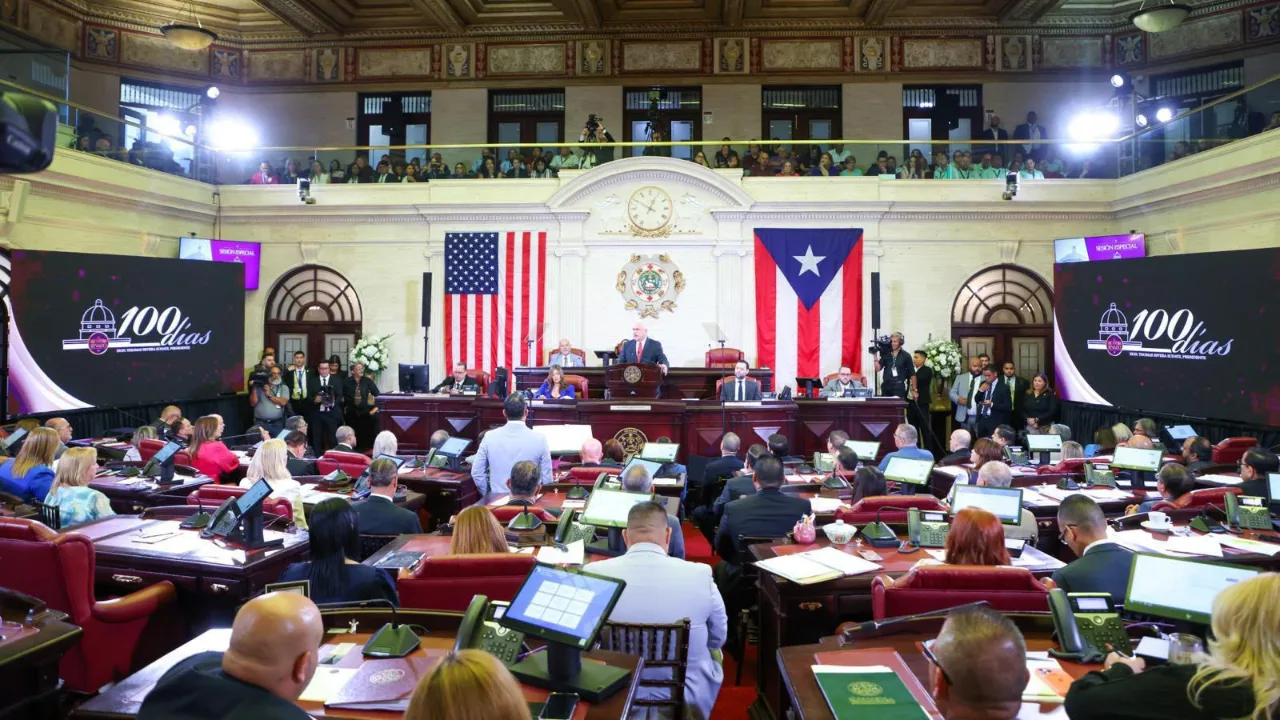
Final goodbye to Ronny Jarabo: In a ceremony attended by family members, friends and legislators, former House Speaker José Ronaldo "Ronny" Jarabo was farewelled on July 2. The final goodbye took place at the Capitol, where he had worked for more than 45 years.
The former Partido Popular Democrático (PPD) legislator died on July 6 following a brain tumor diagnosis. He was 85 years old.
Partial climate change plan presented: The Comisión Conjunta sobre Mitigación, Adaptación y Resiliencia al Cambio Climático presented a first partial report on the Plan de Mitigación, Adaptación y Resiliencia al Cambio Climático, which sets public policy on these matters in Puerto Rico for the coming decades.
Although the plan was initially expected to be approved by June 30, a new interpretation determined that the commission has until November to discuss and approve it. That is when the second legislative session ends.
Executive hearing set for July 22: With this additional time, the agencies involved are expected to present their views on the plan, which was prepared by a group of experts appointed under Ley 33-2019. The hearings will not be open to the public.
🌾 Our agriculture coverage
🔢 Senate: activity in detail, July 1–14
During this period, the Legislature was in recess, so no legislative measures were approved. These were some of the highlights:
🌀 Hurricane season
99 of the 304 shelters have three essential elements: Those are a cistern, an electric generator and solar panels, confirmed Saraí Ruiz Maisonet, director of the Office of Public Policy at the Department of Education (DE), at a public hearing of the Comisión de Vivienda y Bienestar Social. In general terms, the official said that 245 schools have cisterns, 232 have electric generators, 143 have solar panels and 140 have functioning showers. She added that the remaining cisterns must be installed no later than Sept. 30, using funds from the Restart program.
In total, there are 342 certified shelters distributed across the 78 municipalities with capacity for 40,903 people, said Omar Figueroa, undersecretary of the Department of Housing (DV). He noted that during Hurricane María (2017), 175 shelters were activated in one night for some 12,000 people.
The DV has: 29,377 cots, 8,196 tarps, 11,169 sheets and 323 pet crates.
🏥 Health
Licensing exam and regulations for respiratory therapists questioned: Fewer than 30% of respiratory therapist candidates pass the licensing exam, which was reformed last year, a concerning "low pass rate" in a profession where only 73% of the 349 positions are filled, said Myrna Quiñones, chancellor of the UPR Medical Sciences Campus, at a public hearing of the Comisión de Salud.
Also, the new regulation to govern this profession has still not been approved five years after Ley 93-2020, which regulates the practice of respiratory care, was passed. The delay is due to the fact that only one of the five members of the Junta Examinadora de Terapistas Respiratorios has been appointed, said the board's president, Efraín González.
Recommendations: The hearing recommended reviewing the curricula of the four institutions that offer the degree, reviewing the licensing exam, approving the regulation and accelerating the issuance of licenses.
🔢 House: activity in detail, July 1–14
During this period, the Legislature was in recess, so no legislative measures were approved. These were some of the highlights:
🏗️ Infrastructure
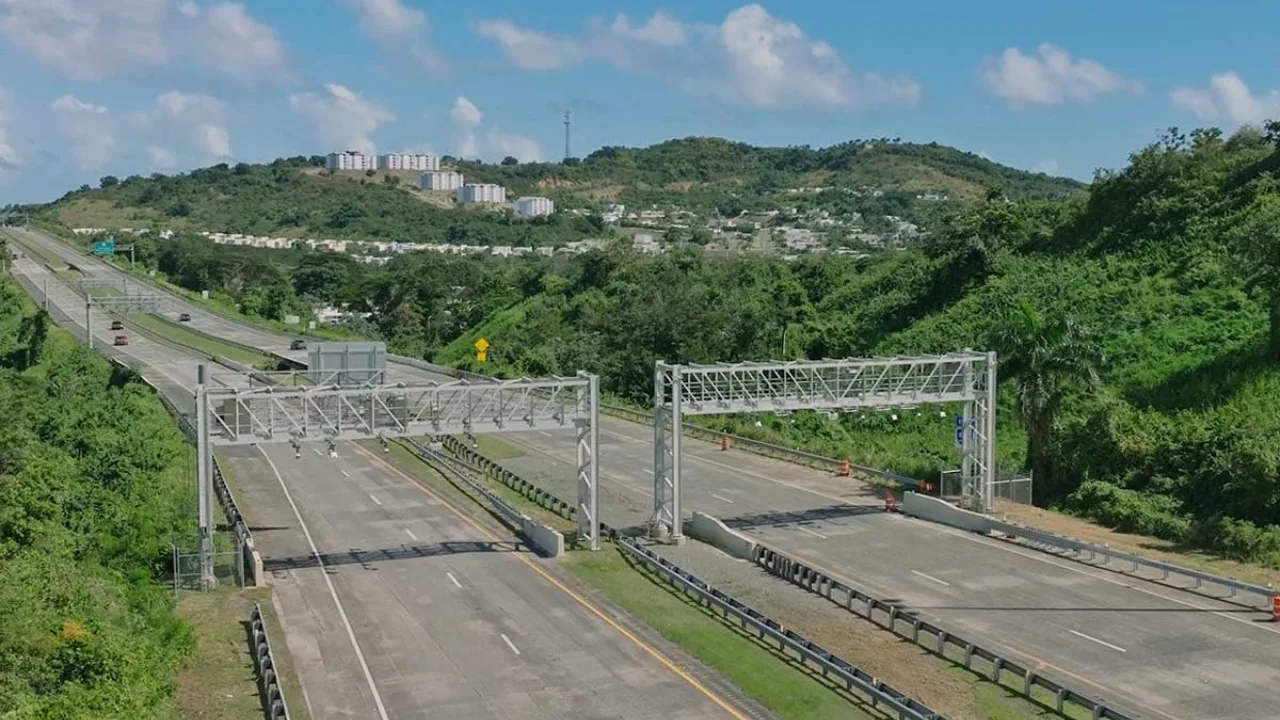
Train resumption announced without LUMA certification: ACI-Herzog, the company that operates Tren Urbano, told the Autoridad de Transporte Integrado (ATI) that the train would be ready to operate in full for the first shows of Bad Bunny's residency, even though LUMA Energy had not yet conducted the relevant studies or certified the system's operation, it was revealed at a public hearing of the Comisión de Transportación e Infraestructura.
For Rep. José "Cheíto" Hernández, these were "irresponsible" acts on the operator's part, because a deadline was set when the investigation report on the explosion at the Martínez Nadal station's electrical substation had not yet been sent to LUMA. That explosion caused the train to shut down for a week and run only partially for a month and a half.
ATI director Josué Menéndez said passengers on the train were not at risk. The train began running at all 16 stations at 4:30 p.m. on Friday, July 11, hours before the start of Bad Bunny's first concert.
🏥 Health
$625,000 donated to Hospital del Niño: The Chamber delivered this donation to the nonprofit Sociedad Pro Hospital del Niño for the purchase of equipment and payment of medical services. These funds are part of House Joint Resolution 157, which includes $20 million in donations to various nonprofit organizations.
This content was translated with the assistance of Artificial Intelligence (AI).