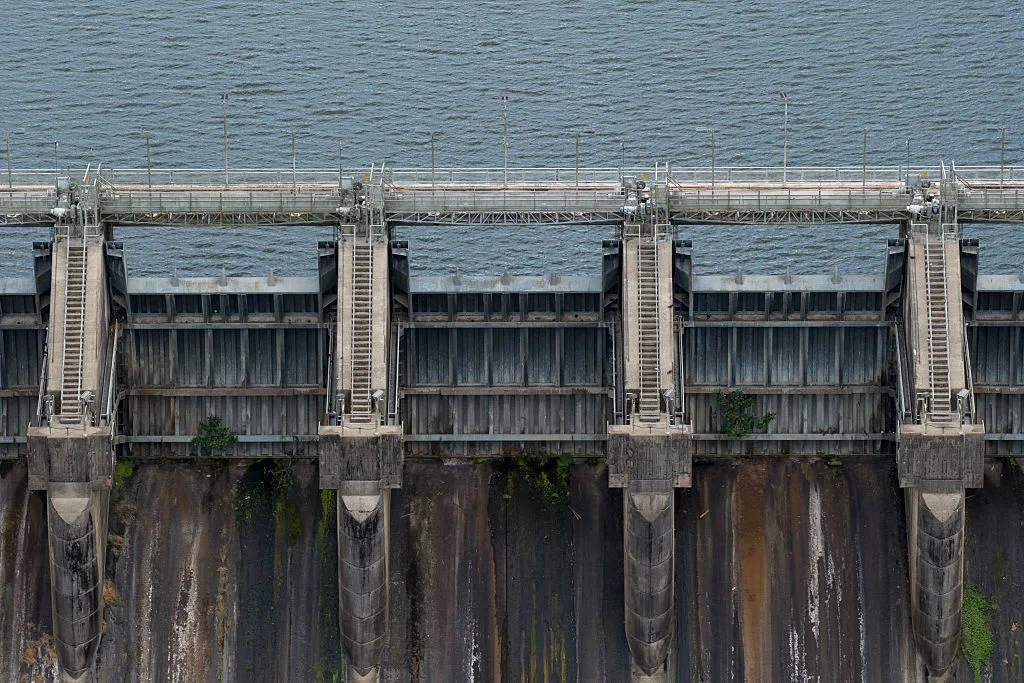
What's happening? Gov. Jenniffer González announced a pause in the rationing plan for the roughly 180,000 customers in seven towns served by the Carraízo reservoir after it reached 38.5 meters following recent rainfall, which would move it out of the operational-adjustment level and into the observation level, at least for the next few days.
The pause in the water rationing plan takes effect Wednesday, Sept. 2, starting at noon and will last 48 to 72 hours, during which all customers, in both Zone 1 and Zone 2, will have water. The governor ordered the Autoridad de Acueductos y Alcantarillados (AAA) to begin the process of restoring service.
"We are giving instructions so that we can pause the scheduled interruptions for tomorrow and so that a pause of 48 to, possibly, 72 hours can be seen. What this would mean is that everyone in Zone 1 and Zone 2 will be able to get water over the next 48 to 72 hours," González said in a message broadcast on her social media following a visit to the reservoir.
Why does it matter? This pause does not mean the rationing plan is stopping entirely. It gives a break to families who, since Aug. 7, have had their water service interrupted in 48-hour periods. The government's plan is to continue monitoring reservoir levels, weather conditions and the drought to determine whether the interruption plan resumes or what other measures can be taken, since the rain has halted, for now, the shoreline dredging that had been scheduled to begin this week.
As Carraízo showed gains, the governor also announced that the Cidra and La Plata reservoirs, which were also at the operational-adjustment level in Monday morning's reading, had not entered a rationing plan. These increases will not be reflected on the AAA's website until tomorrow, she added.
"We are still in an area very close to the observation level, but if we continue to receive rainfall like what we are expecting, like what we have received, we could move out of this stage," González said.
Temporary plan: Reactivating 5 wells to supply water to the metropolitan area
Separately, the governor announced that part of her team identified "12 to 15 wells that had been out of use for the past 15 to 25 years," of which five located "in the Dorado area" could be used to increase the water supply in the metropolitan area. The wells were taken out of service when the Superacueducto came online in the late 1990s.
"Those five (wells) have been identified and could be restored and could be bringing to the metropolitan area at least a minimum of 5 million gallons of water per day, which could solidify the flow of water into the San Juan area and supply the area even more," she explained.
For context, the Carraízo reservoir normally supplies 80 million gallons of water per day through the Sergio Cuevas filtration plant, according to the AAA. That had been reduced to 60 million gallons of water per day as the reservoir declined.
Although this involves additional costs, the governor indicated that the emergency fund will be used to cover them. She did not say how much money restoring the wells would require.
The identified wells were: Campanillas, Levittown, Dorado Dairy 1, Dorado Dairy 2 and Maguayo, said Secretary of State Rosachely Rivera Santana, who joined the governor for the announcement.
Shoreline dredging at the Carraízo reservoir
The governor also said that the U.S. Army Corps of Engineers is expected to authorize shoreline dredging at the Carraízo reservoir this week, a process that was set to begin this week but could be delayed as the reservoir's water level rises.
"The machinery is already in place in the Gurabo area for the dredging of the Carraízo reservoir, the shoreline dredging. Once we receive this permit from the Army Corps of Engineers, which should come this same week, it is a five-year permit," González said.
How shoreline dredging works. The process aims to remove sediment, trash and wood that accumulates along the lake's shores, which until a few days ago had been exposed with dry ground. "There is water in that area, so the machinery cannot go in," the governor said.
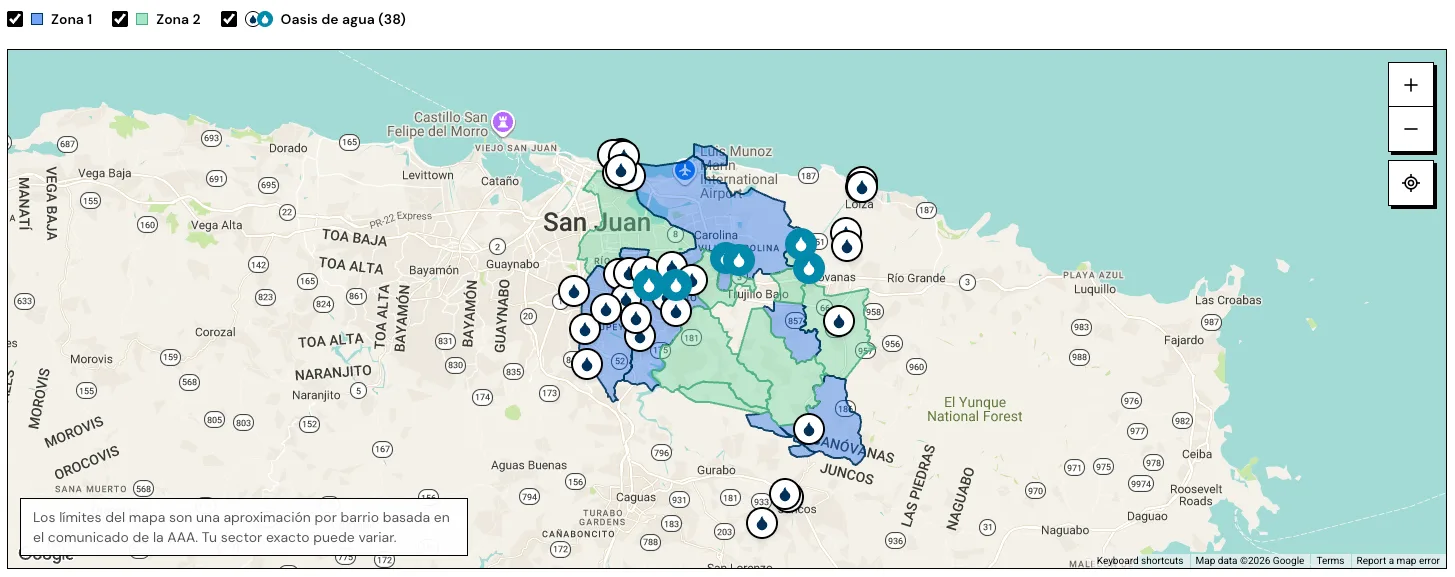
🔗 Click here: Check your location on our interactive map of the rationing plan
This content was translated with the assistance of Artificial Intelligence (AI).