On the Roberto H. Todd Avenue bridge in Condado, there is a work that forms part of the Puerto Rican muralist tradition: "El Batey," by artist Rafael Rivera García. The murals cover both sides of the bridge and show two groups of Taíno people, men and women, playing batú, or pelota.
As with "El Batey," murals by Puerto Rican artists have captured over the years scenes from our history, customs and popular culture on the walls of the country.
This art form emerged in Puerto Rico in the early 20th century and continues today with a new generation of artists and events that promote mural art. Below, we offer a brief history of muralism in the archipelago, from Rafael Ríos Rey to Alexis Díaz.
The beginnings of criollo muralism
Muralism gained momentum in Puerto Rico in the 1930s, and one of the pioneers of this art form was the Ponce-born Rafael Ríos Rey, who completed more than 40 large-scale murals, according to historian and founder of Casa Paoli, Néstor Murray Irizarry.
Born in 1911, Ríos Rey grew up in a family of visual artists and worked with Catalan painter and muralist Ismael D'Alzina, who was based in Puerto Rico. Some of Ríos Rey's murals include "La represa" and "La fundición."
"Rafael Ríos Rey began making murals using the teachings of his family, but also those of Ismael D'Alzina, who was indeed a muralist."
Nestor Murray Irizarry, author of the book "Rafael Ríos Rey y el muralismo en Puerto Rico."
"Rafael Ríos Rey began making murals using the teachings of his family, but also those of Ismael D'Alzina, who was indeed a muralist," said Murray Irizarry, author of the book "Rafael Ríos Rey y el muralismo en Puerto Rico."
Other important Puerto Rican muralists were Augusto Marín and Rafael Tufiño, who between 1952 and 1954 painted "La Plena," originally created as a backdrop for a film.
Programs to promote muralism
In the mid-20th century, the Puerto Rico government commissioned murals through various programs, Murray Irizarry pointed out. The Compañía de Fomento Industrial hired various local artists to decorate factories with murals. And the Instituto de Cultura Puertorriqueña had its own program to commission murals on public structures.
In the 1970s, Rivera García established a mural program through which more than 570 works were completed in Puerto Rico and the United States, according to the website of the Museo de Arte de Puerto Rico.
Muralism today
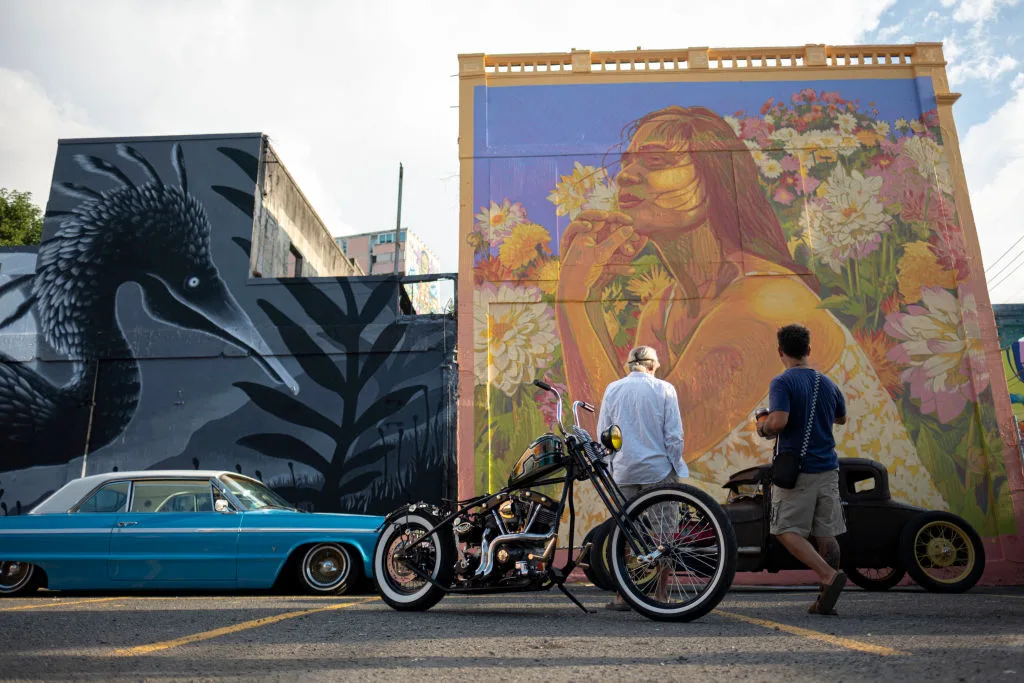
Muralism, particularly what is known as urban art, has gained new momentum in recent years with the rise of festivals and special events. In fact, the Color Caribe festival, which will feature local and international muralists, will take place at the Agroturístico El Dorado park over the next two weekends.
And since 2010, the muralism event Santurce es Ley has decorated buildings in that community of the capital city with art.
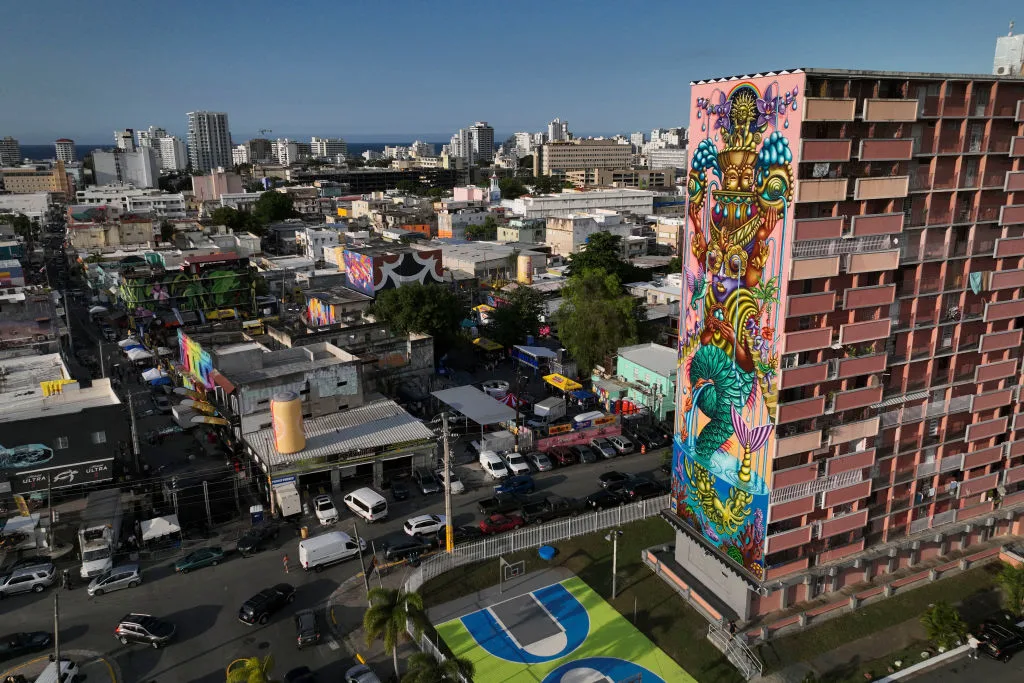
At the same time, artists such as Hector PR, David Zayas, Vero Rivera and Bik Ismo have turned the streets and buildings of Puerto Rico into their canvas. Colectivo Moriviví, for example, a group of women artists, painted the mural "Paz para la Mujer" on Avenida Fernández Juncos in 2015. And a work in India ink by artist Alexis Díaz decorates the facade of the Museo de Arte de Puerto Rico.
"There is a lot of faith, a lot of hope," said the historian and folklorist. "I am very glad and I congratulate those young (artists)."
Preserving history
For Murray Irizarry, without proper preservation care, a mural can "suffer greatly," and the conservation of murals is tied to "the history of a country."
Muralism, for example, "almost always narrates historical events in many cases, customs, traditions," he said.
"Preservation is very important not only because of the history of the country," said Murray Irizarry, "but also because it is a way of being able to show the valuable things that have been done in a place and leave a testimony."
This content was translated with the assistance of Artificial Intelligence (AI).