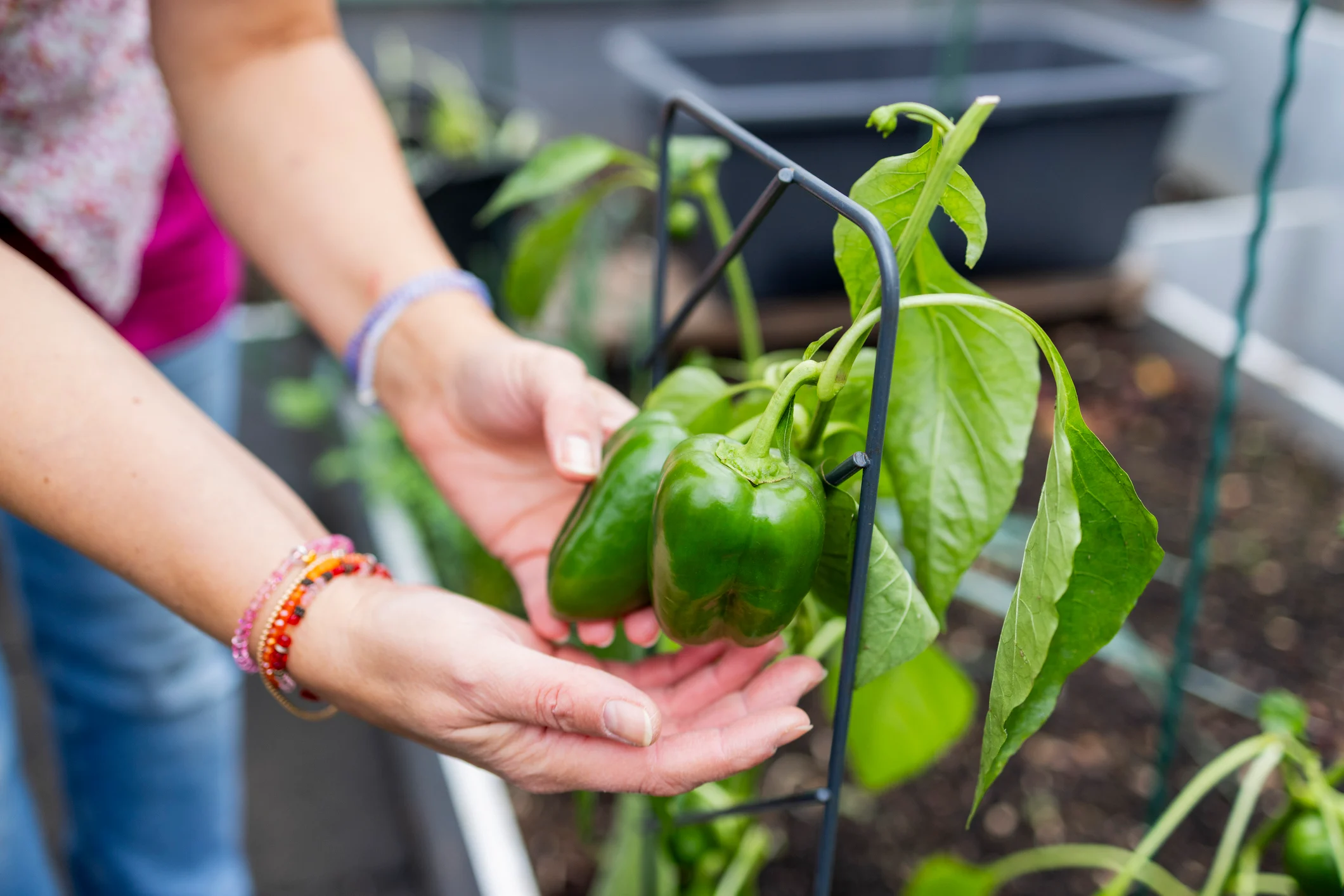
Today, with ongoing inflation and concerns about food insecurity, creating a home garden, whether in pots or small plots of land, is becoming increasingly common.
Some of the benefits of maintaining a home garden include improved health through physical activity, access to more nutritious and better-tasting food, greater food security and money savings, according to professor Myrna Comas Pagán in the curriculum guide Huertos Caseros: Una guía para la seguridad alimentaria familiar.
"Receiving what we give to the earth, receiving that exchange. What we give to the earth we receive back, whether minerals, positive energy, contact with plants, relaxation. […] A more natural, more peaceful way of life. […] A little more peace through that connection with the earth, with that grounding you are constantly doing," said Raúl Rosado, president of the agribusiness Desde Mi Huerto, in an interview.
With fluctuating produce prices, the savings become even more noticeable when you finally harvest the vegetables and fruits your household uses most. What does it take, then, to get started? Below, some of the tips Rosado shared with Platea:
1. Learn about your plants
"A garden is like a pet. You have to educate yourself to take care of it properly," the farmer explained. Each plant has needs that must be studied in order to maintain it correctly, including sun exposure, nutrients, watering frequency and more.
It is also recommended to study the ecological properties of each plant for the garden's benefit. Some plants, for example, act as natural insecticides. Planting them among food-producing plants can repel unwanted insects and pests without the use of chemical insecticides.
Some plants commonly used for this purpose are chamomile, mint, mugwort, lemon, marigold, sage and rue.
If you learn by doing, it may be worth taking a workshop or some other hands-on educational experience. Workshops in particular help you develop key skills and gain valuable knowledge in less time.
2. Start small, organically
Before investing in all the tools needed to maintain a productive year-round garden, start small. Identify what kinds of plants you could grow in your available space, and begin with whatever is easiest for you to grow. Learn to monitor and care for that plant, and once it starts producing, you can bring in other plants.
Short-cycle crops such as lettuces, spinach, zucchini, peppers, beans, cucumbers and scallions can be a good introduction for your first garden.
"Many times, people don't appreciate the amount of food you can grow at home, they don't see it as something that affects the economy or society. […] These small actions taken in communities and homes lead to a fairly large economic impact," the farmer explained.
3. Put each step of the growing process on a calendar
To achieve a successful, continuous harvest, the ideal approach is to write down each step of the process in a calendar or planner.
For short-cycle crops this is especially important, because it lets you know when to plant the next batch. That way, you can have access to that food in your kitchen more often.
4. Have the right tools
If you are starting with a small garden, the ideal setup includes hand tools such as shovels and cultivators, an efficient watering can or hose, pots suited to the size of the seed, seedling trays, quality soil and a nutrient-rich fertilizer.
Rosado also emphasized the importance of having seeds adapted to Puerto Rican soil for keeping a productive garden: "They should be local, adapted to Puerto Rico's local climate, and organic and fresh. They should be new seeds. Seeds fade over time."
The online store at Desde Mi Huerto sells dozens of organic seeds adapted to Puerto Rican soil, along with a wide selection of tools and materials.
5. For those who don't spend much time at home
If you're away on weekends, don't lose hope: you can still maintain a healthy garden
In these cases, Rosado recommended installing an automatic irrigation system. For small gardens, these can be simple and inexpensive.
With this system, and by making sure the plants are positioned to receive sunlight and are secure, the garden can stay healthy for a few days.
When you return, make sure to assess the condition of your plants to address any additional needs they may have. If you keep your garden calendar up to date, this task will be easier.
Cover photo: Getty
This content was translated with the assistance of Artificial Intelligence (AI).