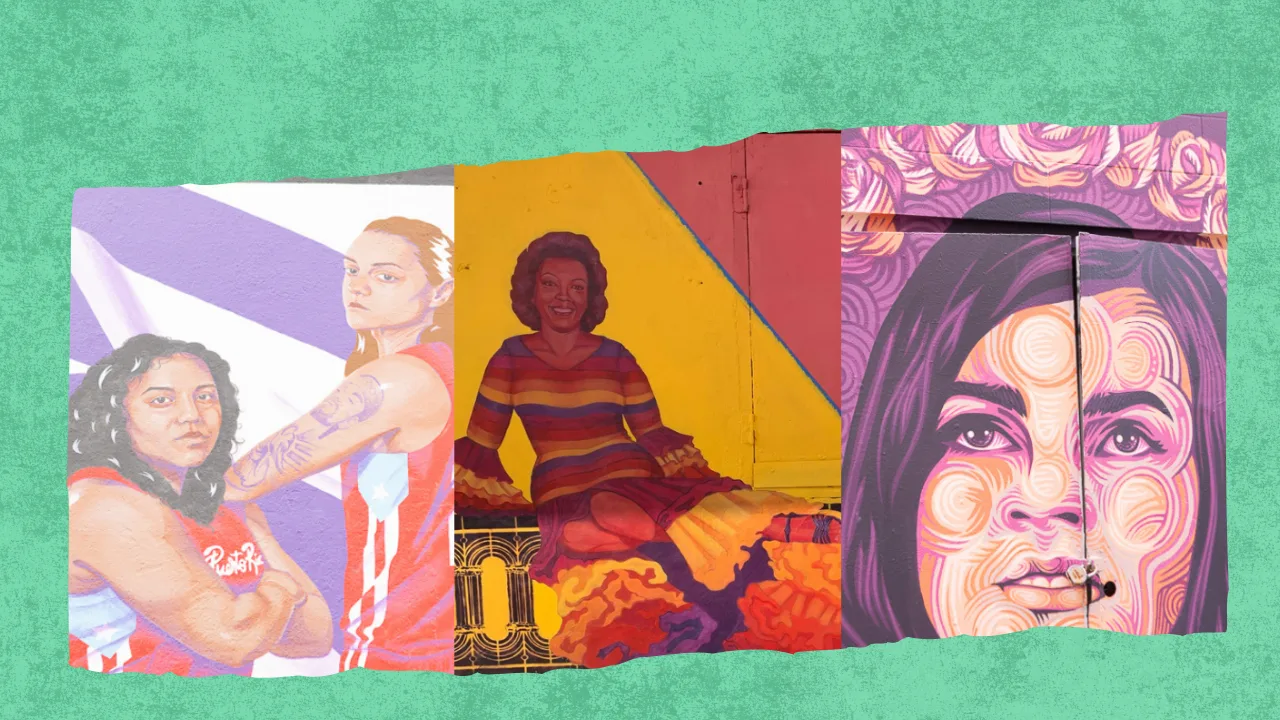
Take a journey through street art that, through its brushstrokes, tells the story of extraordinary women across the archipelago.
This article is a collaboration between Platea, Todas and 9Millones on the occasion of International Women's Day (8M).
Fighters, tenacious, rebels, visionaries. Puerto Rico's streets have murals that are much more than mere snapshots of a moment. They are colorful expressions of art that tell the story of women and dissidents who defied conventions and raised their voices with courage and determination, leaving a legacy that transcends time and space.
To commemorate International Women's Day, we compiled a road trip trek through some of the most emblematic murals that honor the legacy of extraordinary Puerto Rican women. On this journey, we are joined by the artists that make up Colectivo Moriviví and Taller Malaquita, as well as artists Antonio Martorell and Rafael "Rafique" Vega, who expressed how each brushstroke reflects a story that intertwines with many others and could inspire you on your own journey.
📍 First stop: Santurce
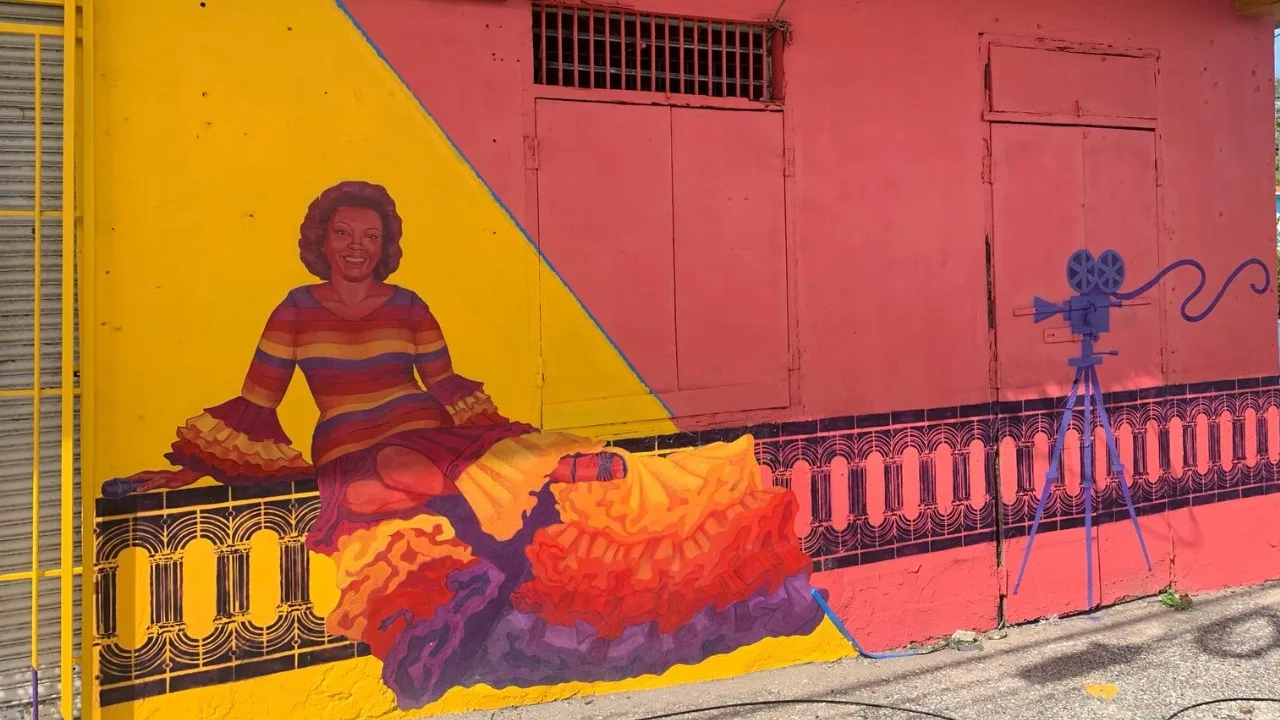
Our route begins on Diez de Andino Street in Villa Palmeras and its surroundings, where murals were painted in honor of the cangrejeras Carmen Belén Richardson, Sylvia del Villard and Mamá Toña, three women who were fundamental in the history of San Mateo de Cangrejos, the name of the Maroon community that gave rise to the art capital known today as Santurce.
The works were conceived through the project Resonancias Cangrejeras, which was part of the artist residency program of Universidad del Sagrado Corazón (USC) with the support of the Villa Palmeras Historical Society and others.
Taller Malaquita, a multidisciplinary workshop comprised mainly of women and dissidents, created the murals together with three USC students (Alondra Jiménez Rivera, Gabriela Rivera Rodríguez and Daniela Arocho González), giving them the opportunity to design and work on the pieces. "We wanted to highlight important Black cangrejera women," Rosenda Alvarez Faro, co-founder and co-director of Taller Malaquita, told Platea. "It's a project in which the community is involved."
Alvarez Faro pointed out that Richardson "was the first Black woman in Puerto Rican television," an actress and comedian who began her career at the age of 9 in a radio soap opera. Throughout her career, she not only recorded telenovelas in Puerto Rico, but also in Mexico and other countries. She also worked in theater and television, participating in programs such as "Black Power" and "Sin ton ni son".
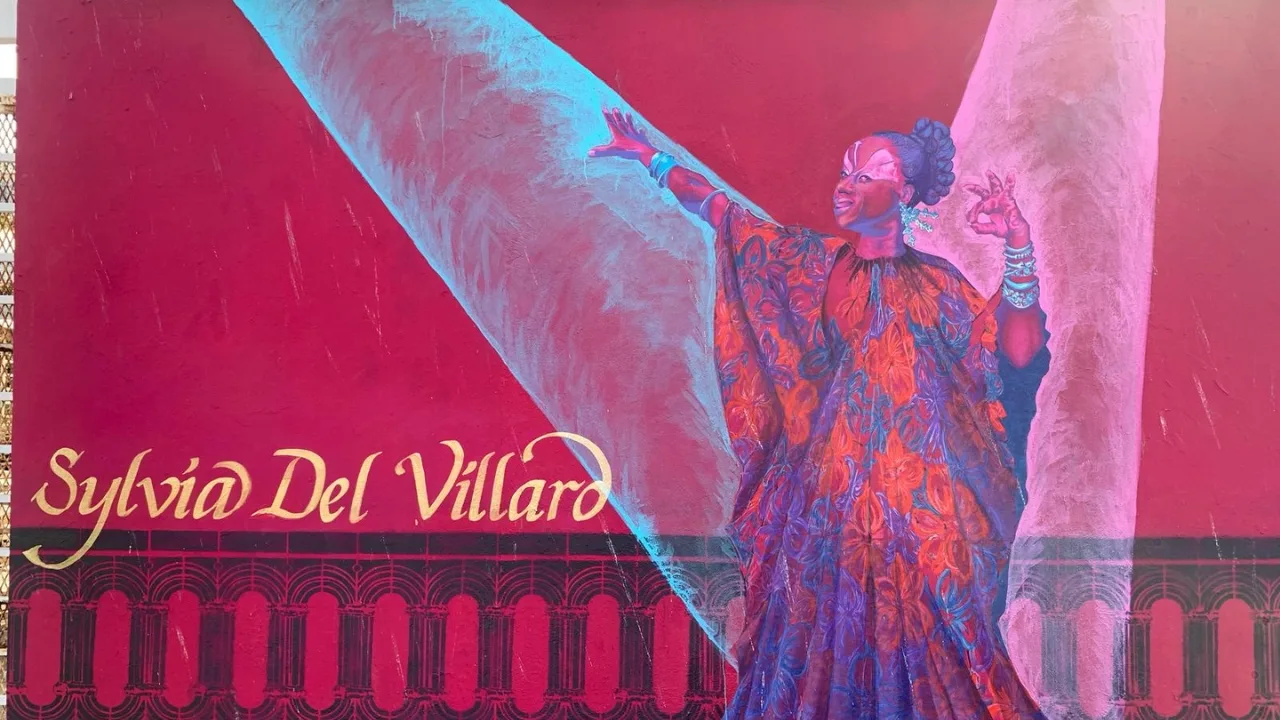
On the other hand, Del Villard "is better known abroad than here," said Alvarez Faro. Del Villard's interest in Africa awakened while studying in New York, something that brought her back to her African roots in Nigeria. In addition to reciting poems and acting, she worked as a dancer and choreographer in plays such as "Valley Without Echo," "Witches of Salem" and "The Boyfriend" in the United States. In Puerto Rico, she founded the Afro-Boricua Theater El Coquí.
Meanwhile, Josefa Antonia Pesante, known as Mamá Toña, was born in Añasco and inherited her last name from the family that enslaved her, but later moved to San Mateo de Cangrejos and made it her home. "She lived confined and enslaved until she managed to buy her freedom," Alvarez Faro recounted. "She managed to buy her son's freedom at the baptismal font," she added, regarding Julián Pesante, one of those in charge of developing the Dos Hermanos Bridge and other architectural projects. Julián Pesante is also the name of the street where the mural was made.
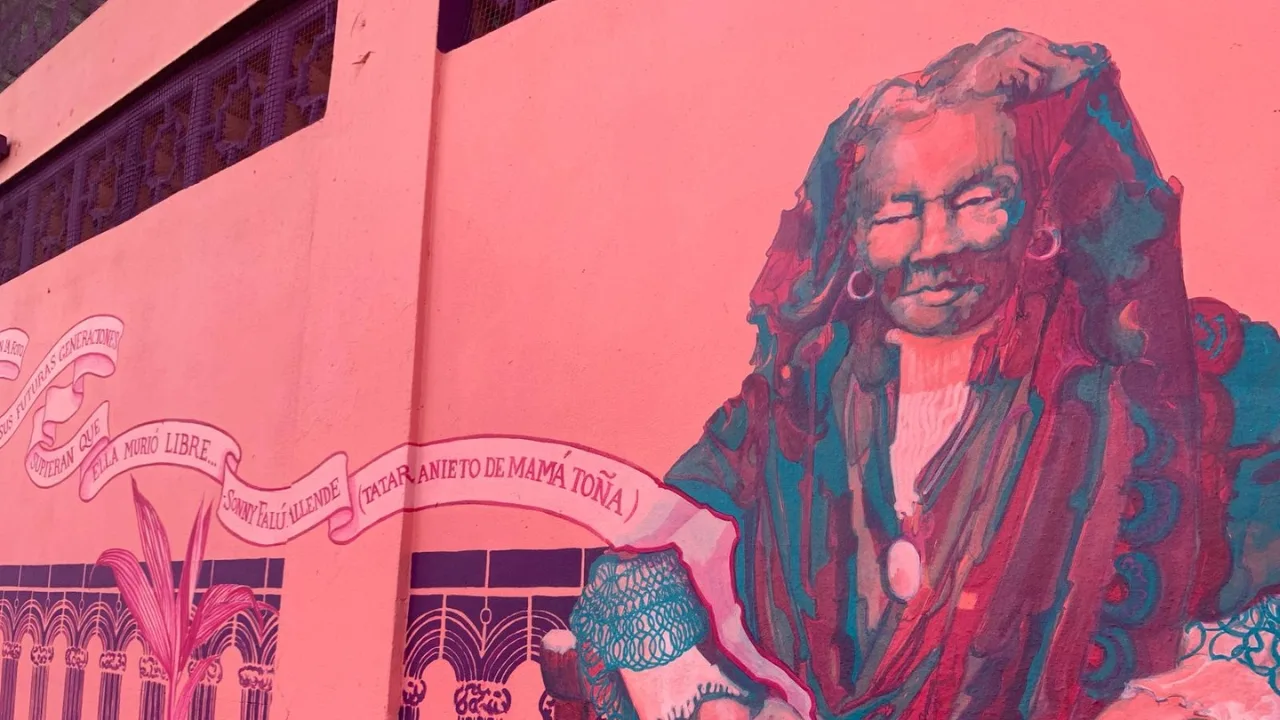
Mamá Toña learned to read and write from one of the Pesante daughters and expressed in letters the sadness of being a slave. This is why she sewed her clothes in a Spanish style and took a photo of herself, which inspired the mural, "so that future generations would know that she died free," the artist said.
A fourth mural is being developed in honor of another exceptional cangrejera: Fe Cortijo, singer and conga player, niece of composer Rafael Cortijo, with whom she performed in multiple musical groups.
📍 Second stop: Río Piedras
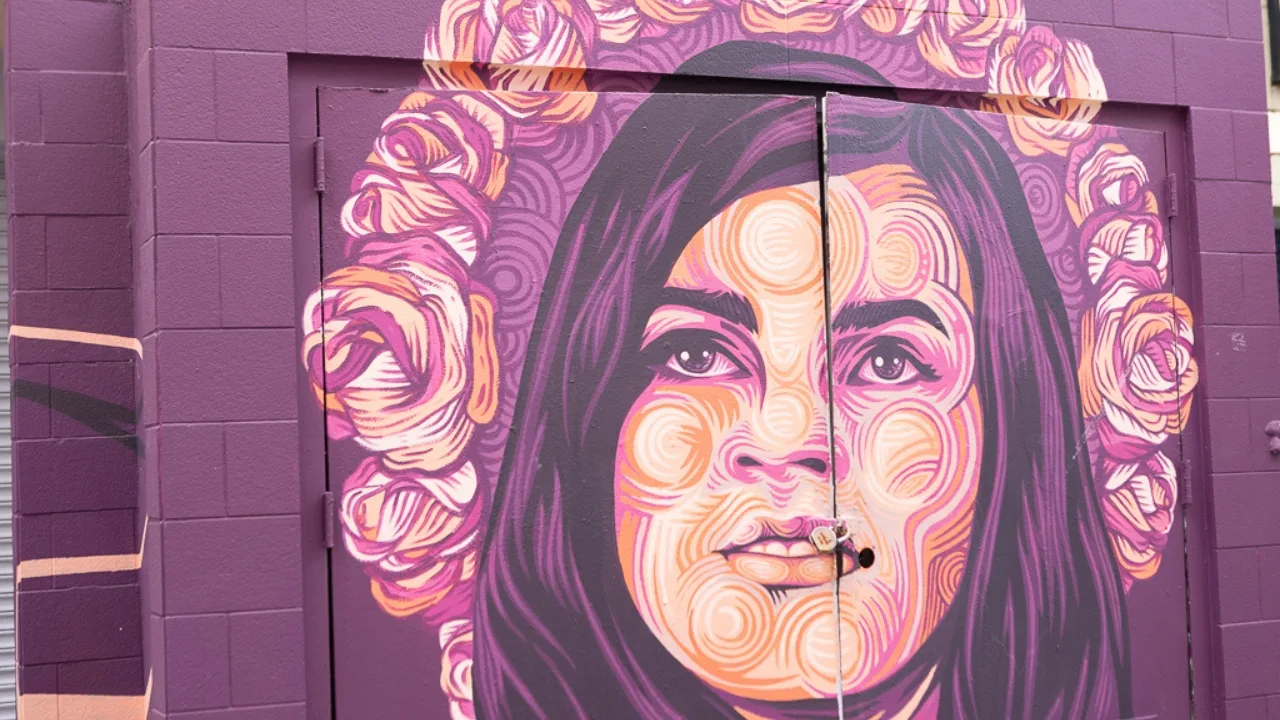
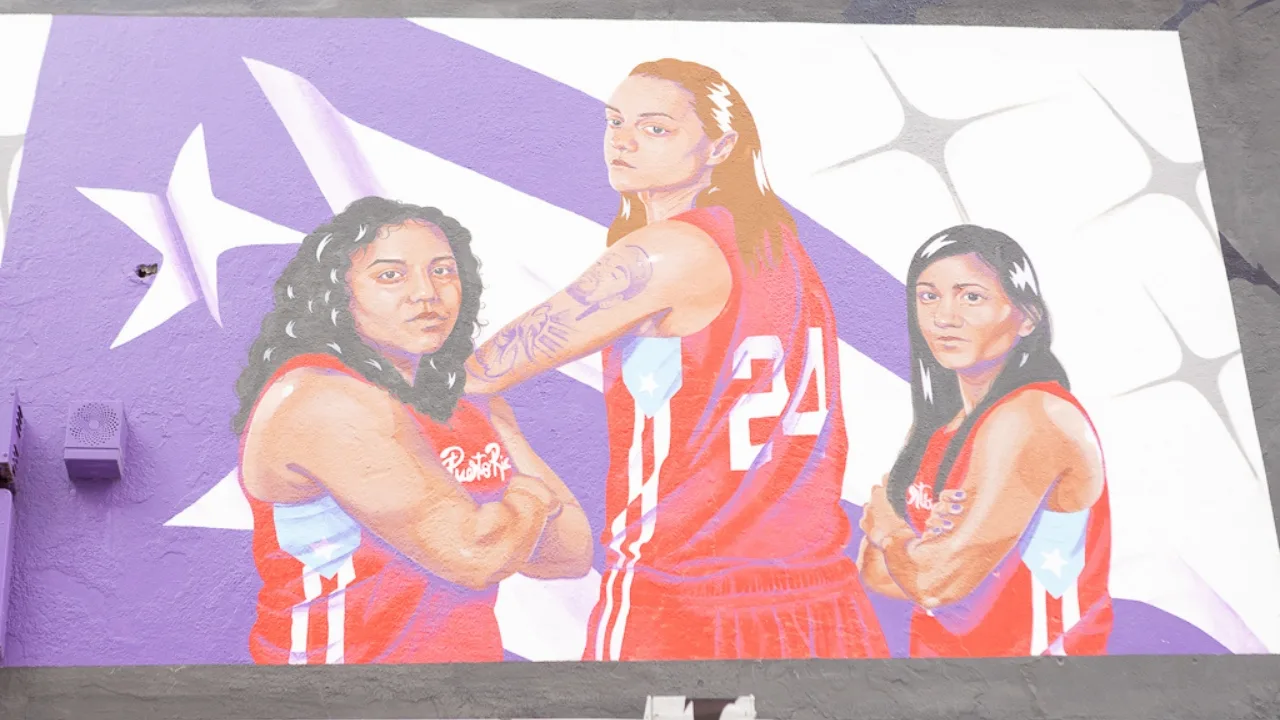
From Santurce we go to Paseo de Diego, in Río Piedras, where there are two murals you should know about. The first one is in honor of student Antonia Martínez Lagares, who was killed by the police during the University of Puerto Rico (UPR) strike of 1970.
Her name became a reminder of police violence against students and inspired songs recorded by Roy Brown and Andrés Jiménez. The mural was painted by Kroniko Arte, a graphic production brand founded by artist Luis "Güillo" Cruz Martes, as part of the Paseo del Arte initiative in October 2023.
The second mural is in honor of the Women's National Basketball Team, which made history by qualifying for the Tokyo 2020 Olympic Games. This mural shows players Pamela Rosado, Jazmon Gwathmey, Jennifer O'Neill, Michelle González and Isalys Quiñones, the quintet that represented us in Tokyo.
"These players represent a generational diversity of what makes up the team, of the reinforcements that arrive and how they come together to work with the Puerto Rican players," artist Elizabeth Barreto, creator of the mural, told Todas. For her, this mural is not only a celebration of women's basketball, but a conversation starter about the "inequality they face" compared to their male counterparts.
Throughout her career, Barreto has used art as a tool of resistance, questioning the establishment from her feminized and queer gaze. She keeps an altar of the dead in honor of femicide victims in Puerto Rico entitled "Del dolor y la rabia nace resistencia y rebeldía" (From pain and rage comes resistance and rebellion), which is part of the permanent collection at the Museo de las Américas.
📍 Third stop: Loíza
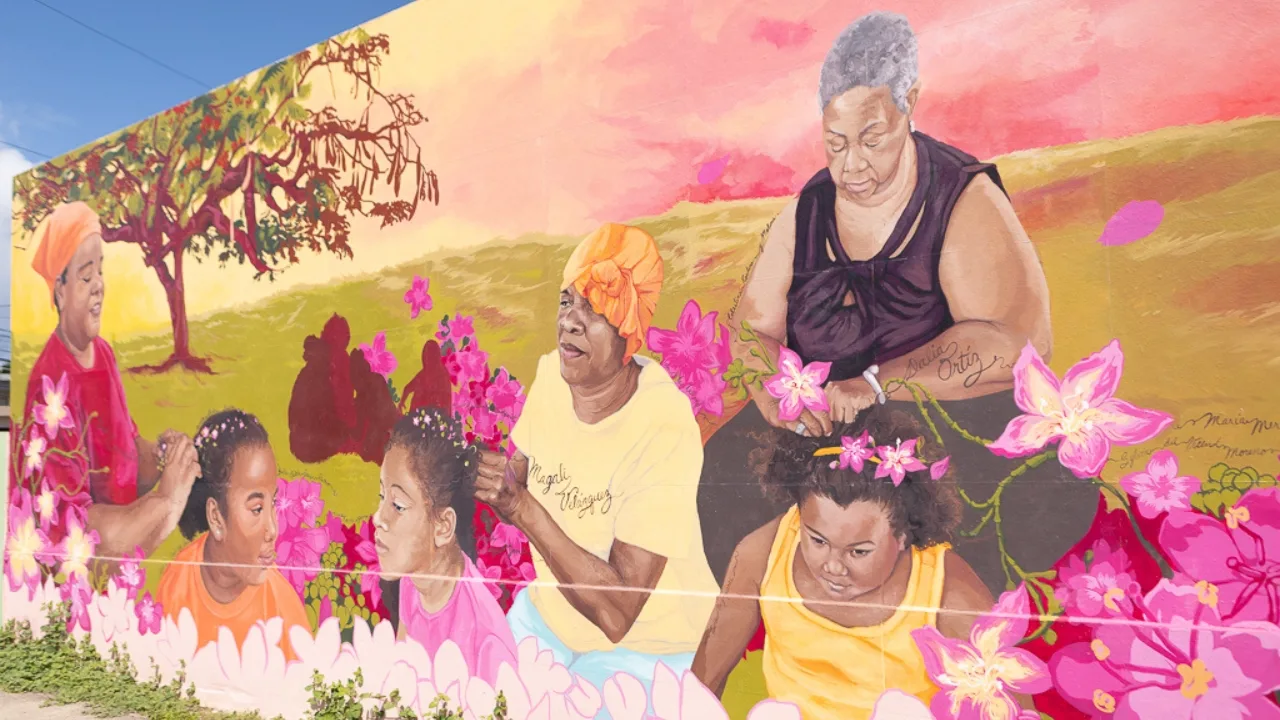
From San Juan, we move to Loíza, a name derived from Yuisa, the only known Taino cacique woman on the island of Puerto Rico. In the Tocones sector, Colectivo Moriviví, led by women and activists, developed with the community a mural entitled "Trenzando legado: Homenaje a nuestras mujeres" (Braiding legacies: Homage to our women). The mural highlights the path of three women leaders: Alicia Carrasquillo, Magali Velázquez and Dalia Ortiz, who stood out for offering educational services, workshops and assistance to the community.
This mural emerged from a braiding workshop offered by the collective during the pandemic. "We liked the theme so much that we wanted to work it into a mural," Raysa Rodríguez García, co-founder and co-director of Colectivo Moriviví, told Platea.
The community piece also references other "Black women who have contributed in different spaces and trenches," whose names are written on their hair, and the girls who are part of the community.
"The mural talks about how the art of braiding metaphorically is the transfer of legacy, knowledge or know-how from generation to generation. That is why the adult women are braiding the girls," explained Rodríguez García.
El árbol de flamboyan en el mural representa el árbol junto al parque de pelota que sirve como centro comunitario de Tocones. Mientras tanto, las flores de ceiba en el mural hacen referencia al legado de Adolfina Villanueva, "una mujer que luchó por su hogar en Loíza y fue brutalmente asesinada", dijo la artista. En el terreno donde estaba la casa de Adolfina, plantaron una ceiba, "que es un árbol protegido y por ley nadie puede talarlo". Esto fue una forma de proteger a la comunidad y continuar el legado de la lucha contra el desplazamiento.
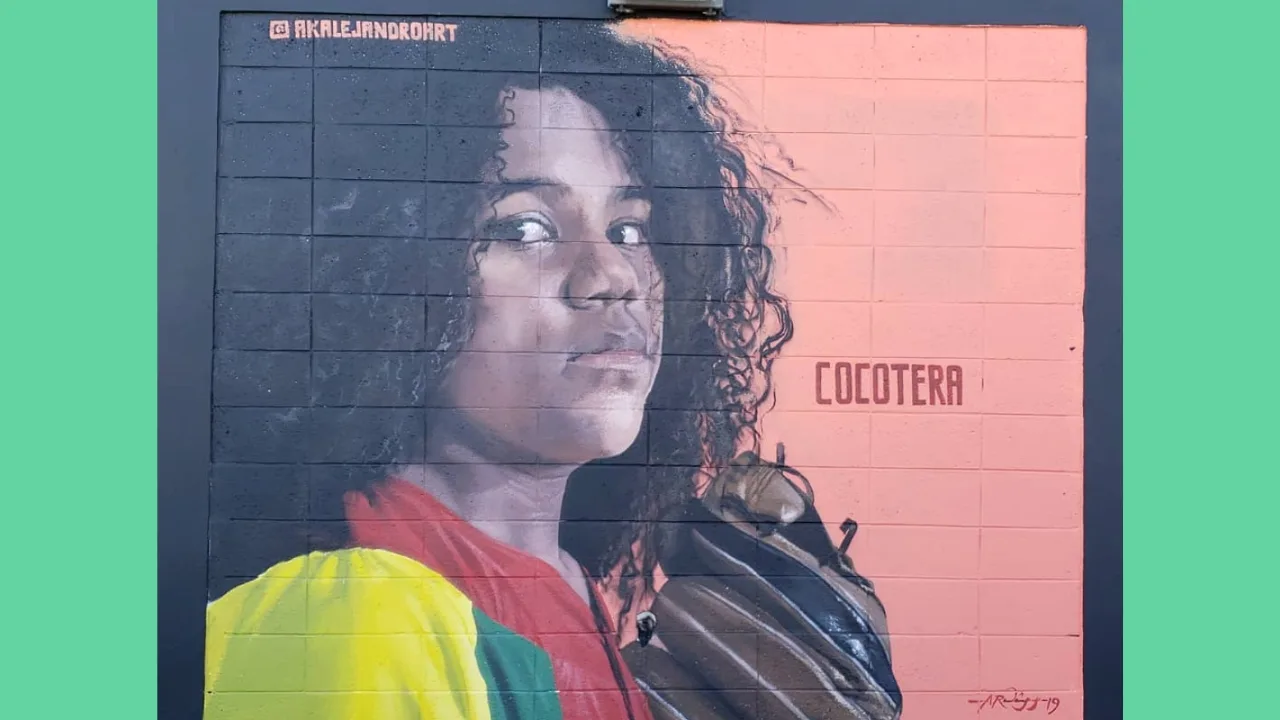
Desde Tocones, nos trasladamos al Estadio Miguel Fuentes Pinet, hogar de los equipos Las Cocoteras y Los Cocoteros de Loíza. Este parque fue revitalizado en 2019 por el proyecto Monument Art, dirigido por el artista visual Celso González. En este parque, además de una serie de murales que destacan la historia de Loíza, hay uno en particular que resalta la importancia de las mujeres en el deporte, titulado La Cocotera.
El autor del mural es Luis Alejandro Rodríguez (akalejrandroart), quien dice que su obra destaca "la importancia de las mujeres y sus capacidades". Es una niña loiceña con el uniforme del equipo de su pueblo que resalta el nombre de la palma de coco.
📍 Cuarta parada: Caguas
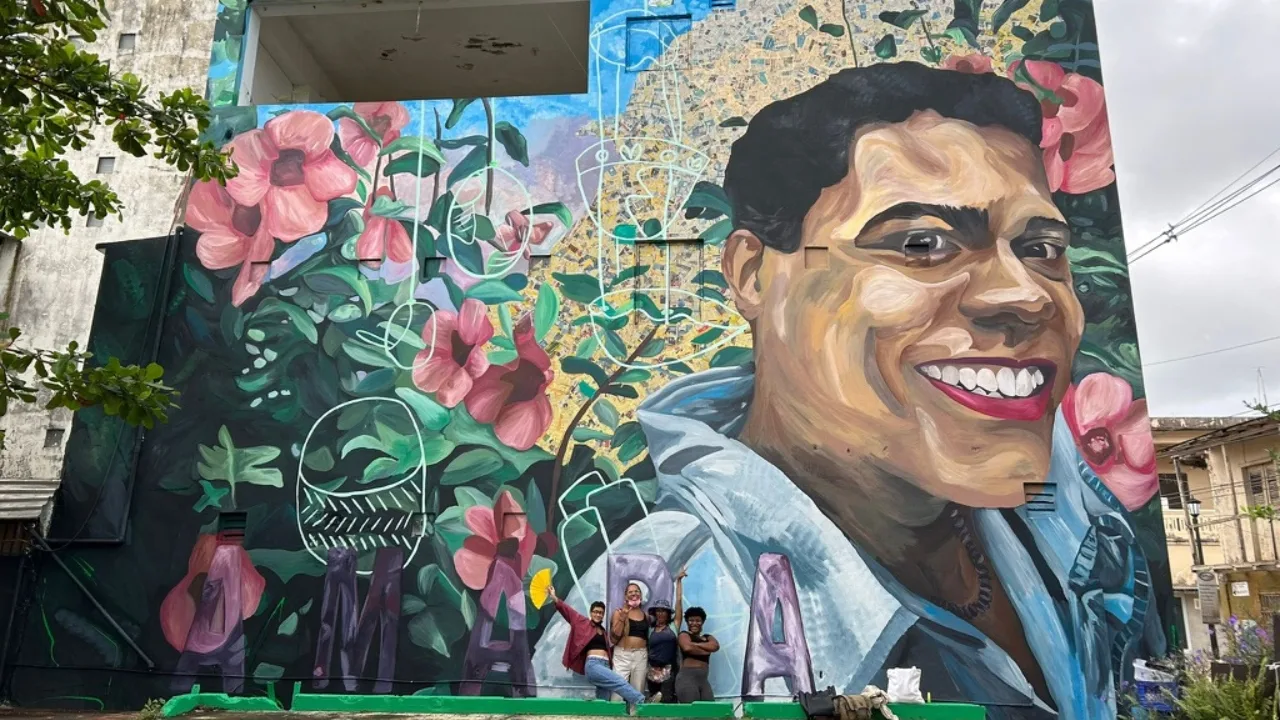
Y desde Loíza llegamos a El Valle del Turabo, donde un mural sirve como legado y altar a la artista y poeta Amara, "una joven activista trans negra, que nació en Aguas Buenas y murió a causa del uso problemático de sustancias y otras circunstancias prevenibles", le contó a EspicyNipples, una red transfeminista que narra historias de vidas TILQAPBG+, le contó a Todas Sora Ferri, una de las integrantes principales del colectivo. Este es el acrónimo invertido del colectivo LGBTQIA+, algo que forma parte de su activismo.
Fue esta red la que dio origen al Proyecto Amara, una "iniciativa artística que trabaja para documentar nuestras vidas a través del lente del duelo, la sanación y la alegría, con un enfoque en el uso de sustancias y la reducción de daños", dijo Ferri. El proyecto fue inspirado por Amara, y visibiliza las vidas de personas trans de ascendencia africana. El mural se estableció en Caguas, un pueblo donde Amara "se formó como activista con Valle Garita de Urbe Apie, que fue una de las organizaciones con las que colaboramos para trabajar en el proyecto".
La creadora del mural es la artista Damaris Cruz, conocida como Dama Lola, cuyo tema principal en su obra es la memoria y la vida cotidiana. Cruz es una reconocida muralista que ha participado en varios concursos de arte urbano y tiene murales en distintas partes de Puerto Rico y la República Dominicana.
📍 Quinta parada: Humacao
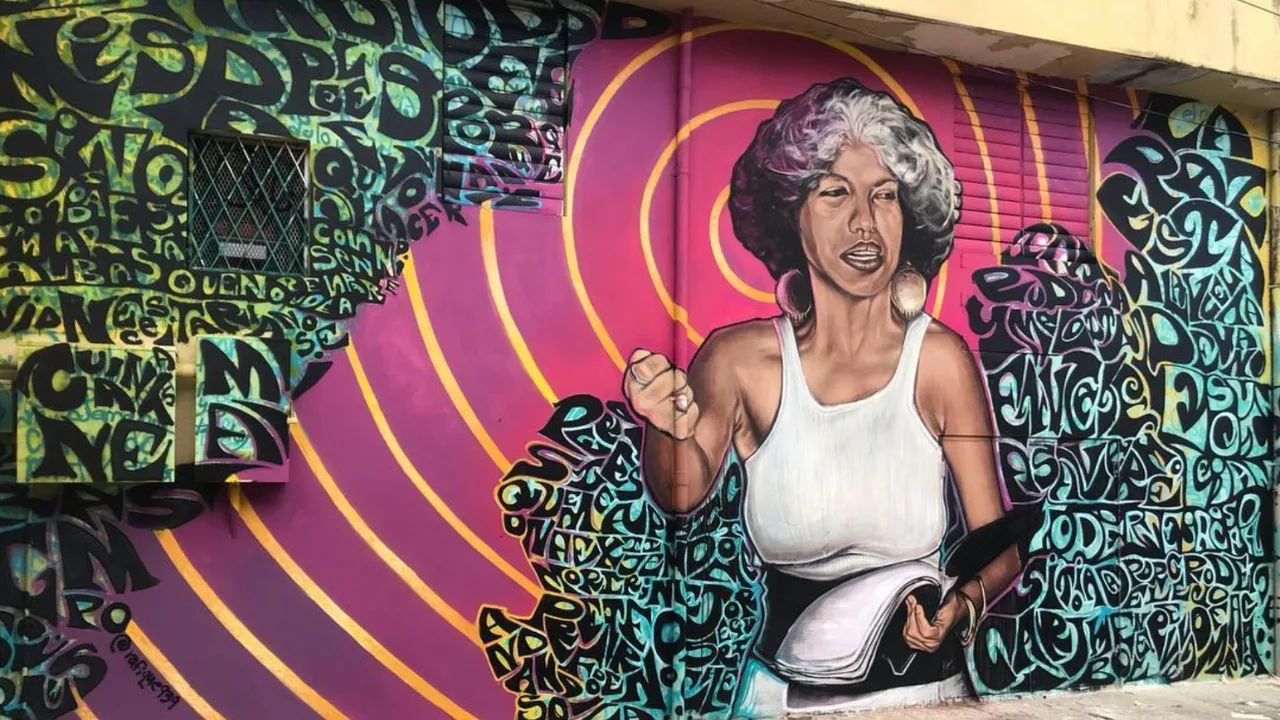
Nos trasladamos a la Perla del Oriente, destacando dos murales creados en dos ediciones de Humacao Grita, un festival de arte urbano dedicado a decorar el área urbana y dar espacio a artistas emergentes para presentar su talento.
El primer mural está dedicado a la poeta, declamadora y cantante Anjelamaría Dávila, quien formó parte del grupo Guajana, liderado por el poeta Vicente Rodríguez Nietzsche en la década de 1960, y fue considerada una de las voces poéticas más destacadas de su época.
"En el undécimo grado, una maestra nos presentó la poesía de Ángela María y me llamó mucho la atención porque es una de las primeras figuras feministas en Puerto Rico (que yo conocía)", Rafael Enrique Vega, conocido como Rafique, el artista que creó el mural, le dijo a Platea. La obra muestra a la poeta frente a algunos versos de sus poemas, especialmente los de sus poemarios La querencia y Animal fiero y tierno.
"Uno de mis favoritos es Animal fiero y tierno porque representa esa parte tierna y salvaje, esa rabia de todas las complicaciones que le fueron dadas a Anjelamaría por ser negra, mujer, feminista y todo lo demás, en los años 1980-90", dijo Vega.
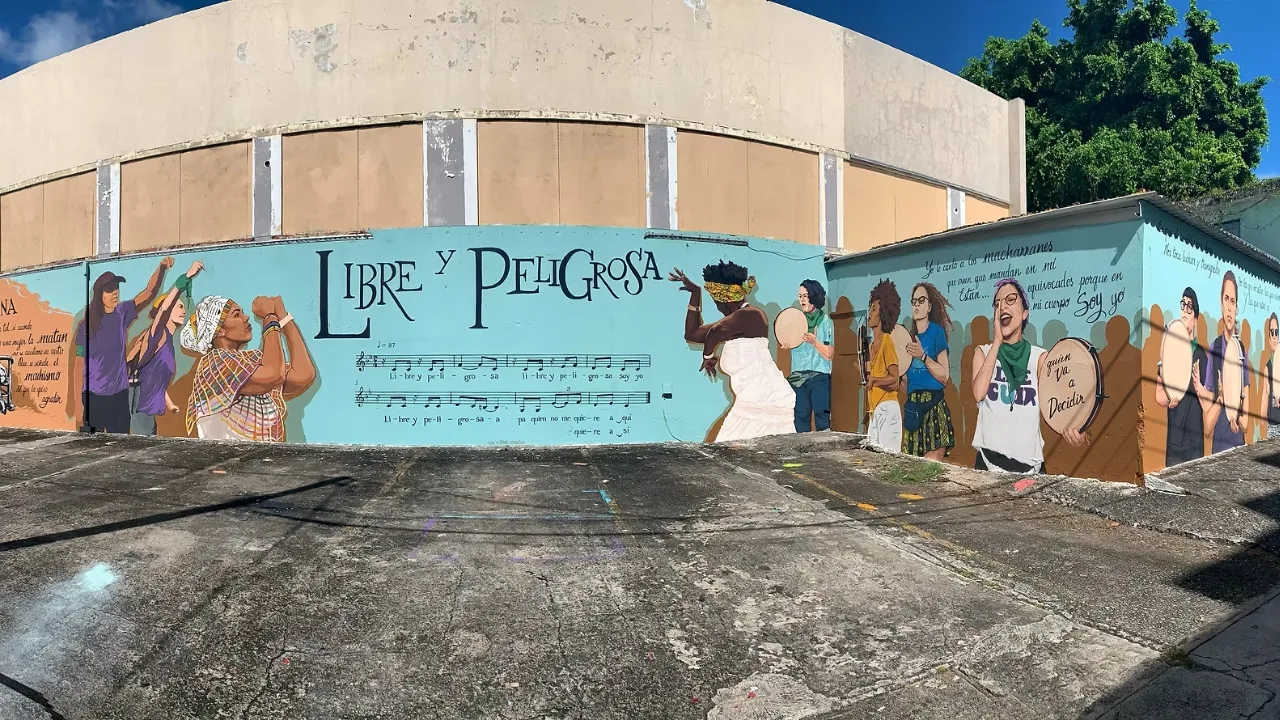
The second mural is titled "Libre y peligrosa" ("Free and dangerous"), honoring women fighting in the streets. It was part of the second edition of Humacao Grita, in which they convened only women artists, perhaps the only urban art festival that does this in Puerto Rico, according to Raysa Rodríguez García, of Colectivo Moriviví, the group that developed the mural.
"We were inspired by the song Libre y peligrosa by Plena Combativa, a group that existed at the time. Based on the lyrics, we made the different scenes," said Rodríguez García.
Taking the plena as a protest rhythm, the first scene, located on the left, refers to Cortaron a Elena, a classic Puerto Rican plena that talks about an incident of gender violence. They use as a base an engraving made by artist Rafael Trufiño for the Plenas Portfolio, directed by Irene Delano in collaboration with artist Lorenzo Homar.
On the right, the rest of the mural has "women playing plena, with fists in the air or declaiming" and phrases from Libre y peligrosa, a contemporary plena that is a feminist anthem against gender violence.
📍 Sixth stop: Adjuntas
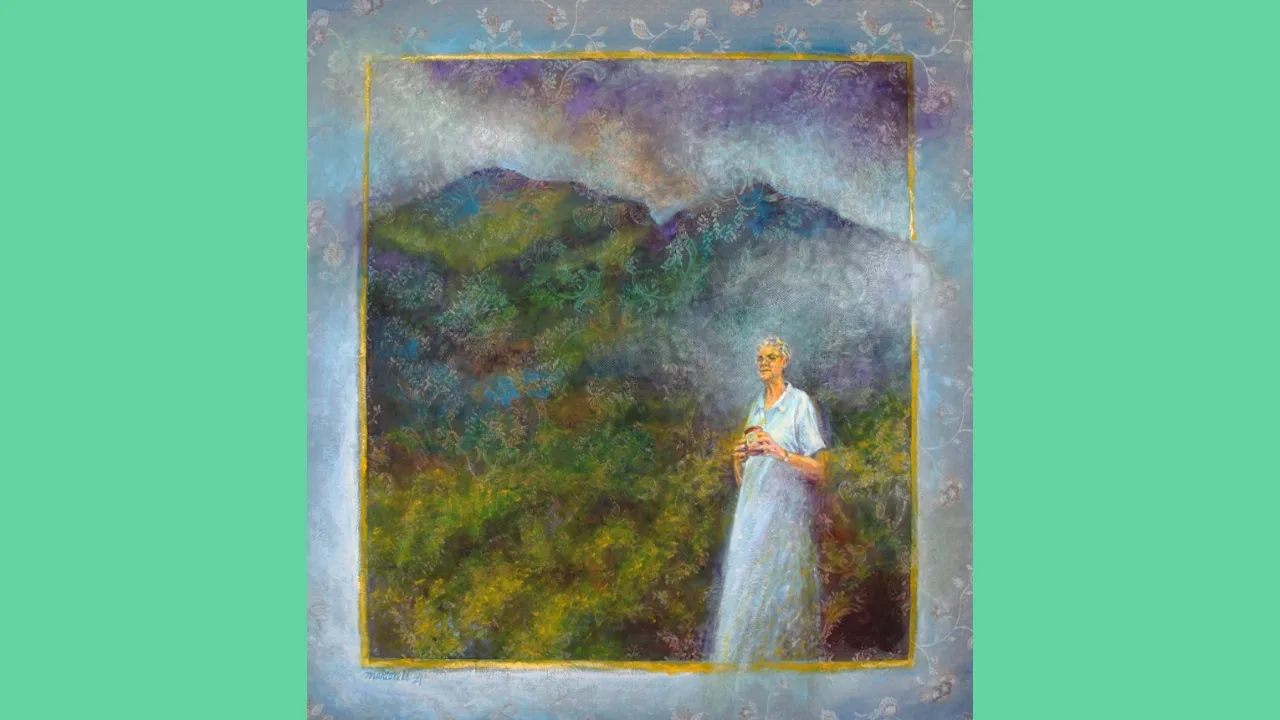
We crossed the island and arrived at La Ciudad del Gigante Dormido, to highlight a work of art that, although not a mural, highlights the legacy of community leader and environmental activist Faustina "Tinti" Deyá Díaz, co-founder of Casa Pueblo. It is a posthumous tribute made by painter and writer Antonio Martorell, who titled the piece "Ella despierta, el gigante dormido" ("She awakens, the sleeping giant") and is located precisely at the headquarters of the community self-management project that Tinti conceived.
In the painting, Deyá Díaz is drinking coffee in front of the mountain, "establishing the Sleeping Giant as a symbol not only of the people of Adjuntas, but of the people of Puerto Rico, who need to wake up. And she is always awake, even when she is dead, she is awake," Martorell told Platea. "This work tries to awaken these people to a position of freedom, of energy, not only of solar energy, but of human energy."
The work was painted in acrylic on a flowery canvas, which can be seen in Tinti's suit. It is a painting that was conceived after Martorell painted, a few years ago, another work of the son of Deyá Díaz, who died suddenly in 2009.
According to the artist, Tinti was "a luminous person, but without fuss. She exercised a quiet authority, the quiet authority that comes from good deeds and patriotic feelings translated into actions. That was felt… She was a very simple woman, very pleasant, but very brave because when she had to speak out to anyone, she did it. She was not an aggressive person, but a person who knew how to defend what was hers and that of her people."
Martorell donated the artwork to Casa Pueblo, which made a poster-sized reproduction of it and is used to support the cause, which includes solar energy projects, a community forest, a radio station and more.
📍 Seventh stop: Lares
We end this historical and artistic route in the Ciudad del Grito, with a mural that was part of the first edition of the urban art festival El Grito del Arte. Created by Colectivo Moriviví, it is titled "Las mujeres hacen matria" ("Women make matria") and honors seamstress and revolutionary leader Mariana Bracetti, recognized as the person who embroidered the first Puerto Rican flag for the independence movement of the Grito de Lares, on Sept. 23, 1868.
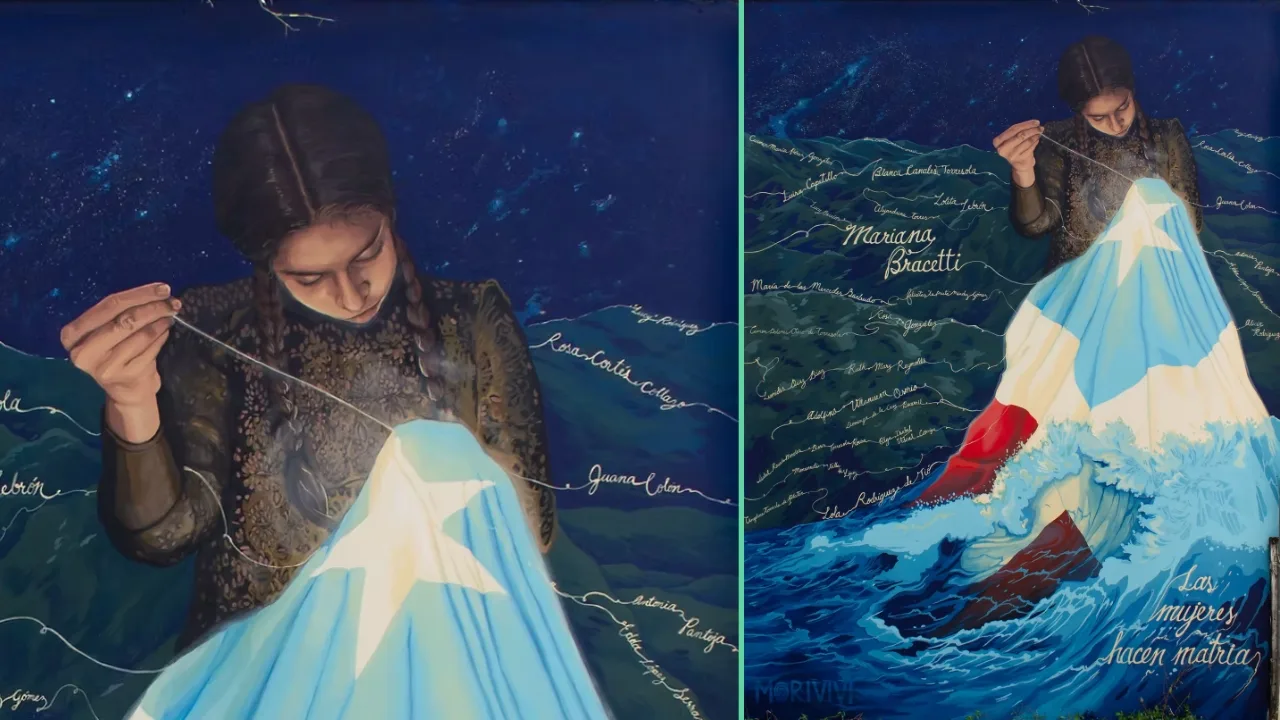
"We represented Mariana Bracetti sewing the flag. From the flag are interwoven or born names of different figures of Puerto Rican women who have also contributed to the fight," explained Rodríguez García. The artists' intention was not only to honor Bracetti and her political legacy, but also to "name other women who have also contributed" to the cause.
This content was translated with the assistance of Artificial Intelligence (AI).