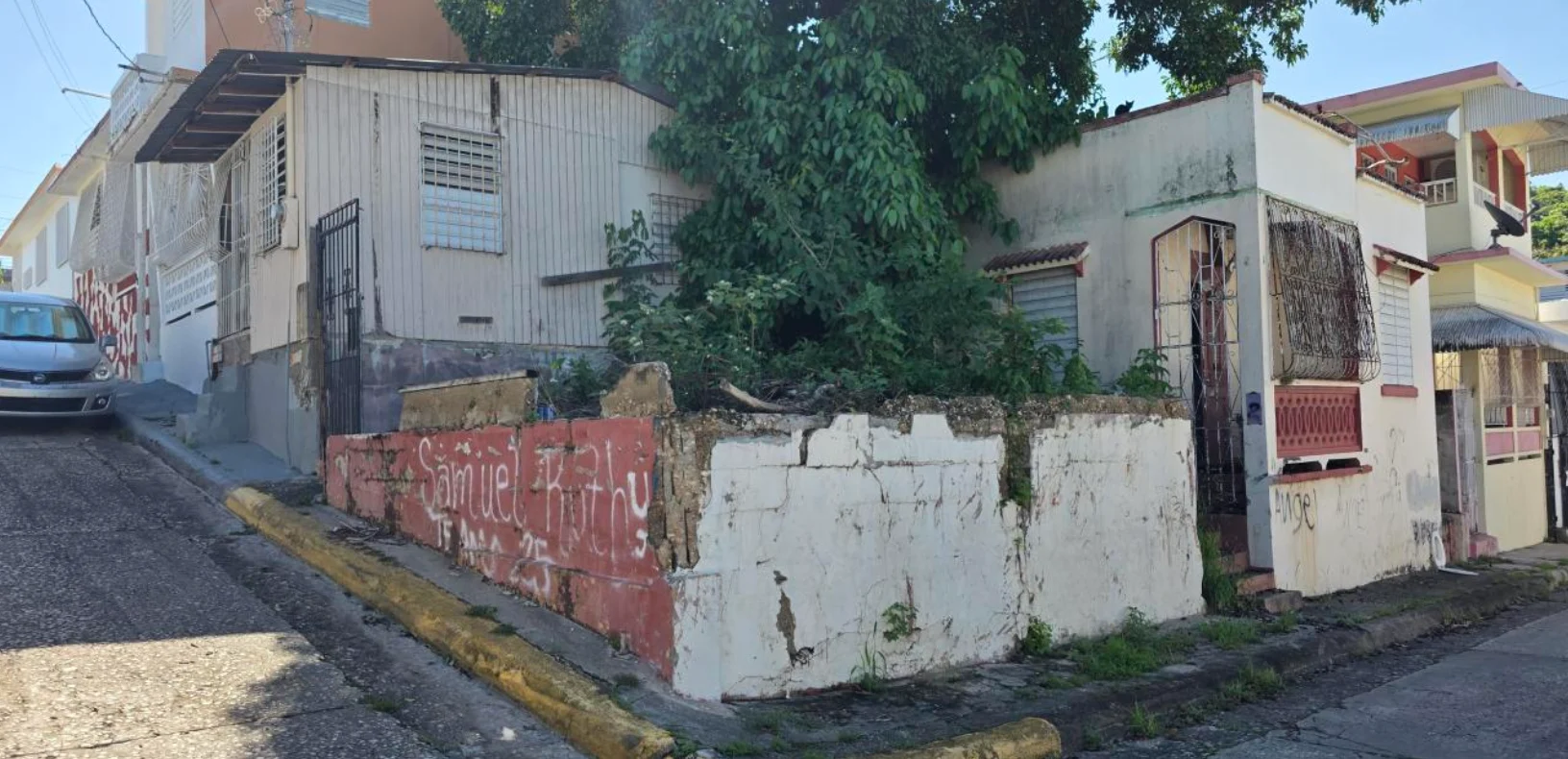
What's happening? To expand access to affordable housing, the nonprofit Habitat for Humanity of Puerto Rico offers 0% interest, 30-year mortgage loans for home purchases and repairs, a product unique in the housing market that allows monthly payments of around $399.
The organization is currently in the process of awarding the sale of 16 repaired homes priced below $150,000, which with mortgage assistance are reduced to loans of around $60,000, targeting first-time buyers with low to moderate incomes.
Why does it matter? This is another available model in Puerto Rico for rehabilitating properties and accessing affordable housing. Habitat's 2026-2028 Strategic Plan calls for developing 30 new homes for sale and completing repairs on more than 75 homes, with the goal of reaching more than 100 families over the next three years.
In Puerto Rico, Habitat arrived in 1997 and has since developed and sold more than 68 units of affordable housing, most of them in multifamily projects, and completed more than 900 repairs. Although most of its work is in the metropolitan area, it has also sold homes or made repairs in Guayama, Santa Isabel, Yabucoa, Loíza, Adjuntas, Arroyo, Patillas, Utuado and Jayuya.
Habitat is part of a global organization, Habitat for Humanity, with more than 50 years of history, a presence in more than 60 countries, and more than a thousand affiliates across all 50 U.S. states.
How does Habitat for Humanity of Puerto Rico work?
Zoom in. Habitat for Humanity of Puerto Rico is a nonprofit dedicated to providing access to affordable housing through two areas:
The sale of restored properties at affordable prices (between $90,000 and $150,000) to people with low to moderate incomes (ranging between $18,000 and $30,000).
The restoration of properties belonging to low- and moderate-income people who have been unable to properly maintain their homes.
What sets it apart is that it offers financing at 0% interest over 30 years in both areas, along with support throughout the process, before, during and after the sale, including help applying for subsidies. The goal is for families to spend no more than 30% of their income on housing. The money received as monthly payments is recycled into more repairs to help additional families.
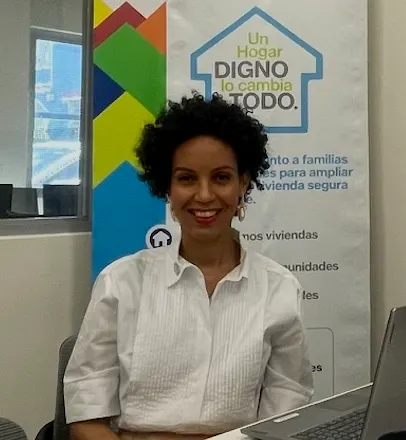
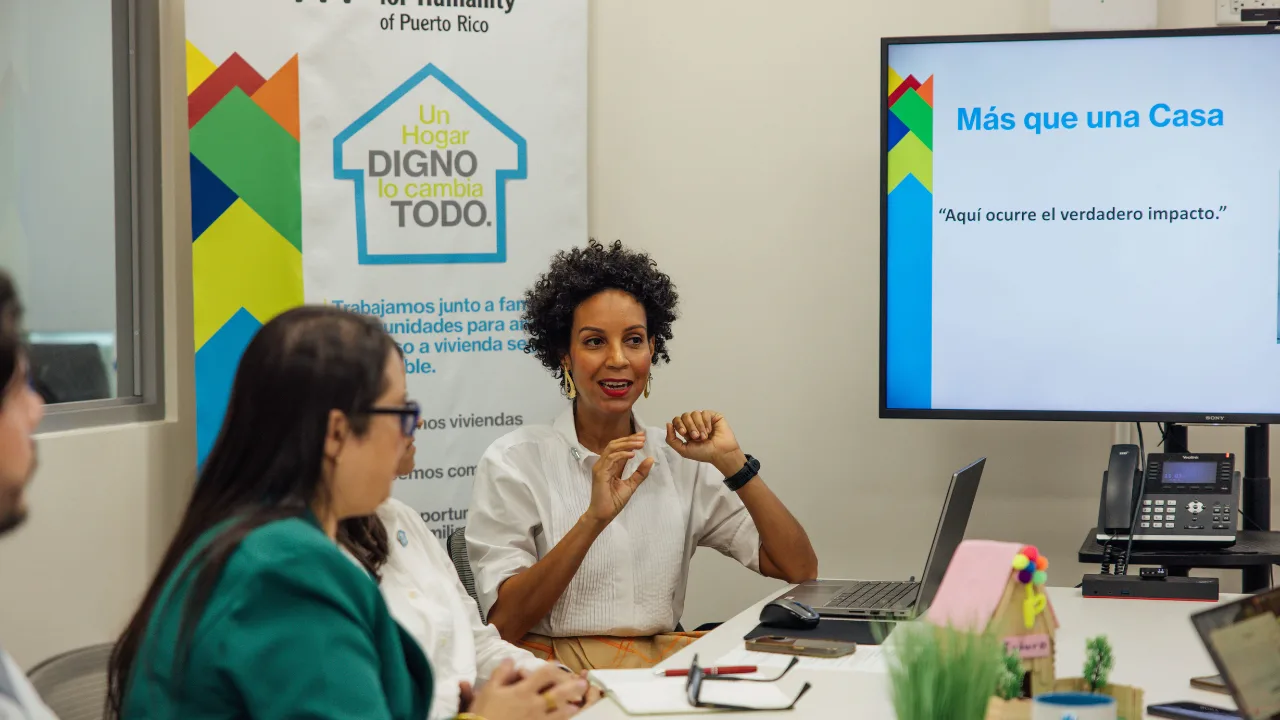
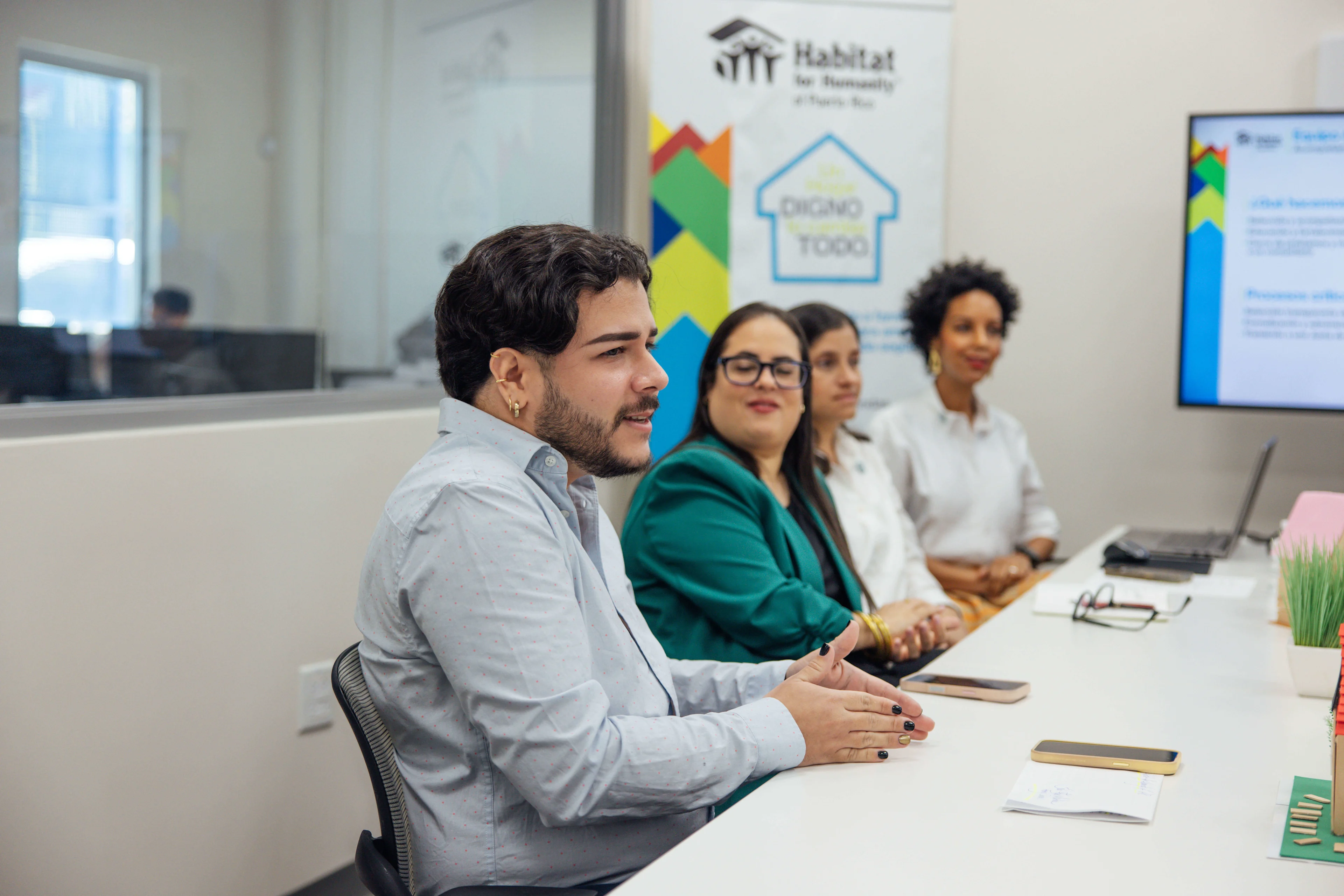
"As nonprofit developers, we make an effort to develop that property at low cost, but above all when we set the sale price we use the appraisal (value)."
Karla Peña Romero, executive director of Habitat for Humanity of Puerto Rico, at a roundtable with journalists
How they work. They operate on a collaborative model that brings together efforts from the public, private and community sectors, with each contributing as it can to housing recovery. The organization:
🔎 Identifies properties and evaluates their potential for repair and sale.
🏚️ Acquires properties or receives them as donations from organizations or municipalities.
👷 Rehabilitates properties with volunteers and donations, both those it has acquired and those it rebuilds for low-income families. This includes contamination mitigation processes carried out by specialists (to reduce environmental, structural and other risks), work schedules and more.
💰 Offers loans for the purchase of properties with support throughout the process.
🏘️ Sells properties at the appraised price. Sales are based on a set of requirements and evaluations of applicants, processed as applications are received.
♻️ Recycles the money received as monthly mortgage payments to subsidize the entire process for other families.
🤝 Provides support, guidance and workshops focused on improving the quality of life of families in their new homes.
📲 787-368-9393
You can also donate or volunteer.
How is Habitat for Humanity of Puerto Rico funded?
Habitat receives funding from organizations and companies, and various donations, which can include properties from the municipality and construction materials.
They also have an extensive volunteer program that includes:
Corporate volunteering: focused on companies that want their employees to learn or donate their time to tasks such as painting, demolition, reconditioning, yard maintenance, masonry, pressure washing, etc.
School volunteering: At least 10 schools in the metropolitan area have had chapters of the organization, with four schools currently active.
Professional volunteering: they seek architects, engineers, plumbers, lawyers, bankers and other professionals to donate their time to help with the property rehabilitation process and reduce costs.
Participant volunteering: the families who benefit must also donate their time to rehabilitate their own property or that of other participants, so the project can continue and community is fostered. This program is called Sweat Equity or Programa de Esfuerzo Propio y Ayuda Mutua.
"We are also committed to something that does not exist at the country level, which is a culture of volunteering, cultivating a culture of volunteering and learning different skills," said Yaira Castellón Torres, Habitat's volunteer services manager.
Home prices. Prices range from $90,000 to $150,000, based on appraisal and often below what it costs to restore them, which is close to $170,000-$180,000 (including acquisition, rehabilitation, mitigation and other expenses). In other words, it is a program that subsidizes rehabilitations with donations and volunteer work.
The money is used to continue funding the program and help other families.
Habitat for Humanity of Puerto Rico management team: Josué Flores, social worker, family services manager; Yaira Castellón, volunteer manager; Nianti Bird, licensed architect, housing preservation director; Karla Peña Romero, executive director of Habitat for Humanity of Puerto Rico. (Provided)
Requirements: Who can buy Habitat for Humanity homes?
The program focuses on giving an opportunity to families and individuals who would otherwise have difficulty acquiring a property. The requirements include:
Demonstrating a housing need (an analysis of the family's composition is conducted).
Being first-time buyers.
Meeting the income limit: individuals and families with low to moderate incomes, which can vary by municipality (approximately $18,000 to $30,000).
Having payment capacity: no more than 30% of their income goes toward housing payments (this is how affordability is demonstrated).
Completing the required volunteer hours on their property or that of other participants. Family members may help accumulate the hours.
Taking the educational courses (financial, home acquisition, and others) that Habitat offers.
People with vouchers from the Programa R3 (Repair, Reconstruction or Relocation) qualify.
Limits on home acquisition. Buyers may not sell or rent the property during the first 10 years.
"We have no individuals or families who have bought through the program and resold," said Habitat's executive director. The only cases on record date to 2003 and were due to changes in family composition.
To buy. You should get oriented at the organization and watch for when it launches new calls with rehabilitated homes.
What homes can be acquired or rehabilitated?
According to architect Nianti Bird, Habitat's housing preservation director, the criteria for rehabilitating and acquiring homes include:
Not be in a flood zone.
Be in an accessible location (which is why the focus is on historic downtowns), based on proximity to schools, businesses, etc.
Be connected to the sewer system. "We don't work with septic tanks," she said.
Be workable without major structural interventions, such as building retaining walls or demolishing the property.
"We look for a fairly sound shell" where rehabilitation work can be done, Bird explained.
In the case of repairs, owners must hold a title or obtain ownership rights. These are processes for which guidance is offered.
Habitat for Humanity's achievements and challenges
The executive director of Habitat highlighted several achievements compiled from other affiliates of the organization, based on their surveys:
😷 65% of participants who acquire a home through the program report an improvement in their health.
🏫 80% of the children in participating families improve their school grades.
📚 45% of participating adults obtain professional training.
🏠 94% feel safe in that home.
🥰 98% of those surveyed "say they feel better, meaning their self-esteem is strengthened," she said.
Challenges. Peña Romero explained that the biggest challenge is the current housing market, in which "more than 270,000 households carry a burden of more than 30% of their housing costs." This means they are one emergency away from not being able to pay that mortgage or rent.
"There are many buildings that are abandoned," but this does not mean "they have development potential." That is why a technical assessment is always conducted.
High housing prices. "Prices at times, when properties are on the market, face high competition," she said of another challenge. "It pushes the limit of the investment amount we have a little."
More of our articles on Housing…
This content was translated with the assistance of Artificial Intelligence (AI).