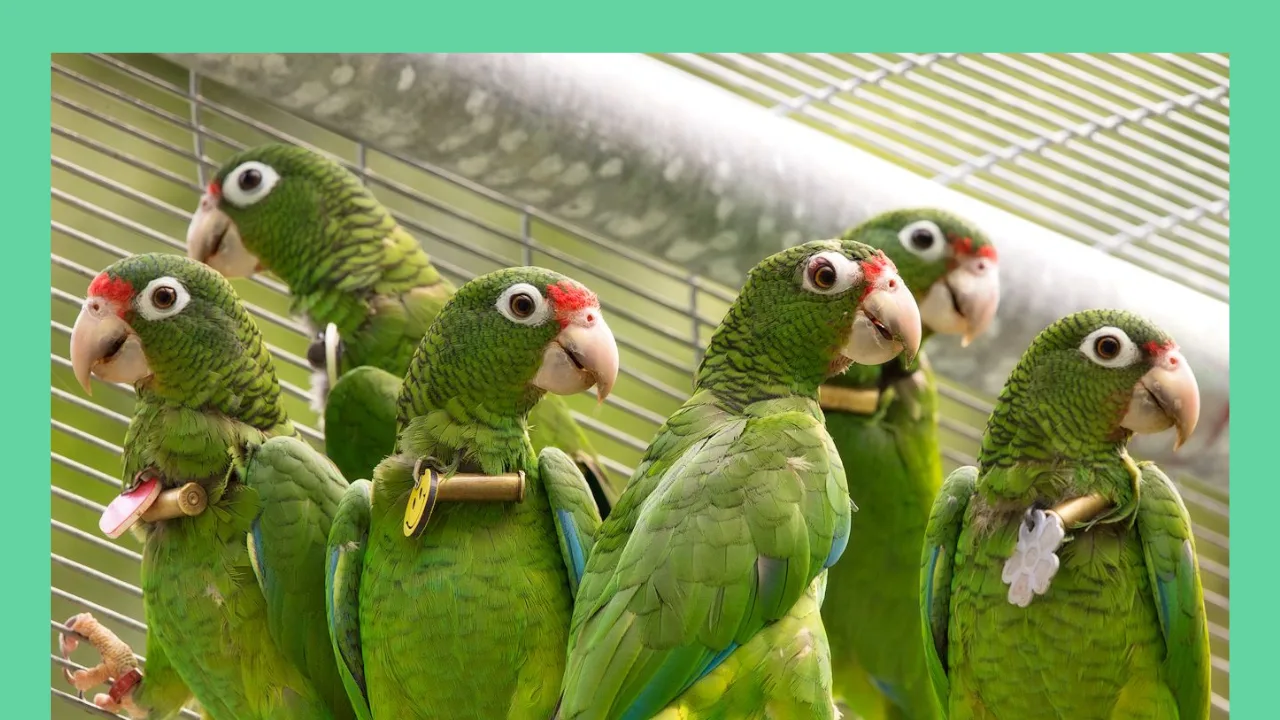
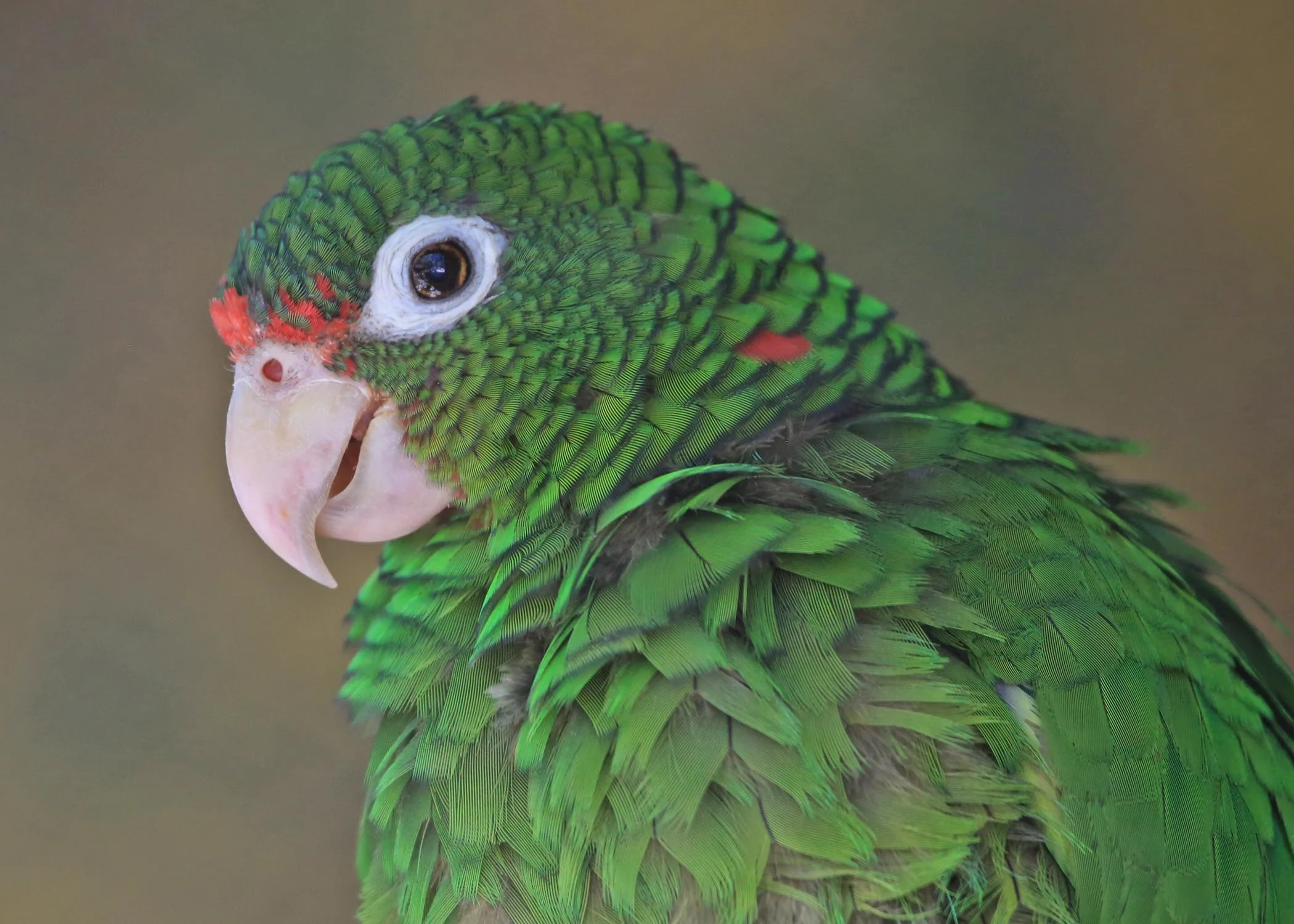
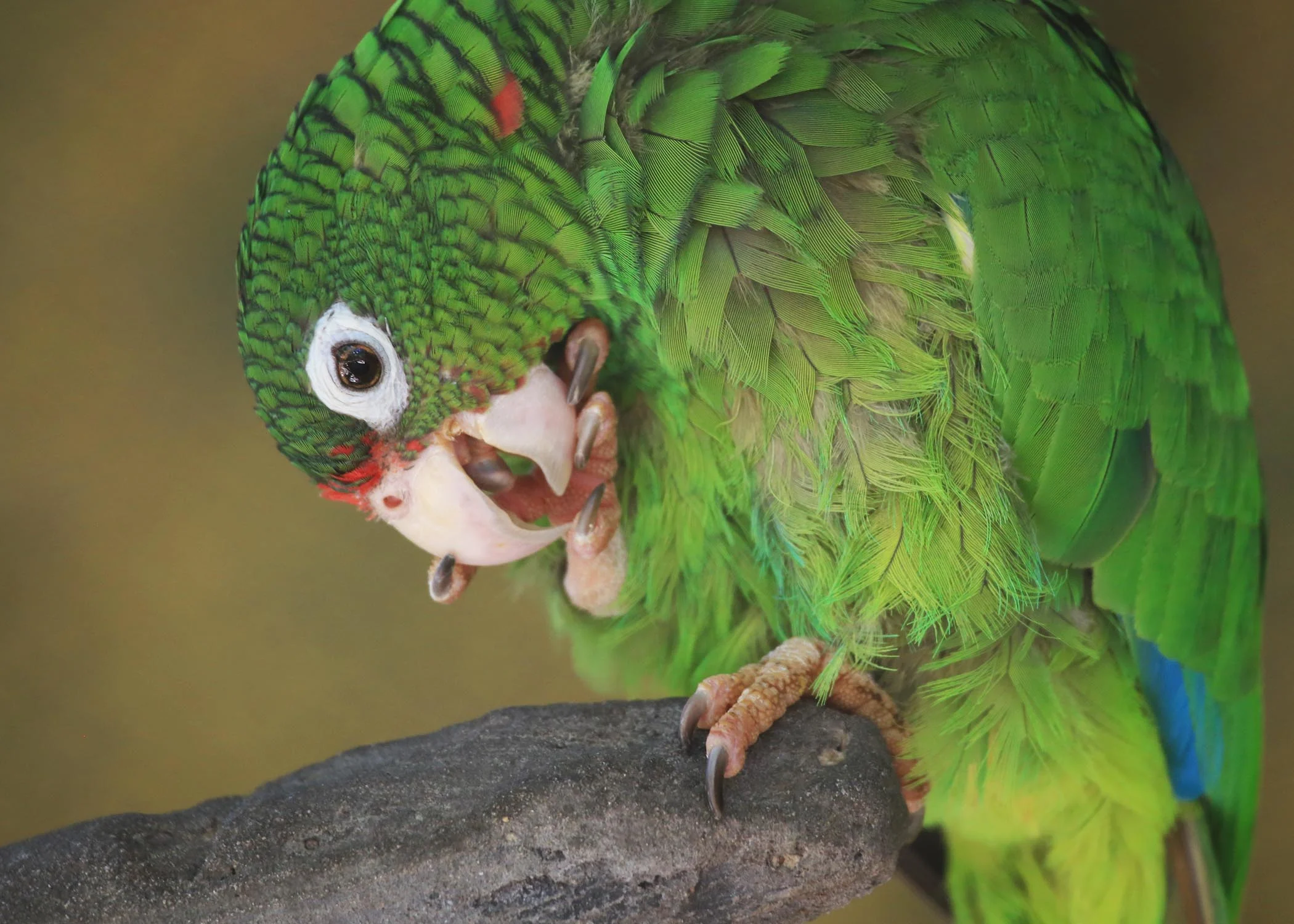
It's a historic record. The Puerto Rican parrot has reached its highest wild population count in this forest, the third to join the Puerto Rican Parrot Recovery Program.
When the Puerto Rican Parrot Recovery Program began in 1970, only 13 to 15 of these birds remained in the wild in El Yunque National Forest, the last place where this endangered species had been reported.
Today, in addition to the wild birds at El Yunque and those at Bosque Estatal de Río Abajo, a record number of Puerto Rican parrots has been reported at Bosque Estatal de Maricao, the third forest to join the program.
We spoke with wildlife biologist Thomas White of the Caribbean Ecological Services Field Office to learn about this milestone and what it means for the recovery of the Puerto Rican parrot.
Historic count: 75-77 wild individuals
White is a bird enthusiast who has spent 26 years with the Puerto Rican Parrot Recovery Program, a joint effort among the U.S. Fish and Wildlife Service (USFWS), the U.S. Forest Service and the Departamento de Recursos Naturales y Ambientales (DRNA).
In an interview with Platea, the biologist confirmed that they were able to count between 75 and 77 wild individuals at Bosque Estatal de Maricao, the highest figure since 2021, the year this forest joined the program and captive-bred Puerto Rican parrots began to be released there to diversify the population across the Island.
He noted, however, that "even one parrot in Maricao is a record," since it is not known when these birds were last spotted in that forest before it was included in the program. There are also no records of how many of these birds lived in this forest before the species was declared endangered in 1967.
🎧 Listen to the call of the Puerto Rican parrot
The addition of this third forest is part of a conservation biology strategy aimed at diversifying a species by introducing it into different habitats, so that a hurricane or other weather event does not affect the entire population.
How the parrots survive in Maricao
White explained that, in the cases of El Yunque and Río Abajo, Puerto Rican parrots began to be released near the two aviaries where they are bred in captivity, in Luquillo and in Utuado. This is because they are social animals that like to be around their own species. The aviaries, with their captive parrots, served as a "social magnet" to keep wild birds in areas where they could be more easily monitored.
Although the Maricao forest does not have an aviary for breeding parrots in captivity, biologists set up "satellite cages" with small populations to serve as a social magnet for the birds that would be living in the wild. This way, they could track them.
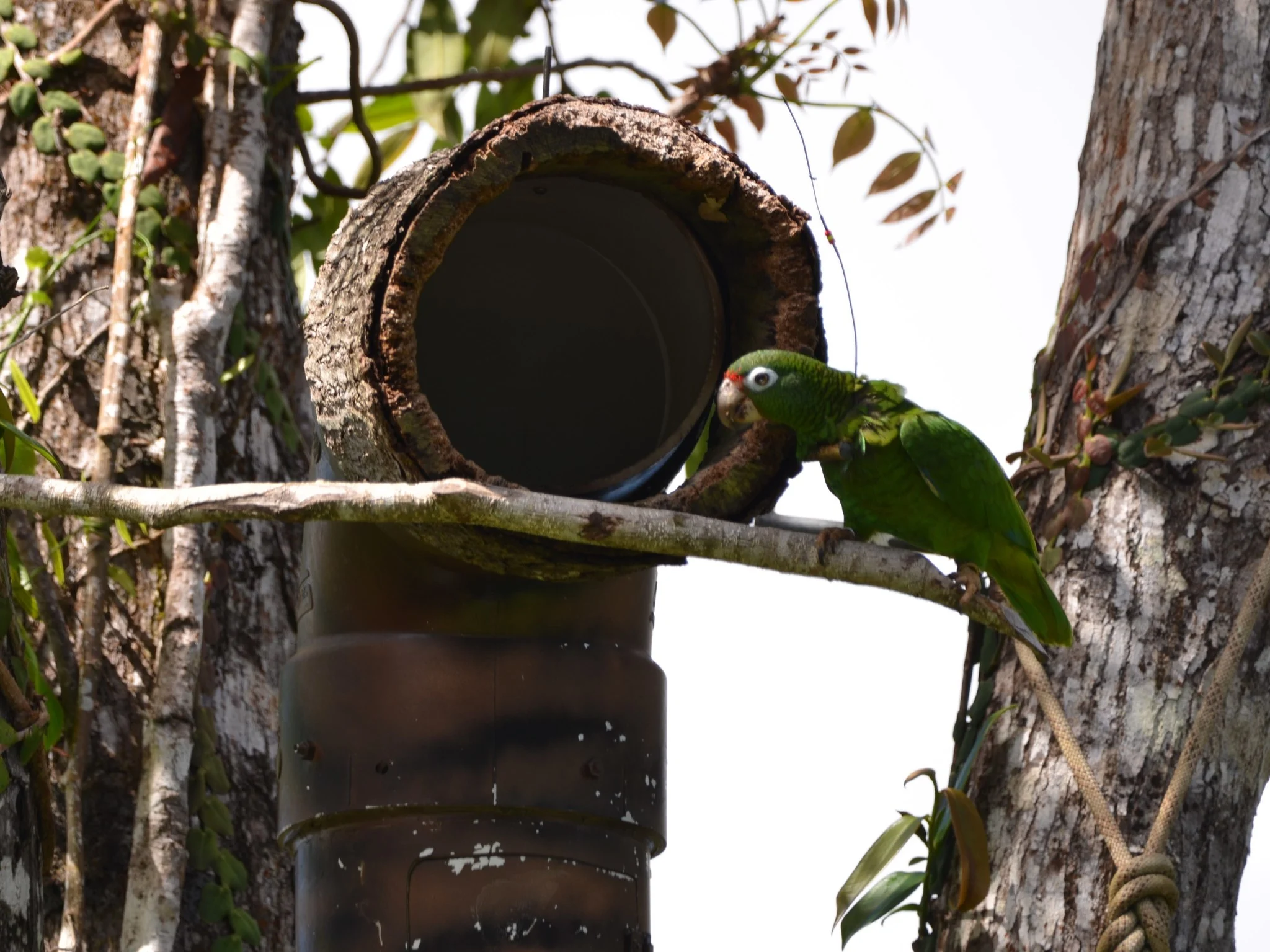
Because the parrot does not build its own nest but instead nests in natural tree cavities, something that occurs only in large trees whose numbers have declined due to deforestation, artificial nests were installed before the birds were released so they would have a place to nest. These nests are made of PVC, covered with plant material to resemble real cavities, and placed in trees throughout the forest for the parrots to nest in.
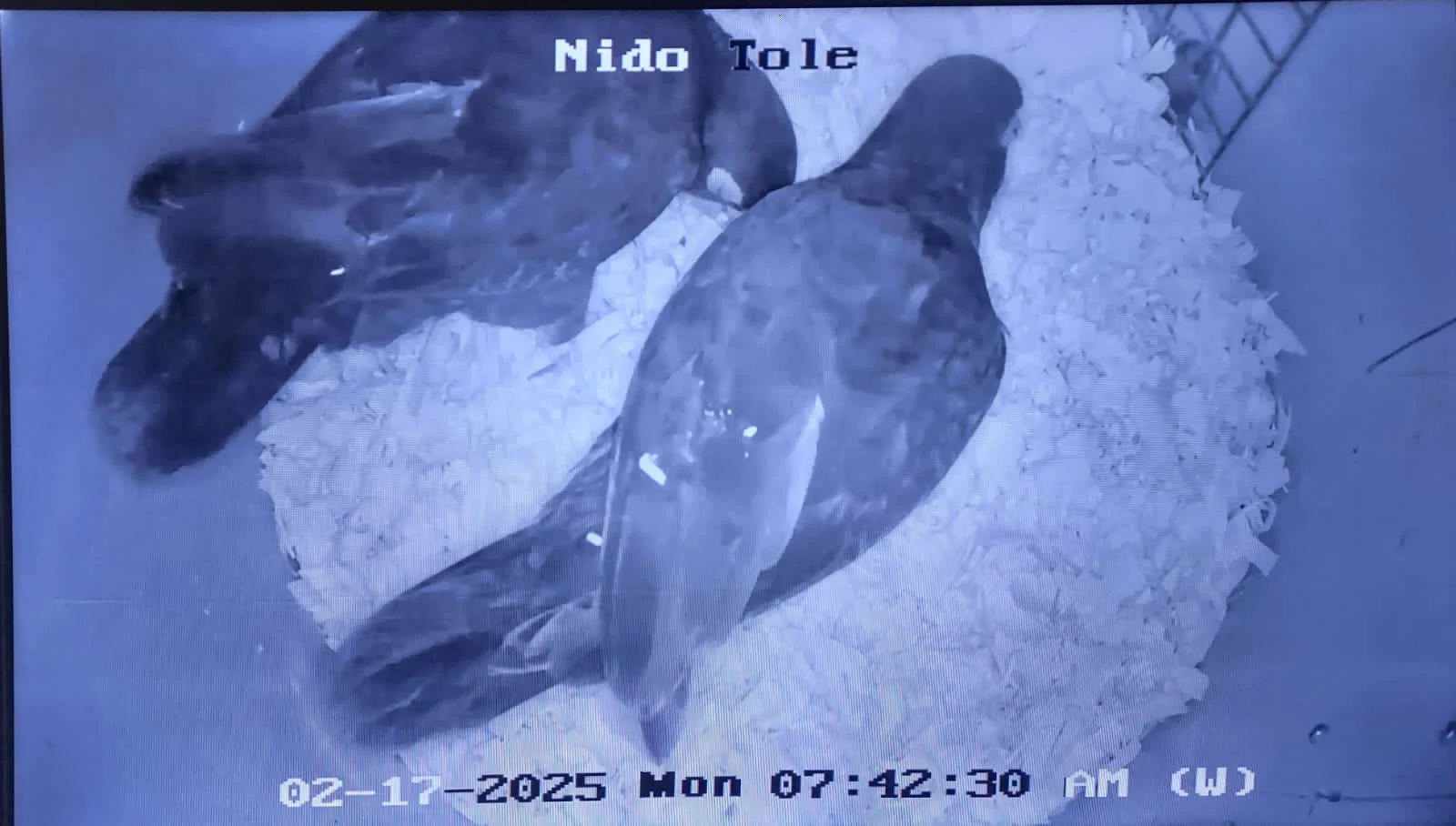
Although there are no natural nests in Maricao yet, White pointed out that the birds are reproducing in the wild, which is a very positive sign for the Recovery Program. In addition, chicks in artificial nests are monitored through infrared cameras, allowing researchers to track the species' development closely.
, Thomas White, wildlife biologist
Cover photo: Partners for Fish and Wildlife: Puerto Rican parrots in Maricao. Joe Milmoe/USFWS, Public Domain, https://www.fws.gov/media/partners-fish-and-wildlife-puerto-rican-parrots-fws-aviary-facility-maricao-puerto-rico
This content was translated with the assistance of Artificial Intelligence (AI).