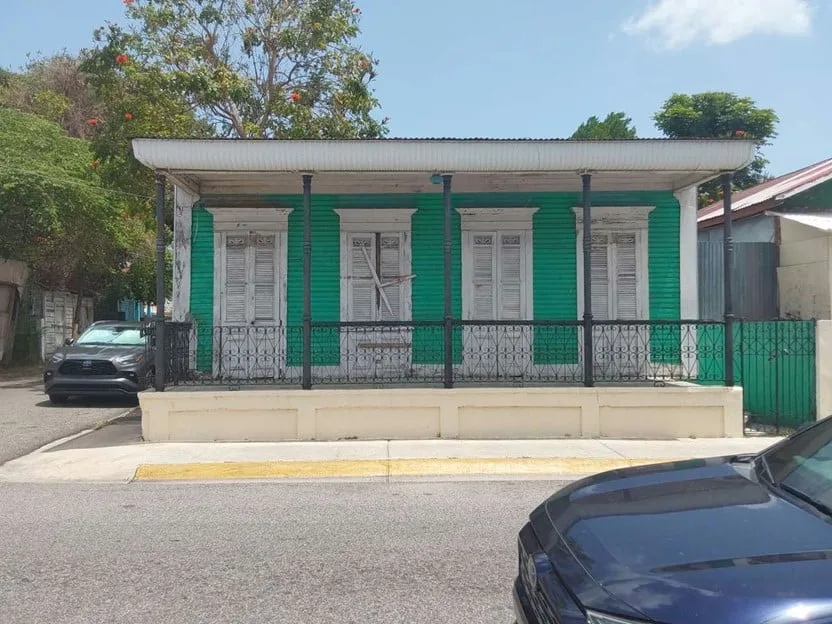
What's happening? The Municipality of San Lorenzo is considering restricting the resale of properties acquired at public nuisance auctions after detecting that a buyer attempted to resell a lot for more than double its purchase price before completing the sale. The purchase took place at the second nuisance auction for $9,000, and the attempted resale was detected at $19,500.
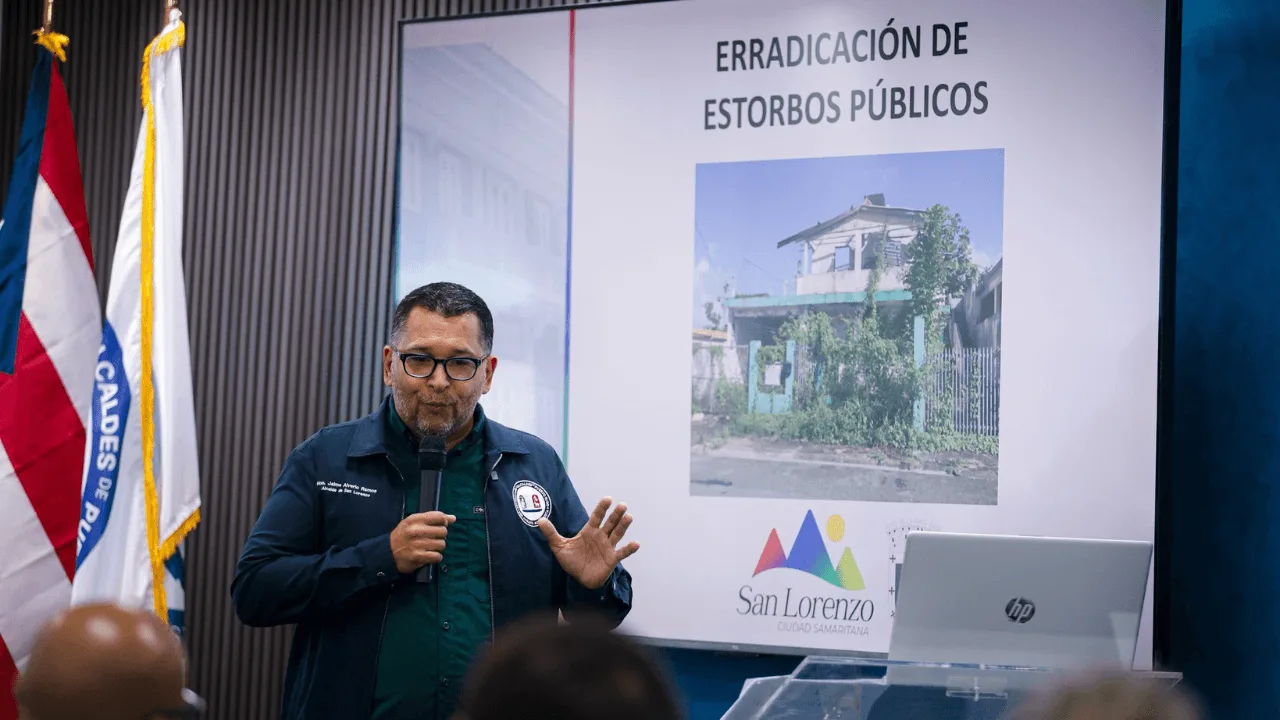
The information was disclosed by San Lorenzo Mayor Jaime Alverio Ramos during the 2nd Public Nuisance Summit of the Federación de Alcaldes, in Puerta de Tierra, San Juan.
The municipal executive said they will now add a restriction preventing buyers who acquire nuisance properties at public auctions from reselling them for "six months or a year, we are still analyzing that."
Why does it matter? The sale of public nuisance properties is one of the avenues several mayors see for creating affordable housing, but this case exposes the risk of real estate speculation. Speculation, in real estate, means buying a property cheaply to resell it at a higher price in a short time and without improving it, seeking a quick profit, which is exactly what was attempted with this lot.
"It is impossible to write a regulation that prevents all speculation," the San Lorenzo mayor acknowledged after speaking to his colleagues about his municipality's experience. San Lorenzo places no restrictions on the type of buyers allowed in its public auctions.
Alverio Ramos expects the changes to the municipal regulation to take effect before the third public nuisance auction, scheduled for August.
A lot purchased for $9,000 listed for resale at $19,500
Alverio Ramos said he learned about the situation from a resident.
"It's case USU-01. That case was a lot in the historic downtown that sold for $9,000 (on May 6, 2026), and in recent days a person came to me to say it was listed on Clasificados Online for $19,500. This person has not yet closed with the municipality, has not signed the deed of sale. He is trying to do a kind of flipping," the mayor said in response to questions from Platea.
Flipping. In the real estate sector, flipping ("dar la vuelta"), house flipping or business flipping refers to buying something that is quickly resold ("flipped") for profit.
The resident who purchased the property was within the 120-day period to secure the funds and pay the municipality. Because it was a vacant lot, it did not carry the stipulation requiring improvements within one year of acquiring the property, as applies to other public nuisance properties.
What will the municipality do? "We have already identified it. What we are going to do now is place a restriction so that once the property is awarded to a person at auction, they have four months to find the money, but they will not be able to sell the property for a longer period. That means they will have to close with the municipality before they can sell it afterward. But this practice of making free money off the Municipality of San Lorenzo's program is something we will not allow," Alverio Ramos said.
The mayor estimated the resale restriction period will be "more than four months," somewhere between "six months or a year." He explained that he does not want a longer period because the purpose of selling nuisance properties at auction is precisely to accelerate the recovery of these abandoned properties.
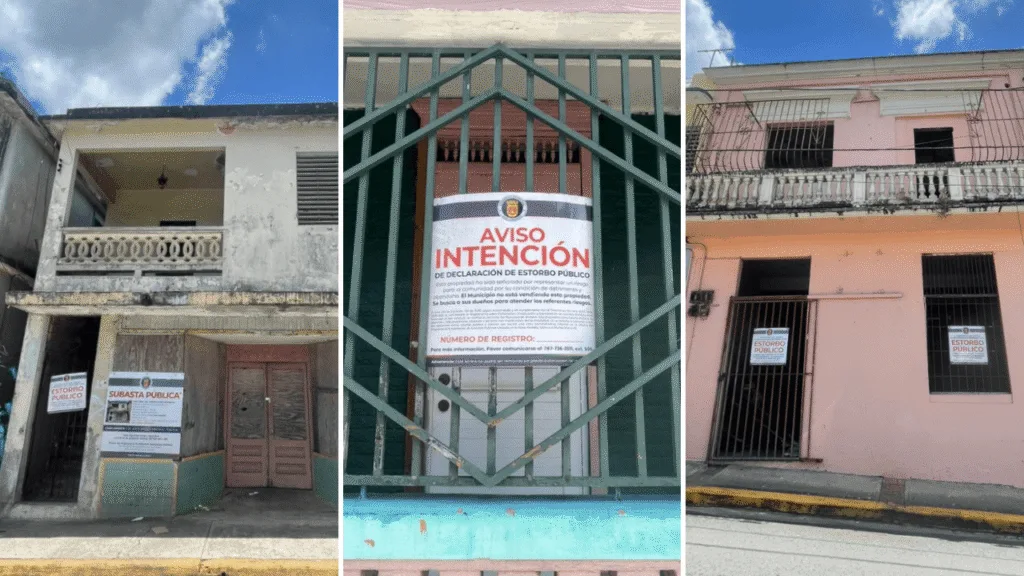
More changes to the auction regulations
Alverio Ramos acknowledged that, as these are new processes, it is likely they will continue identifying other areas that need to be refined or corrected.
"Before the next auction goes out, the regulation will be amended to prevent these things from happening. And again. This is a living process. These are living documents, and every time we identify something, we are going to keep closing the doors to speculation," the official said.
Law 97-2026 will require further adjustments
He also said there will be amendments to the municipality's public nuisance ordinance to bring it in line with the changes introduced by Law 97-2026, which strengthened the power of municipalities to identify, fine and expropriate public nuisances and which the mayor of San Lorenzo helped champion.
One of the main changes this law made to the Municipal Code was to clarify the terms for the transfer of property titles and other court proceedings, as well as to reduce judicial discretion in expropriation cases. This would make municipal court proceedings more uniform, avoiding the completely opposing rulings on public nuisances that several municipalities said they had experienced.
San Lorenzo nearly recoups its investment in public nuisances
Through February 2026, San Lorenzo had identified 437 potential public nuisance cases, of which 145 are in the declaration process, 187 had been closed because the owners addressed them, and 105 had reached a formal declaration.
Of those formally declared public nuisances: 14 were in the process of being repaired by the owner, 35 were pending expropriation, 11 remained in court, 10 were to be demolished, 16 had been demolished, 2 had been sold, and 19 were ready to be auctioned (expropriated).
In the first two public auctions, the municipality auctioned 14 properties and awarded 12, with an estimated $707,000 in funds generated. That figure is close to the roughly $800,000 the Municipio de San Lorenzo has invested in the program over the past five years, the mayor said.
Where the funds go. The official said the money received from the sale of nuisance properties goes into the municipality's general fund. Within that fund, they created a special line item "to set aside part of that money to reinvest in the program itself," which will be used to carry out more expropriations and to finance what will be phase 2.
Phase 2: Affordable housing
Alverio Ramos said the first phase of the public nuisance program consists of selling the properties that generate the most interest and recovering as much money as possible for the municipality, but the second phase will focus on creating a program to develop affordable housing for residents of the town.
This would include properties that are "unattractive" to buyers. "Those are the ones we intend to rehabilitate quickly and transfer through a Land Bank or a similar model, using the funds we generate in the first phase," he said.
He explained that he structured it this way in order to have the funds to rehabilitate the properties that will be offered as affordable housing, since this is one of the main challenges facing the community land bank model.
"We have it set for 2032 to begin that phase (2). I have to win several elections to get there," he added.
The future of San Lorenzo's public nuisance program
Alverio Ramos explained that, in addition to the changes to the nuisance auction regulations, they will create the process that will govern properties that do not sell in the first public auction.
Listing of nuisances. If a property declared a public nuisance generates no interest in the first public auction, it will be placed on a listing where it will remain for at least six months so that interested residents can offer to acquire it at the minimum price (the appraised value).
If it does not sell within those six months, the property goes back to public auction but with "the minimum bid at 50%, so that bidding starts at 50%" of the original price.
Difference between listing and inventory. The mayor of San Lorenzo explained that they use the term listing to distinguish the processes under article 2.018 of the Municipal Code (acquisition of property through eminent domain), which are the ones used in these cases, from the inventory required by article 4.011 of the same law.
In this last case (article 4.011), the inventory covers properties declared a public nuisance without going through the expropriation process. The municipality has the option of acquiring them through expropriation or allowing interested residents to pay the court costs to eventually obtain the title. In this case, the properties in the inventory are not sold at auction unless the municipality acquires them.
Cover photo: Jaime Alverio Ramos, mayor of San Lorenzo, speaks about his municipality's public nuisance program at the Segunda Cumbre de Estorbos Públicos de la Federación de Alcaldes. (Provided)
This content was translated with the assistance of Artificial Intelligence (AI).