


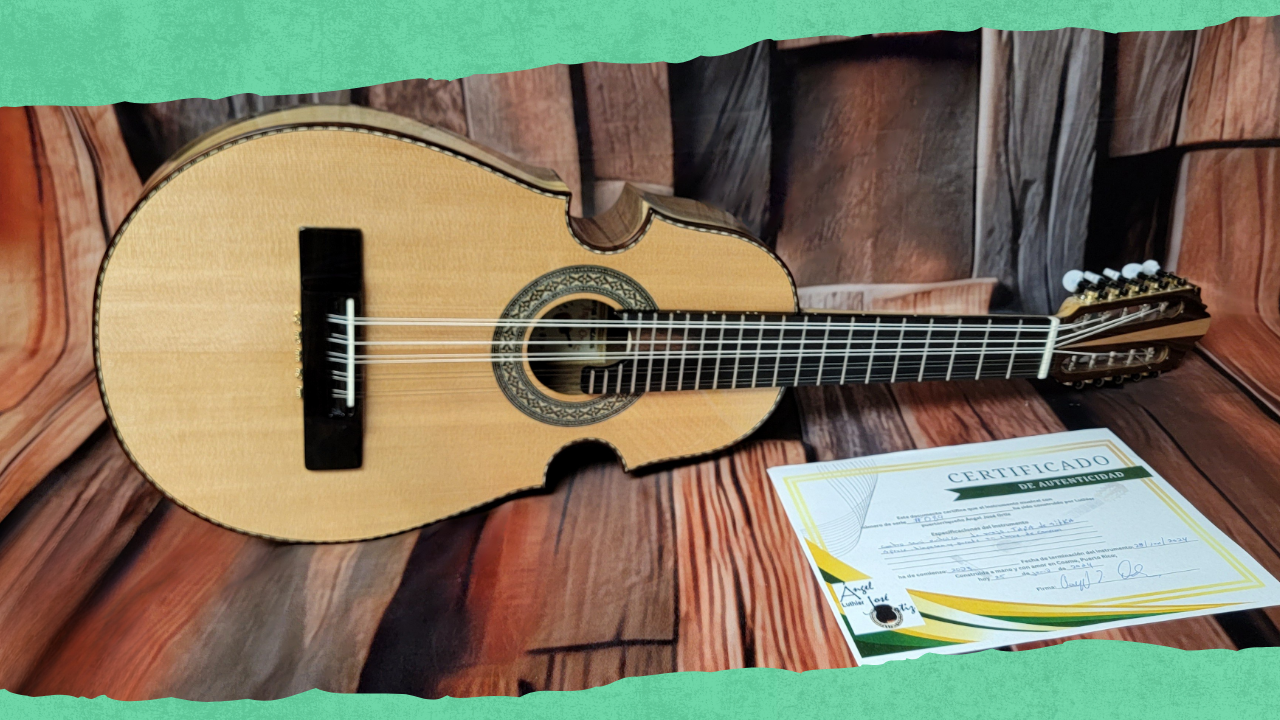
Crafted by Hand, Heard Around the World: The Puerto Rican Cuatro

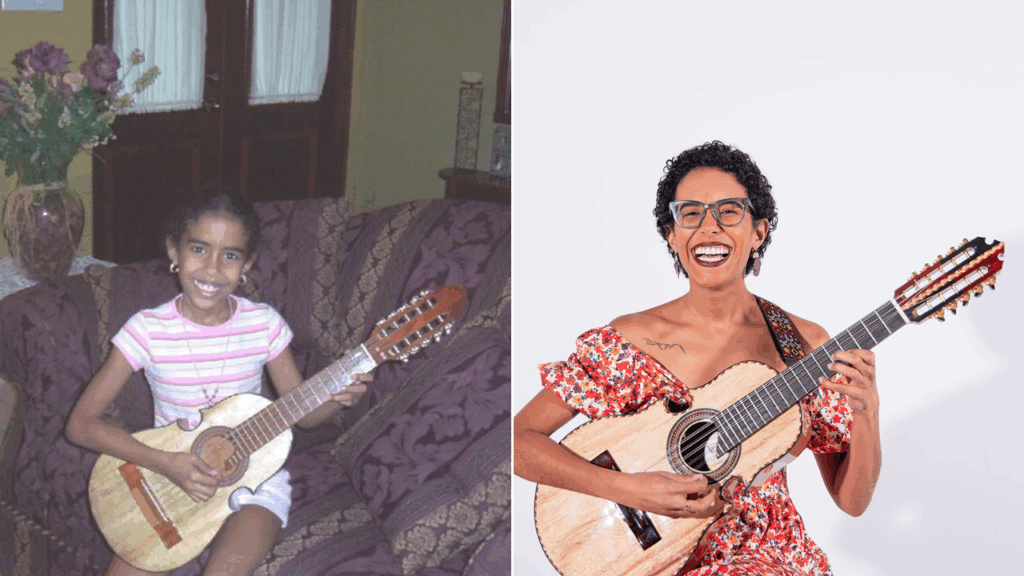
The parents of cuatrista Fabiola Méndez keep her first cuatro as a relic from her childhood.
“At six years old, my parents tell me, I picked up papi’s cuatro and started playing melodies on it. They saw that interest in me and put me in classes,” said Méndez, who is now a distinguished composer who recently brought the sound of the cuatro to a global audience at NPR’s Tiny Desk alongside Bad Bunny.

But behind every cuatro like the one that inspired Méndez—an instrument that now has weekly exposure at Bad Bunny’s Residency with artists like José Eduardo Santana performing before 14,000 spectators—there’s an artisan who preserves a tradition spanning over 200 years: the luthier.
- According to the Cuatro Project, a collective that seeks to preserve the instrument’s traditions, the first cuatros were documented in the early 19th century. They were rustic four-string instruments made with native woods like guaraguao and laurel.
- Over time, it evolved to have ten strings or five double strings, giving it the broader musical range we know today.
Today, that legacy continues in workshops around the island where this centuries-old art is preserved.
What does a luthier do?
A luthier is an artisan who builds stringed instruments by hand. In Puerto Rico, these craftspeople specialize in making and repairing the Puerto Rican cuatro, preserving a tradition that defines our musical identity.
🎶 The art behind the instrument
Luthier Ángel José Ortiz from Coamo, who has nearly two decades of experience, spoke with Platea about the artisanal process of creating a cuatro.
His workshop is one of the few places where this art is still preserved.
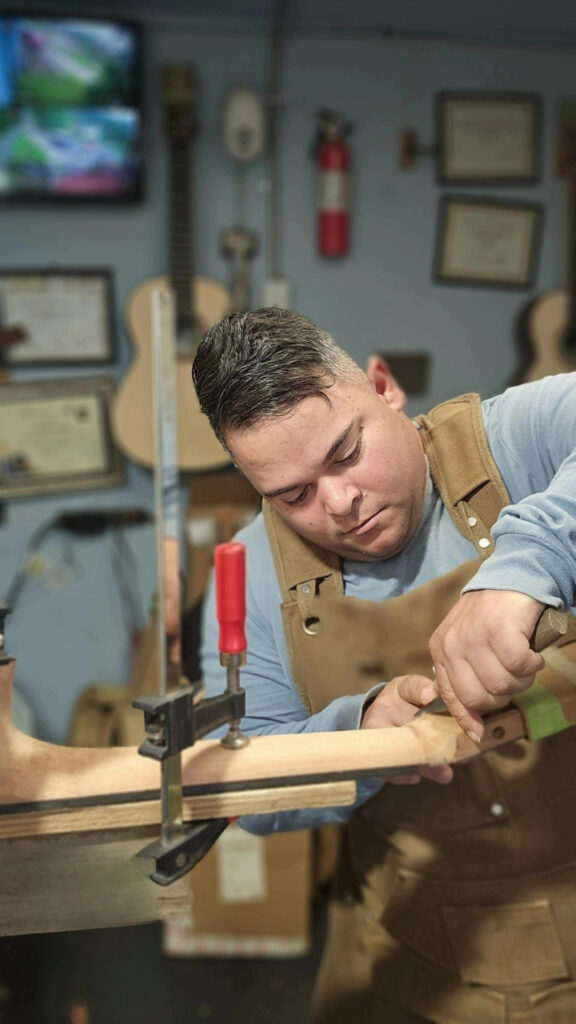
“Each maker transmits a specific sound. I can make something identical to another maker, and my instrument will sound different,” explained Ortiz, who describes his sound as “strong, clear, clean.”
Each cuatro is a customized work that can take weeks to create, which is why luthiers work primarily on commission.
The woods that sing
Before a luthier can begin their work, they must carefully select the raw material that will give voice to the instrument.
As documented in Proyecto Cuatro, the first artisans used endemic woods from the island: guaraguao, laurel, maga, algarrobo, cedro macho, and roble blanco.
- Today, a luthier must verify that the wood they will use is completely dry, a process that can take months or years.
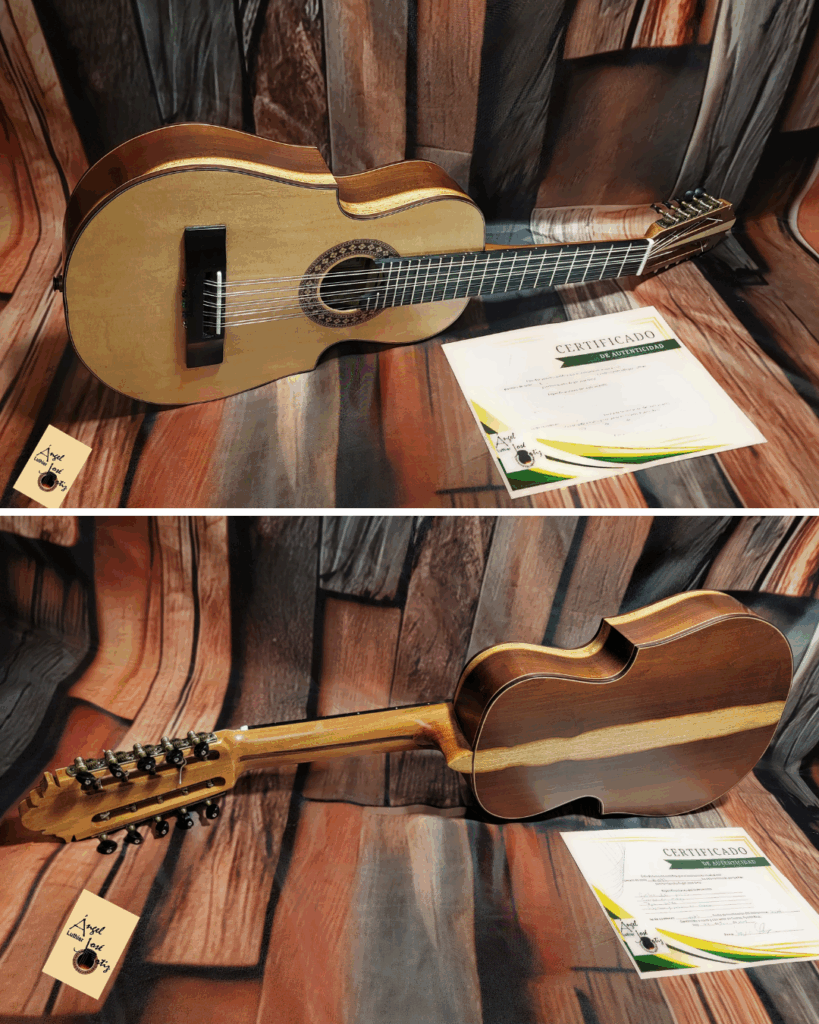
“Wood is a living material,” described Ortiz, explaining how it can absorb or release moisture from the environment, affecting the tuning and sound of the instrument.
- That’s why the creation process, which takes up to 12 weeks, begins with the careful selection of completely dry woods.
Each stage, from carving the sound box to installing the fan bracing system, determines the sonic qualities of the final instrument.
How to create a Puerto Rican cuatro
The traditional art of criollo lutherie step by step
Preserving the tradition
In his workshop in Coamo, Ortiz doesn't just create instruments; he also teaches the art of building them.
"The more luthiers there are, the more cuatros there will be," affirmed Ortiz, who feels proud to transmit his knowledge "so that the culture stays alive."
As a guitar musician, Ausberto Ramos Rodríguez, 43, always had curiosity about the manufacturing process. He saw an ad on Facebook for Ortiz's course and decided to take it between February and August of last year.
"I had always had that interest in making guitar instruments and the world of lutherie attracted me quite a bit," said Ramos Rodríguez, a native of Vega Alta.
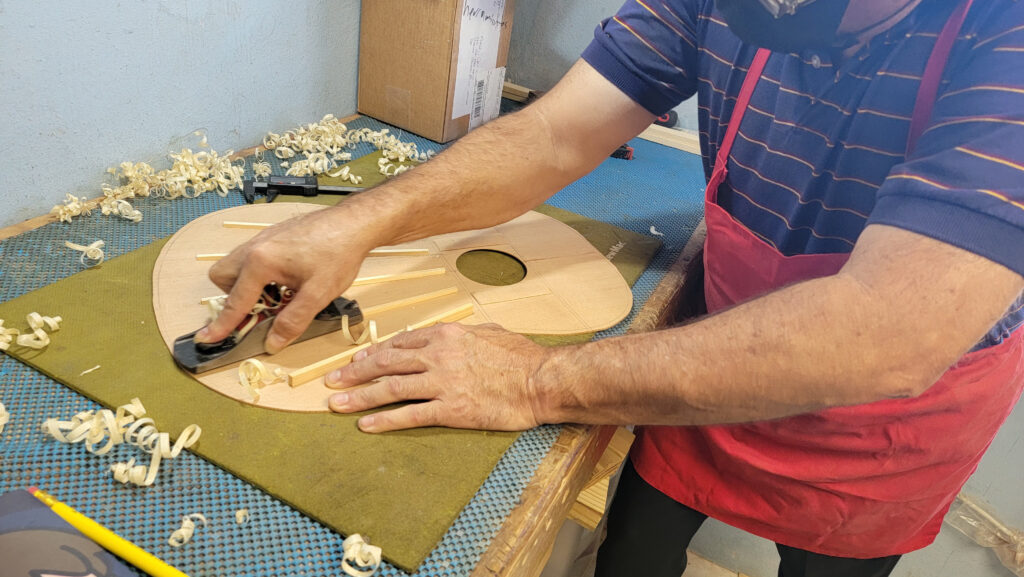
Meanwhile, Javier Ortiz, 52, a resident of Morovis, also took the course to learn about woods and how the natural material affects the sound.
For both apprentices, their teacher's guidance was excellent as they watched wooden planks transform into instruments with their own hands.
"The most beautiful thing is being able to hear the instrument once you finish it. I mean, that feeling that with your hands you made something that sounds and brings you joy," added Ramos Rodríguez.
Both students agree: learning and continuing the tradition is fundamental to preserving this Puerto Rican cultural heritage.
The relationship between musician and luthier
For professional cuatristas like Méndez, who is the first graduate of Berklee College of Music to specialize in the Puerto Rican cuatro, finding the right luthier is just as important as learning to play it.
"When you find that luthier who makes instruments the way you like them, who knows you, well, you create that quite long-lasting relationship," said the cuatrista.
Throughout her career, Méndez has worked with renowned artisans like Jesiel Martínez, a young 27-year-old luthier with 12 years of experience who designed a cuatro used in DeBÍ TiRAR MáS FOToS, Bad Bunny's latest album, and Aurelio Cruz, who has dedicated his life to lutherie since age 13.
3️⃣ Tips for your custom cuatro
If you're considering ordering your own cuatro, these are the key aspects you should discuss with your luthier
Which artisans make cuatros and offer workshops?
For those looking for a custom cuatro or wanting to learn the art of lutherie, these are the workshops and artisans available in Puerto Rico:
Jesiel Martínez
- Artisan Jesiel Martínez is located in Barrio Alto Sano, San Sebastián. He's 27 years old and already has about 12 years of experience making cuatros, bordonúas, tiples, electric cuatros, requintos, guitars, Cuban tres, güiros, and other musical instruments.
- Some of his instruments have been featured in the album DeBÍ TiRAR MáS FOToS by Bad Bunny, such as Méndez's bordonúa and cuatrista José Eduardo Santana's electric cuatro. You can contact him at (939) 437-0412.
Aurelio Cruz
- Since age 13, this artisan has dedicated his life to the lutherie of tiples, cuatros, bordonúas, and other popular and endemic stringed instruments from the island. You can see his most recent works through his Facebook page and request a free quote by contacting (787) 618-6872 or through his email.
Taller 100x35
- Distinguished luthier Ángel Luis "Wimbo" Rivera works with cuatros, tres, tiples, bordonúas, requintos, and guitars in his workshop in Morovis, with over three decades of experience in his craft. You can call or send a text message to (787) 618-0703.
Puerto Rican Cuatro
- The process of crafting Puerto Rican Cuatro's artisanal pieces requires four to six weeks, ensuring an excellent quality finish. Interested parties can order a Puerto Rican cuatro or other instruments by visiting puertoricancuatro.com.
El Taller del Cuatro
- This family business has dedicated over two decades to the construction and repair of cuatros, as well as offering musical instruction on the instrument and selling accessories related to this Puerto Rican musical symbol. Customers can place their orders directly at their facilities in Bayamón or through their digital platform www.tallerdelcuatro.com.
From craftsmanship to the future of the instrument
As more popular songs continue to integrate the cuatro and listeners identify the instrument, the luthier's craft will continue to be fundamental in Puerto Rico.
"They do us a huge favor," emphasizes Méndez about artists like Bad Bunny, "they put the instrument in the place it deserves, but with a different narrative, especially in the eyes of young people—that it's a 'cool' instrument, that it's an instrument that represents me as a Puerto Rican and, therefore, I'm going to embrace it with pride, and I'm going to respect it and want to listen to that music and promote it."
🎧 Save this playlist if you want to appreciate the Puerto Rican cuatro across various genres:


