

Cui Cui: A Classic American Bar Reimagined in Puerto Rico by the Team Behind La Factoría

At a Glance
What would an American Bar — that century-old concept that brought U.S. cocktail culture to Europe — look like in 21st-century Puerto Rico?
That was the question behind Cui Cui in Old San Juan, the new culinary venture from Roberto Berdecía, Leslie Cofresí, and Pablo Rodríguez — the co-owners of La Factoría, the iconic San Juan bar that appeared on the World’s 50 Best Bars list from 2015 to 2019 and is featured among North America’s 50 Best Bars.
The concept launched on December 26 with a team of 15. The bet? To once again transform the cocktail experience in Puerto Rico.
The Concept: The American Bar
American Bars became popular across Europe and Latin America in the late 19th and early 20th centuries as bars dedicated to cocktails — an American invention. They spread especially through hotels during Prohibition in the United States, Cofresí explained in an interview with Platea.
The oldest and most iconic is the American Bar at the Savoy Hotel in London, which opened in the 1890s and is said to be where author Ernest Hemingway ordered a Montgomery, a cocktail made with gin, dry vermouth, and lemon peel. Along with the Savoy, other bars that inspired the Cui Cui concept include Boadas in Barcelona, with more than 90 years of history, and Harry’s Bar in Paris, open since 1911.
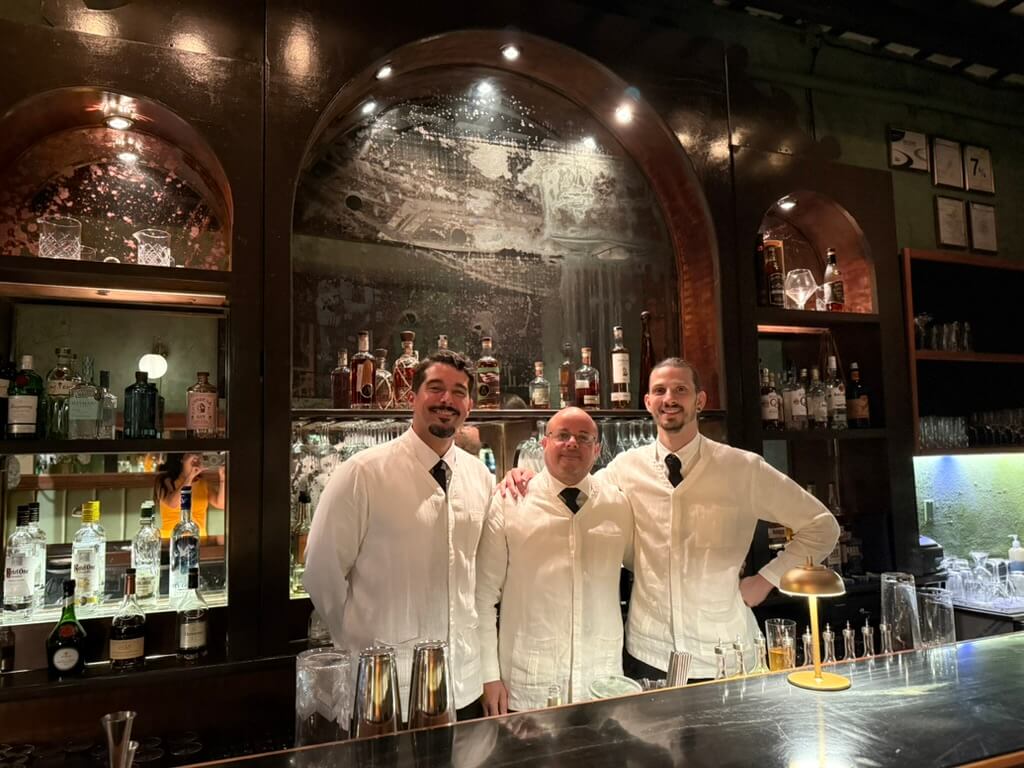
“In recent years, there’s been a revival of these very classic establishments, reimagined for today. When we created Cui Cui, we wanted to ask ourselves: If a bar like that had survived in Puerto Rico, what would it look like now? This is what we imagined, and it’s what we’re inviting people to experience… It has that vibe of classic bars in big cities like New York or London,” Cofresí said.
Cofresí explained that these bars were also known for their service. “The bartenders dressed a certain way; there was always an element of elegance in those places,” he noted. “Everything is table service, everything follows a standard of hospitality,” Berdecía added.
The classic white coat of American Bars has been reimagined at Cui Cui as a white guayabera by boricua designer Yari Pérez — another Puerto Rican twist on the American concept.
The Name: Why Cui Cui?
🎶 Cui Cui, acompañar tus sentimiento’…
“Cui Cui is partly inspired by the Roberto Roena song. It’s a kind of playful, teasing laugh. It’s a bit of a statement from us. We’ve spent so many years at La Factoría, known as a high-energy party bar, but Roberto Berdecía and I actually come from working cocktails at a very high level. This was our chance to remind people that we can do this level of mixology — beyond the party,” Cofresí said.
The mixologist admitted that “it was hard to land on a name” and that they went through several options before arriving at the final choice — short, playful, and a nod to another essential part of boricua culture: the music.
The Experience
It’s best to reserve a table in advance to secure your spot, since this is a small, intimate space where everything is seated — it fits just 35 to 40 guests.
“The atmosphere is designed to feel a bit refined, but still comfortable. Our goal is to create an elegant setting for drinking cocktails — especially classic cocktails,” Cofresí explained.
- The main room features the bar and several tables, dim lighting, green walls, and a soundtrack of jazz — with the occasional salsa or guaguancó mixed in. A second room holds more tables, followed by the kitchen.
- Two paintings by Puerto Rican artist Carlos Irizarry, created in homage to Picasso, decorate each of the dining rooms. And a piece by painter and calligrapher Lorenzo Homar commemorating the 1979 Pan American Games in San Juan is the first thing you see when you walk in.
Accessibility. Cui Cui occupies the space where the restaurant El Boquerón used to be, on the first floor of a building on calle San Sebastián, across from Plaza San José. There is no on-site parking.
- The nearest paid parking is the Ballajá Parking Garage, beneath the Plaza del Quinto Centenario.
The Food at Cui Cui
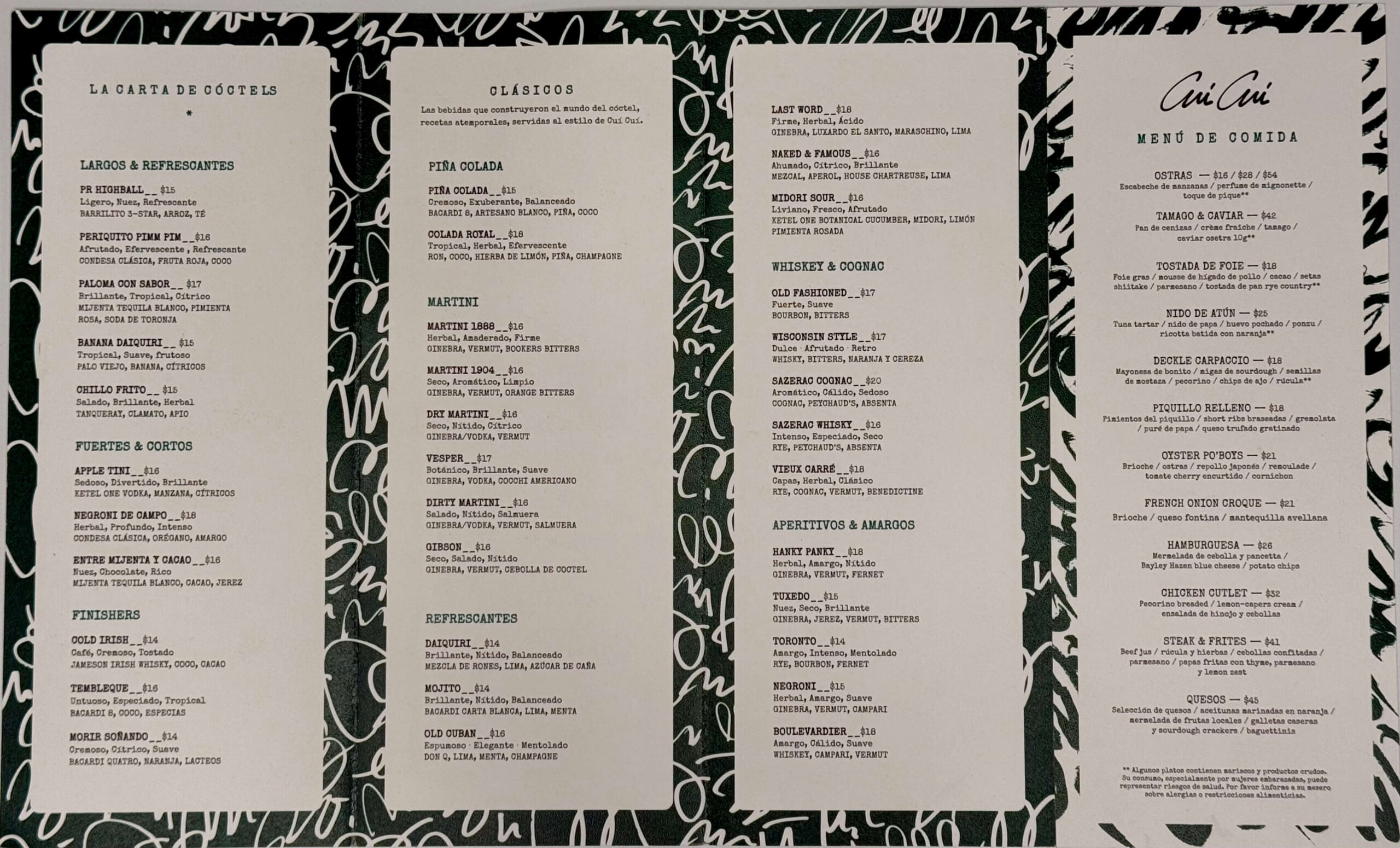
The menu was created by Luis Castillo, the executive chef at both Cui Cui and La Factoría. The dishes blend French Bistro classics with a Puerto Rican twist, ranging from fresh oysters, tuna tartare, and carpaccio to burgers, chicken empanadas, and steak & frites.
Castillo set out to combine classic bar fare with modern trends, incorporating pickled elements — a staple of bars from a bygone era. He drew inspiration from “a lot of global bar trends” and assured that “every single dish is a perfect fit for the menu.”
Among the most intriguing items are the Oyster Po’boys, a twist on the classic New Orleans shrimp po’boy. It’s made with a house-baked brioche bun, fried oysters, Japanese cabbage, pickled cherry tomatoes, and cornichons (small French pickles).
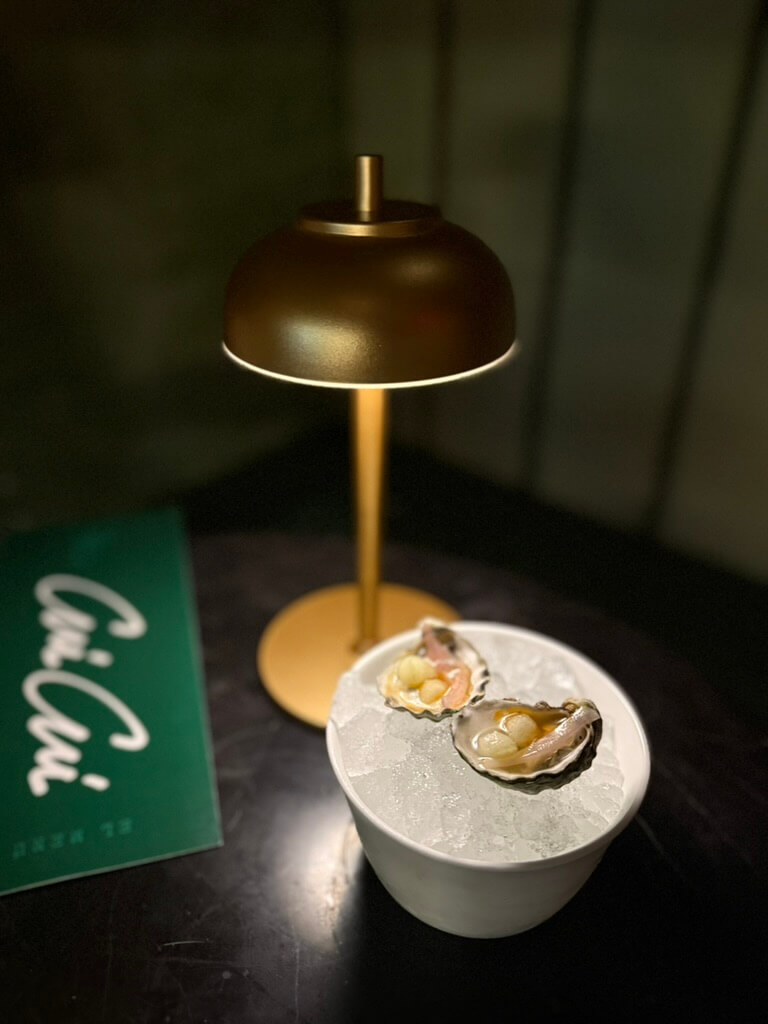
Oysters
Served in portions of 3, 6, or 12, the oysters come with an apple escabeche, mignonette perfume, and a touch of local pique (hot sauce).
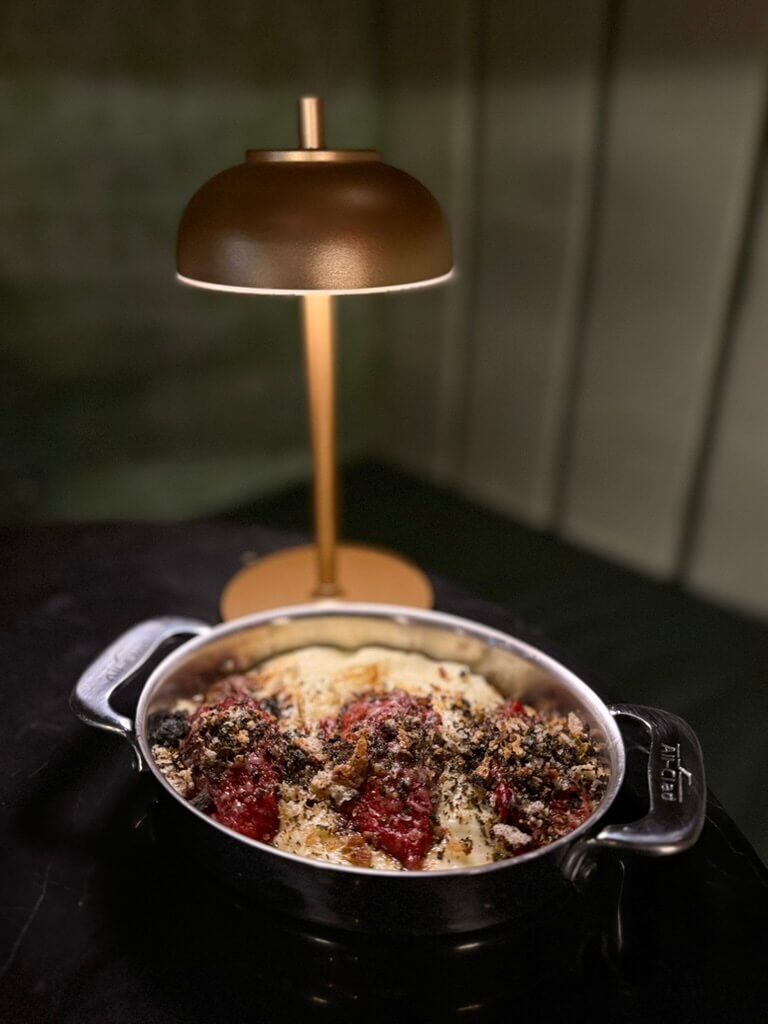
Piquillo Relleno
Three piquillo peppers — a Spanish classic — stuffed with short ribs braised for four hours, gremolata, and truffle cheese gratinéed over mashed potatoes.
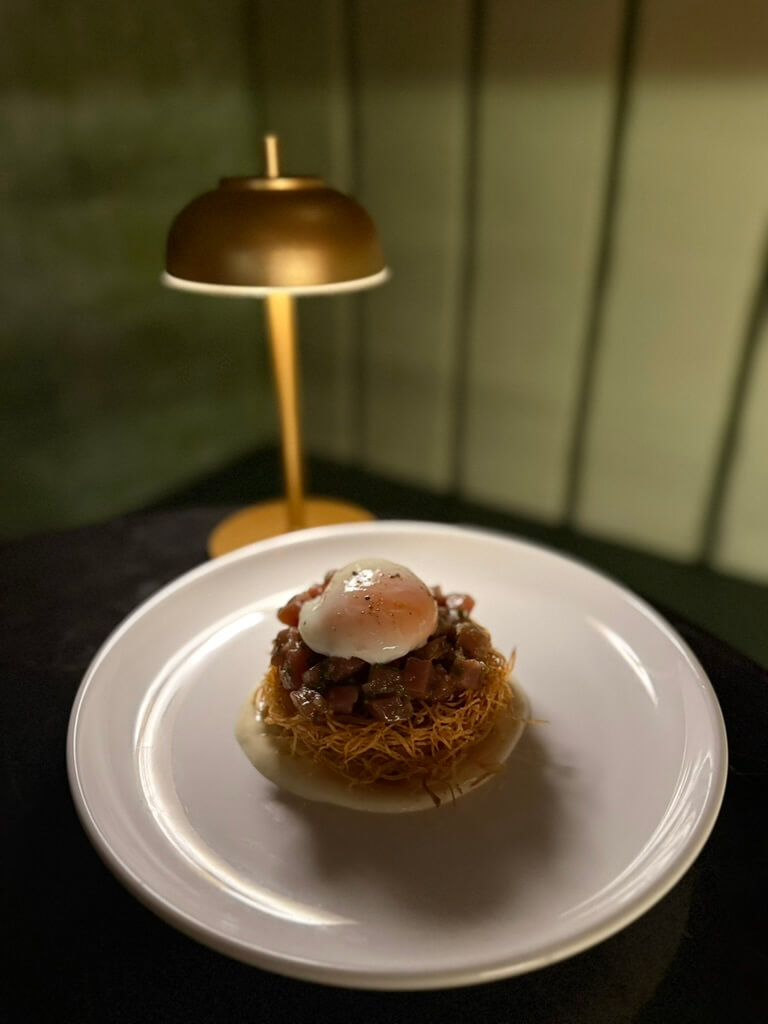
Nido de Atún
This is no ordinary tuna tartare. It layers the crunch of a potato nest, the softness of a poached egg, and a bed of orange-whipped ricotta that gives it a truly special touch.
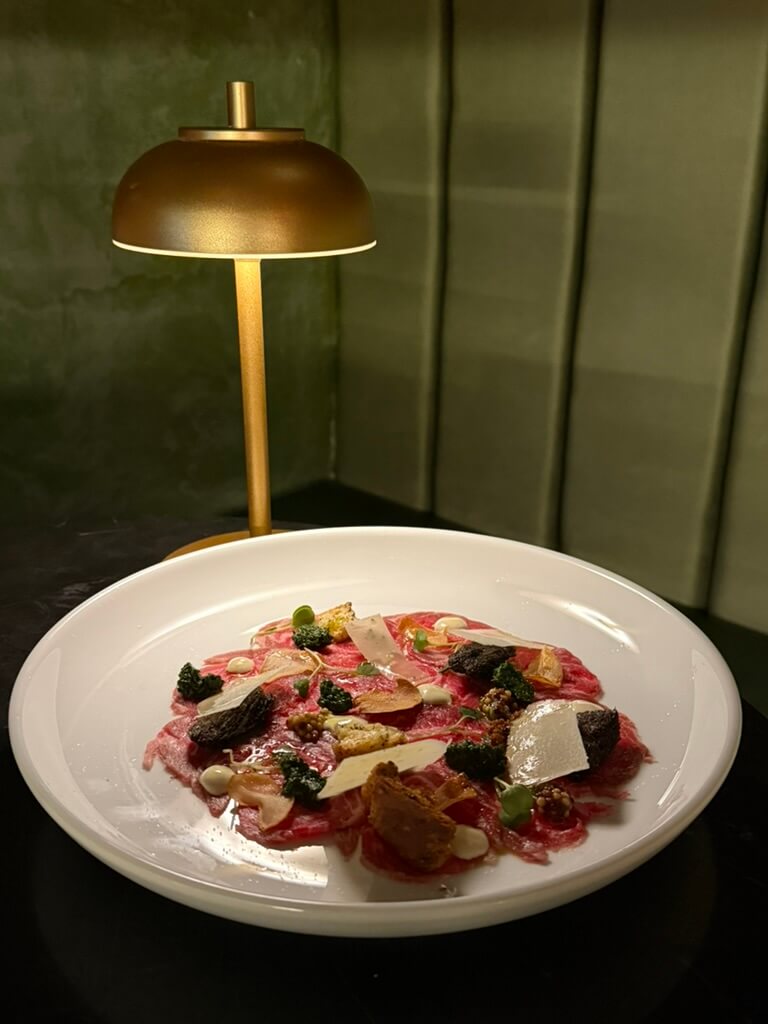
Deckle Carpaccio
Served with bonito mayonnaise, sourdough crumbs, mustard seeds, pecorino, garlic chips, and arugula.
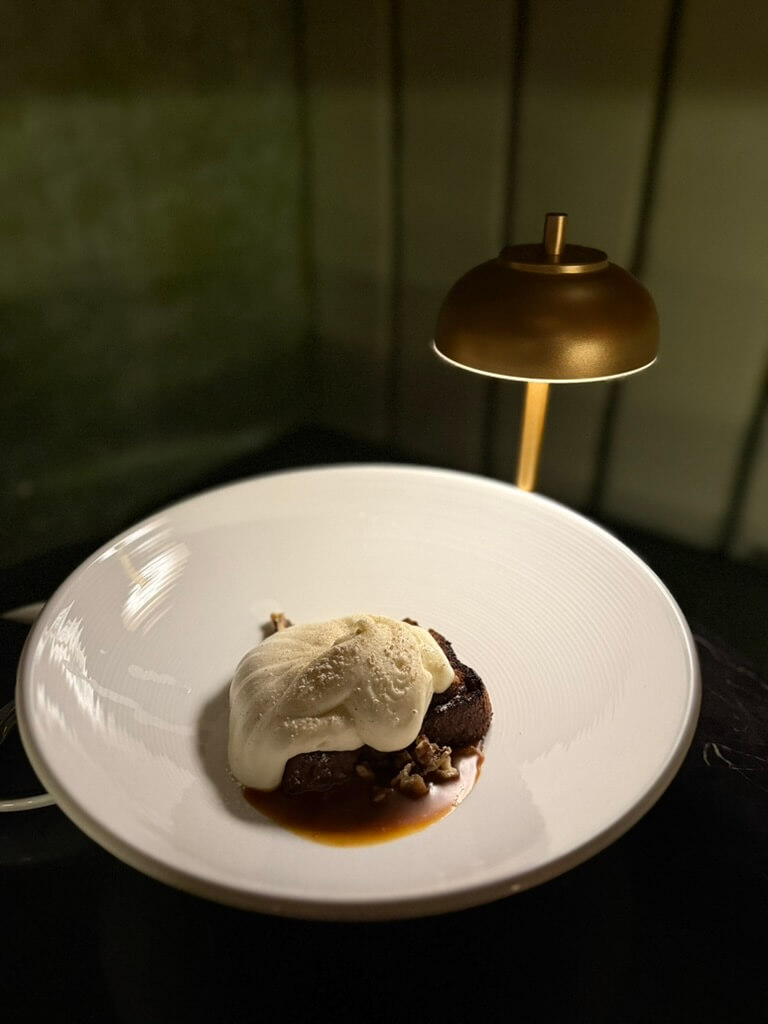
Carrot Cake
Served with a cream cheese foam and vanilla ice cream, over candied nuts.
The chef’s favorite. The Steak & Frites “is my favorite,” though the choice was a tough one, Castillo confessed.
Desserts. They’re made by pastry chef Paulette Vázquez, of the restaurant Lala, in a collaboration with Cui Cui. There are two desserts: “a carrot cake with a cream cheese foam, vanilla ice cream, and candied nuts — it’s really good,” Castillo said.
- The other is a tiramisú made with a house-baked galleta María (a classic shortbread cookie). “It comes with a mascarpone cheese foam. It’s also delicious,” Castillo said. It’s served in a glass.
Prices. Cocktails range from $14 to $20, while food runs from $16 to $54.
Service. Every staff member at Cui Cui wears a white guayabera and is ready to walk you through what goes into each cocktail and dish. Chef Castillo himself comes out of the kitchen to share details about the oysters’ origins or the inspiration behind the menu.
The Cocktails
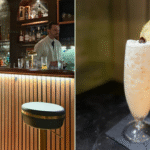
The quintessential boricua cocktail. While Cui Cui offers a wide range of both original and classic cocktails, it’s making a special play for Puerto Rico’s national drink: the piña colada. “We’re committed to making the best piña coladas,” Berdecía said.
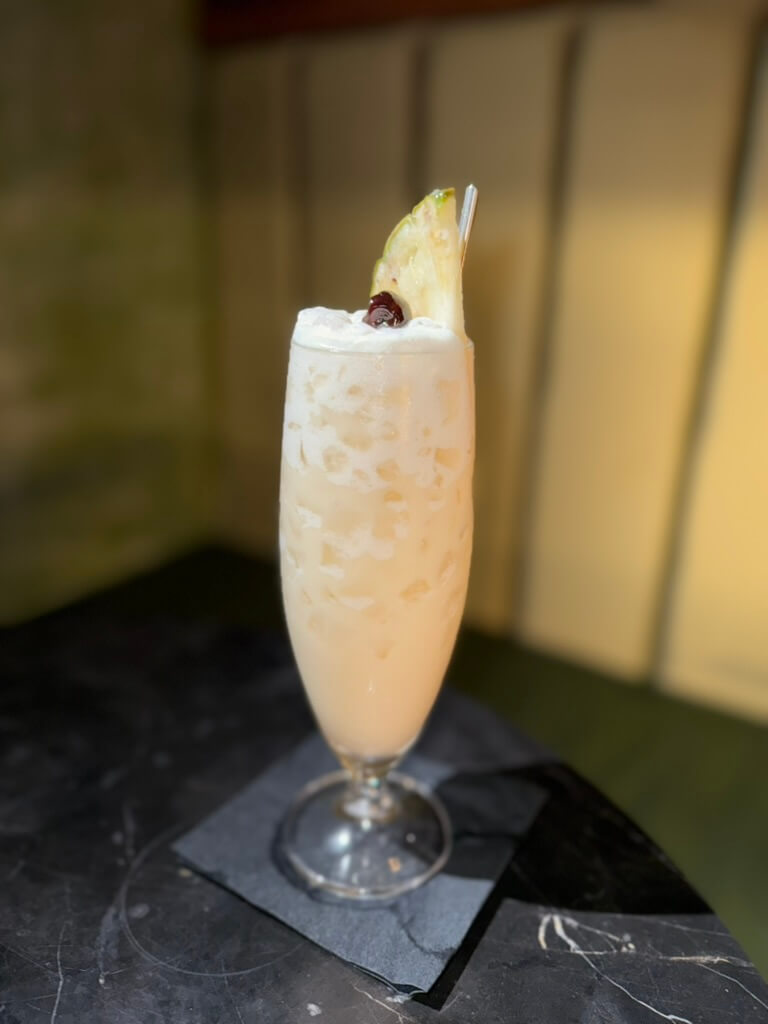
“We wanted to create a version inspired by the classic piña colada. We make it using one of those old-school blenders, like the ones from 1950s batida shops, with pebble ice, and we use a coconut ice cream as the base instead of cream,” Cofresí explained.
- It’s made with Bacardí 8 (rum aged eight years or more), Artesano blanco, pineapple, and coconut. The ice cream gives it that creamy touch without being overly sweet, and it’s absolutely a must-try — unlike other piña coladas, this one isn’t frozen.
The Mixologists’ Favorites
Cofresí and Berdecía share four cocktails from their personal top picks. We’ll tell you which one is Platea’s favorite and which is for the adventurous palate.
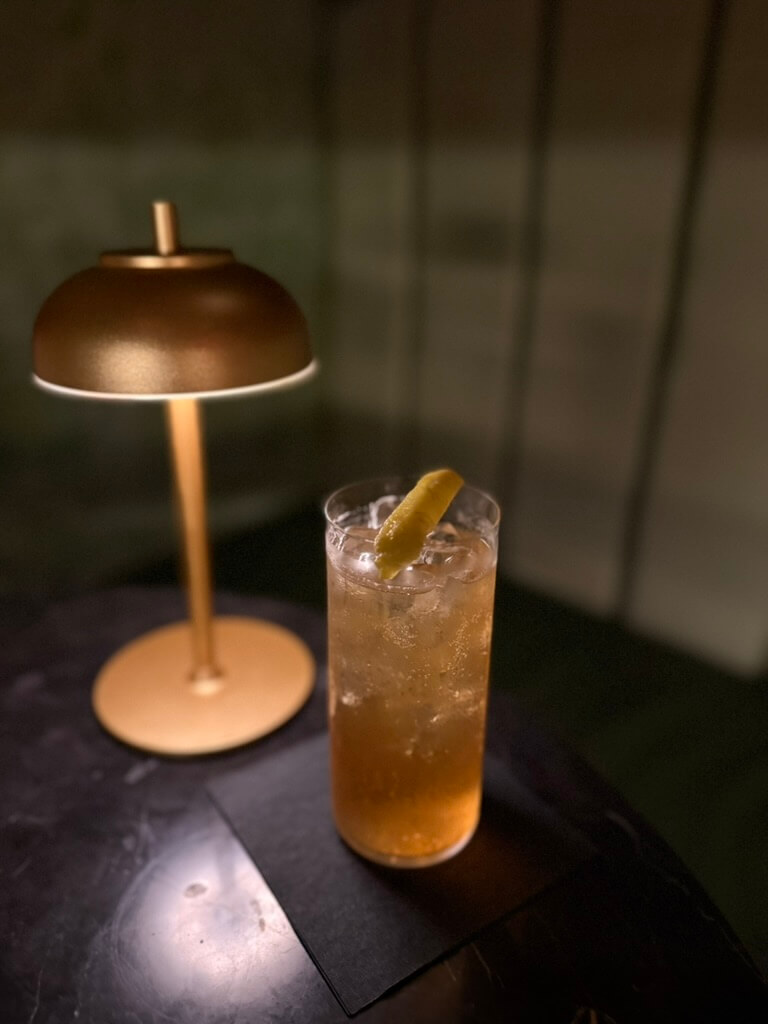
PR Highball
“It’s our version of a whiskey highball, but Puerto Rican. Obviously, with Puerto Rican rum (Barrilito 3-star). We make a soda from arroz pega’o (crispy rice from the bottom of the pot) and matcha tea,” Cofresí explained. It’s a refreshing, light drink. The arroz pega’o flavor adds an unexpected twist.
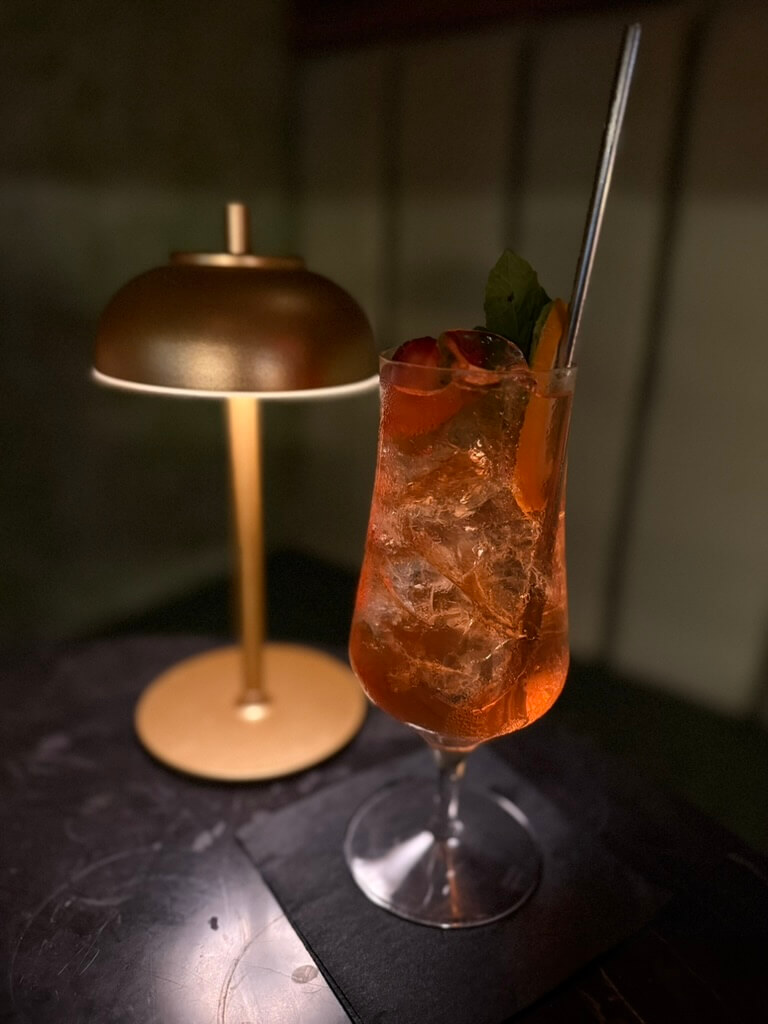
Periquito Pimm Pim
“Our version of a Pimm’s Cup, a classic refreshing London summer cocktail. Pimm’s is a liqueur. We make our own Pimm’s — a fortified wine with red fruits — and the cocktail is inspired by the spritz,” Cofresí said. It’s effervescent, made with gin and coconut.
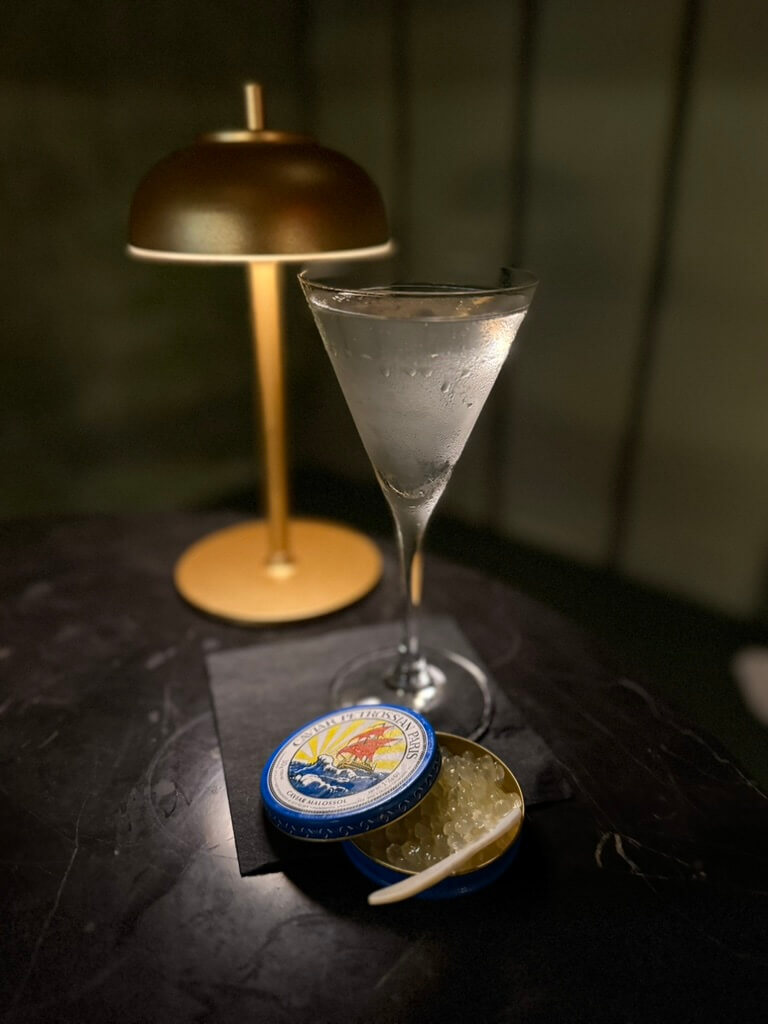
Apple Tini
“It’s not the Apple Martini you know (from the early American Bar days). We tried to reinterpret it into something crisp and refined,” Berdecía explained. Blending vodka, apple, and citrus, it’s served with apple caviar that you can taste before sipping or drop into the drink — a playful touch.
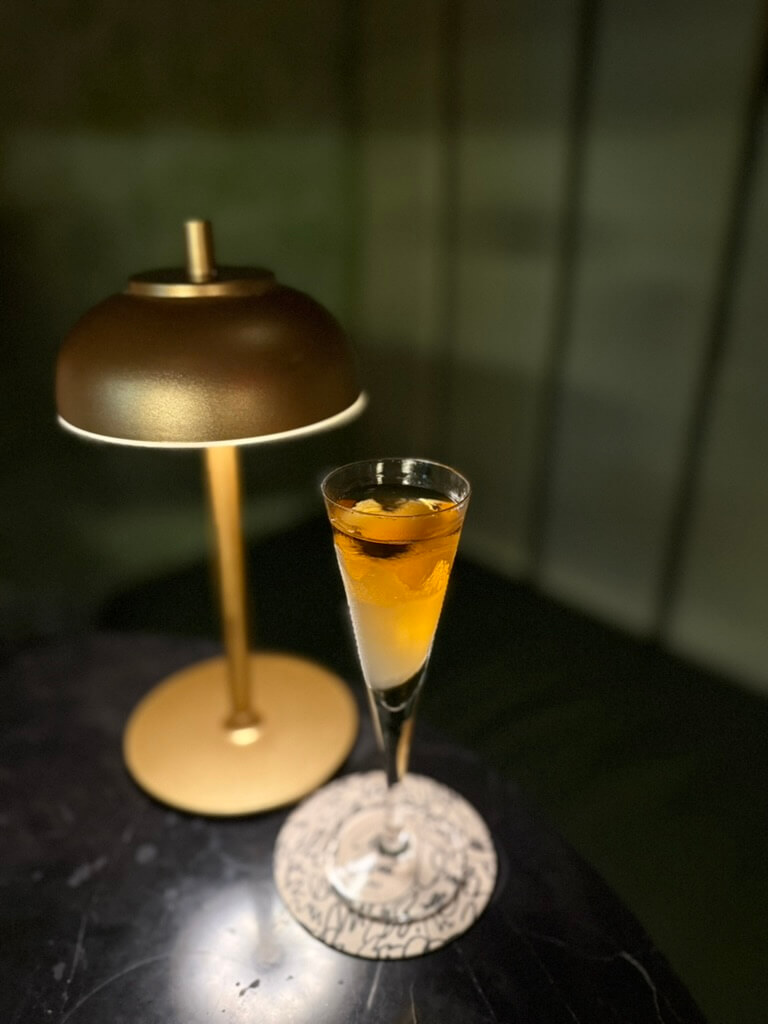
Martini 1888
A reinterpretation of one of the oldest martini recipes. It blends gin, vermouth, and Boker’s bitters — a balance of sweet and bitter.
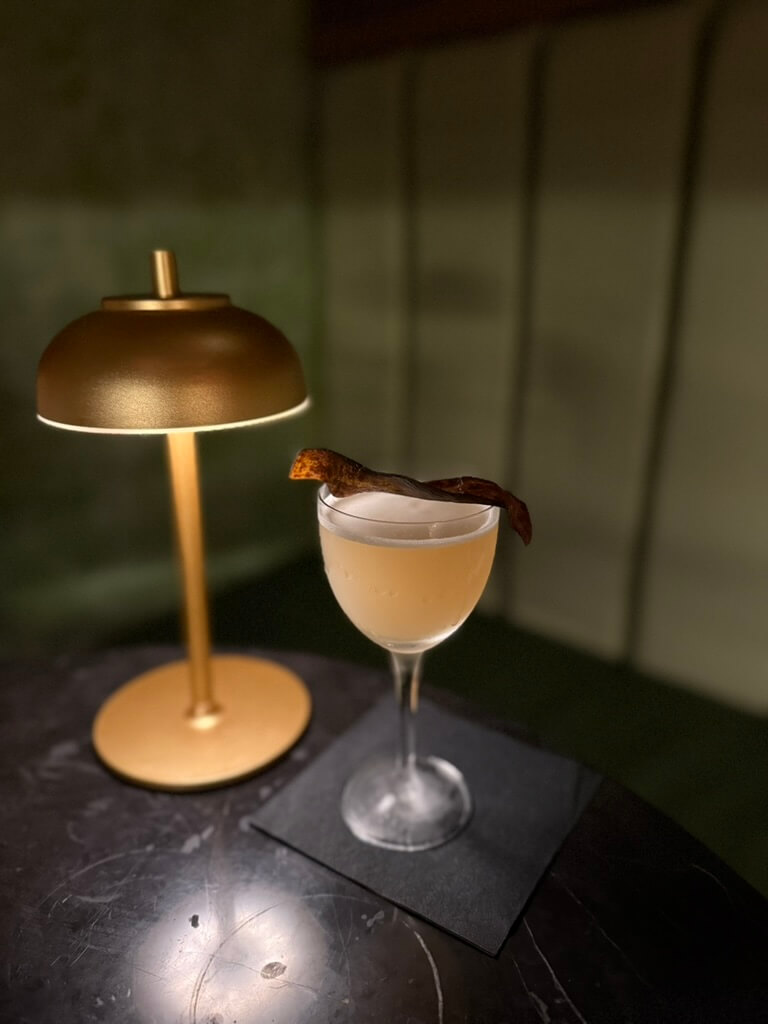
Banana Daiquiri
Along with the piña colada, the Banana Daiquiri was a Platea top pick. Made with rum, banana, and citrus, this daiquiri is fruity and refreshing without being overly sweet.
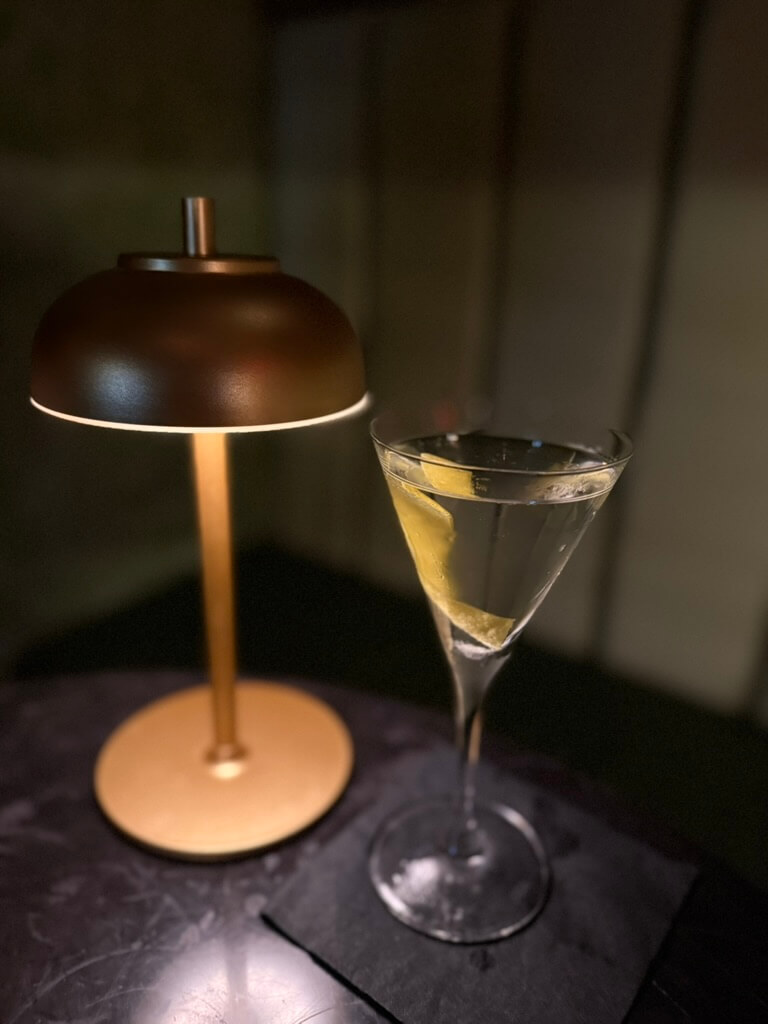
Vesper
Among its martini offerings, Cui Cui serves the drink of choice of James Bond himself: the Vesper. This is the martini the iconic character first described in the novel Casino Royale (1953), blending gin, vodka, and an aperitif wine.
How Is Cui Cui Different from La Factoría?
“La Factoría is a bar; Cui Cui is a restaurant,” Berdecía summed up. “That’s the more refined concept — Cui Cui versus Factoría. Cui Cui is more laid-back than Factoría. You go to Cui Cui for a date, to sit back and take it easy. You go to Factoría to have a good time, to janguear (hang out),” he added.
Cofresí elaborated: “They’re two totally different ends of the experience spectrum. La Factoría is a high-energy party — different vibes, different rooms, lots of energy. Cui Cui is designed to be the opposite: a place to unwind, to sip slowly, to talk, and to have a more elegant, more relaxed, more classic experience.”


