

DtMF and Bad Bunny’s Residency: “A Love Letter to Puerto Rico”
Historian Jorell Meléndez-Badillo analyzes the impact of the “No Me Quiero Ir De Aquí” Residency and how Bad Bunny’s latest album could be considered a new unofficial anthem of Puerto Rico

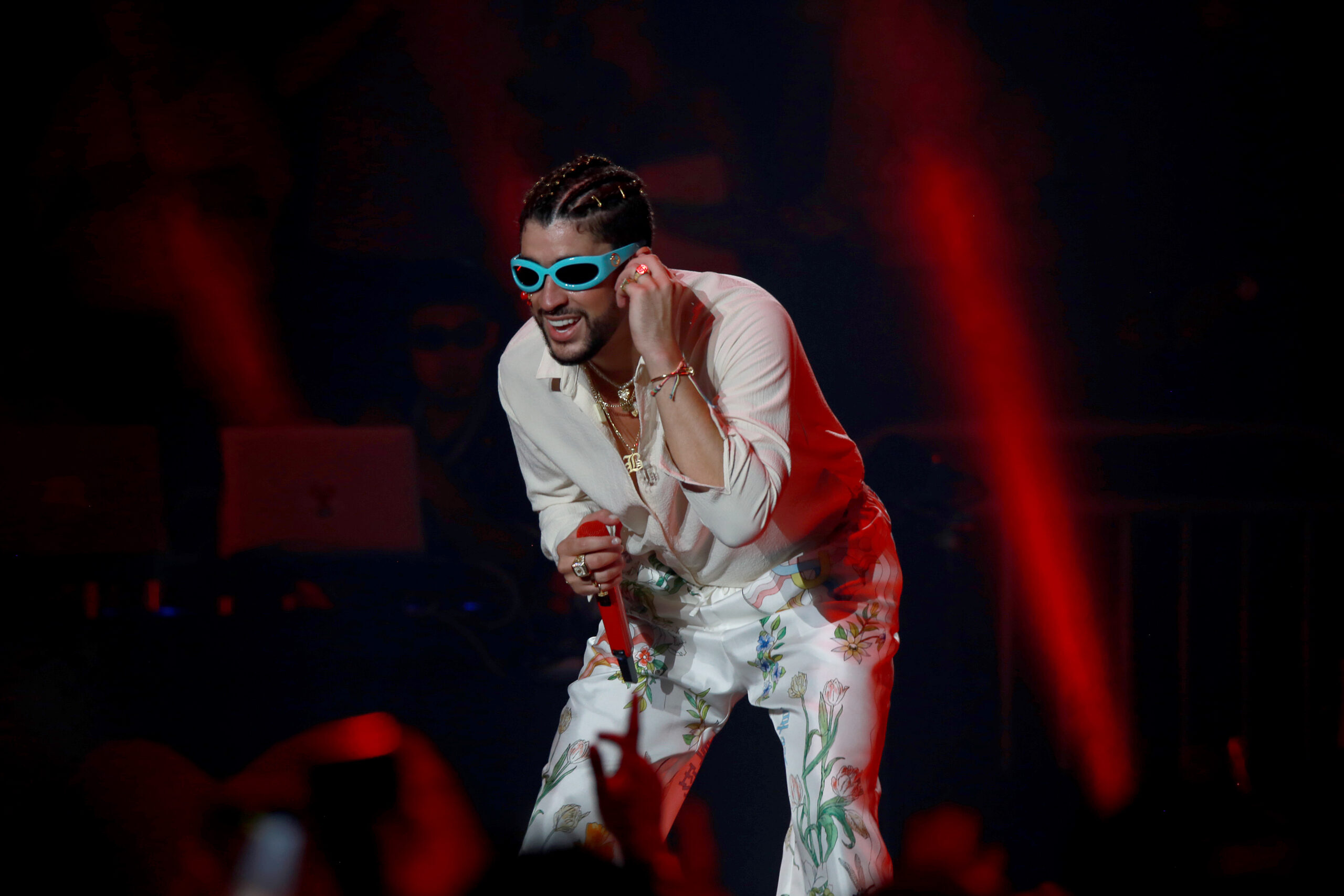
When Bad Bunny released “DtMF” (Debí Tirar Más Fotos / I Should Have Taken More Photos), he didn’t just create an album. He composed a musical ode to Puerto Rico, a record that could shape up to be a new unofficial anthem of Borinquen.
According to historian Jorell Meléndez-Badillo, the album transcends Spotify and Billboard records to become something deeper: a declaration of boricua identity that, in turn, proves once again that the artistic creativity of Puerto Ricans knows no limits.
Furthermore, with the 30 concerts of his historic “No Me Quiero Ir De Aquí” (I Don’t Want to Leave Here) Residency at the Coliseo de Puerto Rico José Miguel Agrelot, Benito Martínez Ocasio continues to accumulate artistic milestones with what he called “the best project of my career, the most special, the most beautiful”.
“I believe the entire album is like an anthem, an ode to Puerto Rican identity.” Jorell Meléndez-Badillo, historianIn an interview with Platea, after taking a historical journey through Puerto Rico’s unofficial anthems over a century, Meléndez-Badillo stated that the Residency is “a gift to Puerto Rico,” a “love letter” from Bad Bunny to his country.
“Many people would say: but how can you put Benito Antonio Martínez Ocasio in the same category as our Lola (Rodríguez de Tió), Manuel Fernández Juncos, Virgilio Dávila, Bobby Capó, or (Juan Antonio) Corretjer? They are artists responding to a historical moment in the way they know how. And I believe the reception that the album has had proves it. There was a thirst for that kind of cultural affirmation,” added the author of the book Puerto Rico: Historia de una nación (2024).
For Meléndez-Badillo, this album manages to revive the elements found in other unofficial anthems of Puerto Rico, such as Preciosa or En mi Viejo San Juan.
“Another beautiful sunset I see in San Juan
Enjoying all those things that those who leave miss
Enjoying nights like the ones that don’t happen anymore.”
—DtMF

Debí Tirar Más Fotos Records
streams on Spotify in just 13 days
on Top Latin Albums for the ninth consecutive time
songs on Hot Latin Songs, a historic record
countries where it reached #1 on Apple Music
songs from the album entered Hot Latin Songs
Bad Bunny songs on Billboard Hot 100
Amplifying Puerto Rico’s History
For Meléndez-Badillo, who provided the historical context for the YouTube visualizations of each DtMF song, this album achieved something few cultural products accomplish: sparking a desire to learn Puerto Rico’s history while critiquing displacement, colonization, migration, and what it means to be Puerto Rican.
“Benito didn’t have to do this. He could have kept talking about Maseratis, about Monaco, about the champagne-drinking lifestyle, but he decided to amplify the history and culture of Puerto Rico, and use the biggest platform in the world to include historical narratives, to include a critique of displacement through the short film with Jacobo Morales,” analyzed the historian, who felt fortunate to collaborate on the project.
These experiences, beyond being Puerto Rican, struck a chord worldwide. That’s why songs like DtMF or LO QUE LE PASÓ A HAWAii became symbols of other struggles in places like Palestine, Latin America, and even Hawaii.
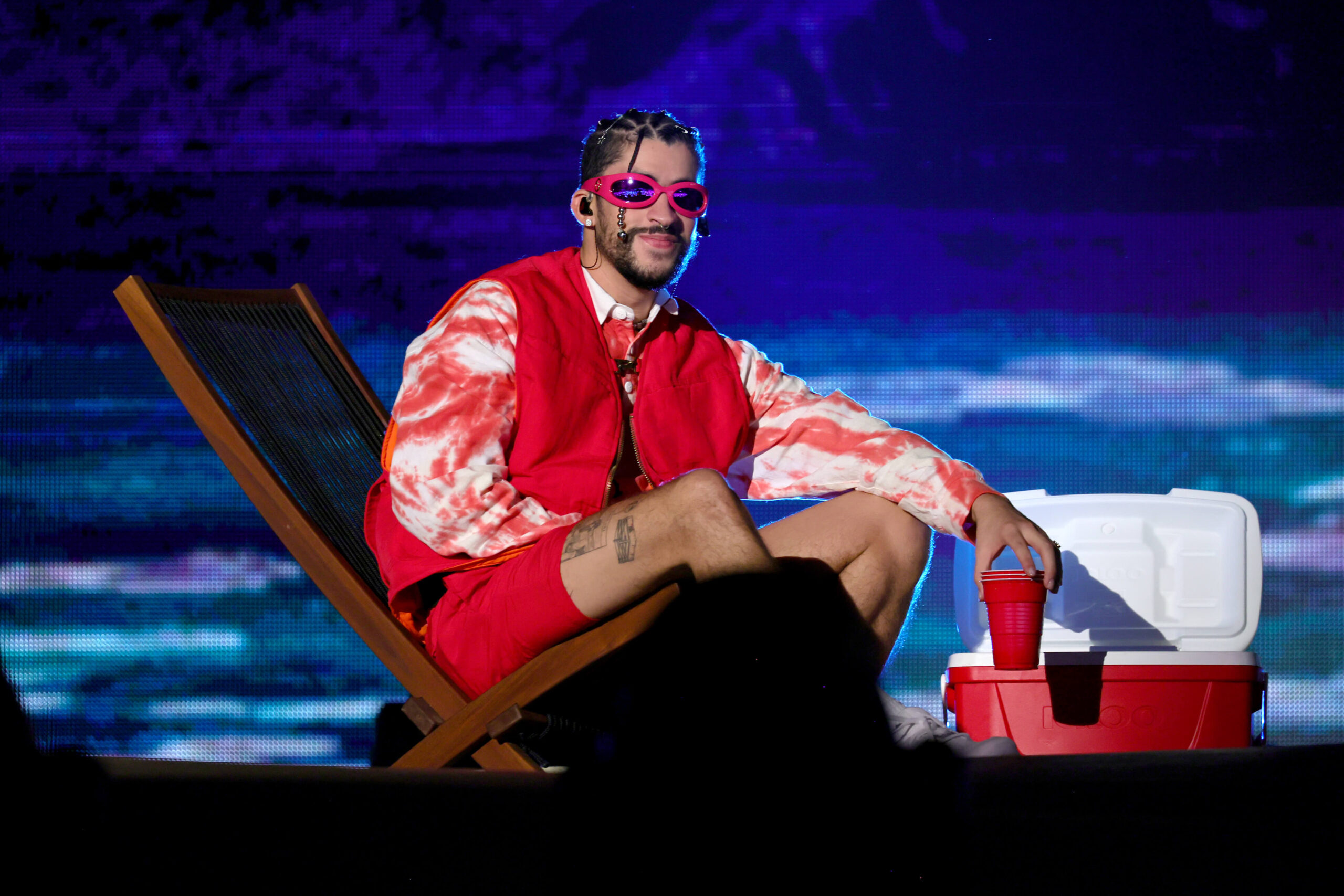
“Nobody here wanted to leave, those who left dream of coming back
If someday it’s my turn, how much it’s gonna hurt.”
—LO QUE LE PASÓ A HAWAii
“The sensitivity of a song like DTmF allows people in different parts of the Global South to identify with it because many countries are experiencing displacement, not just Puerto Rico,” he added.

Why Consider DtMF a Puerto Rican Anthem?
For Meléndez-Badillo, this album manages to revive the elements found in other unofficial anthems of Puerto Rico, such as Preciosa or En mi Viejo San Juan.
“It managed to include elements that have been crucial in the creation
of past anthems, which is nostalgia, that patriotic feeling of being proud to be from this terruño we call Puerto Rico. So yes, for me the entire album is an anthem.” Jorell Meléndez-BadilloJust like the authors of other unofficial anthems, the album manages to reflect “an awareness of his own historical subjectivity, and Benito sees himself as a political subject, as a diasporic subject.”
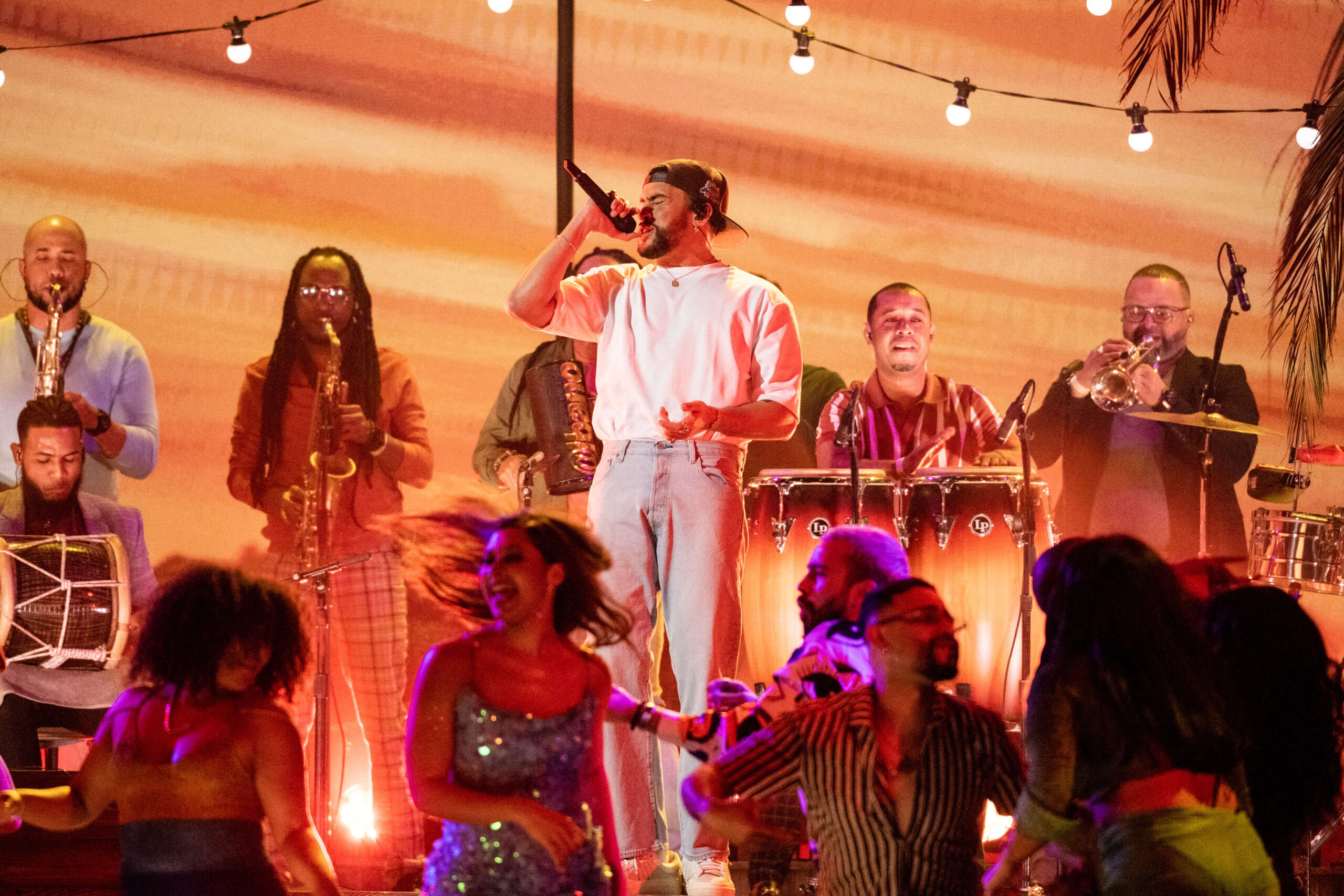
DtMF: The Eternal Christmas or How the Diaspora Shaped Benito
Just as Bobby Capó wrote Soñando con Puerto Rico from New York and Rafael Hernández wrote Preciosa from Mexico, living outside the island shaped the new perspective Bad Bunny reflects in his latest album.
“That diasporic experience marked Benito and led him to seek how to define Puerto Rican identity,” said Meléndez-Badillo, who considers that, in his case, migration also left its mark. “I also think about my Puerto Rican identity in that key,” and it’s probably the eternal dialogue between boricuas on the island and the over 5 million living in the diaspora.
The historian added that, if the album Un Verano Sin Ti (2022) was seen as the eternal summer in the Caribbean, DeBÍ TiRAR MáS FOToS can be read “as the eternal Christmas in Puerto Rico, but at the same time, the theme is one about displacement, about cultural and national affirmation.”
“In my life you were a tourist
You only saw the best of me
And not what I was suffering.”
—TURiSTA
The Residency as a “Love Letter” to the Homeland
Beyond breaking records and generating an estimated $200 million economic impact, the Residency represents Bad Bunny’s stance toward the music industry and Puerto Rico’s historical context as an unincorporated territory of the United States—a colony in the 21st century.
“It’s a love letter to Puerto Rico and there’s an institutionality and a very concrete political statement in not including the United States in the entire tour… There’s a decentralization of where things are usually produced from,” explained Meléndez-Badillo.
“Here they killed people for taking out the flag
That’s why now I carry it wherever I go.”
—LA MuDANZA
“This album and the Residency have increased and deepened that thirst
for Puerto Rico’s history, and I can only applaud the gesture and
the impact that the Residency will have.” Jorell Meléndez-BadilloBad Bunny’s 5 Most Political Moments
Hurricane María on The Tonight Show
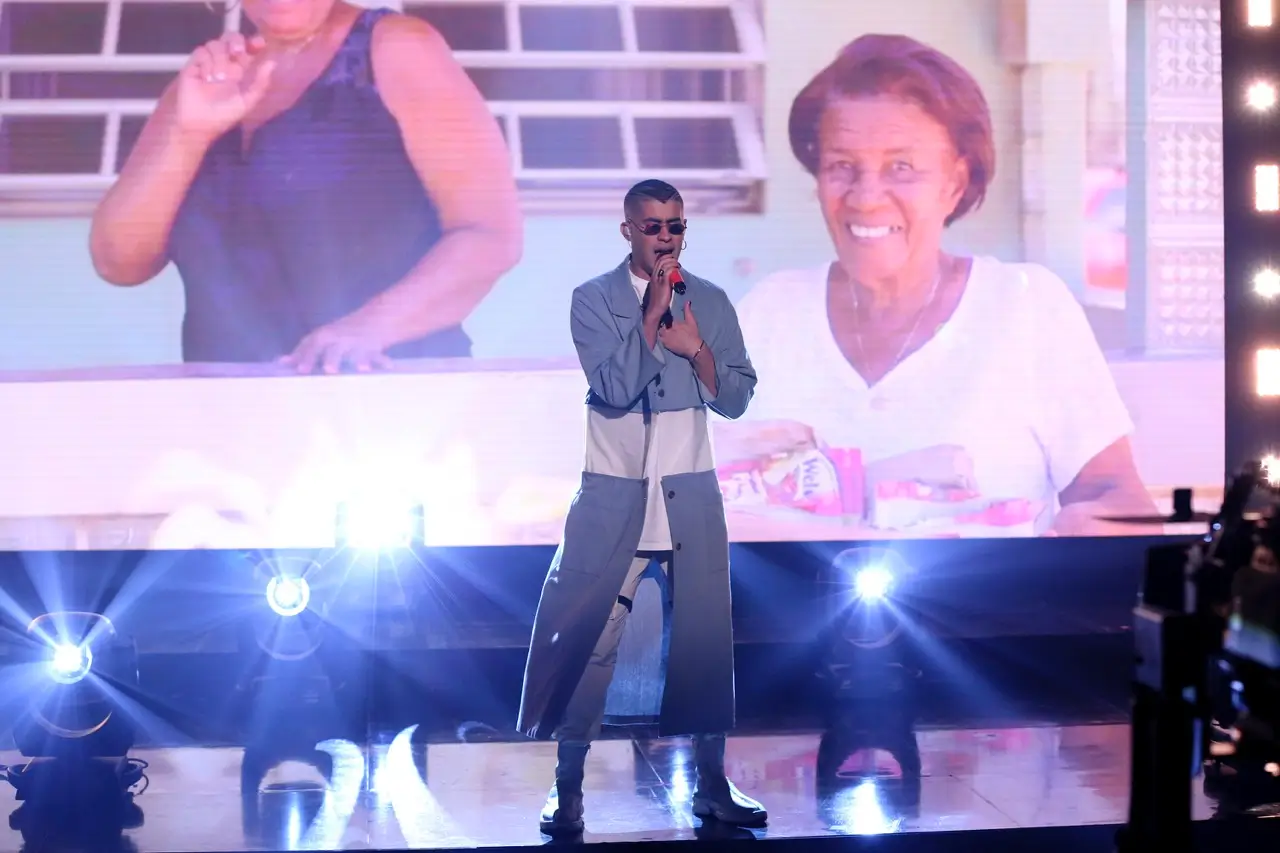
“Benito’s first post-María anthem was ‘Estamos Bien,’ and not just the song, but the performance he had on Jimmy Fallon’s show, his first performance on American national television,” said the historian.
On that show, Bad Bunny presented photos of Hurricane María and said in broken English before singing the song: “After a year of the hurricane, there are still people without electricity in their homes. More than 3,000 people died and Trump is still in denial.”
For Meléndez-Badillo, that political stance gave depth to the first single from Bad Bunny’s first studio album, X100pre (2018). “I believe it’s an anthem because, just as Hijos del Cañaveral appealed to a deep sensitivity, in that moment of multiple crises Estamos Bien was like the affirmation that we’re going to get through this,” he expressed.
Sharpening Knives
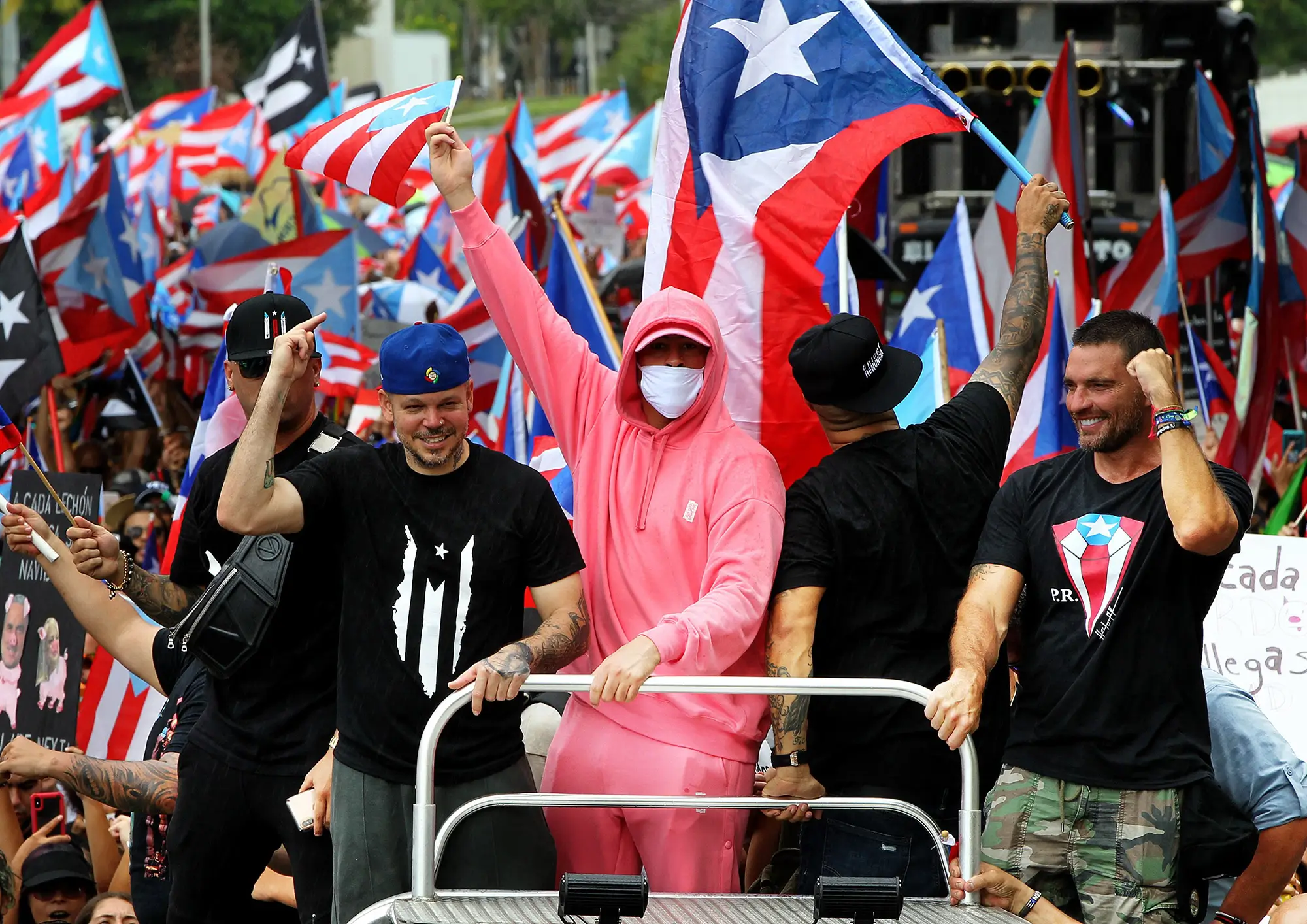
In the midst of protests demanding the resignation of then-Governor Ricardo Rosselló, Bad Bunny not only led demonstrations in the streets, but also released alongside Residente (René Pérez) and iLe (Ileana Cabra) a protest song that was recorded in one day.
The song was recorded in one day and released on July 17, 2019. Eight days later (July 24), Rosselló announced his resignation.

Naming Alexa
In February 2020, the murder of Neulisa Luciano Ruiz shook Puerto Rico. She was 28 years old, also known as Alexa or Alicia, a poor, Black transgender woman who lived on the streets.
Shortly after the hate crime, for which two of the defendants were sentenced to 33 months in prison, Bad Bunny appeared again on Jimmy Fallon’s show to present his album YHLQMDLG (2020) and sang wearing a skirt and a t-shirt that highlighted the hate crime against Neulisa Luciano Ruiz.

Poem for George Floyd
“I swear it hurts me and it hurts to even think that today still because of skin color someone, can they kill them? In a world like this, I can’t breathe either,” reads part of Bad Bunny’s poem published in TIME in Spanish and English.
He referenced not only the phrase Floyd said before dying (“I can’t breathe”), but also the anti-racist social movement Black Lives Matter and experiences he said he had as a child in Puerto Rico, when they told him he had “bad” hair because it was curly.
El Apagón (The Blackout)
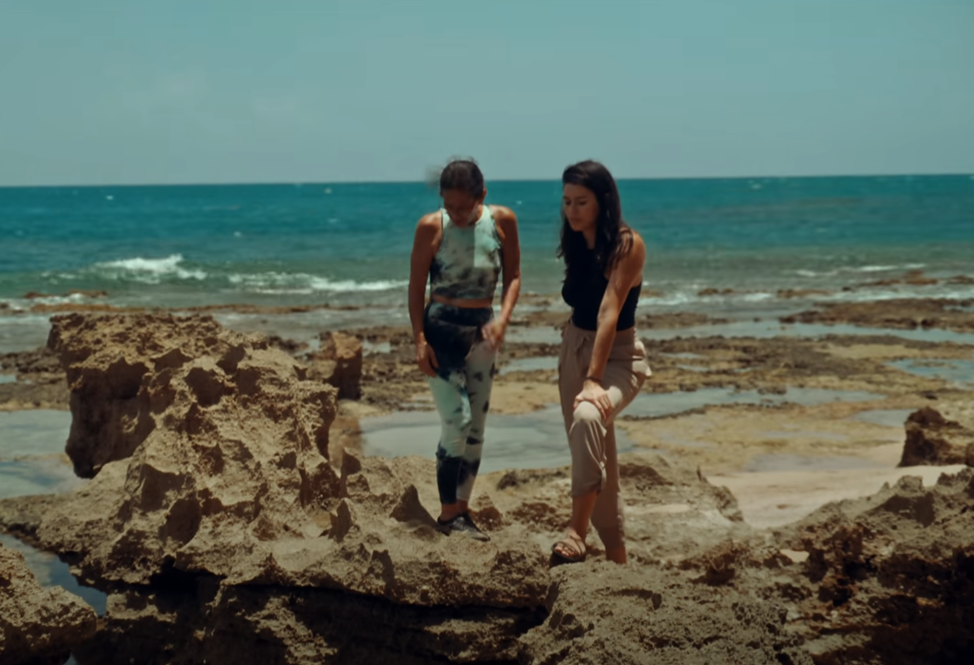
“El Apagón seems to me to have been extremely important in Benito’s musical trajectory, not just because of the song, but because of the historical documentary,” said Meléndez-Badillo about the eighth single from the album Un Verano Sin Ti (May 2022) and the documentary video released in September of that same year with journalist Bianca Graulau as narrator.
It addresses Puerto Rico’s energy collapse, privatization, and what that represents for island residents. The historian shared that he uses this documentary in his classes to talk about displacement and gentrification.
Additionally, the song has the iconic phrase “Puerto Rico está bien cab%$#” (Puerto Rico is f***ing amazing), which “can be read on multiple levels,” according to Meléndez-Badillo. It represents not only that Puerto Rico is beautiful, but also how difficult it is to live here.
Photo Credits
Photos in order of appearance: Gladys Vega; NBCU Photo Bank; Theo Wargo; Ricardo Arduengo; Timothy Norris/FilmMagic; NBCU Photo Bank; Pedro Portal/Miami Herald/TNS; NBCU Photo Bank (Getty Images).
Record Sources
- Bad Bunny’s DeBÍ TiRAR MáS FOToS Breaks Spotify Record & Sells Out Residency – Hit Channel
- ‘Debí Tirar Más Fotos’ de Bad Bunny debuta en el No. 1 de la lista Top Latin Albums – Billboard
- Bad Bunny’s ‘DTMF’ Debuts at No. 1 on TikTok Billboard Top 50 – Billboard
- Nuevo récord para Bad Bunny: ‘Debí tirar más fotos’ se convirtió en el álbum masculino más rápido en alcanzar miles de millones de streamings – Infobae
Compiled by Cindy Burgos Alvarado | PlateaPR | Component developed with help from Claude.