Puerto Rican Plena: More Than the People’s Newspaper | PlateaPR
Plena, Identity and Resistance: the sound that unites the Puerto Rican people
More than the “people’s newspaper,” plena is bembeteo. It’s collective memory that is played, danced, and taught as a way of life.
Text: Cindy Burgos Alvarado | Visuals: Juan Santa
November 22, 2025
Learn about Puerto Rican plena, the living musical tradition known as “the singing newspaper of Puerto Rico” that continues to shape the island’s cultural identity.
More than a century after originating in the sugarcane fields and barrios of southern Puerto Rico, plena is more alive than ever: it reached the top of Spotify and Apple Music global charts thanks to Bad Bunny, took over the island’s main music venue, was performed at the 2025 Billboard Latin Music Awards, and continues to attract growing interest from both new and established artists.
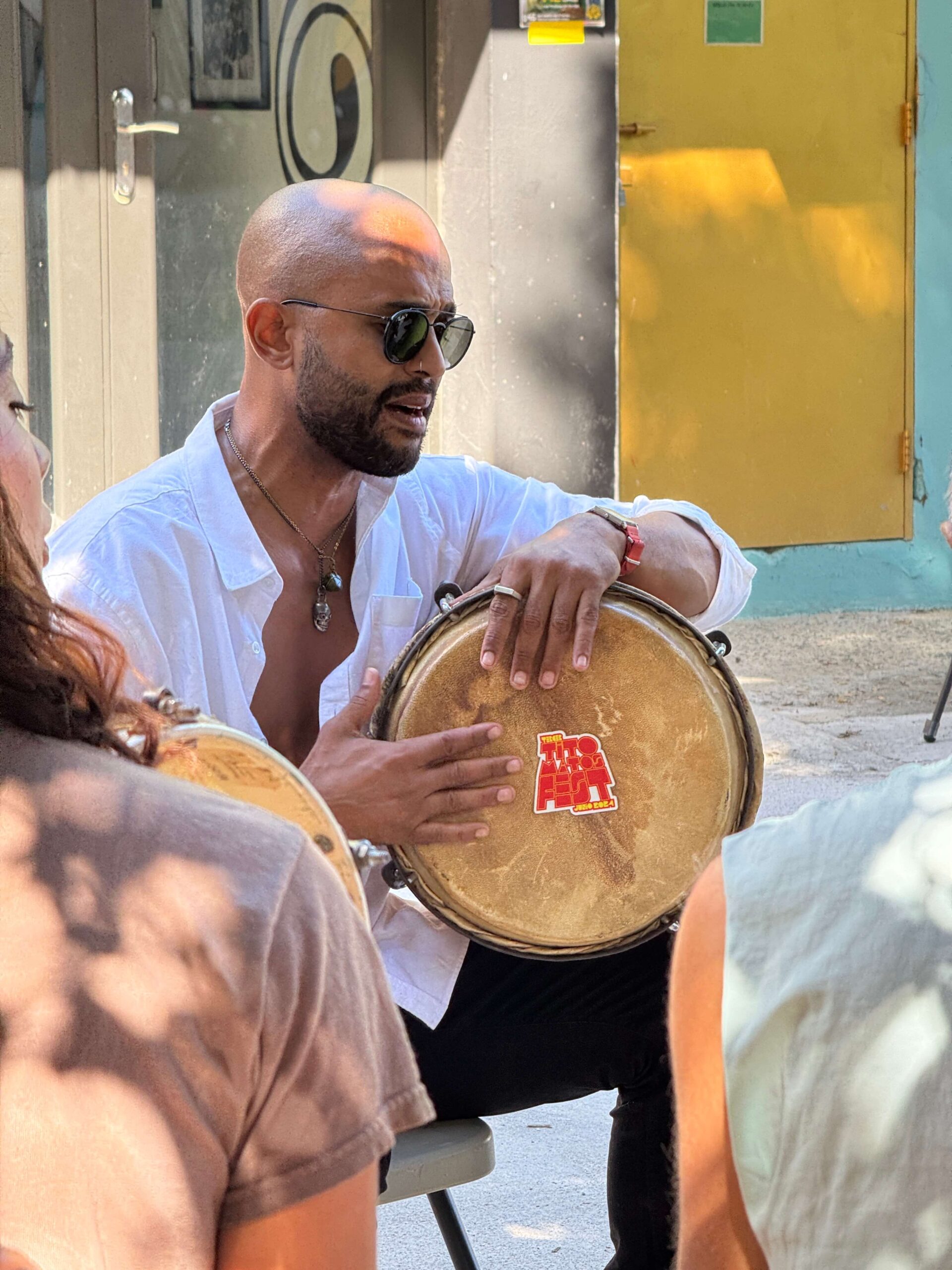
“Plena and Puerto Rican bomba are at their best moment in history. Currently, plena is played, performed, danced, interpreted, composed, and taught more than ever,” said musician and plenero Emanuel Santana, general coordinator of La Casa de la Plena Tito Matos, one of several schools dedicated to teaching the history, performance, and dance of this native rhythm.
It’s the music that plays among boricua crowds at celebrations, sporting events, protests, the Fiestas de la Calle San Sebastián, and the Christmas asaltos navideños, and it has far more performers and contributions from anonymous people than history can record.
“Plena is the rhythm of Puerto Ricans and that’s proven by one simple fact: there’s no event you’ll attend in your life where the panderos haven’t been or won’t be,” said musician LuisGa Núñez, director of the group Plena Libre.
Musician Emanuel Santana is the general coordinator of Casa de la Plena Tito Matos.
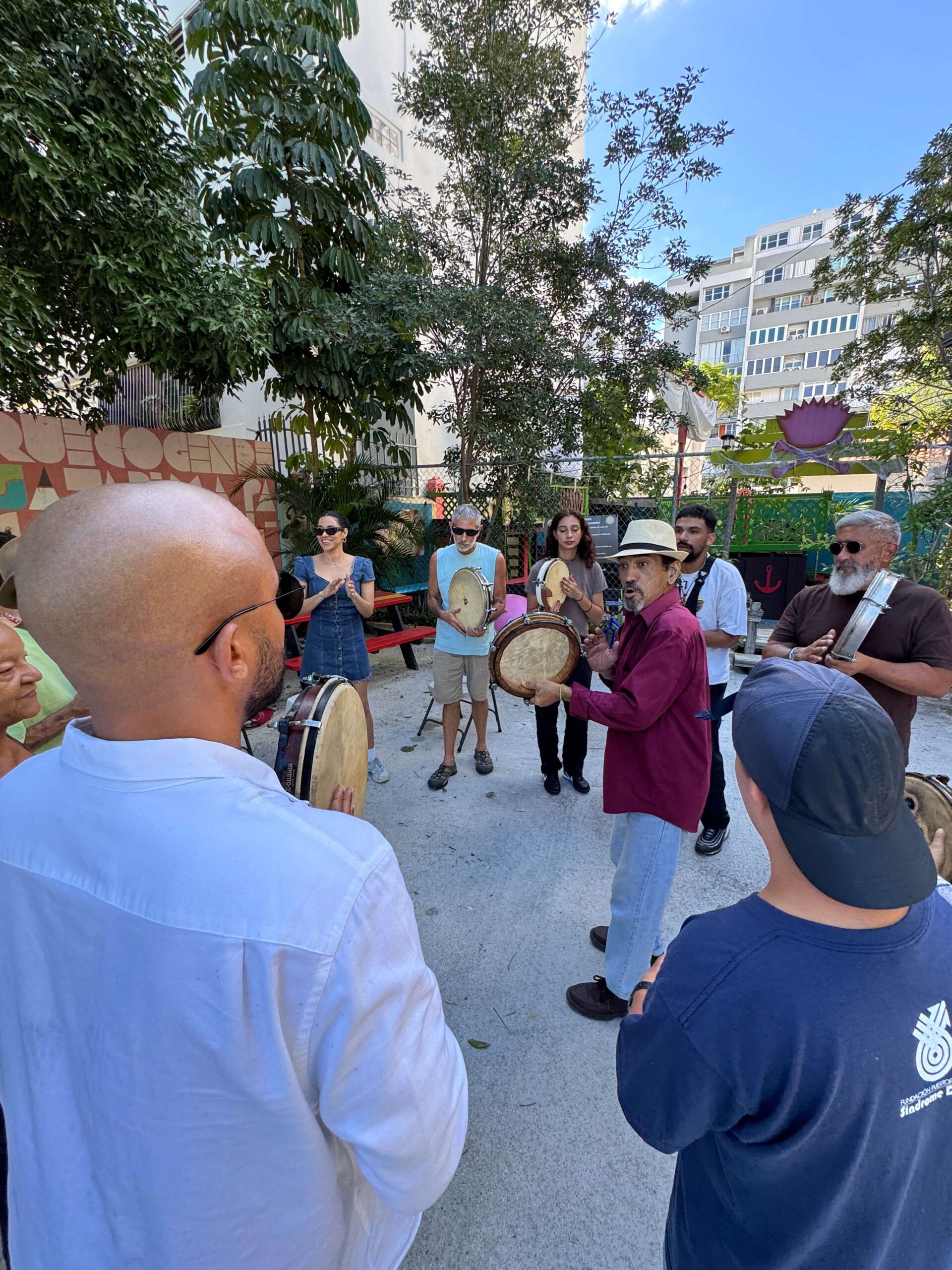
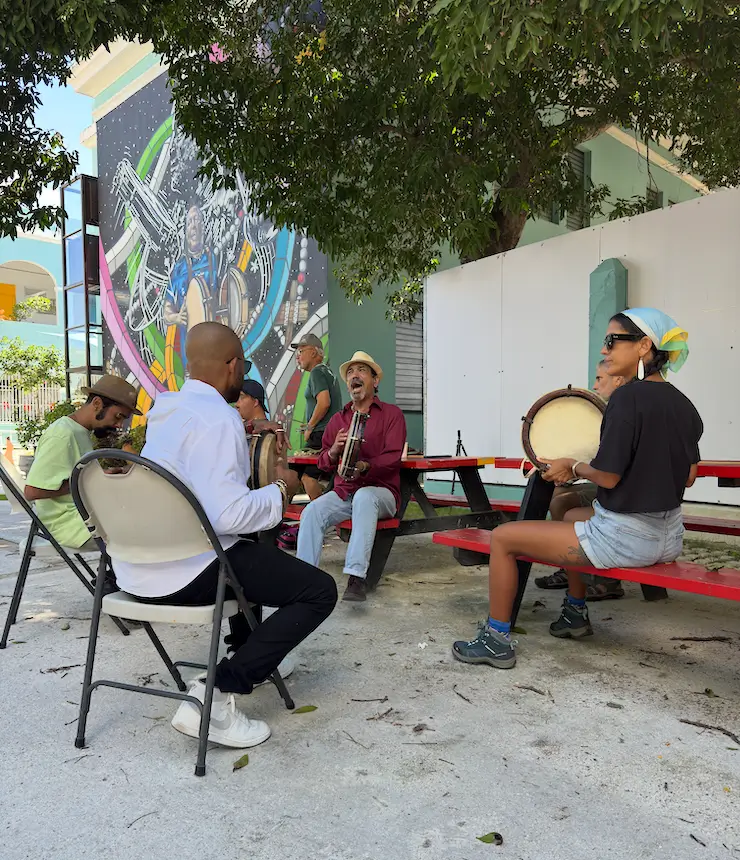
Every Saturday, from 12:00 to 3:00 PM, La Casa de la Plena Tito Matos holds a plenazo and honors the legacy of a plenero.
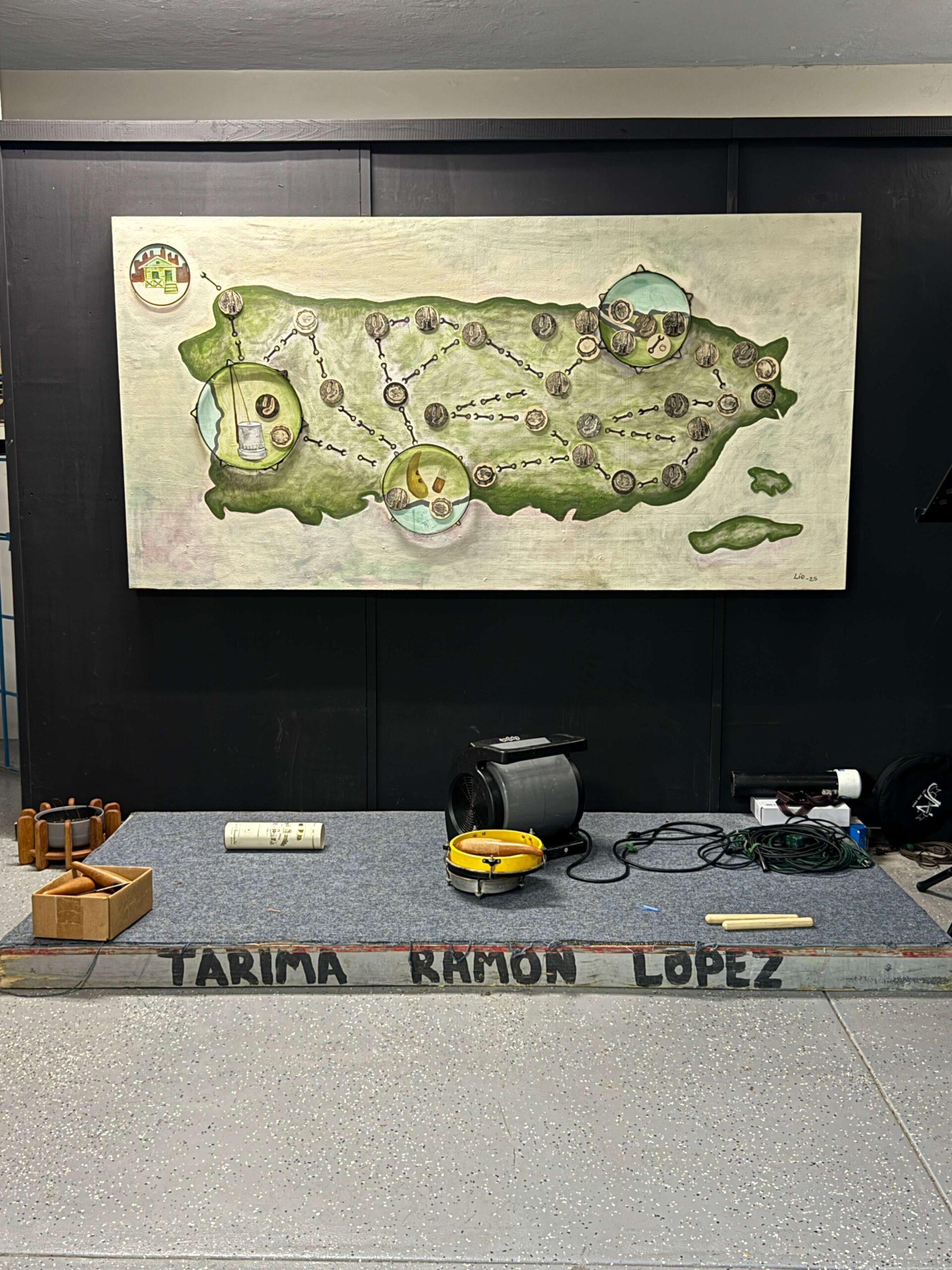
Map of Puerto Rico highlighting the areas of the three most prominent plena styles: Mayagüez (west), Ponce (south), and Santurce (northeast).
Tito Matos was in groups such as Los Sapos del Caño, Los Pleneros del Almendro, Los Pleneros del Pueblo, Los Pleneros de la 21, Los Pleneros de la 23 Abajo, and co-founded Viento de Agua.
La Casa de la Plena’s mission is to preserve, develop, and promote plena and the legacy of artist Héctor “Tito” Matos.
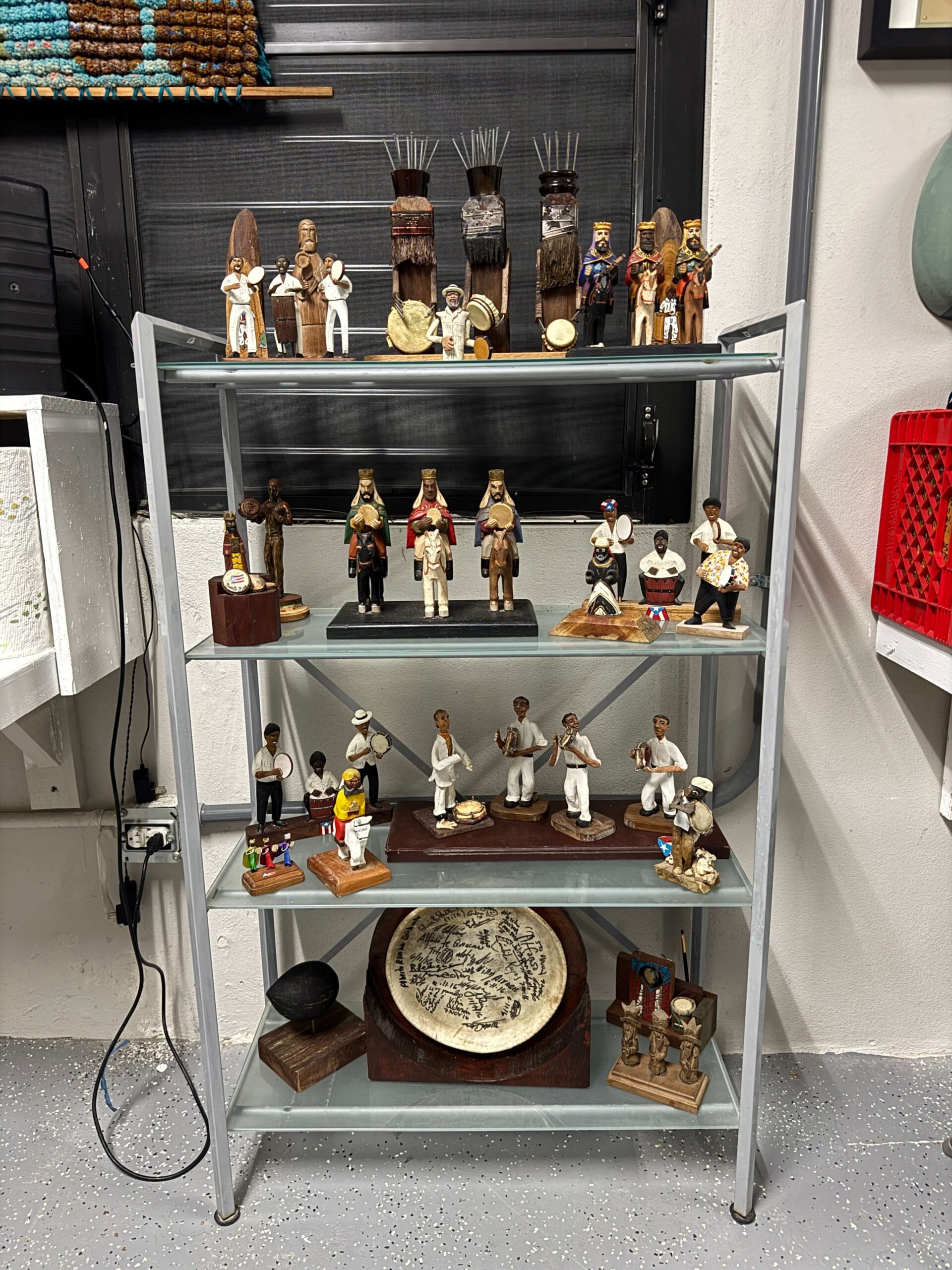
Hand-carved santos representing boricua pleneros.
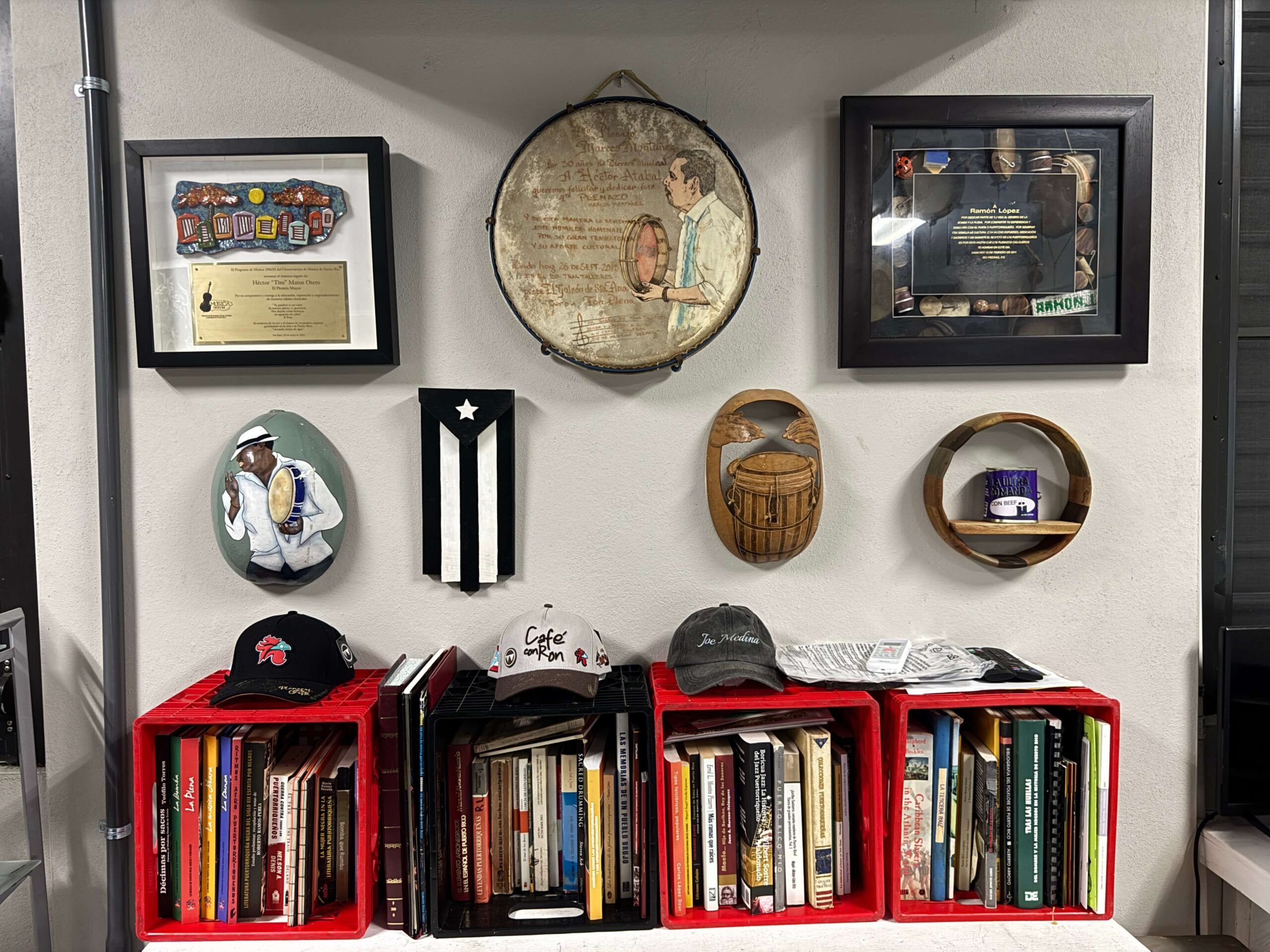
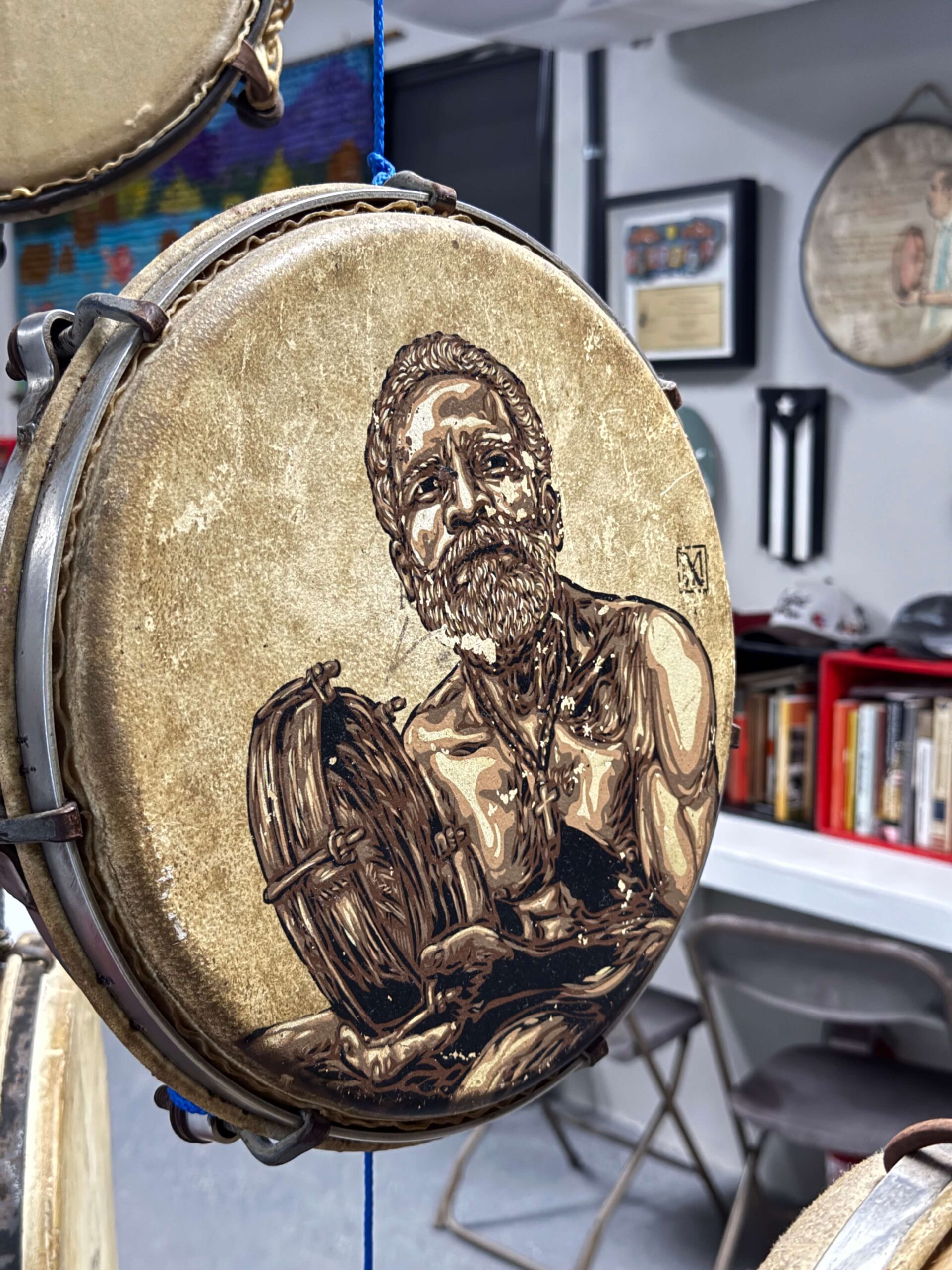
Pandero with the image of Ismael Rivera.
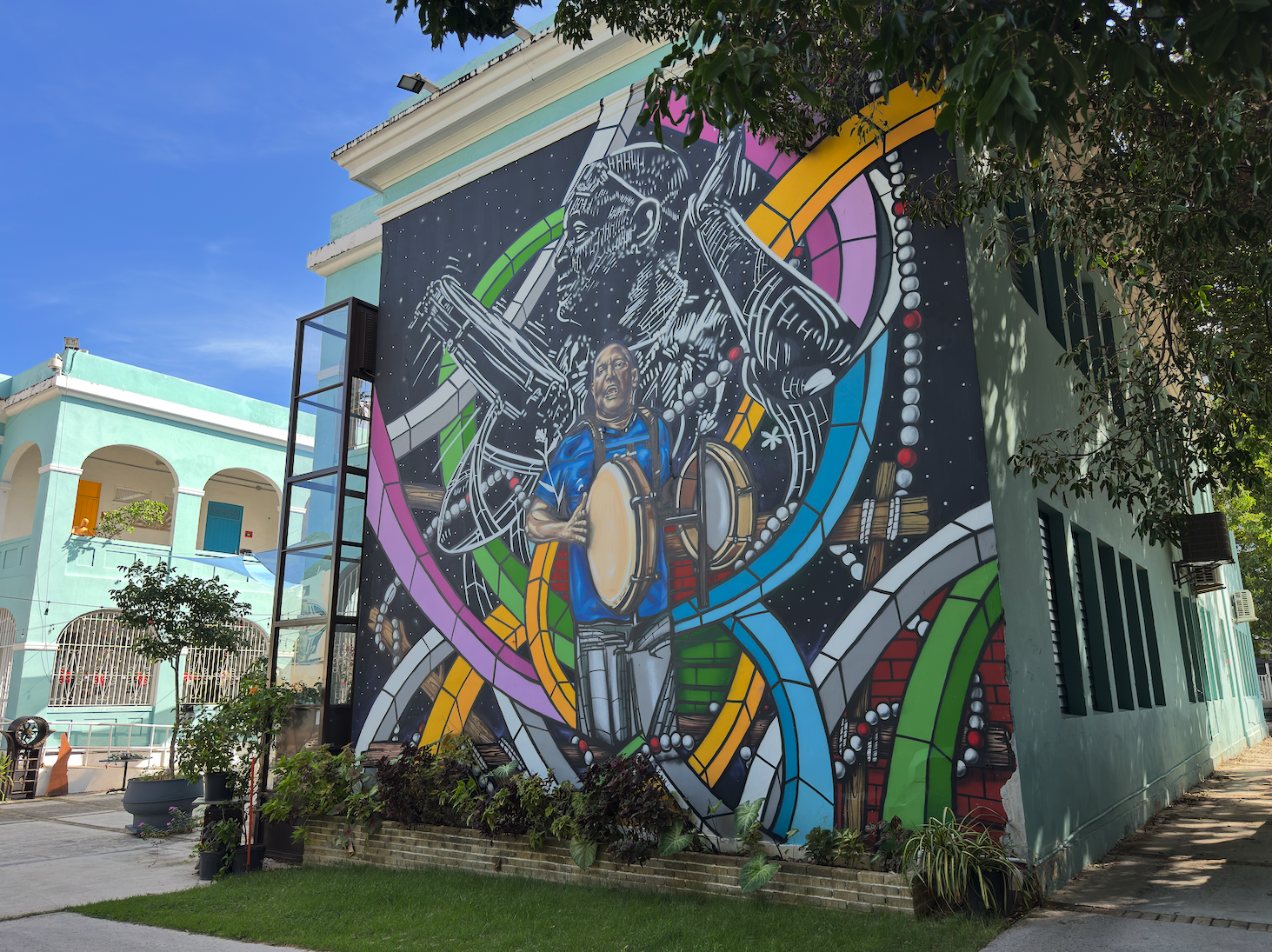
Mural honoring Tito Matos at Casa de la Plena, in Santurce.
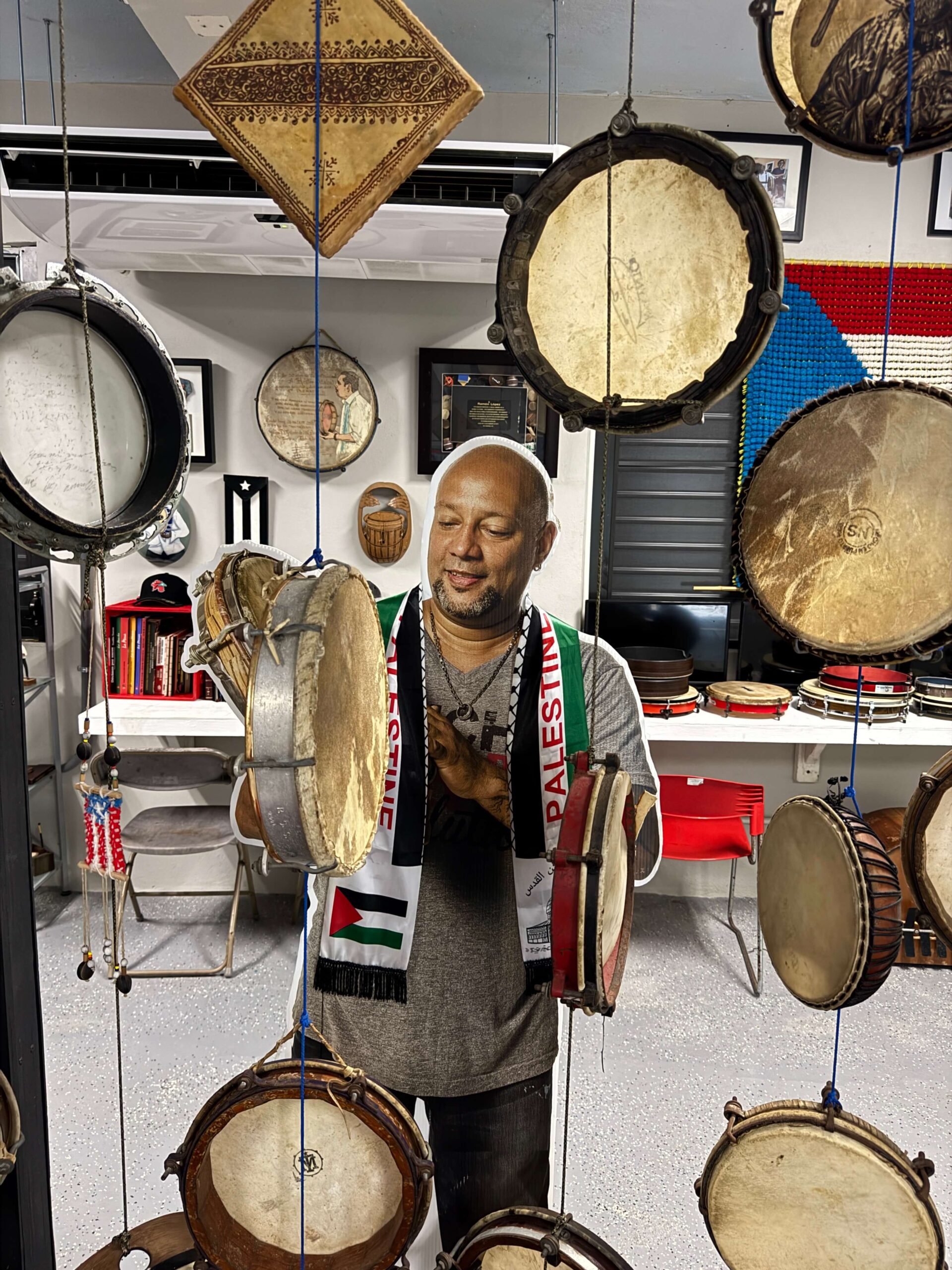
La Casa de la Plena houses the collection of anthropologist and plenero Ramón López.
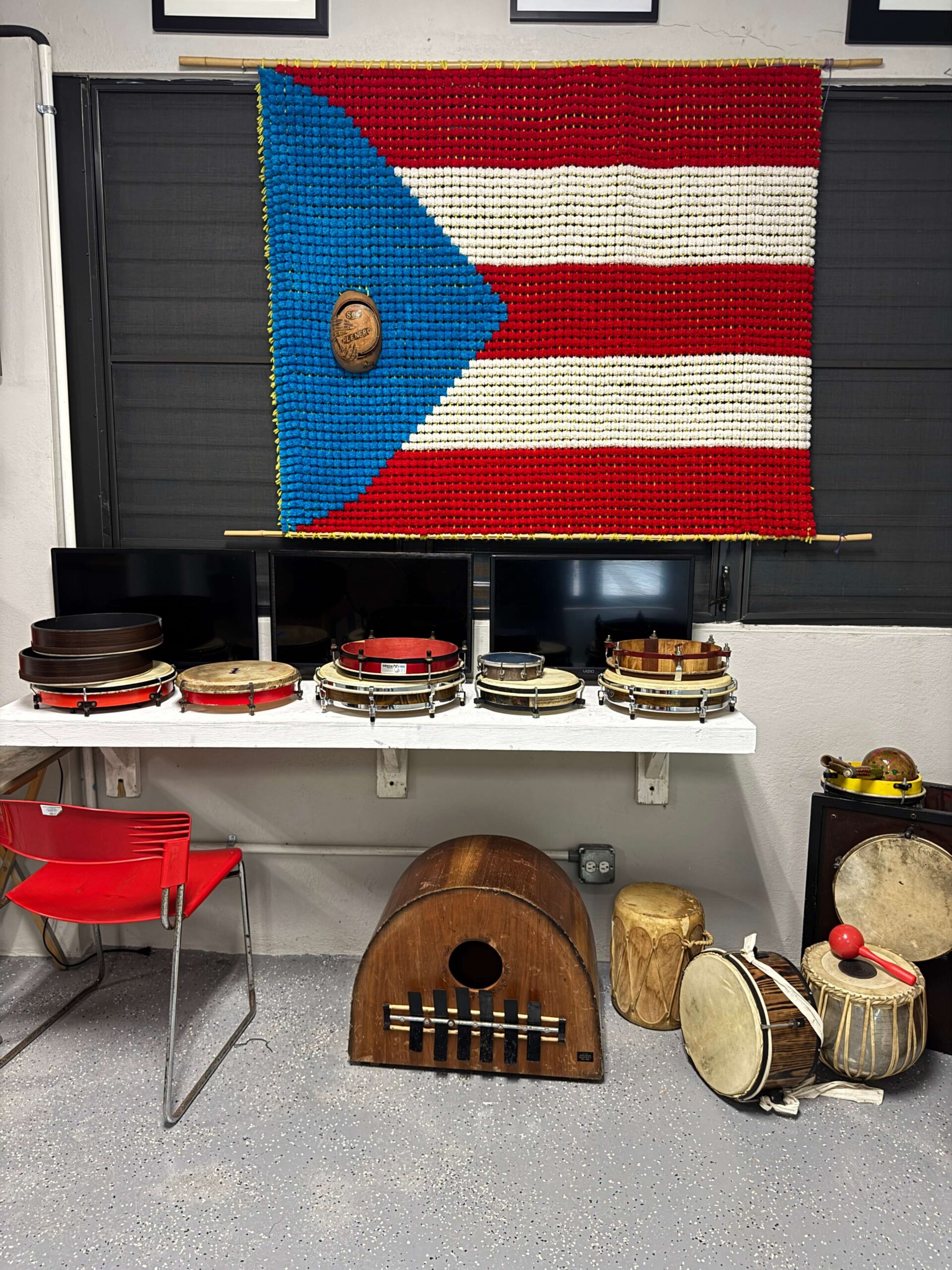
Panderos and various instruments at La Casa de la Plena, where they offer classes in plena (for children and adults), bomba, güícharo, and children’s plena.
Origin of Plena: More Than the ‘People’s Newspaper’—It’s ‘Bembeteo’
Historian, artisan, and anthropologist Ramón López, who founded the Santurce group Los Pleneros de la 23 Abajo, spoke of an “elusive origin of plena” because “we have no evidence that there is a place where plena was invented or that there is a person who invented it,” as he explained in the documentary Los orígenes inatrapables de la plena puertorriqueña (The Elusive Origins of Puerto Rican Plena, 2020), directed by Felipe García.
The most established theory is that plena originated in the late 19th and early 20th century on the southern coast of Puerto Rico, at a time when “the most important meeting point was Ponce,” according to López.
It was a “collective movement” born from the hands of “dispossessed people” (without property or wealth), many of them sugarcane field workers and residents of the barrios of the south.
It emerged during a time of intense changes in Puerto Rico, so it’s no surprise that the panderos—light and easy-to-transport instruments—became the protagonists.
Plena is the musical response of Puerto Ricans to the American invasion. It is their way of reacting musically to that change. — Ramón López, artisan, cultural anthropologist, and plenero
“Plena couldn’t have been slow, melodious, soft music or whatever, because the world and the era in which it was born was the complete opposite… The plenero is a guy who’s standing, ready to leave, to move, he’s moving, he’s dancing if he feels like it,” added the anthropologist.
Bembeteo. More than the “people’s newspaper”, a nickname it earned decades after its founding, for López, plena was the “bembeteo”—the gossip, the exaggerated story you tell your neighbor. “It’s a way of expressing the matters of their daily life. That’s why plena is very cuentera [full of stories],” noted the historian, with whom Santana and Núñez agree.
Where Does Plena Come From?
Before plena, tambourines or panderos were used in other foreign rhythms, and their use “is attributed a lot to the Arabian side,” explained Santana.
However, there’s a theory developed by López that considers that the use of panderos in Puerto Rico began with the arrival of migrants from the Lesser Antilles, particularly from the English islands, who came to work in crops like sugarcane. They were few and it was a fleeting migration.
“(They were) Black people so poor they had to leave their own islands to find a way to survive, and those people used tambourines and guitars more frequently than Puerto Ricans to liven up their songs, dances, and entertainment,” recounted López.
In that mix of rhythms similar to ours and fleeting, changing encounters in sugarcane fields and barrios, what we know today as plena began to develop.
Another theory is that “it comes from a bomba rhythm called holandé, which is very similar to the plena rhythm,” said Santana.
Many musicians have contributed to the development of plena. We’ve compiled some key names, acknowledging that the list is much more extensive.
Historical Figures
Joselino “Bumbún” Oppenheimer
Emilio Escobar
Paco Cerniera
María Cristina “Cristy” Alfonso Mangual
Ramón López
Norberto Sánchez
Ramón Pedraza
Ángel Luis Torruellas “The King of Plena”
Tony Capitán
Ismael “Cocolay” Rivera
Ramón Rivera Alers “Don Mon” and his sons
Efraín Rivera Castillo “Mon Rivera”
Héctor “Tito” Matos
Gary Núñez
Héctor “Atabal” Rodríguez
Los Pleneros del Quinto Olivo
Los Pleneros de la 21
Los Pleneros de la 23 Abajo
Rafael Cortijo y su Combo
Ismael Rivera
Family Legacies
Cepeda Family8 generations promoting bomba and plena.
Emmanuelli Family
Martínez FamilyEmil, Leró, and Johnsy Martínez
Rivera Family
Pacheco Brothers
Contemporary Groups
Plena Libre
Emplegoste
Plenéalo
Los Pleneros de la Cresta
Los Pleneros de Severo
Grupo Esencia
Truco y Zaperoko
Pleneros del Truco
La Joya del Castillo. Although there’s no precise place of origin, López noted that La Joya del Castillo (The Jewel of the Castle), a slum located in the Quinto neighborhood of Ponce, “was the most important meeting point” in the early days of plena. It was a barrio outside the control of the sugarcane fields, which allowed people from other neighborhoods like San Antón or Bélgica to freely gather and play.
The King of Plena. The lack of documentation of the first plena musicians makes a concrete history of the most outstanding figures difficult, but López highlighted Joselino “Bumbún” Oppenheimer as “the king of plena”—singer, pandero player, composer—one of the pioneers and “the most charismatic, the most talented.” He even said that some of the oldest plenas might be his, but he died without recording his compositions.
The song Bembetea by Plena Combativa pays tribute to Carola Clark, one of the pleneras considered a pioneer.
The Main Instruments of Plena: The Panderos and the Güícharo
Learn to play
The Main Instruments of Plena: The Panderos and the Güícharo
Panderos: percussion instruments from the drum family, consisting of a rigid round frame covered on one end with stretched skin. It’s played by hitting or tapping with the hands.
El seguidor (the follower): is the second pandero to be added. It has the deepest sound and is the largest (usually 16 inches). It’s used to keep the rhythm.
El punteador: Has a medium size (about 13 inches) and intermediate tuning. It also keeps the rhythm, but in a higher pitch than the seguidor.
El requinto: the one with the highest tuning and the smallest (about 12 inches), used for solos. It’s considered to have been present since the beginnings of plena, when it was played with just one pandero.
Güícharo or güiro: a percussion instrument from the scraper family that in Puerto Rico is made from a plant called marimbo, grooved and played with a stick called varillero or puya.
The Evolution of Plena: Rhythm, Lyrics, and Influences
Rhythm. Unlike bomba, which has dozens of rhythms, plena “is a single rhythm” that has regionalisms, ways of being interpreted, and various tempos, said Santana, who considers that even today’s fusions are the same genre.
Among the playing styles, Núñez highlighted three main ones: Ponce, Mayagüez, and Santurce, “particularly with maestro Rafael Cepeda,” whose family is a pioneer in founding the first plena schools. These were the most important hubs of Puerto Rican plena.
“The most different style out there is one called ‘punta de clavo’ (nail tip), which is from Mayagüez, it’s a lamento plena,” played more slowly and with the fingertips, as opposed to the whole palm as done in Santurce, explained Núñez.
For Santana, the way of playing, volumes, and even techniques “have been evolving” and respond to the reality of each era. Both the pandero and güícharo playing have been changing, he affirmed.
Lyrics. From its beginnings, song lyrics have told stories of everyday life, from romances and celebrations to political and religious events, death, and anything that captures popular imagination. “Plena was also very patriarchal,” said López, referring to plenas like Cortaron a Elena (They Cut Elena).
Although Santana considers that today a group wouldn’t write about a femicide, the lyrics remain the “living expression of the people” and “a way of confronting the regime in an artistic manner,” with inclusive lyrics by new performers. “Plena is like our battle cry,” he added.
Núñez, for his part, uses his art to express celebration, romance, and resistance.
Plena responds to Puerto Rican reality, and Puerto Ricans will get angry, celebrate, love, and hate through plena, through the music that represents them. — LuisGa Núñez
Influences. “Plena has always been nourished by the music that’s popular at the moment, what’s in vogue,” noted Santana. For example, in the early 20th century, plena was influenced by danza; in the 1940s, it was bolero and trio music.
“If we go further ahead, already son, guaracha, and the movement of the phenomenon we call salsa were more in vogue, so plena got influenced by that. Later with merengue. Later with rap, reggae, reggaetón, trap, and that’s where we are today,” said Santana.
In Núñez’s case, his plena as a soloist has been influenced by bossa nova, urban music, and even jazz. “My two biggest influences are Calle 13 and Tego Calderón,” although he grew up listening to Los Pleneros del Quinto Olivo, Cortijo, Mon Rivera, Ángel Luis Torruella, La Sonora Ponceña, and El Gran Combo, he said.
“The most important thing is exposure: that we give it the spaces, structures, and opportunities that we give to foreign music,” said plenero Emanuel Santana.
2
Lack of Resources
“The monetary difference plays a role in us not being in the spaces necessary to stand out,” explained plenero LuisGa Núñez.
3
Historical Gap
Although there are various theories about the origin of the rhythm, specific details were not documented. “I would like to encourage much more serious research,” said Santana.
1
The ‘Bad Bunny Effect’
“It’s up to us to take advantage of the moment… make good music, reach people,” acknowledged LuisGa Núñez about the responsibility of pleneros given the impact of international-caliber artists fusing plena.
2
Collaborations
“Collaborations are the next step,” affirmed Núñez. It’s time to invite other artists to use the plena rhythm in their compositions.
3
Public Policy
Santana suggests revitalizing the Our Native Music Act (Law 223) to ensure funding at public events and include plena as mandatory in school curricula.
4
New Markets
Looking south. Uruguay, where plena is deeply rooted, is “a mirror of what could happen in Puerto Rico,” assured Núñez.
With the inclusion of Bad Bunny, Rauw Alejandro, and other international-caliber artists fusing their songs with plena, and with so many other local artists creating their own interpretations, “I’m very sure that the future of plena is very bright,” in Santana’s view.
The general coordinator of La Casa de la Plena Tito Matos, where Ramón López’s archives are housed, said the important thing is to approach the rhythm with respect, keeping in mind and acknowledging the legacy of the great masters of plena.