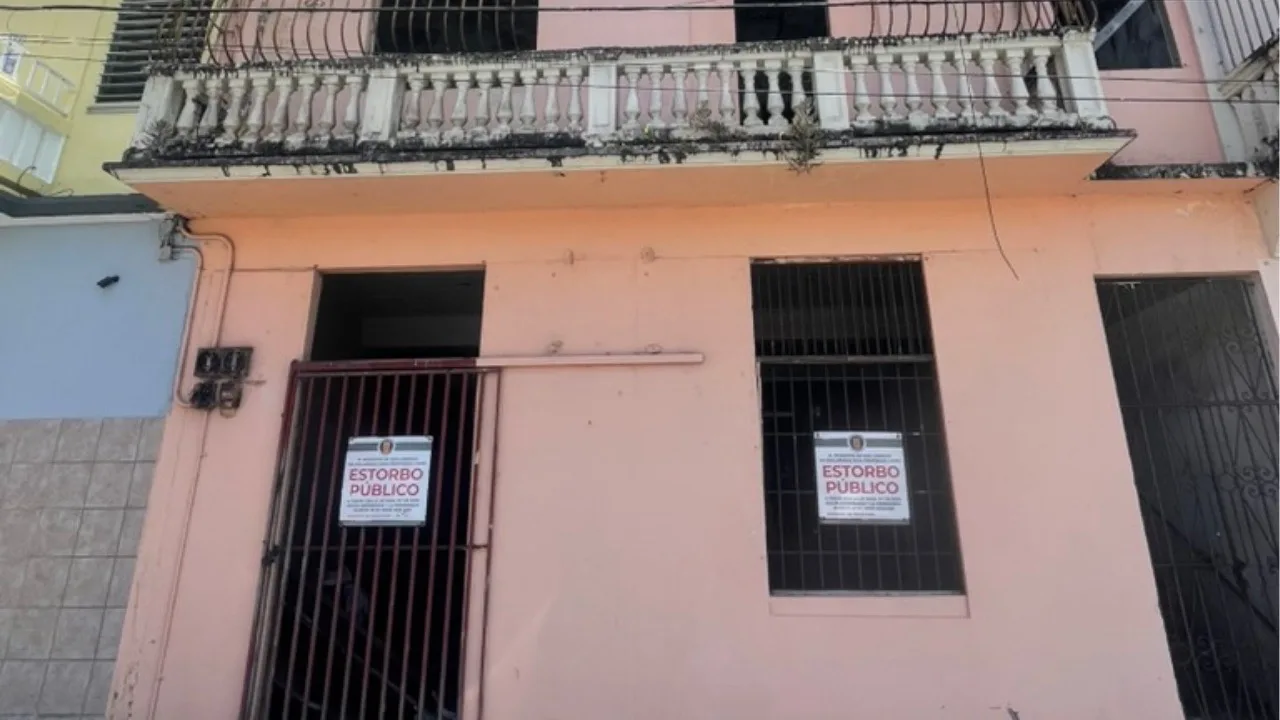
What's happening? In early June, a new law strengthened the power of municipalities to identify, fine and quickly expropriate abandoned properties declared a public nuisance, and also changed how municipal legislators are elected.
The law is Ley 97-2026, which introduced changes to the Código Municipal (Ley 107-2020) to, among other things, give greater protections to property owners, prevent expropriations in cases of hardship and poverty, and prohibit transfers to real estate investors during the first year.
Why does it matter? These amendments to the Código Municipal build on those introduced in 2024, which made it easier to declare public nuisances and carry out expropriations. Since then, many municipalities have established processes to deal with public nuisances, estimated at more than 150,000 across Puerto Rico, ranging from community land banks, public auctions and more.
Here are some of the main changes Ley 97-2026 introduces to the handling of public nuisances and how they could affect you.
For analysis of the measure, we consulted with attorney Alicia Díaz Santiago, director of public policy at the Centro para la Reconstrucción del Hábitat (CRH).
🧍🧍♀️Changes with a direct impact on residents
These changes protect residents' rights, create housing opportunities and define property owners' responsibilities.
1️⃣ Changes to the definition of public nuisance
What changes: The law clarifies that the accumulation of junk or debris can justify a public nuisance declaration, in addition to structural problems and abandonment. (Art. 8.001)
How it affects you: This can help neighbors affected by the accumulation of junk or heavy trash.
Analysis: Despite the change, in practice the accumulation of trash was always considered part of the definition of public nuisance, Díaz Santiago explained.
2️⃣ Protection of the primary residence
What changes: The law excludes from the definition of public nuisance any property occupied as the primary residence by its owner, limiting the use of this mechanism to expropriate such properties. (Art. 4.010 (g))
How it affects you: It could protect families in vulnerable or low-income situations who occupy their only home.
Analysis: According to Díaz Santiago, this reinforces the language included in the Código Municipal under Ley 114-2024 to make clear that, to qualify as a public nuisance, a property must be uninhabited and abandoned.
3️⃣ Priority for buyers with limited access to housing
What changes: When a property declared a public nuisance can be rehabilitated as housing, the law establishes a one-year window from the declaration during which only people with limited access to the housing market may acquire it. During that period, it cannot be transferred to real estate investors. (Art. 4.012A)
During that year, buyers may arrange financing, with the possibility of a six-month extension. If they do not complete the purchase within that period, the municipality may sell to any interested party, including investors.
How it affects you: If you need housing and have not been able to buy through traditional channels, you have up to a year and a half of priority access to these properties before they open to the general market.
4️⃣ Three years to claim just compensation
What changes: Anyone entitled to compensation for an expropriation will have three years to file a claim. After that period, they would lose the right to collect. (Art. 1.012A(g))
How it affects you: If the municipality expropriated a property that belongs to you, you have three years to go to court and seek payment. After that time, you lose the right to compensation. This affects former owners of expropriated properties and their heirs.
📑 Changes in how municipalities operate:
These are the new rules and powers municipalities have to address public nuisances.
1️⃣ More power to collect debts and fines, and notification to the CRIM
What changes: Municipalities will be able to use property declared a public nuisance to collect taxes, fines and administrative costs, but must notify the Centro de Recaudación de Ingresos Municipales (CRIM) before acting.
They may also deduct CRIM debts, fines and cleanup or administrative costs from the just compensation. (Art. 1.008(h))
The law clarifies that fines range from $1,000 to $5,000 in cases where owners of public nuisances do not carry out improvements requested by the municipality or allow the nuisance condition on their properties to continue.
How it affects the municipality: It gives municipalities clear tools for everything they can collect from an owner through the property, ensuring the nuisance process becomes an effective debt-collection instrument.
Analysis: The CRIM notification requirement is one of the new mechanisms included in the law, and municipalities will need to incorporate it into their administrative procedures each time a public nuisance is declared, Díaz Santiago explained.
2️⃣ Condemnations without an initial deposit
What changes: Municipalities will be able to file condemnation suits without depositing money at the start of the process. The obligation to deposit funds would begin when defendants appear in court. (Art. 2.018(a)(10))
How it affects the municipality: It allows municipalities to begin condemnation proceedings without an immediate impact on their budget or cash flow.
In San Lorenzo, Mayor Jaime Alverio Ramos estimated the cost of condemning each public nuisance at around $7,300. That figure could apply in other municipalities as well, according to Díaz Santiago.
Analysis: Although municipalities still need to account for the total cost of the full process, Díaz Santiago considers these changes "facilitate the condemnation process for municipalities."
3️⃣ Property title transfers to municipalities are expedited
What changes: The law now requires courts to transfer title of property declared a public nuisance within a maximum of five days from the filing of the condemnation petition, and eliminates the requirement that the municipality deposit money when opening the case.
How it affects the municipality: It reduces the waiting time in court to receive title to nuisance properties, something that previously could take months, even as the judicial process continues.
Analysis: "There was no law regulating how long the court had to take to do it (deliver the property title transfer)… It is a fairly important law for expediting the condemnation process for municipalities," said the CRH director of public policy.
4️⃣ Power to adjudicate "ownerless" properties
What changes: Municipalities will no longer have to wait indefinitely for owners or heirs who never appear. If no one claims a property declared a public nuisance within the periods established by law, a judge may transfer it to the municipality. (Art. 4.010(e)(f))
The deadlines:
If heirs exist, they will have three years to claim the property (previously five years). If they do not claim it within that period, the property may pass to the municipality.
If no one appeared to contest the public nuisance declaration or claimed the property, the period is reduced to one year. Once that time has passed, the property may pass to the municipality.
How it affects the municipality: It eliminates the stagnation of abandoned properties where the owner died or left Puerto Rico decades ago, or where no one comes forward to take responsibility.
Analysis: For Díaz Santiago, these adjudication processes are a double-edged sword. If a municipality has an affordable housing program, it is a powerful tool. But in communities with fewer resources, where properties without formal titles are common, the mechanism could also be used to displace residents without having to condemn or pay just compensation.
5️⃣ Municipalities will be able to carry out work on nuisance properties more quickly
What changes: Municipalities will be able to intervene in a property declared a public nuisance more quickly. Previously they had to wait 60 days from notification to clean the lot or correct the conditions that prompted the declaration. Now they can do so after 30 days. (Art. 4.010)
How it affects the municipality: It will be able to speed up cleanup or mitigation work. However, other deadlines in the process do not change. For example, the municipality must still wait 60 days to record liens in the Registro de la Propiedad and to begin acquiring the property.
More from our Housing articles…
The position of director of the Internal Audit Unit is created: it will be a trust employee and will shape the internal oversight process for municipalities. This differs from the internal auditor, which remains a career position. (Art. 2.006)
A subsection is added for technology and digital modernization contracts: it authorizes the contracting of specialized professional services to promote operational efficiency and optimize municipal revenue collection. (Art. 2.014 (d))
Contractors will be required to pay a business license tax in the municipality where the contract is awarded: regardless of where the contractor has an office, the business volume of a municipal contract is considered income in the municipality where the contract is awarded. If the contractor has no office, it must obtain a provisional license for tax payment. (Art. 7.200 (k))
Change in legislative sessions and budget deadlines: the mayor may call emergency special sessions while the Municipal Legislature is in regular session and may interrupt it for a maximum of 5 days with a 2/3 vote of the legislators. The municipal budget must be reviewed between June 10 and June 20. (Art. 1.037)
Changes to the structure and election of the Municipal Legislature: all members of the Municipal Legislature must be elected by direct vote, and automatic minority seats are eliminated. The number depends on the population from the decennial census, and the legal guarantees that the second or third party obtains representation for having finished as a minority are eliminated. (Art. 1.020 y 1.022)
Civil immunity for directors of Territorial Planning and Permit Officers: civil immunity is expanded in cases of lawsuits for damages, including in scenarios where these officials serve in their positions under professional services contracts. (Art. 1.053)
What comes next?
Effective date: The law took effect June 8, 2026, automatically upon the governor's signature.
Approval of municipal ordinances: Each municipality will need to pass an ordinance in its Municipal Legislature to adopt the specific requirements for how it will sell or transfer public nuisance properties to interested families.
This content was translated with the assistance of Artificial Intelligence (AI).